Universal Design: Age-Proof Your Bathroom for 2026
Creating a bathroom that supports safety, comfort, and independence as individuals age represents one of the most strategic home investments available. Universal design principles enable preparation for evolving needs while preserving aesthetic appeal and functionality. This method emphasizes accessibility, user-friendly features, and enduring performance.
This guide details strategies for remodeling a bathroom with universal design in mind, ensuring it remains suitable for all household members. Readers will discover essential features to incorporate, associated costs, the value of professional involvement, and methods for anticipating future requirements.
What Universal Design Means for Bathrooms
Universal design develops environments that accommodate individuals across all ages and abilities. Within a bathroom context, this involves crafting spaces that prioritize accessibility, stability, and ease without evoking a sterile atmosphere. The objective centers on rendering every element readily accessible, intuitively operable, and secure in diverse scenarios.
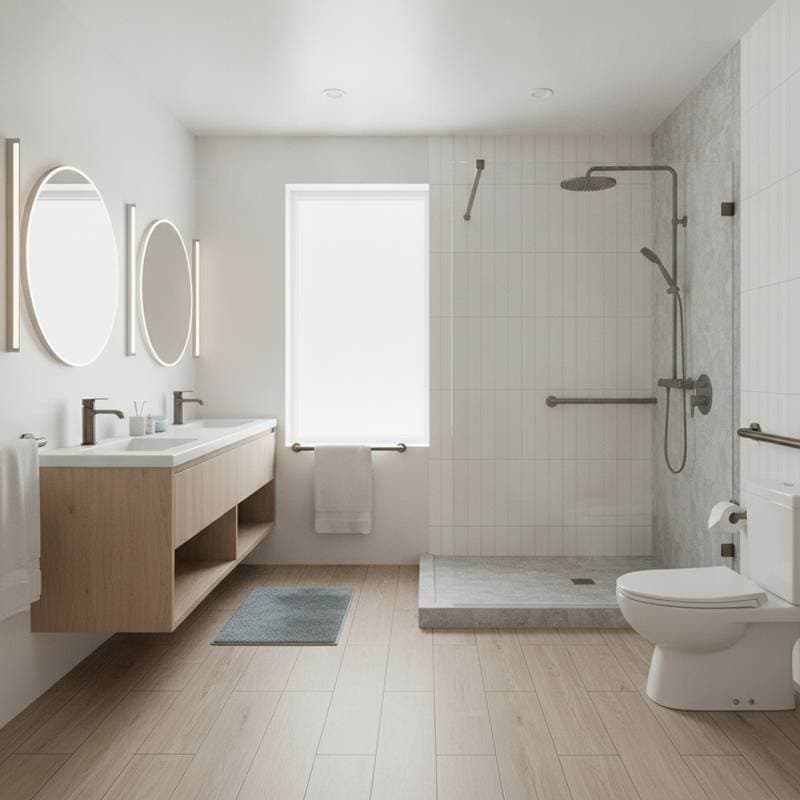
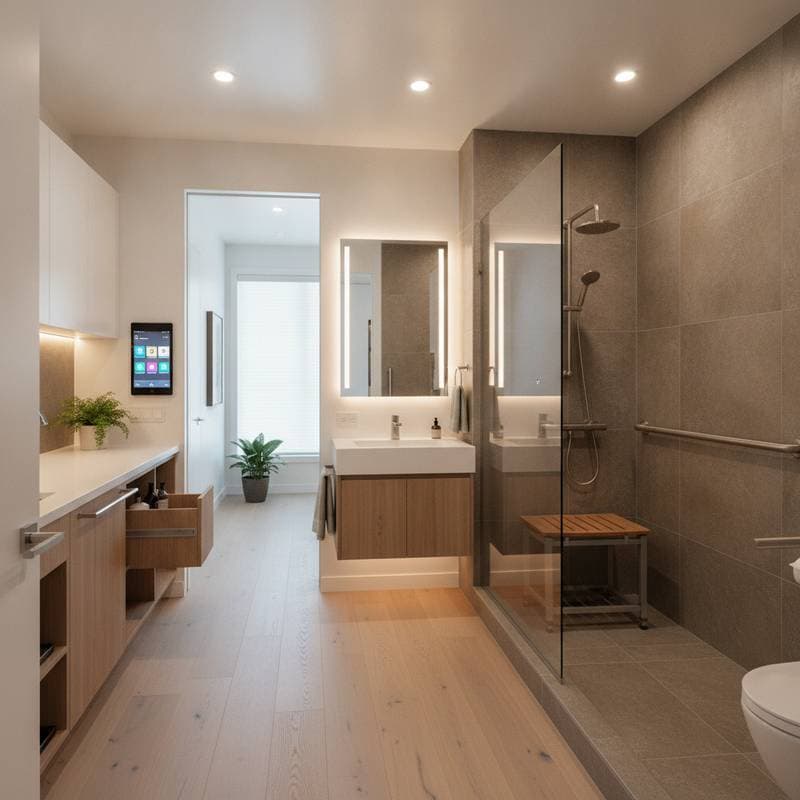
Essential universal design components encompass broader doorways, seamless-entry showers without curbs, reinforced grab bars, lever-style handles, and surfaces resistant to slipping. Such enhancements not only facilitate movement but also elevate property marketability, as prospective buyers increasingly seek homes equipped for accessibility.
To implement these effectively, evaluate the existing layout for potential bottlenecks, such as narrow passages or high fixtures. Begin by measuring clearances around the toilet and shower to confirm adequate space for maneuvering. Professionals recommend integrating these features during initial construction or major renovations to minimize disruptions.
Cost and ROI Expectations
A comprehensive universal design bathroom renovation generally spans $15,000 to $35,000. Expenses vary based on structural adjustments, material selections, and finish levels. Although the upfront expenditure may exceed that of conventional remodeling, it frequently yields sustained financial benefits by eliminating the need for subsequent alterations or reliance on external care facilities.
ROI potential: Property owners typically realize a 60 to 70 percent recovery upon sale, augmented by enhancements in safety and utility.
To optimize spending, focus initially on core safety measures like flooring treatments, grab bar installations, and illumination upgrades. Subsequently, address accessibility improvements such as doorway expansions or barrier-free shower entries. Consult cost estimators early to align budget with priorities, and explore financing options tailored to home improvement projects.
Style and Material Choices
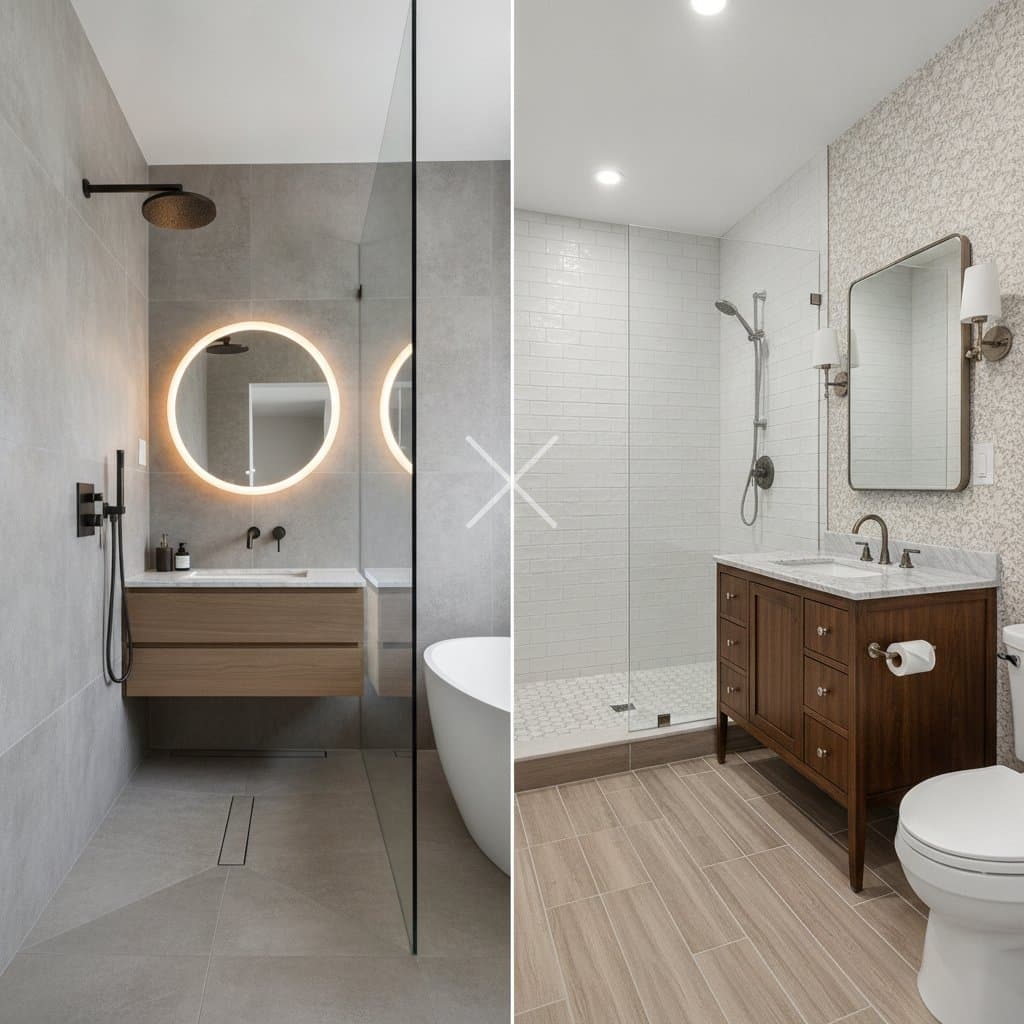
Universal design need not compromise on sophistication; contemporary options merge practicality with refined aesthetics.
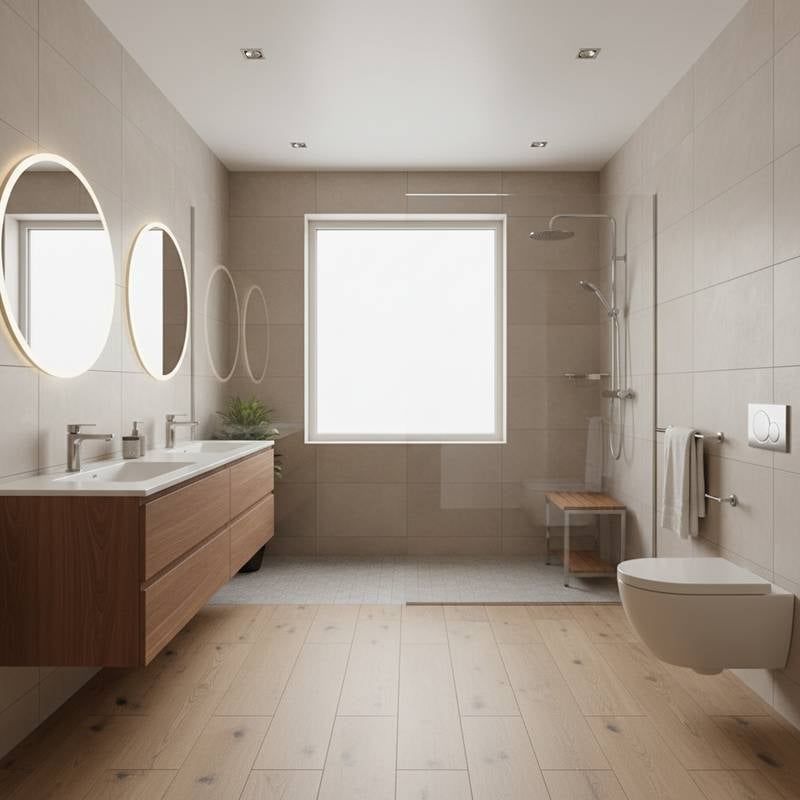
- Tiles: Opt for expansive porcelain formats featuring reduced grout seams, which simplify maintenance and enhance grip in moist environments.
- Colors: Select pale, neutral shades to amplify spatial perception. Incorporate edge contrasting for superior visual orientation, particularly beneficial for those with diminished sight.
- Fixtures: Choose brushed nickel or matte black options, which offer both contemporary style and secure handling.
- Vanities: Install wall-mounted designs that afford legroom for seated individuals and impart a sleek, contemporary vibe.
- Storage: Integrate extendable shelving units and drawers with gentle-closing mechanisms to lessen the physical demands of accessing items.
These selections foster a unified aesthetic that upholds accessibility standards while cultivating a home-like ambiance. For instance, pair matte finishes with warm lighting to soften the space, ensuring it feels inviting rather than utilitarian. Sample various textures in person to verify compatibility with daily routines.
Safety and Code Considerations
Bathroom renovations frequently necessitate approvals for alterations involving plumbing, electrical systems, or load-bearing elements. Confirm adherence to regional building regulations prior to commencement.
Critical safety protocols encompass:
- Appropriate gradients in seamless showers to avert water accumulation.
- Ground-fault circuit interrupter outlets positioned adjacent to basins and moisture-prone areas.
- Reinforced framing within walls to support grab bar installations securely.
- Flooring materials certified for non-slip performance in damp conditions.
Overlooking these stipulations may introduce risks and diminish market value. Engage a certified contractor to guarantee regulatory compliance and superior execution. During planning, conduct a site assessment to identify compliance gaps, and retain documentation of all modifications for future reference.
Money-Saving and ROI Tips
- Plan early: Integrate universal design elements into planned overhauls to consolidate labor expenses.
- Use mid-range materials: Resilient options like luxury vinyl, porcelain surfacing, and engineered quartz provide longevity at accessible price points.
- Reuse existing plumbing locations: Relocating drains or conduits substantially escalates outlays; preserve original positions where feasible.
- Bundle projects: Contracting a single specialist for assorted upgrades often lowers administrative charges.
- Energy and water efficiency: Select certified WaterSense products and energy-efficient LED illuminants to accrue ongoing reductions in utility bills.
Implementing these approaches sustains essential comfort and security while reining in fiscal commitments. Track material sourcing from reputable suppliers to secure warranties, and review rebate programs for eco-friendly installations.
FAQs
What is the best flooring for an accessible bathroom?
Textured porcelain tiles or premium vinyl planks offer robust construction and slip prevention alongside low upkeep demands.
Do I need permits for a universal design remodel?
Yes, interventions affecting plumbing, wiring, or framework typically mandate permits to uphold safety protocols and legal standards.
Can I make a universal design bathroom look stylish?
Certainly. Contemporary hardware, streamlined support rails, and subdued hue schemes yield refined environments devoid of institutional overtones.
How much space does a wheelchair-accessible bathroom need?
Provide at least a 5-foot diameter for rotation, with entryways measuring no less than 32 inches to accommodate unobstructed passage.
What lighting works best for visibility?
Employ multi-tiered illumination, including vivid ceiling units, focused mirror-adjacent lamps, and subdued pathway lights to enhance orientation and prevent mishaps.
Long-Term Benefits
A bathroom crafted under universal design tenets promotes autonomy, ease, and reassurance over time. It averts expensive retrofits and bolsters property attractiveness in the market.
Through deliberate planning, durable material choices, and collaboration with skilled experts, the space evolves seamlessly with personal circumstances. Such an investment secures a residence that stays hospitable, protected, and aesthetically pleasing across decades.