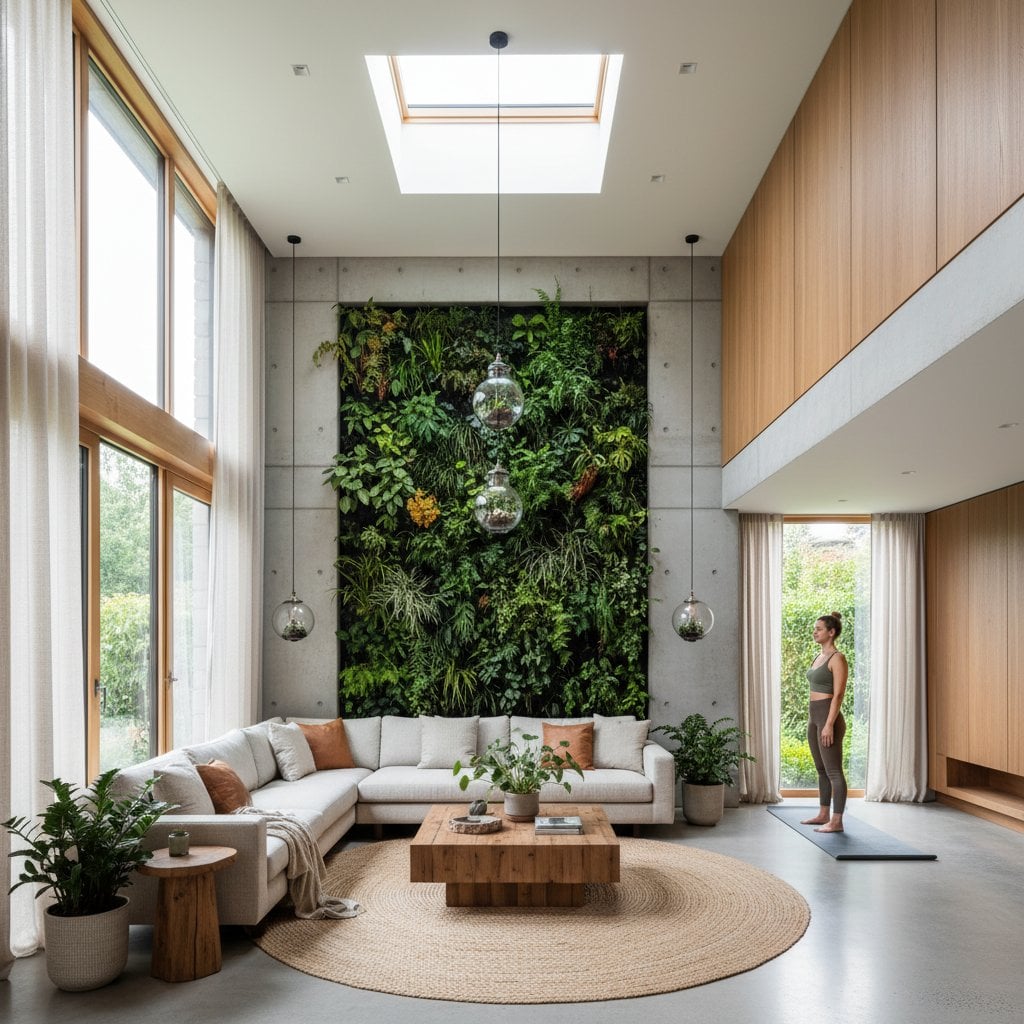
Why Biophilic Design Shapes 2026 Home Builds
Quick Answer Box
Biophilic design connects homes to nature through elements such as light, air, plants, water, and natural materials. This approach enhances comfort, focus, and mental well-being. Homeowners can implement many features independently, including living walls, daylight optimization, and indoor plant zones. Projects typically involve moderate difficulty, with costs varying from low for do-it-yourself improvements to high for comprehensive remodels. Risks remain low when avoiding structural or electrical modifications, which necessitate a licensed contractor.
Step-by-Step Instructions
Step 1: Plan the Natural Flow
Examine how daylight, airflow, and outdoor views influence each room.
- Conduct walkthroughs of the home at various times of day to observe light patterns.
- Pinpoint areas that appear dark, dry, or enclosed.
Success check: A detailed map identifies problem areas where natural elements can enhance comfort.
Step 2: Choose Key Biophilic Elements
Select two or three features aligned with budget and schedule constraints.
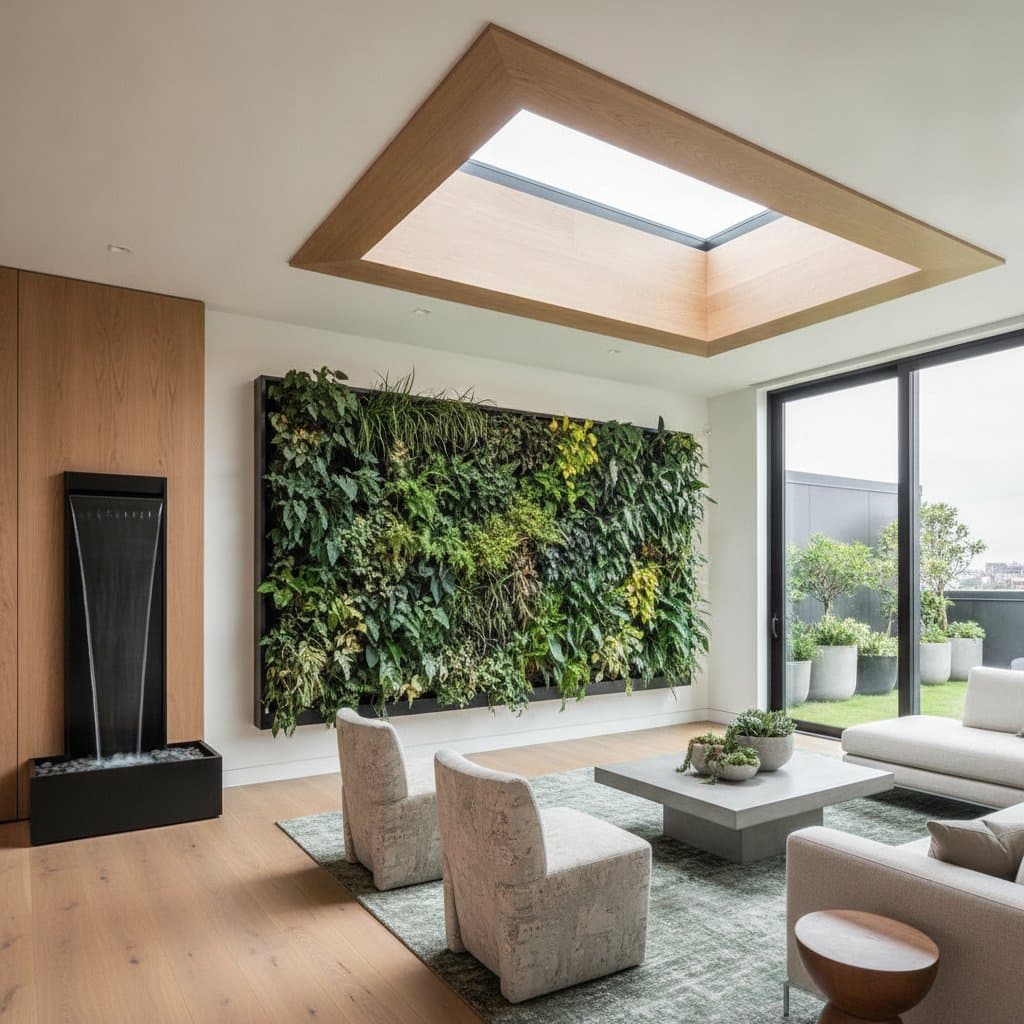
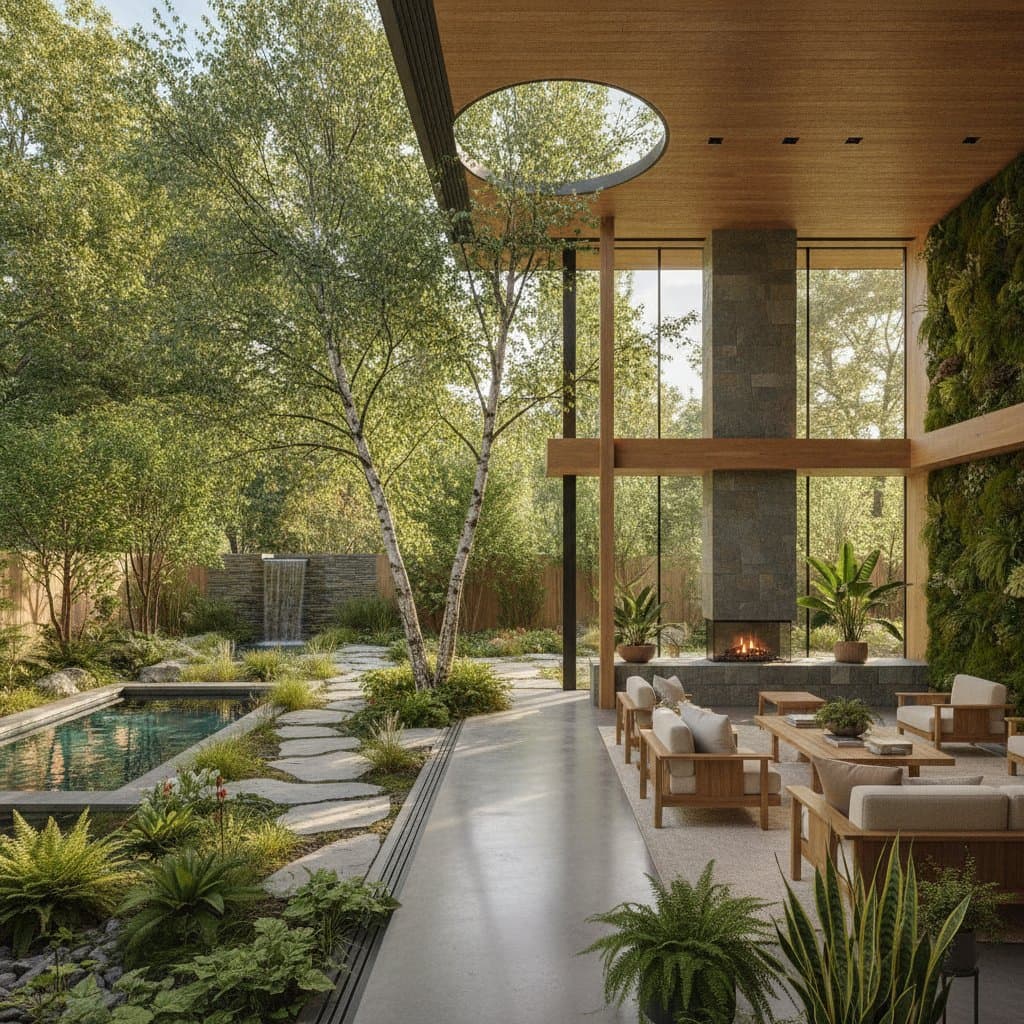
- Popular choices encompass living walls, skylights, water features, natural textures, or indoor gardens.
- Prioritize elements that elevate light quality and air freshness.
Success check: A prioritized list includes specific upgrades, along with estimated costs and required materials.
Step 3: Prepare Surfaces and Systems
Inspect walls, ceilings, and flooring prior to installing new features.
- Address any cracks or leaks promptly.
- Verify that walls can bear additional weight.
- Engage a licensed electrician or plumber for any wiring or plumbing adjustments.
Success check: All surfaces and systems prove secure, dry, and prepared for installation.
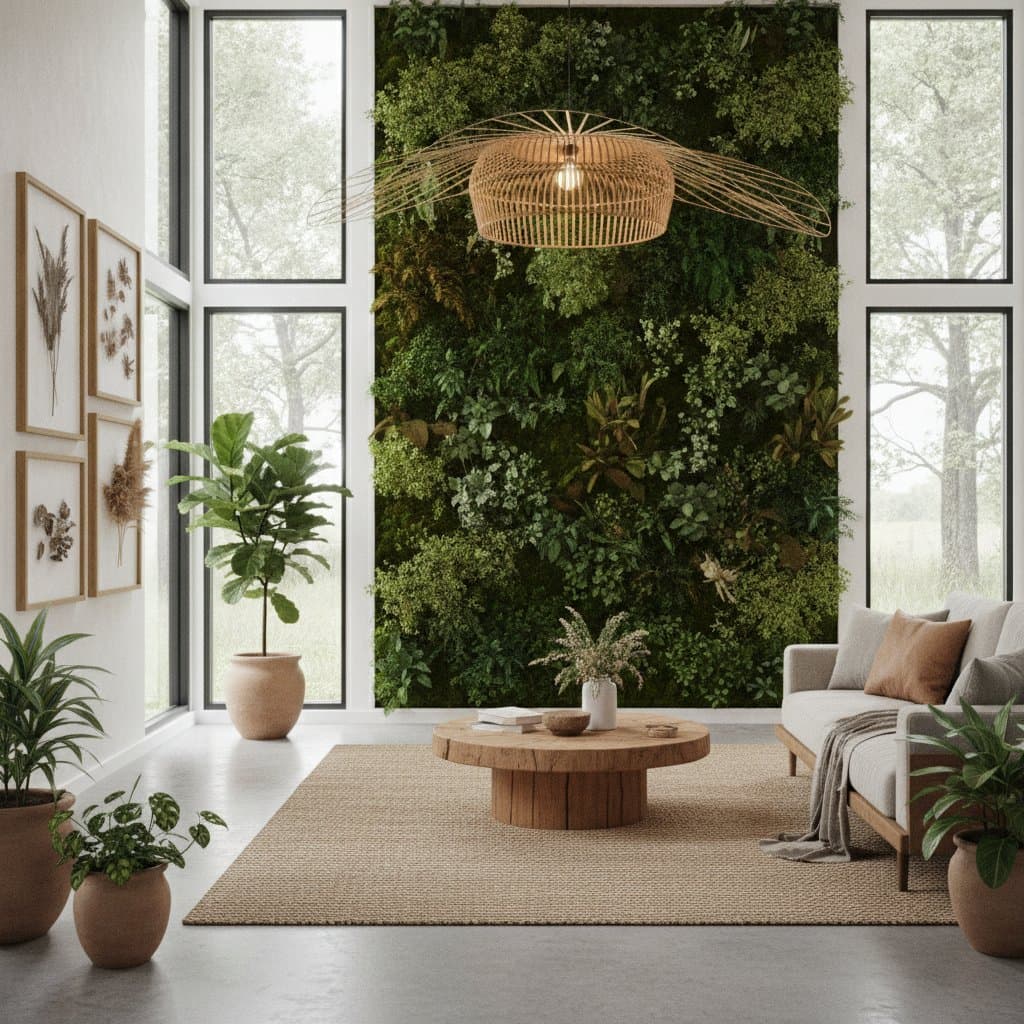
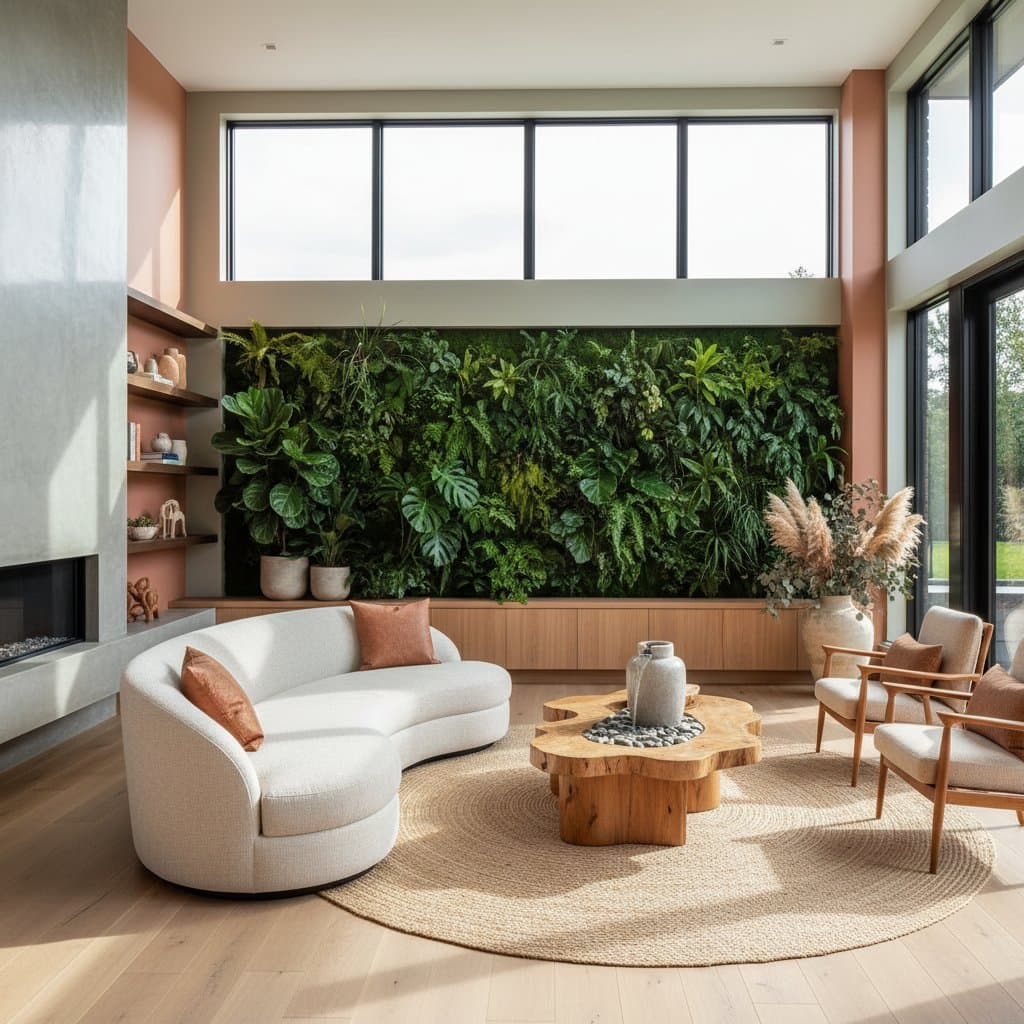
Step 4: Install a Living Wall or Vertical Garden
Warning: Avoid securing heavy planters solely to drywall. Anchor to studs or a reinforced frame.
- Install a waterproof backboard or membrane as the base.
- Secure wall planters or modular pockets firmly.
- Incorporate a drip irrigation system equipped with a catch tray to avert leaks.
- Select low-maintenance plants like pothos, ferns, or philodendrons.
Success check: The wall bears the complete planted weight without sagging, and moisture remains contained without seepage.
Step 5: Improve Natural Light
Incorporate or expand daylight sources with care.
- Substitute heavy curtains with light-filtering shades.
- Position mirrors or reflective panels to distribute sunlight further into rooms.
- For significant openings like skylights, consult a licensed contractor to evaluate roof loads and proper flashing.
Success check: The space appears brighter without excessive glare or heat accumulation.
Step 6: Integrate Natural Materials
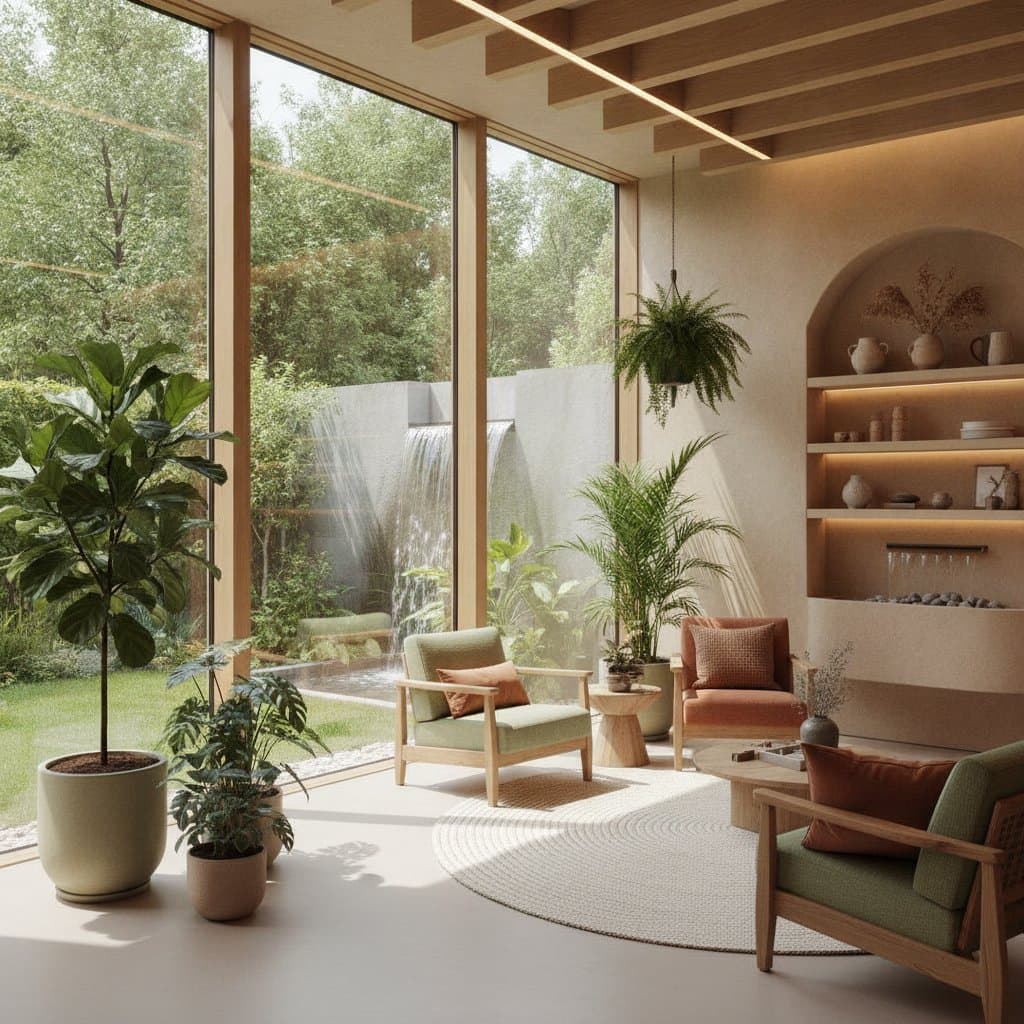
Apply wood, stone, bamboo, or clay finishes in frequently touched areas.
- Seal materials using low-VOC products to protect indoor air quality.
- Select coatings that preserve natural texture while minimizing chemical emissions.
Success check: Surfaces provide a natural tactile experience and contribute to stable humidity and temperature levels.
Step 7: Add Air and Water Movement
Subtle airflow and the sound of running water promote tranquility.
- Employ ceiling fans to simulate gentle breezes.
- Introduce tabletop fountains or wall-mounted water features designed for indoor environments.
- Ensure electrical cords stay dry and connect to GFCI-protected outlets.
Success check: Soft sounds of natural movement emerge without splashing or electrical interference.
Step 8: Layer Plants and Scents
Blend visual greenery with subtle natural aromas.
- Arrange plants in clusters near seating zones.
- Incorporate cedar, eucalyptus, or lavender for gentle scent diffusion.
- Maintain clean soil and remove any plants showing mold.
Success check: The air feels refreshed, with scents remaining subtle and organic.
Quality Checks and Troubleshooting
Common Issues
- Wilting or mold: Decrease watering frequency and enhance airflow.
- Poor drainage: Incorporate gravel or perlite into the soil mixture.
- Uneven lighting: Rotate plants on a monthly basis to promote even growth.
- Condensation on walls: Boost ventilation or add a dehumidifier.
Simple Fixes
- Swap standard bulbs for full-spectrum LEDs during periods of reduced natural light.
- Re-seal seams and edges around living walls annually.
- Deploy moisture sensors to prevent overwatering.
Success Indicators
- Plants thrive through at least one complete growth cycle.
- Air maintains a fresh scent without traces of mildew.
- Surfaces remain dry and structurally sound.
When to Call a Pro
Engage a licensed contractor or designer for projects involving:
- Installation of skylights or large windows.
- Modifications to roofs or structural framing.
- Built-in irrigation or plumbing systems.
- Electrical circuits for lighting or pumps.
- Ventilation systems integrated with HVAC.
Typical Cost Ranges
- Professional living wall installation: $150 to $300 per square foot.
- Skylight installation: $1,000 to $3,000, including flashing and finishing.
- Indoor fountain with plumbing: $1,500 to $4,000.
- Design consultation: $500 to $2,000, based on project scope.
To select a contractor, confirm licensing and insurance coverage. Request references and ensure adherence to local codes and manufacturer guidelines. Obtain itemized estimates that detail materials, labor, and disposal costs.
FAQs
What does biophilic design mean?
Biophilic design creates spaces that link people to nature via light, air, and organic materials.
Can biophilic upgrades occur without full remodeling?
Yes. Begin with indoor plants, natural textures, and enhanced lighting.
Does biophilic design increase home value?
Homes that promote brightness and health often generate greater buyer interest, though outcomes vary by local market.
What features offer the easiest entry points?
Potted plants, natural fiber rugs, and wooden accents provide affordable introductions.
Are living walls high maintenance?
They require regular watering and trimming. Automated systems lessen the workload at an added expense.
Do permits apply to skylights or indoor water features?
Permits may prove necessary for skylights or plumbing alterations. Review local regulations before proceeding.
How can mold be prevented in indoor gardens?
Ensure adequate drainage, moderate watering, and consistent airflow.
Can biophilic design suit small spaces?
Yes. Vertical gardens, window herbs, and light-reflecting surfaces introduce nature effectively in compact areas.
Pro Tips for Success
- Start with small zones. Implement one natural feature per room and monitor changes in comfort and air quality prior to broader application.
- Use layered light. Merge daylight with warm LED sources and indirect fixtures to replicate outdoor illumination cycles.
- Balance moisture. Maintain relative humidity between 40 and 60 percent to nurture plants while deterring mold.
- Involve your senses. Select textures, scents, and sounds aligned with personal preferences for optimal comfort.
- Plan seasonal refreshes. Rotate plants or decor to align with natural cycles and avoid design stagnation.
Biophilic design thrives as an ongoing process rather than a one-time endeavor. By viewing the home as a living ecosystem, each enhancement deepens ties to the natural world. Over time, this yields a harmonious environment that fosters calm, concentration, and adaptability. Through thoughtful planning and secure implementation, the home mirrors the vital systems that nourish it.