Stay Independent: Aging-in-Place Bath Remodels
A bathroom remodel extends beyond aesthetic updates. It enhances safety and ease for changing needs over time. Thoughtful modifications simplify routines and promote enjoyment. This guide details accessible design elements that merge style with enduring functionality in an aging-in-place bathroom.
Understanding Aging-in-Place Design
Aging-in-place design creates environments that accommodate mobility, safety, and comfort across life stages. The aim involves subtle adaptations rather than institutional aesthetics. Bathrooms benefit from universal design principles integrated with appealing materials and efficient configurations.
Universal design ensures usability for diverse ages and abilities. It prioritizes unobstructed pathways, stable fixtures, and adaptable elements that minimize physical effort. Effective implementations appear intuitive and inviting, fostering a space that serves all users seamlessly.
Zero-Threshold Showers for Seamless Entry
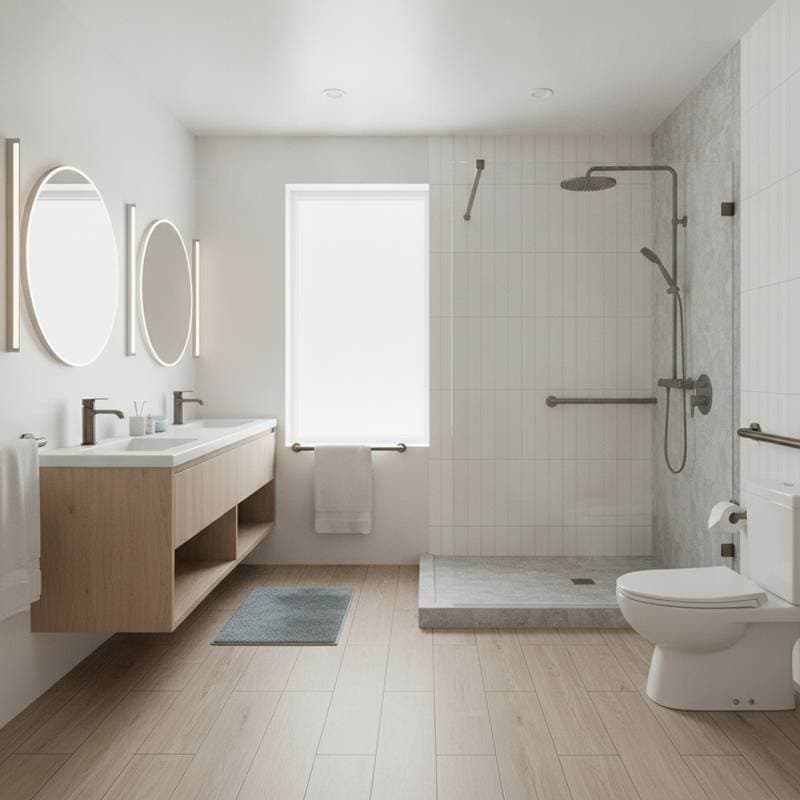
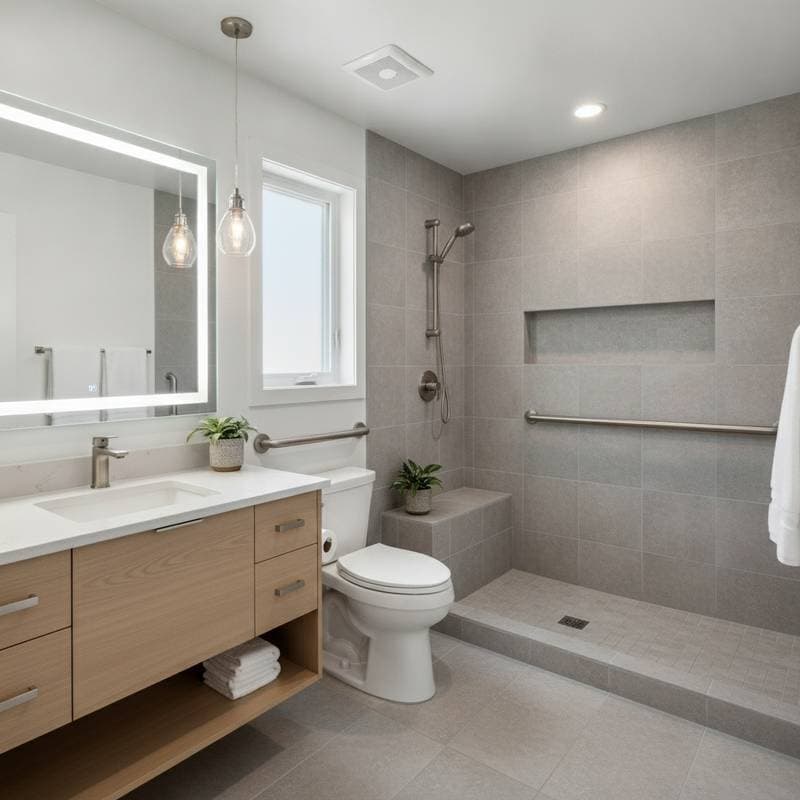
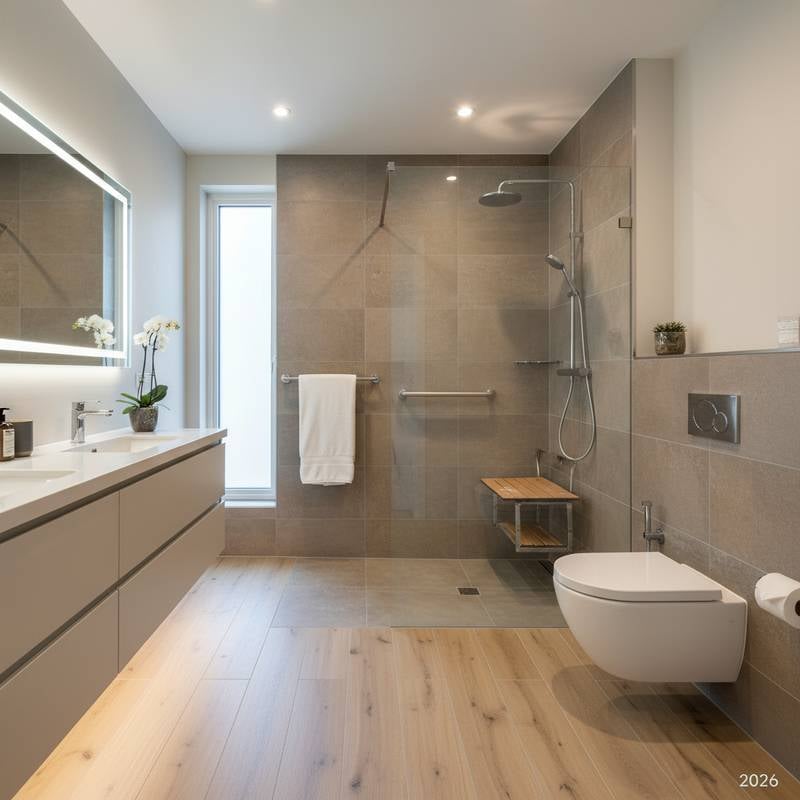
Zero-threshold showers eliminate steps for effortless access. These designs feature a flush floor transition that aligns with the bathroom level, often paired with gentle slopes for drainage.
Benefits: They reduce tripping hazards and support wheelchair maneuverability while maintaining a spacious feel.
Integration tips: Opt for frameless glass enclosures in frosted or clear finishes to enhance openness. Select nonslip tiles in neutral shades that harmonize with wall colors for a unified look.
Grab Bars That Integrate Seamlessly
Grab bars offer crucial support without compromising elegance. Contemporary options resemble decorative towel racks or integrated shelving, ensuring they complement the overall decor.
Benefits: Positioned near toilets, showers, or tubs, they prevent falls by providing reliable handholds during transfers.
Integration tips: Match finishes like brushed nickel or oil-rubbed bronze to cabinet pulls and lighting. Align shapes and dimensions with nearby fixtures for visual continuity.
Smart Lighting for Enhanced Visibility
Smart lighting systems adjust brightness and color temperature via apps or sensors. Motion-activated options illuminate paths automatically, while dimmable LEDs reduce eye strain.
Benefits: They improve visibility in low-light conditions and minimize glare on reflective surfaces.
Integration tips: Install recessed fixtures above vanities and showers. Choose warm white bulbs that pair with matte black or satin finishes for a contemporary vibe.
Slip-Resistant Flooring Options
Flooring choices impact safety and ambiance equally. Options such as textured porcelain tiles, luxury vinyl planks, or matte natural stone deliver traction without discomfort.
Benefits: These materials grip effectively in moist environments, lowering slip risks during routines.
Integration tips: Incorporate soft, earthy tones to amplify natural light and evoke serenity. Match grout hues closely to tiles for a fluid, expansive appearance.
Lever-Style Faucets and Handles
Traditional twist knobs challenge those with reduced dexterity. Lever handles or sensor-based faucets streamline operation and introduce sleek modernity to sinks and tubs.
Benefits: They demand minimal force, aiding users with arthritis or limited grip strength.
Integration tips: Align lever designs with overhead light fixtures. Favor straightforward geometries that suit various styles, from minimalist to traditional.
Wider Doorways and Streamlined Layouts
Constricted doorways and cluttered arrangements hinder navigation. Broadening openings and decluttering fosters accessibility alongside an airy aesthetic.
Benefits: Ample clearance accommodates walkers or wheelchairs, while open plans encourage fluid movement.
Integration tips: Install sliding pocket doors or rustic barn doors to conserve space and inject character. Extend uniform flooring into adjacent areas for uninterrupted transitions.
Key Practical Elements
Strategic Color and Contrast
Contrast in colors delineates boundaries and aids orientation. A pale quartz countertop against deep wood cabinets, for instance, sharpens visual cues without overwhelming the palette.
This approach directs attention and averts errors in perception. Subtle variations maintain harmony while supporting functional navigation.
Optimal Lighting Choices
Select bulbs emitting warm to neutral light for a soothing atmosphere. Avoid stark fluorescents that reflect harshly off tiles or fixtures.
Even distribution flatters complexions and eases tasks. Layer ambient, task, and accent lights for versatility throughout the day.
Effective Ventilation Strategies
Proper airflow combats humidity and mold growth. Install silent fans triggered by humidity sensors to regulate moisture efficiently.
These systems preserve air freshness without disruptive noise. Combine with dehumidifiers for comprehensive environmental control.
Durable, Low-Maintenance Materials
Prioritize surfaces that withstand daily use and simplify cleaning. Quartz countertops and solid-surface vanities resist stains and require minimal effort.
Apply sealants to grout lines and opt for mold-resistant paints. Such selections ensure longevity and reduce ongoing maintenance demands.
Budget and Implementation Guidance
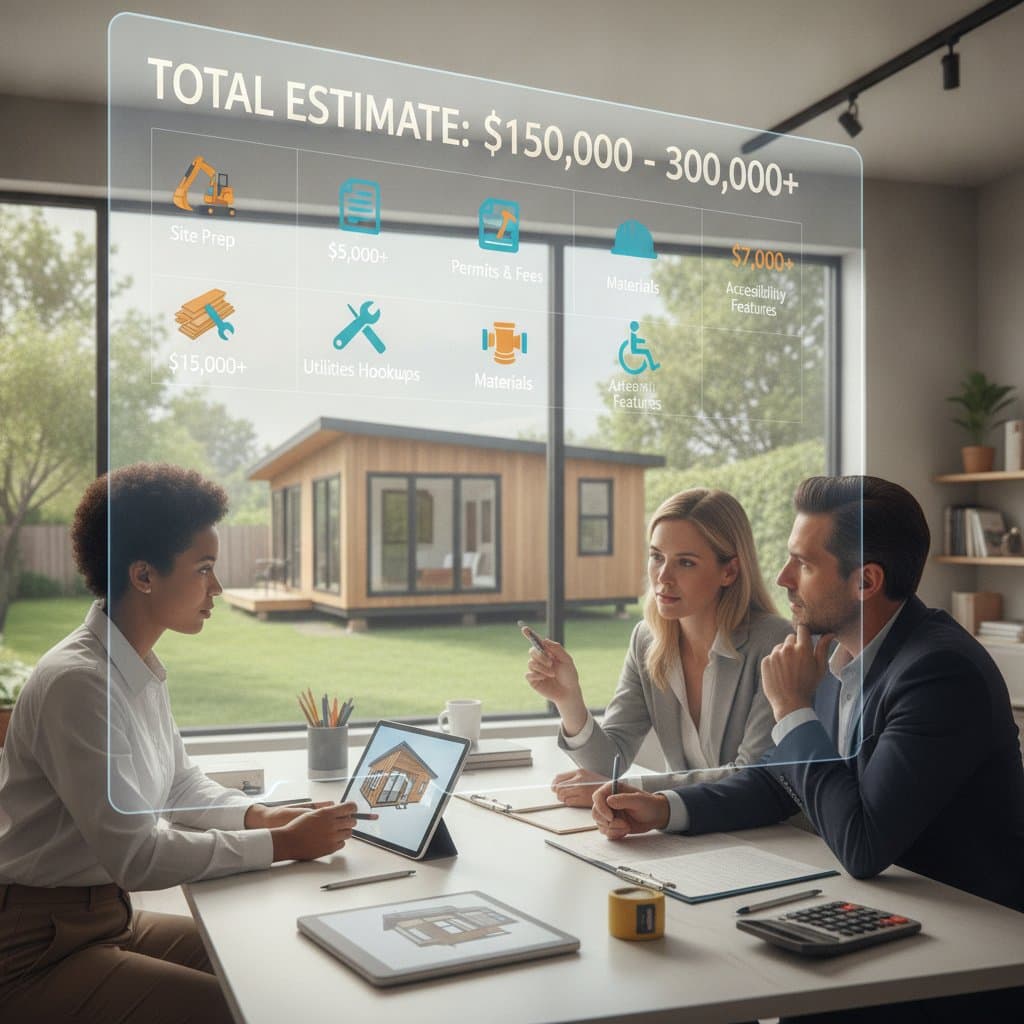
Costs for aging-in-place remodels depend on project scale and selections. Basic additions like grab bars or lever faucets suit modest budgets and DIY approaches.
Extensive changes, including curbless showers or flooring replacements, often necessitate expert involvement. Engage certified professionals to handle waterproofing, electrical, and regulatory standards. Strategic planning yields lasting returns by averting expensive retrofits later.
Frequently Asked Questions
How can I optimize a compact bathroom layout for accessibility?
Prioritize unobstructed zones and direct routes. Swap pedestal sinks for wall-hung models to maximize floor space and ease approach.
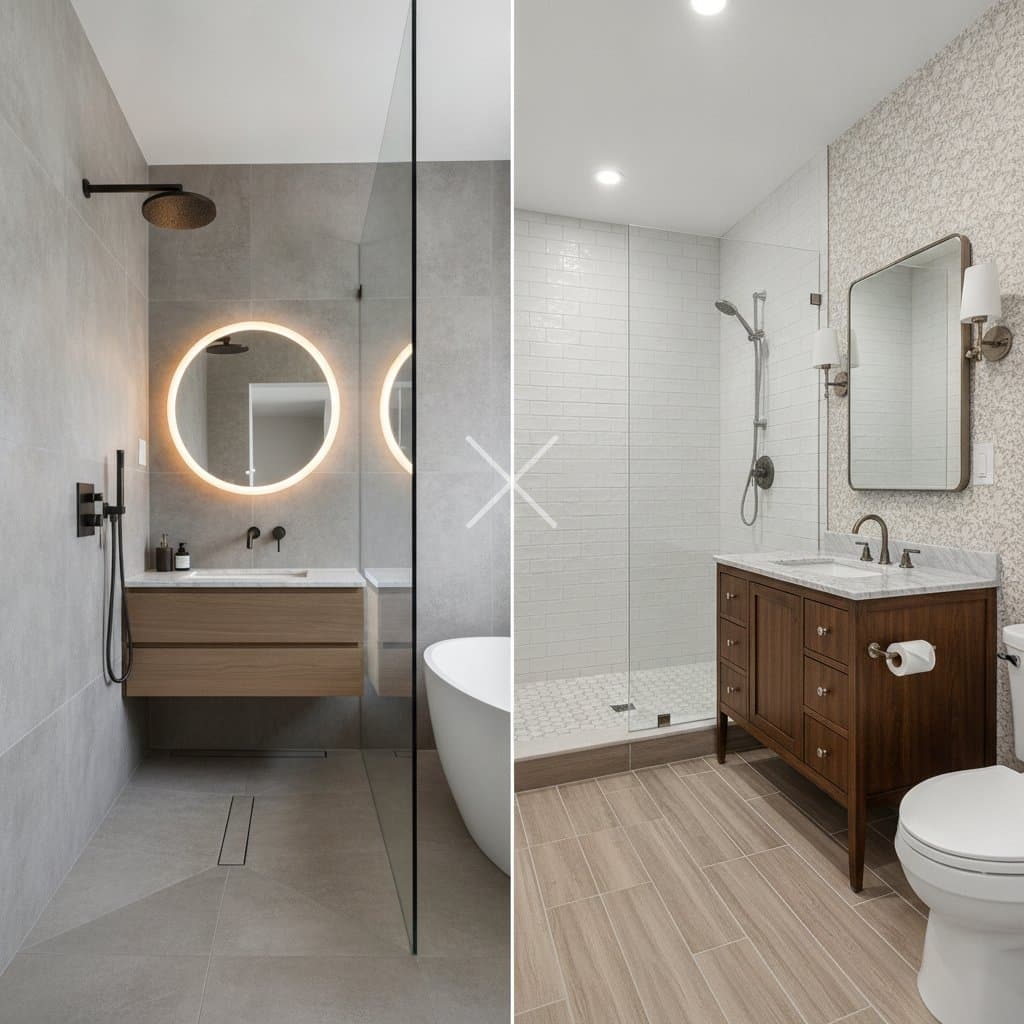
Must accessibility compromise aesthetics?
Accessibility enhances style through innovative products. Sleek, multifunctional fixtures elevate both utility and visual appeal.
Is it possible to retain a bathtub during updates?
Yes, incorporate transfer benches or reinforced grab bars around existing tubs. Walk-in models offer soaking without full replacement.
Embracing Long-Term Comfort
Your remodeled bathroom integrates seamlessly into daily life. These enhancements foster confidence and autonomy for years ahead.
Prioritizing safety, accessibility, and enduring style transforms the space into a supportive sanctuary. Enjoy the assurance of a home that evolves with you, blending practicality with personal satisfaction.