The Bathroom Remodel That Supports Aging in Place
Quick Cost Overview
An accessible bathroom remodel designed for aging in place generally costs between $12,000 and $35,000. The average for a mid-range project falls around $22,000. Factors such as bathroom size, current conditions, material selections, and the choice between professional installation or limited DIY efforts influence the final total.
Key elements driving expenses include:
- Accessibility modifications like grab bars, curbless showers, and expanded doorways
- Adjustments to plumbing and electrical systems
- Upgrades to fixtures, including comfort-height toilets and handheld showerheads
- Safety enhancements for flooring and lighting
- Labor requirements and design intricacies
Essential Highlights
A comprehensive accessible remodel boosts safety and promotes sustained independence. Labor often comprises 40 to 60 percent of the overall budget. Homeowners frequently request curbless showers and non-slip flooring as core aging-friendly elements.
The primary return on investment derives from prolonged home usability rather than immediate resale gains. Universal design principles integrate style and function seamlessly, steering clear of an institutional appearance.
Contractor Expenses and Labor Details
Engaging a contractor for an aging-in-place remodel typically involves rates of $75 to $150 per hour, varying by region and project scope. Specialists in universal design charge consultation fees from $500 to $1,500 to evaluate layouts and accessibility needs.
Plumbing and tile installation represent the bulk of labor costs. For instance, a curbless shower installation requires coordination among plumbers, tile setters, and possibly carpenters for structural reinforcement. This multi-trade approach ensures precision and safety, though it elevates expenses.
DIY Options Versus Professional Services
Certain accessibility upgrades suit skilled homeowners, yet professional involvement proves essential for most projects.
Upgrades suitable for DIY:
- Mounting grab bars after verifying proper wall blocking
- Swapping faucets or showerheads for lever-style or touch-activated models
- Incorporating anti-slip mats, peel-and-stick flooring, or tension-based accessories
Tasks requiring professionals:
- Transitioning to a curbless shower configuration
- Relocating plumbing or electrical components
- Strengthening floors or walls to accommodate support bars
- Fitting walk-in tubs or bespoke tile arrangements
Professional oversight guarantees adherence to local building codes and accessibility guidelines. It minimizes risks like water leaks or faulty setups that compromise safety. Although DIY efforts might reduce labor costs by 10 to 20 percent, expert workmanship delivers greater durability and typically comes with guarantees.
Strategies to Control Remodel Expenses
Strategic decisions help maintain budget constraints.
- Target core upgrades initially. Address the shower, toilet, and flooring priorities ahead of optional luxuries.
- Preserve existing plumbing layouts. Relocate major fixtures only when essential.
- Select prefabricated elements. Pre-assembled curbless shower kits and modular grab bars prove more economical than bespoke solutions.
- Opt for refinishing over replacement. Reglazing a bathtub or vanity surface can conserve thousands of dollars.
- Invest in mid-range, resilient materials. These options deliver optimal cost-performance ratios alongside safety.
- Integrate with broader home projects. Bundle demolition or electrical tasks from concurrent renovations to distribute labor expenses.
Investment Returns
An aging-in-place bathroom remodel yields returns distinct from conventional renovations. Financial recovery upon home sale hovers at 50 to 60 percent. However, the genuine advantages encompass prolonged independence, enhanced safety, and daily comfort.
Features like barrier-free showers or broadened doorways sustain home livability for years, averting expensive relocations. Universal design broadens buyer appeal, enhancing marketability.
Basis for Cost Estimates
These figures draw from national averages for residential remodels, tailored to accessibility adaptations. Sources include contractor bids, supplier pricing, and owner feedback. Local differences in labor and materials may adjust costs by 10 to 25 percent.
Core Design Elements for Aging in Place
Aging-in-place modifications emphasize comfort, safety, and ease of use across abilities and life stages. The following features harmonize utility with aesthetics.
1. Curbless Showers
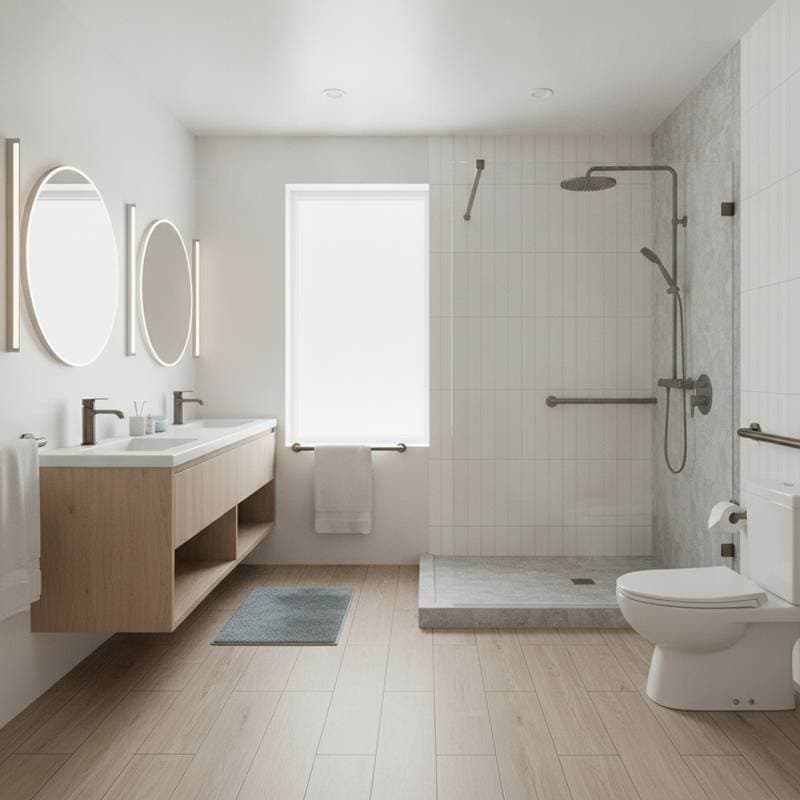
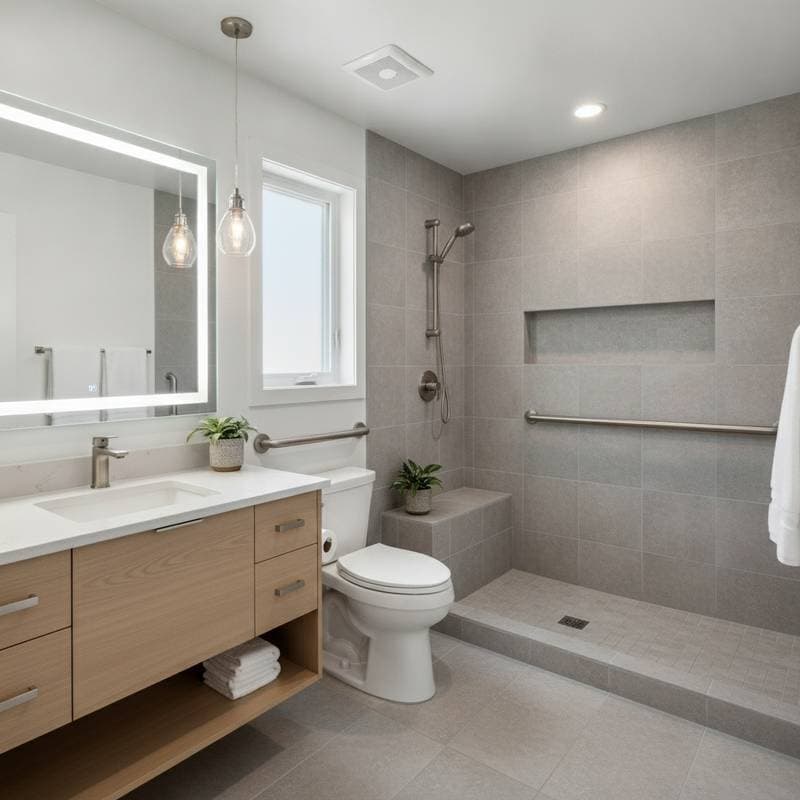
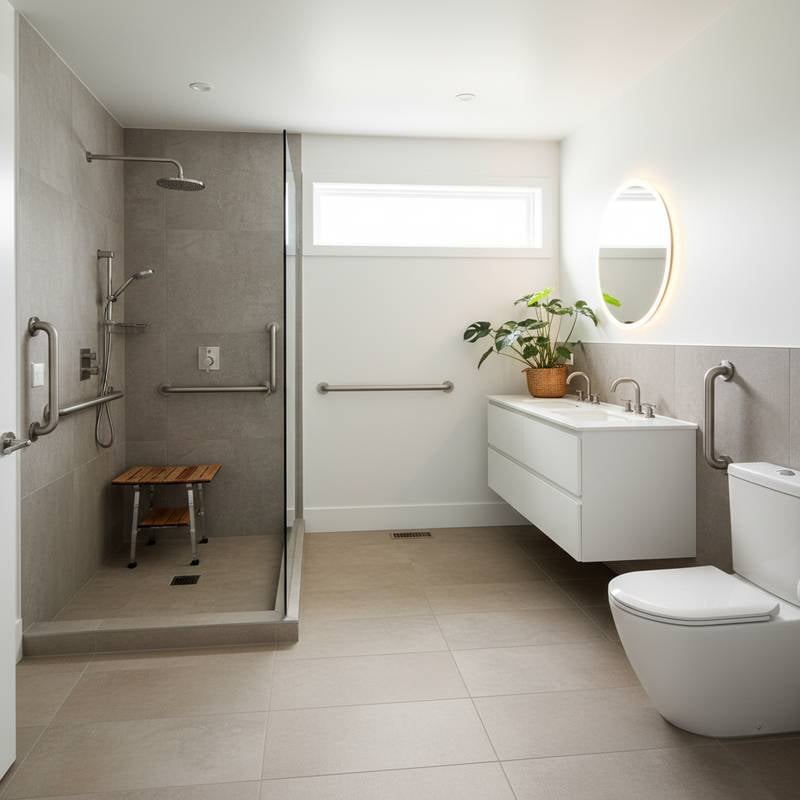
Zero-threshold designs remove entry barriers, lowering fall hazards and enabling wheelchair maneuverability. Pair with slip-resistant tiles and linear drains to facilitate efficient water runoff.
2. Handheld Showerheads with Slide Bars
These adjustable units accommodate seated or standing positions. A mounted slide bar serves as an additional secure hold when anchored correctly.
3. Comfort-Height Toilets
Elevated models, measuring 17 to 19 inches from floor to seat, ease transitions for sitting and rising.
4. Grab Bars and Support Rails
Position these near showers, toilets, and entrances. Select finishes coordinating with existing hardware for cohesive style.
5. Slip-Resistant Flooring
Choose textured porcelain tiles or vinyl planks boasting high friction coefficients to avert slips. Heated variants enhance comfort while upholding safety standards.
6. Enhanced Lighting
Layer overhead fixtures with targeted illumination at mirrors and showers. Opt for uniform, glare-free brightness to eliminate shadows. Motion-activated sensors improve nighttime accessibility.
7. User-Friendly Storage
Incorporate pull-out drawers, reachable shelving, and under-sink knee clearance to simplify routines.
8. Spacious Entryways and Maneuvering Areas
Target 32 inches of door clearance and 5 feet of turning radius to support wheelchair navigation.
9. Lever Handles and Touch Controls
These surpass traditional knobs in ease of use for faucets, doors, and cabinetry.
Enduring Advantages
Beyond physical ease, an accessible bathroom fosters emotional stability by enabling prolonged home residency and personal autonomy. Safer environments benefit visiting family members during support or stays.
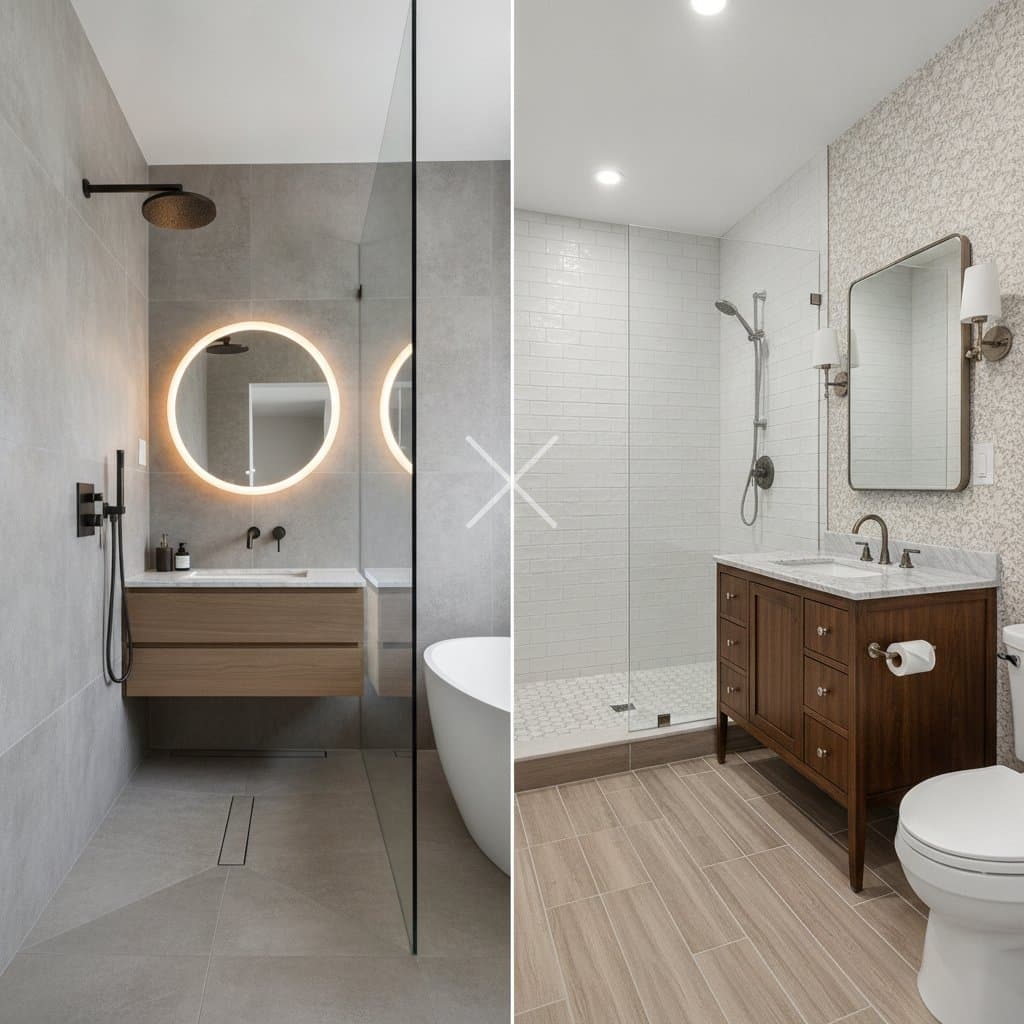
Forward-thinking universal designs preclude expensive future alterations. Elements like curbless entries and expanded passages project contemporary functionality without a clinical feel. Many owners note simplified daily tasks even prior to mobility challenges.
Expert Recommendations
- Anticipate evolving requirements. Incorporate adaptable elements, such as concealed wall blocking for potential grab bar additions.
- Prioritize longevity in materials. Select robust tiles, traction-enhanced flooring, and humidity-resistant surfaces for extended service.
- Equilibrate utility and aesthetics. Collaborate with universal design experts to achieve elegant, non-institutional outcomes.
- Validate layouts through prototypes. Employ temporary setups to assess ergonomics before committing to installations.
- Conduct thorough post-project reviews. Confirm drainage gradients, support integrity, and code conformity via inspections.
Frequently Asked Questions
What is the expense for accessibility modifications in a bathroom?
Such remodels range from $12,000 to $35,000, influenced by dimensions, selections, and workforce.
Is it feasible to adapt an existing shower into a walk-in format?
Yes, curbless conversions cost $4,000 to $8,000 and might necessitate subfloor alterations for drainage.
Do walk-in tubs justify their investment?
Installed at $5,000 to $9,000, they provide mobility aid and relaxation, though they demand longer fill times and greater water volume.
Will insurance or Medicare offset accessibility remodel costs?
Standard coverage remains limited, yet documented medical needs or community grants could alleviate expenses.
Which flooring promotes optimal safety?
Textured porcelain, vinyl planks, and rubber options deliver superior grip and minimal upkeep.
Sustaining Your Remodel
Regular upkeep preserves your accessible bathroom's integrity. Clean surfaces routinely and address minor issues promptly. Inspect grab bars and rails for security quarterly, and ensure lighting remains vibrant through timely bulb replacements.
This remodel transcends construction; it secures comfort, security, and self-reliance for years ahead.