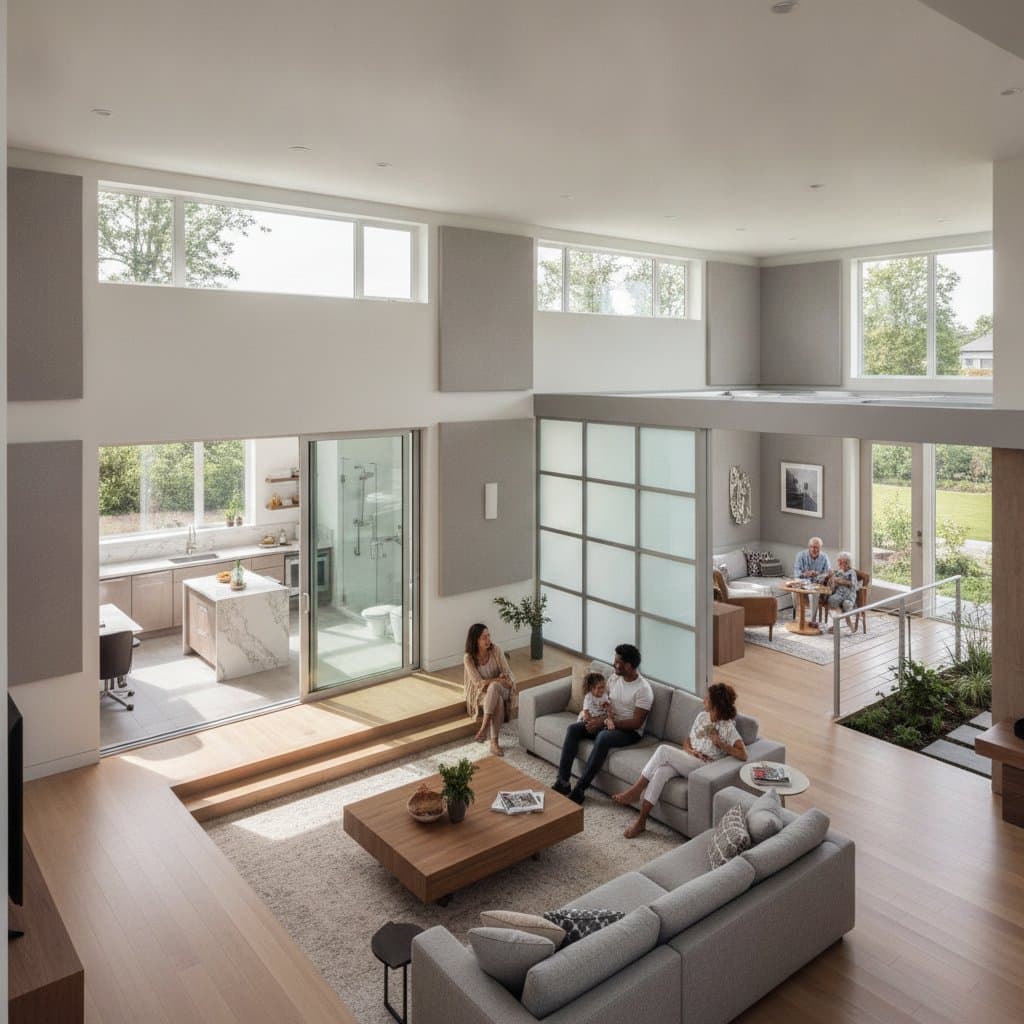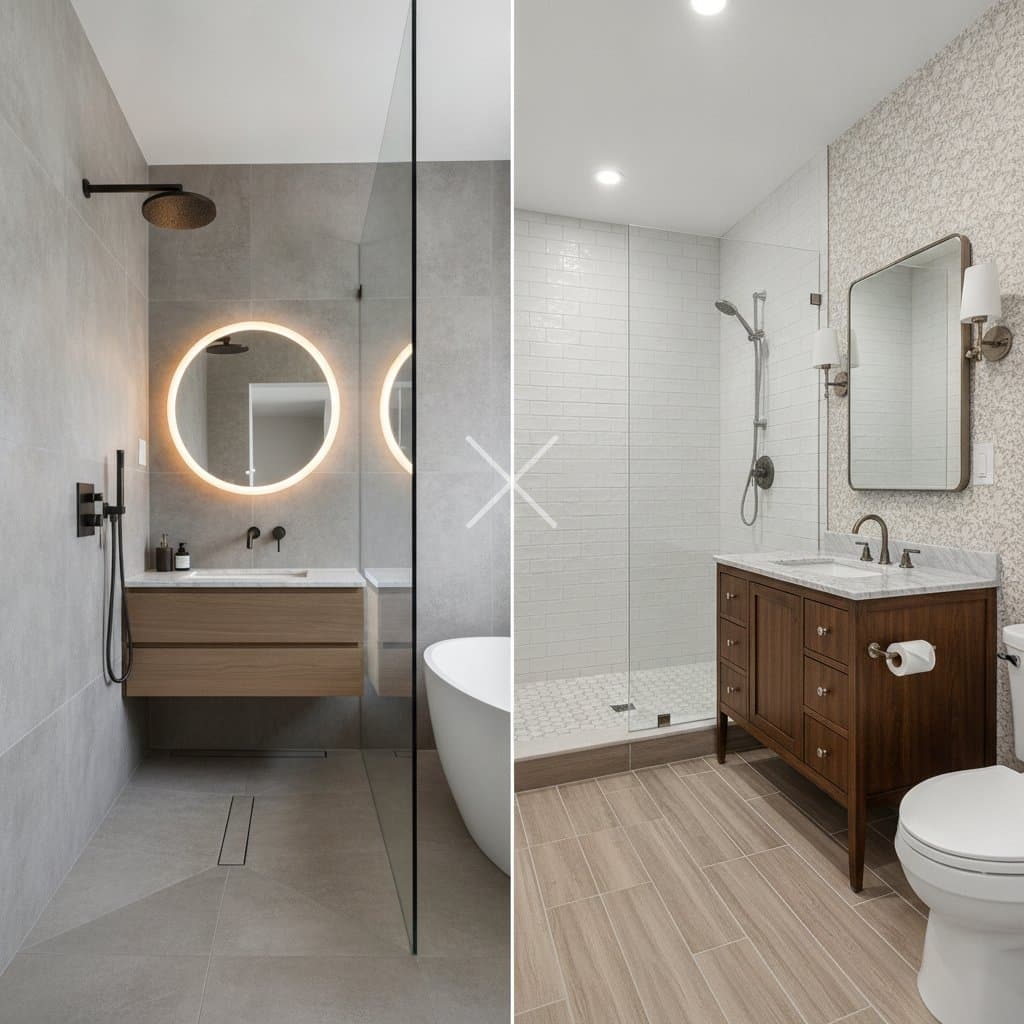
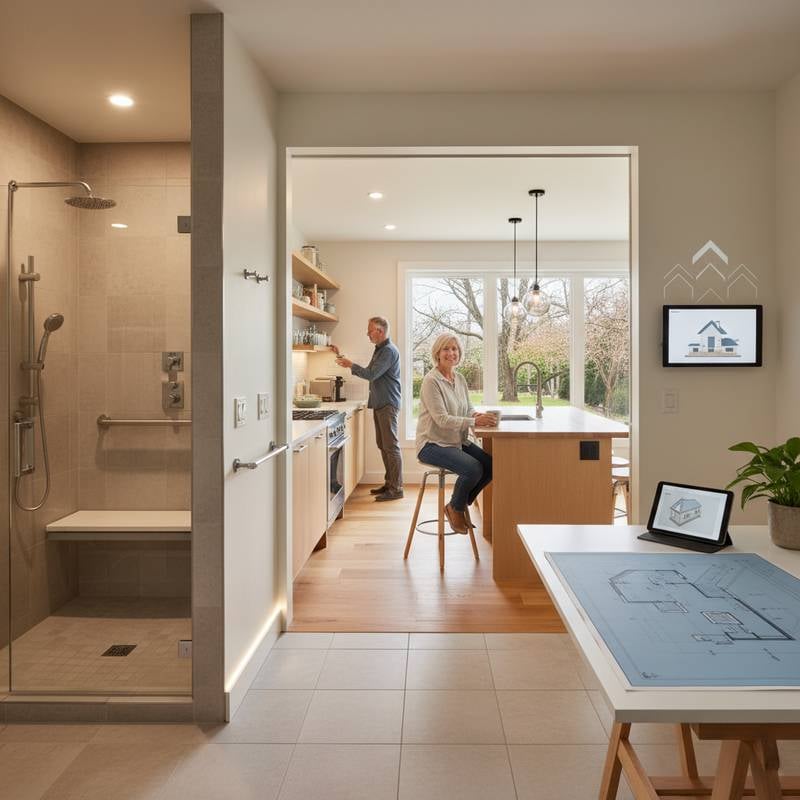
Standard project durations:
- Basic enhancements: 1 to 3 days
- Single-room adaptations: 2 to 4 weeks
- Full-property transformations: 1 to 3 months
Complexity levels:
- Simple safety additions: Straightforward for most
- Room-specific adjustments: Moderately challenging
- Load-bearing alterations: Highly technical
Options for DIY Implementation Versus Professional Services
Certain aging-in-place enhancements suit capable homeowners, while others demand professional intervention to adhere to safety regulations and building codes.
Suitable for DIY efforts:
- Mounting grab bars in bathing areas
- Fitting lever-style door mechanisms
- Upgrading to rocker-style switch plates
- Incorporating high-output LED illumination
Tasks necessitating professionals:
- Expanding doorways or adjusting framing
- Constructing entry ramps or stair modifications
- Redesigning bathing or cooking spaces for mobility aids
- Revising electrical or plumbing infrastructures
Expense contrasts:
- DIY material outlays: $100 to $1,000
- Expert-led projects: $10,000 to $75,000, scaled to project magnitude
Engaging a certified remodeling specialist guarantees adherence to accessibility guidelines and jurisdictional standards.
Guide to Executing a Fundamental Aging-in-Place Enhancement
Step 1: Evaluate the Residence
Conduct a thorough inspection of every area to pinpoint potential obstacles or risks. Concentrate on access points, bathing facilities, and preparation zones.
Verification point: Ensure circulation paths measure at least 36 inches to accommodate assistive devices.
Step 2: Outline Essential Alterations
Rank modifications by urgency and daily relevance. Frequent selections encompass:
- Slip-resistant surfaces in moist environments
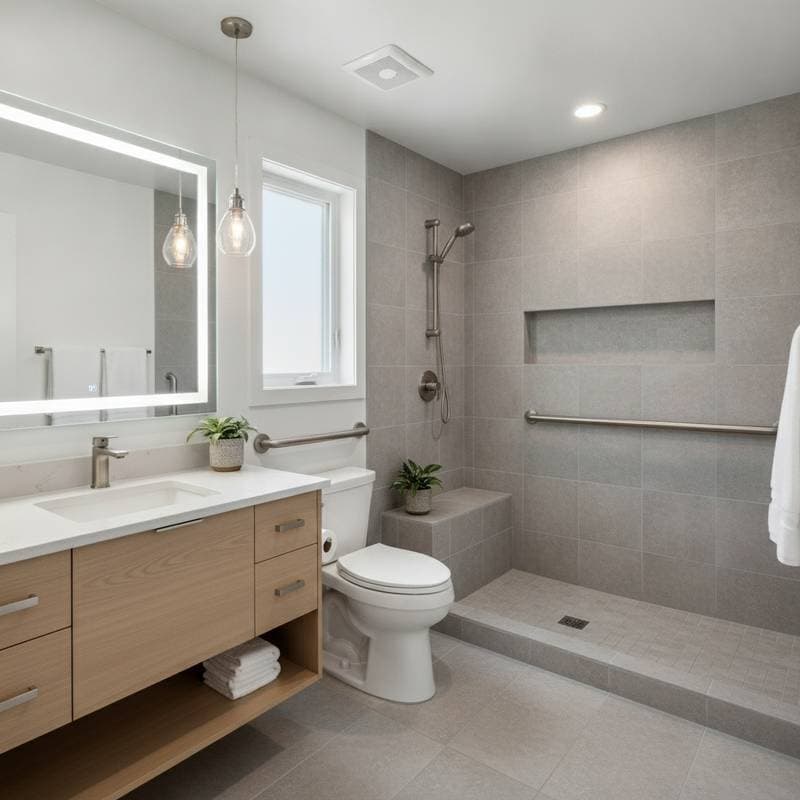
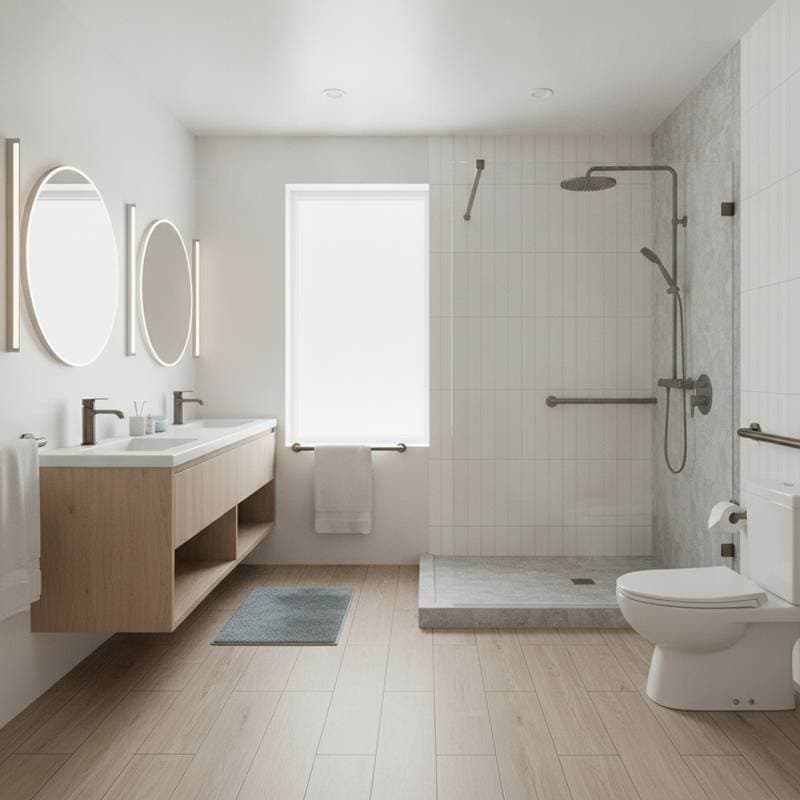
- Entry-less shower enclosures
- Support bars adjacent to lavatories and bathing units
- Ergonomic controls for entries and water fixtures
Verification point: Confirm that adaptations enhance usability without compromising aesthetics.
Step 3: Obtain Necessary Authorizations
Consult the municipal building authority prior to initiating significant projects. Alterations to water or power systems invariably require approvals.
Verification point: Verify that the hired professional incorporates evaluation phases into the timeline.
Step 4: Ready the Area
Clear furnishings and shield existing surfaces against residue. Isolate utilities as appropriate.
Alert: Electrical Precaution Deactivate circuits at the main panel prior to handling receptacles or controls.
Step 5: Integrate Supportive Elements
Execute installations methodically.
- For support bars, align with structural supports and secure using corrosion-resistant fasteners.
- For surfaces, select materials certified for traction in damp conditions.
- For illumination, position units to deliver uniform brightness.
Verification point: Confirm that all components mount securely, align properly, and remain steadfast.
Step 6: Validate Functionality
Traverse the modified zones, simulating mobility challenges if relevant.
Verification point: Pathways must remain unobstructed, levels consistent, and illumination steady.
Essential Safety Precautions and Recommendations
- Alert: Slip Hazard Maintain clear zones devoid of wiring or obstructions.
- Alert: Framing Concerns Avoid disturbing partitions without confirming non-structural nature.
- Utilize protective eyewear, hand coverings, and traction footwear.
- Double-check utility disconnections before commencing.
Resolving Issues and Ensuring Standards
Frequent challenges:
- Support bars detaching: Bolster with internal reinforcements.
- Surface irregularities: Apply gradual inclines or smoothing transitions.
- Inadequate visibility: Upgrade to elevated-output bulbs or automated detectors.
Standard assessments:
- Support elements must withstand 250 pounds of applied pressure.
- Surfaces require firmness without protruding sections.
- Illumination must dispel shadows along routes and elevations.
Post-Project Cleanup and Waste Management
Arrange removal of outdated components and refuse via community facilities. Recoverable items like metallic supports and appliances merit recycling. Thoroughly clear particulates and scrutinize for residual hazards that might impede movement.
Ongoing Care and Durability Expectations
Inspect support bars, guides, and surfaces biannually for stability or degradation. Light-emitting diodes and control mechanisms endure extended periods, yet warrant yearly reviews. Traction flooring sustains 10 to 15 years under routine maintenance with neutral cleaners. Consistent evaluations preserve security and efficacy.
Indicators for Professional Engagement
Seek a qualified specialist when:
- Door expansions or framing adjustments arise.
- Utility system revisions occur.
- Authorizations or oversight prove necessary.
- Advanced features like elevation aids or bespoke inclines integrate.
Specialist expense spectrum:
- Bathing area overhauls: $15,000 to $30,000
- Preparation zone adaptations: $20,000 to $40,000
- Property-wide accessibility initiatives: $40,000 to $75,000
Selection criteria for specialists:
- Valid credentials and coverage
- Proven expertise in inclusive design
- Detailed proposals with guarantees
- Regional endorsements and visual portfolios
Strategies for Optimal Outcomes
Initiate planning prior to mobility constraints intensify. Commence with high-traffic zones and progress incrementally. Sustain open routes, vivid lighting, and uniform planes to foster enduring independence.