Concrete Alternatives That Cut Emissions While Matching Strength
Concrete remains essential to construction because of its proven strength. Environmental pressures and material shortages now encourage builders to consider substitutes. These options can lower carbon output, enhance insulation, and deliver comparable or superior results in specific applications.
This guide examines several alternatives. It presents costs, performance metrics, and practical uses to guide project planning.
Factors Driving Interest in Sustainable Options
Cement production generates substantial carbon dioxide. Each cubic yard of conventional concrete can emit hundreds of pounds of the gas. Homeowners and contractors who must meet sustainability targets or local regulations therefore evaluate substitutes that retain structural integrity.
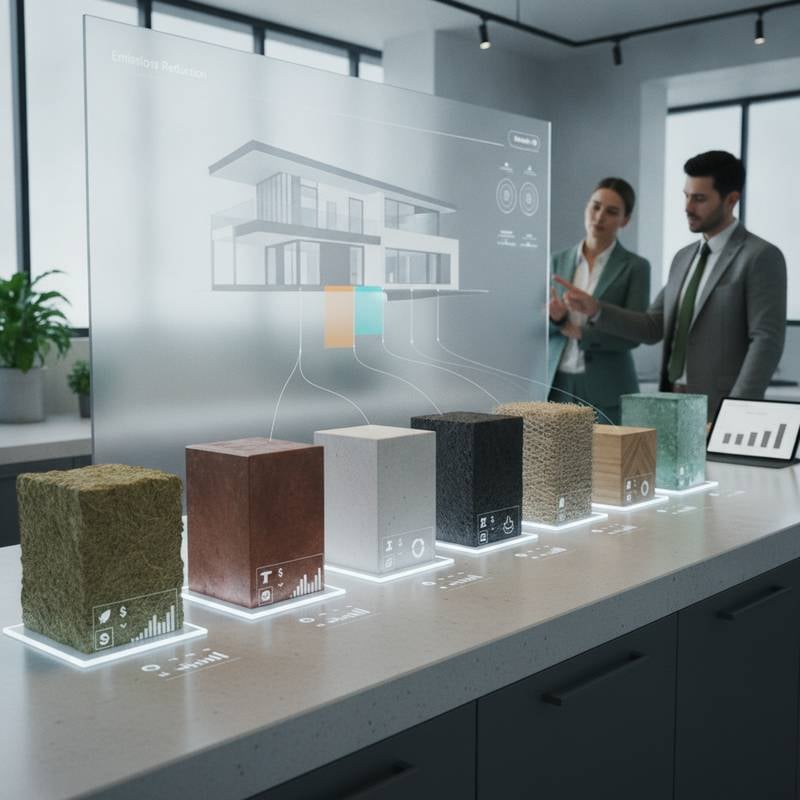
Materials such as geopolymer concrete, rammed earth, and timbercrete now function as reliable structural choices. Several provide better thermal regulation and moisture control than standard mixes.
Geopolymer Concrete
Geopolymer concrete substitutes industrial byproducts for Portland cement. The approach can reduce emissions by as much as 80 percent and often equals or exceeds conventional compressive strength.
Cost and ROI
- Average cost: $110 to $130 per cubic yard
- Standard concrete: $100 to $120 per cubic yard
- ROI: Strong because of extended service life and lower upkeep
Performance
The mixes resist chemical attack and suit marine or sulfate-rich sites. They also harden more quickly and exhibit reduced shrinkage.
Installation Considerations
Precise proportioning and temperature management are required. Engage contractors familiar with geopolymer systems rather than attempting DIY work.
Implementation Tips
- Source binders from specialists in geopolymer technology.
- Use the material for slabs, foundations, and load-bearing walls.
- Verify code acceptance in your jurisdiction before proceeding.
Rammed Earth
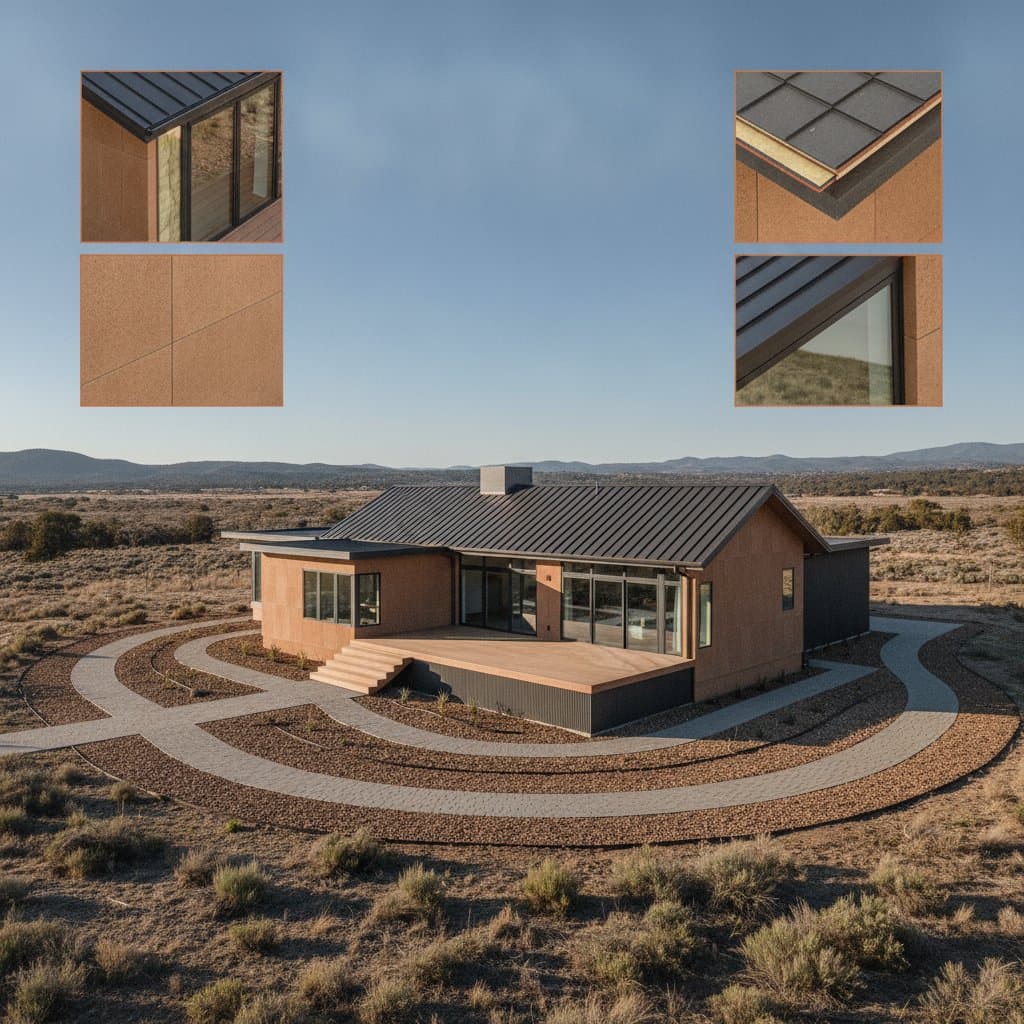
Rammed earth walls are formed from compacted soil, sand, and minimal stabilizer. The result offers a distinctive appearance and substantial thermal mass.
Cost and ROI
- Average cost: $60 to $100 per square foot of wall area
- ROI: Extended lifespan and negligible maintenance recover initial expense
Performance
Walls resist fire and moderate indoor temperatures naturally. They perform best in arid regions and need moisture protection in wet climates.
Installation Considerations
Small nonstructural projects can be completed by skilled DIYers. Structural walls require professional engineering and execution.
Implementation Tips
- Analyze local soil for suitable composition.
- Apply vapor-permeable sealers to enhance water resistance.
- Integrate passive solar strategies to maximize energy performance.
Timbercrete
Timbercrete blends sawdust with cement and binders to produce lightweight blocks. Trapped air improves insulation while lowering overall weight.
Cost and ROI
- Average cost: $10 to $14 per square foot of wall area
- ROI: Energy savings and reduced transport costs deliver value
Performance
Blocks provide adequate strength for residential walls, strong acoustic isolation, and surfaces that accept finishes readily.
Installation Considerations
Decorative or low-load features can be assembled by experienced DIYers. Multistory or load-bearing applications need professional supervision.
Implementation Tips
- Protect surfaces with suitable coatings in humid conditions.
- Pair blocks with reinforced framing on taller structures.
- Specify factory-cured units for uniform quality.
Cost and Performance Overview
| Material | Average Installed Cost | Load-Bearing Use | Insulation Quality | Carbon Reduction Potential |
|---|---|---|---|---|
| Concrete | $100 to $120 per cubic yard | Yes | Moderate | Low |
| Hempcrete | $12 to $18 per square foot | Partial | High | Very High |
| Geopolymer Concrete | $110 to $130 per cubic yard | Yes | Moderate | High |
| Recycled Aggregate Concrete | $95 to $110 per cubic yard | Yes | Moderate | Medium |
| Rammed Earth | $60 to $100 per square foot | Yes | High | High |
| Ferrock | $120 to $150 per cubic yard | Yes | Moderate | Very High |
| Timbercrete | $10 to $14 per square foot | Partial | High | High |
| Mycelium Composite | $12 to $20 per square foot | No | Very High | Very High |
Approaches That Control Project Expenses
- Pair materials deliberately. Combine load-bearing geopolymer concrete with hempcrete infill or recycled aggregates to balance strength and budget.
- Obtain supplies from nearby producers. Reduced hauling distances cut both cost and emissions.
- Favor modular components. Prefabricated panels limit waste and speed assembly.
- Project long-term energy returns. High-insulation choices such as hempcrete or timbercrete typically offset premiums through utility savings within several years.
- Incorporate reclaimed content. Recycled aggregates and wood byproducts can lower material outlays by up to 20 percent.
Common Questions Answered
What is the strongest concrete substitute?
Ferrock currently records the highest compressive strength and surpasses traditional concrete in multiple laboratory evaluations.
Which option carries the lowest environmental impact?
Hempcrete and mycelium composites sequester carbon during manufacture, resulting in the smallest overall footprint.
Can hempcrete be used below grade?
No. It lacks the compressive capacity required for foundations yet functions effectively as wall insulation or infill.
How do service lives compare with conventional concrete?
Properly installed geopolymer concrete and rammed earth routinely match or exceed the durability of traditional concrete, often lasting decades with limited maintenance.
Matching Materials to Project Requirements
Evaluate site conditions, structural demands, and climate before selection. Prioritize local availability and code compliance to streamline permitting. Test small mock-ups when introducing unfamiliar systems. These steps help secure both performance and environmental goals on residential and commercial builds.