Flood-Proof Homes: Elevation and Waterproofing Costs in 2026
Flooding poses significant risks to a home's structure, safety, and overall value. Homeowners in flood-prone regions benefit from proactive measures such as elevation and waterproofing to minimize future repair expenses and eliminate ongoing concerns. This guide details the essentials of flood-proofing, the mechanics of home elevation, and anticipated costs for foundation upgrades or waterproofing installations in 2026.
Understanding Flood-Proofing
Flood-proofing encompasses techniques designed to enable a home to withstand or recover swiftly from water exposure. The primary strategies involve elevation and waterproofing.
- Elevation lifts the entire structure above anticipated flood levels, typically to comply with local floodplain standards.
- Waterproofing applies barriers or reinforcements to block or restrict water entry into walls, basements, and foundations.
Integrating both approaches yields optimal results. Elevation safeguards against substantial inundation, whereas waterproofing addresses gradual moisture intrusion from rainfall or rising groundwater.
Why Elevation and Waterproofing Matter
Water penetration compromises foundation integrity, promotes wood rot in framing elements, and endangers electrical components. Post-flood reconstruction demands substantial financial outlay compared to preventive investments. Implementing elevation and sealing enhances resilience, curtails recurring damages, and extends the home's service life. Such upgrades frequently qualify for reduced insurance rates and attract prospective buyers seeking reliable, hassle-free properties.
Waterproofing Strategies for Flood-Prone Homes
Elevation effectively bars major floodwaters, yet waterproofing provides essential defense against lesser water events and subsurface moisture. These methods establish protective envelopes around the foundation and lower-level exteriors.
1. Exterior Waterproof Coatings
Specialized membranes or elastomeric coatings applied to external walls form seamless shields against infiltrating moisture. These materials flex with minor structural shifts, accommodating small fissures without failure. They prove particularly effective on concrete blocks or brick foundations.
Such coatings halt water at the surface, preserving internal dryness. For enhanced performance, integrate them with site grading that slopes away from the structure and subsurface drainage lines to channel runoff efficiently. In 2026, installation costs range from $8 to $15 per square foot, depending on surface preparation and coating thickness.
2. Interior Sealants
Sealants or epoxy-based coatings brushed onto basement or crawlspace interiors curb dampness penetration and inhibit mold proliferation. This approach suits scenarios where external access proves challenging.
Interior treatments enhance indoor air circulation and fortify wall longevity without disruptive digging. Pair them with sump pumps that activate during high humidity or with dehumidification units to maintain optimal conditions. Expect expenses of $4 to $10 per square foot in 2026, inclusive of surface cleaning and multiple application layers.
3. Drainage and Sump Systems
Perimeter drains, often configured as French drains, capture excess groundwater and route it toward sump pumps for expulsion. These setups avert water accumulation adjacent to the foundation.
By alleviating hydrostatic pressure, they safeguard walls from bulging or cracking. Bolster effectiveness through gravel-filled trenches and overlying waterproof membranes for comprehensive layering. 2026 pricing typically falls between $2,000 and $6,000 for a standard 1,000-square-foot perimeter, varying by soil permeability and pump capacity.
4. Foundation Venting
Strategic vents in foundation walls permit floodwaters to pass through, diffusing pressure buildup. This technique mitigates strain during brief submersion episodes.
Pressure equalization prevents fractures and upheaval. Equip vents with rust-resistant grilles and schedule debris clearance biannually. Costs in 2026 hover around $500 to $1,500 per installation, scaled to the number of vents required.
Style and Structural Considerations
Elevating a residence alters its silhouette and spatial dynamics, necessitating thoughtful aesthetic integration. Proper execution elevates visual harmony alongside physical elevation.
Architectural Balance
Post-elevation modifications to steps, handrails, and door thresholds preserve proportional elegance. Employ matching veneers like textured brick or toned concrete for infill walls to harmonize with existing exteriors.
Landscaping Adjustments
Revised grading and water diversion influence outdoor usability and aesthetics. Incorporate subtle inclines, low-profile retaining barriers, and native vegetation to control erosion while enhancing landscape appeal. Moisture-tolerant species such as ferns or willows stabilize earth and absorb surplus runoff.
Material Choices
Opt for resilient exteriors in vulnerable zones, including fiber-cement panels, natural stone facings, or advanced masonry sealers. These selections endure wet conditions without aesthetic compromise, ensuring a refined appearance over time.
Practical Tips for Flood-Proof Remodeling
-
Start with a Professional Assessment
Engage a certified structural engineer or flood specialist to analyze soil composition, existing foundation stability, and prevalent water flow patterns. This evaluation identifies tailored solutions and potential vulnerabilities. -
Check Local Requirements
Review zoning ordinances for mandatory lift heights or material specifications in designated flood areas. Secure necessary approvals early to avoid project delays. -
Consider Maintenance Costs
Budget for routine evaluations of coatings and drainage components, with resealing or pump servicing recommended every three to five years. Proactive upkeep sustains performance and averts minor issues from escalating. -
Combine Elevation with Energy Efficiency
During the lift process, incorporate rigid foam insulation and airtight seals around the perimeter. Exposed undercarriages demand robust barriers against drafts to optimize climate control. -
Factor in Insurance Savings
Document all enhancements, including elevation surveys, to negotiate premium reductions with insurers. Verified protections often yield 20 to 50 percent discounts on flood coverage.
Costs of Home Elevation in 2026
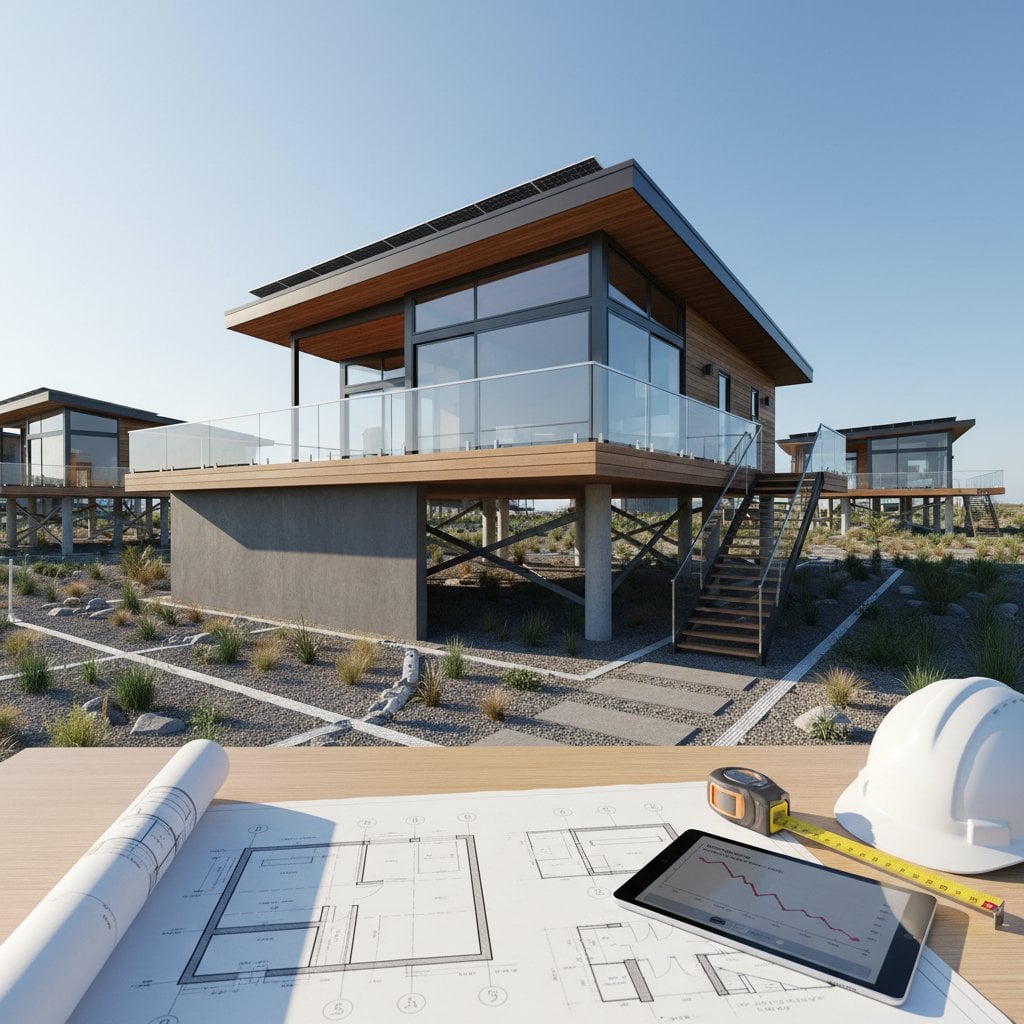
Lifting a home requires hydraulic jacks, temporary supports, and reinforced pilings or piers. For a single-story structure, costs range from $100,000 to $300,000, influenced by size, soil conditions, and height increase. Multi-story homes or those on expansive lots incur higher fees due to complex engineering. These investments typically recoup through halved repair expenditures and elevated market value, often appreciating by 10 to 15 percent in resilient designs.
Implementing Your Flood-Resilient Upgrade
Embark on flood-proofing by mapping your property's exposure via flood maps and historical data. Solicit bids from contractors versed in elevation techniques and barrier applications. Weigh options that align upfront expenses with enduring safeguards and aesthetic preservation.
In elevated-risk locales, prioritize structural lifts augmented by perimeter waterproofing for comprehensive shielding. For moderate rainfall zones, focus on internal barriers and drainage enhancements to thwart insidious dampness. These targeted interventions secure your home's integrity, value, and habitability against evolving climate challenges.