The Real 2026 Costs for Aging-in-Place Remodels
Aging-in-place remodeling helps you stay comfortable and independent in your home as your needs change. This type of renovation focuses on accessibility, safety, and long-term usability. Understanding the real costs can help you plan a project that fits both your goals and your budget.
What Aging-in-Place Remodeling Means
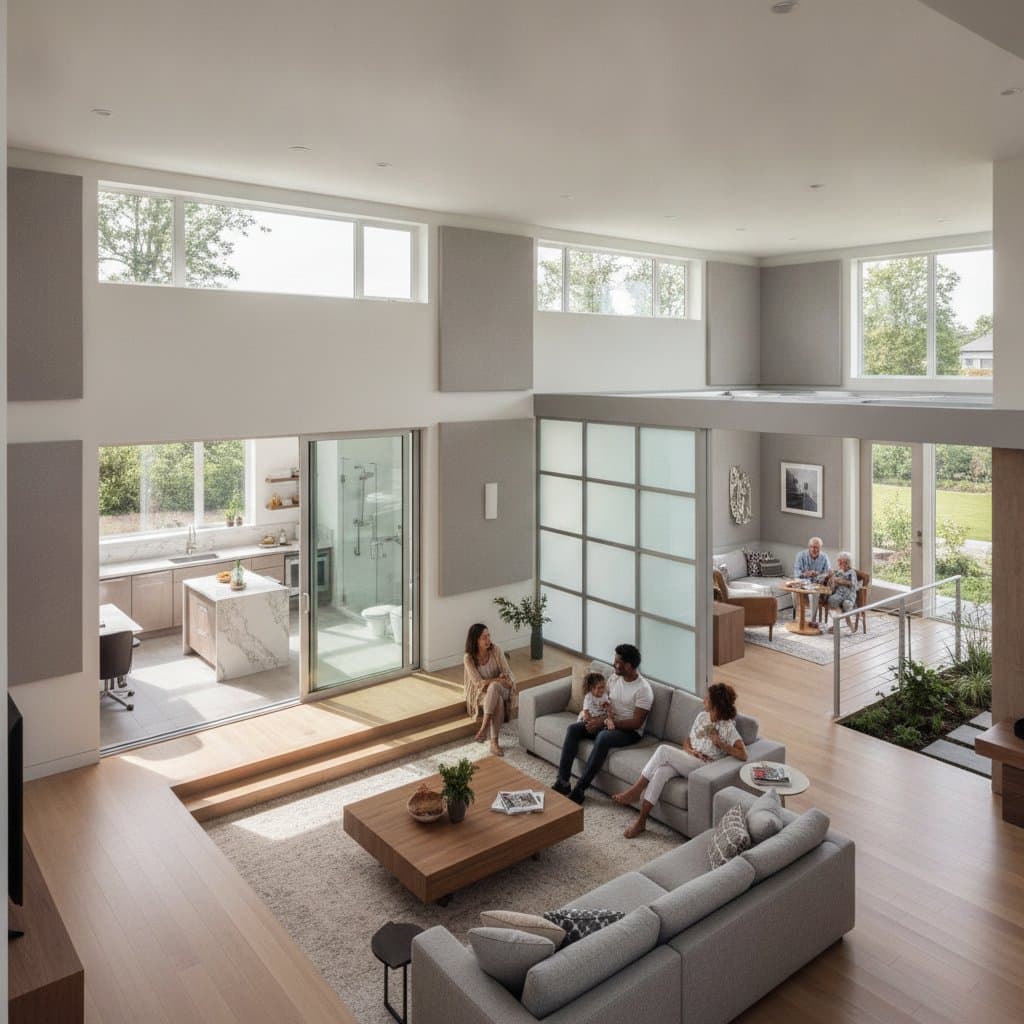
Aging-in-place design, sometimes called universal design, creates a space that supports mobility, safety, and ease of use for all ages. It includes both small accessibility updates and larger structural changes. The goal is to make your home functional without losing its warmth or style.
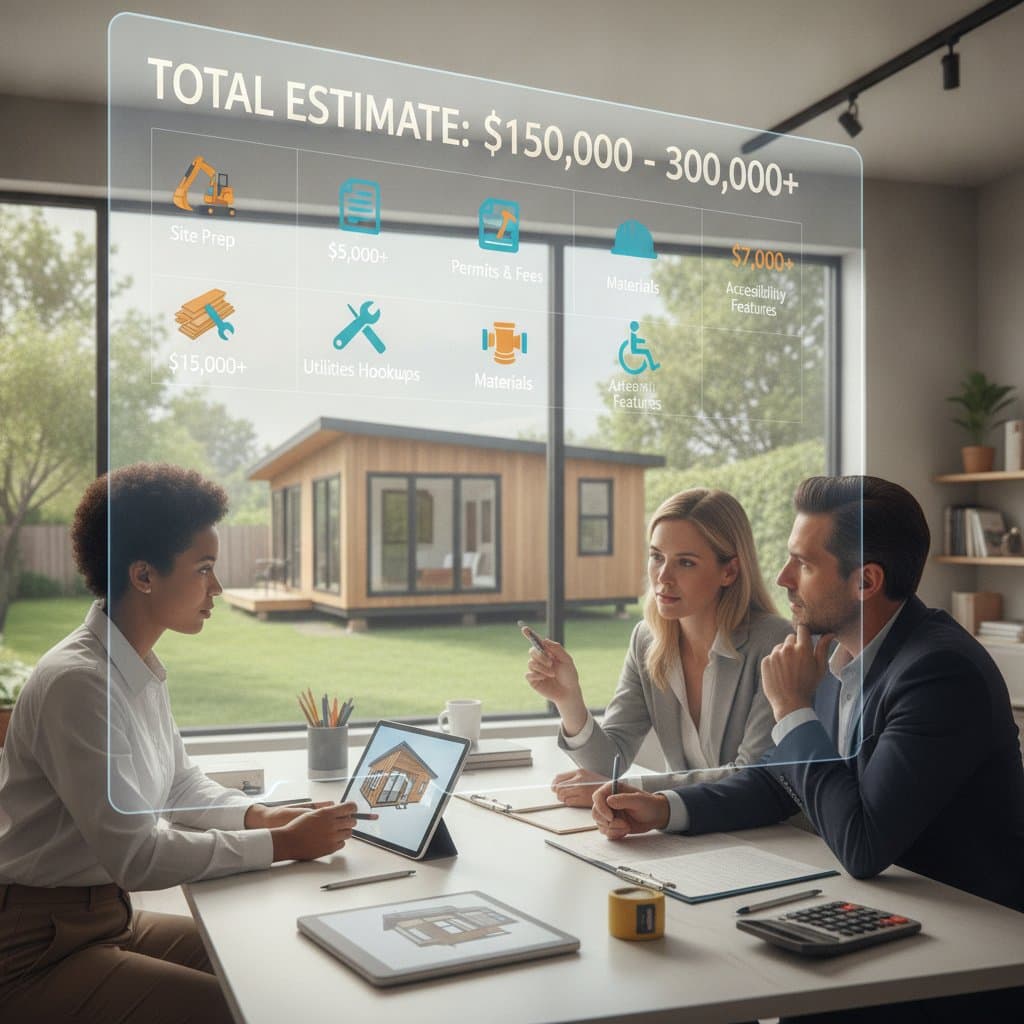
Projects can range from a few thousand dollars for minor updates to major renovations that reach six figures. The scale depends on the home’s size, layout, and existing condition.
Key Factors That Affect Cost
Several variables influence what you will spend on an aging-in-place remodel:
- Scope of the project – A bathroom update costs far less than a full-home remodel.
- Existing layout – Older homes may need structural work before accessibility improvements can be added.
- Material choices – Durable, slip-resistant surfaces or smart fixtures cost more upfront but last longer.
- Professional labor – Accessibility specialists, electricians, and plumbers all add to total cost.
- Regional pricing – Labor and material costs vary by area, especially for specialized trades.
Common Aging-in-Place Upgrades and What They Cost
Each space in your home has unique needs. The following are typical upgrades and what you can expect to invest.
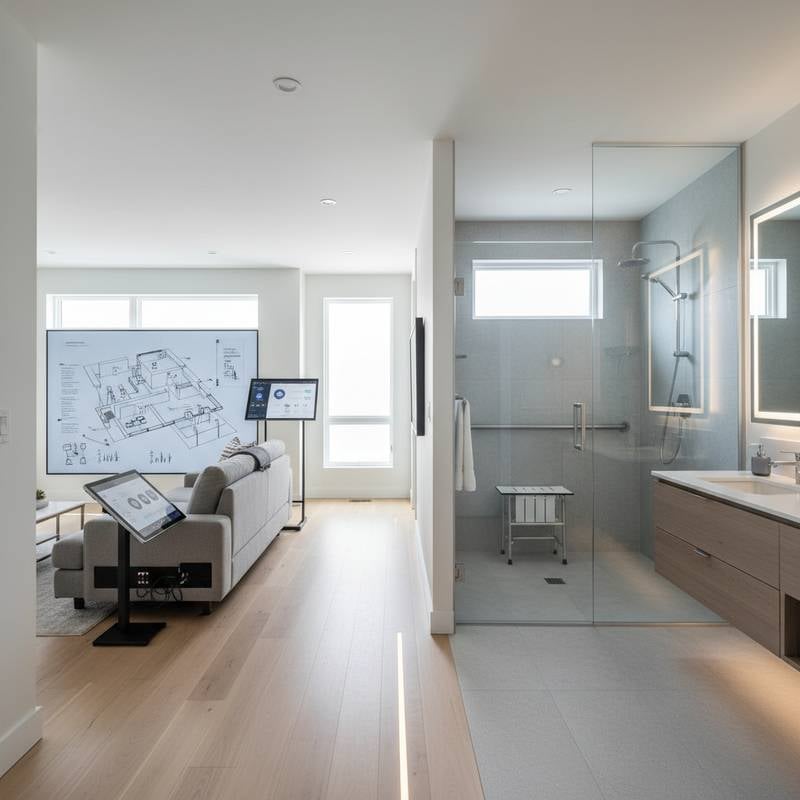
- Accessible Bathrooms
- Why it matters: Bathrooms are high-risk areas for slips and falls.
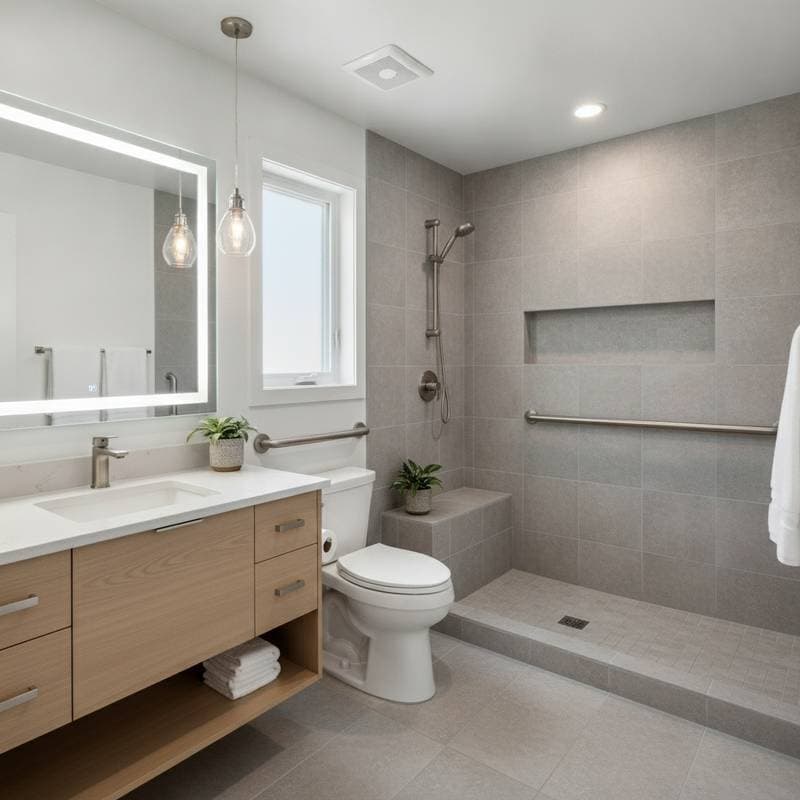
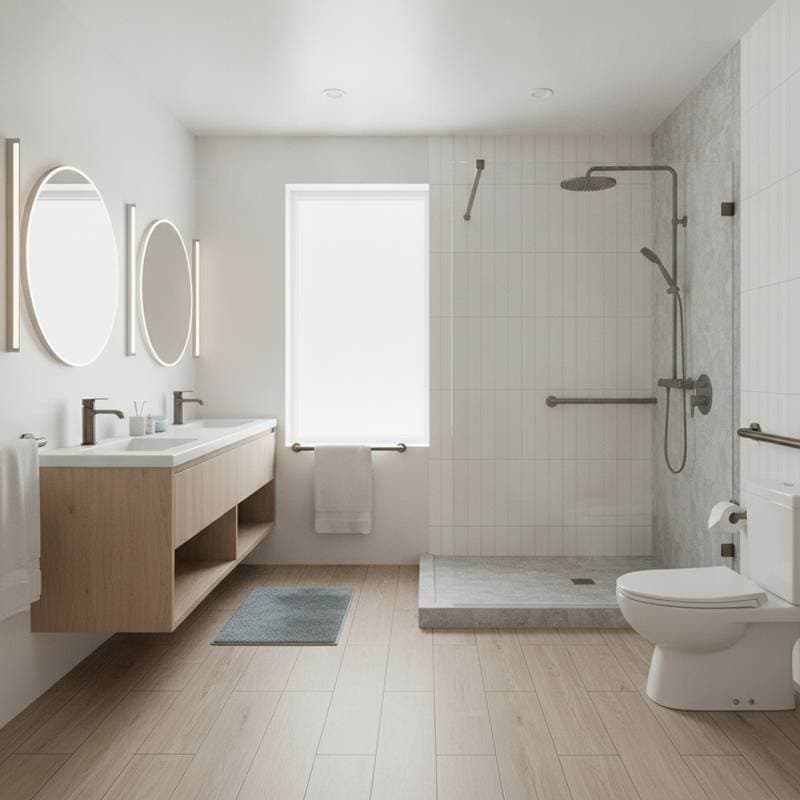
- Typical features: Walk-in showers, grab bars, bench seating, handheld showerheads, and slip-resistant flooring.
- Estimated cost: Around the mid-five-figure range for a full remodel, or a few thousand for targeted updates.
- Pairing ideas: Combine light, matte tile finishes with contrasting trim to improve visibility.
- Kitchen Modifications
- Why it matters: The kitchen should function comfortably for seated and standing use.
- Typical features: Lowered countertops, adjustable-height work surfaces, pull-out shelves, and lever-handled faucets.
- Estimated cost: Varies widely depending on cabinetry and appliance changes, often starting in the five-figure range.
- Pairing ideas: Choose smooth, easy-to-clean materials that resist staining and allow light to reflect evenly.
- Entry and Pathway Improvements
- Why it matters: Safe, step-free access prevents daily strain.
- Typical features: Ramps, wider doorways, zero-threshold entries, and improved lighting.
- Estimated cost: A few thousand for basic modifications, more for full structural adjustments.
- Pairing ideas: Coordinate ramp finishes with exterior siding or stonework for visual harmony.
- Living Area Adjustments
- Why it matters: Open layouts make movement easier and reduce fall hazards.
- Typical features: Non-slip flooring, wider hallways, lever-style handles, and improved lighting control.
- Estimated cost: Smaller updates can be modest, while full layout changes increase cost.
- Pairing ideas: Use warm, low-sheen flooring that provides grip and comfort underfoot.
- Smart Home Features
- Why it matters: Technology supports independence and safety.
- Typical features: Voice-controlled lighting, automated blinds, and security systems.
- Estimated cost: Starting in the low thousands for basic systems.
- Pairing ideas: Match fixture finishes with existing décor for a cohesive look.
Balancing Design and Function
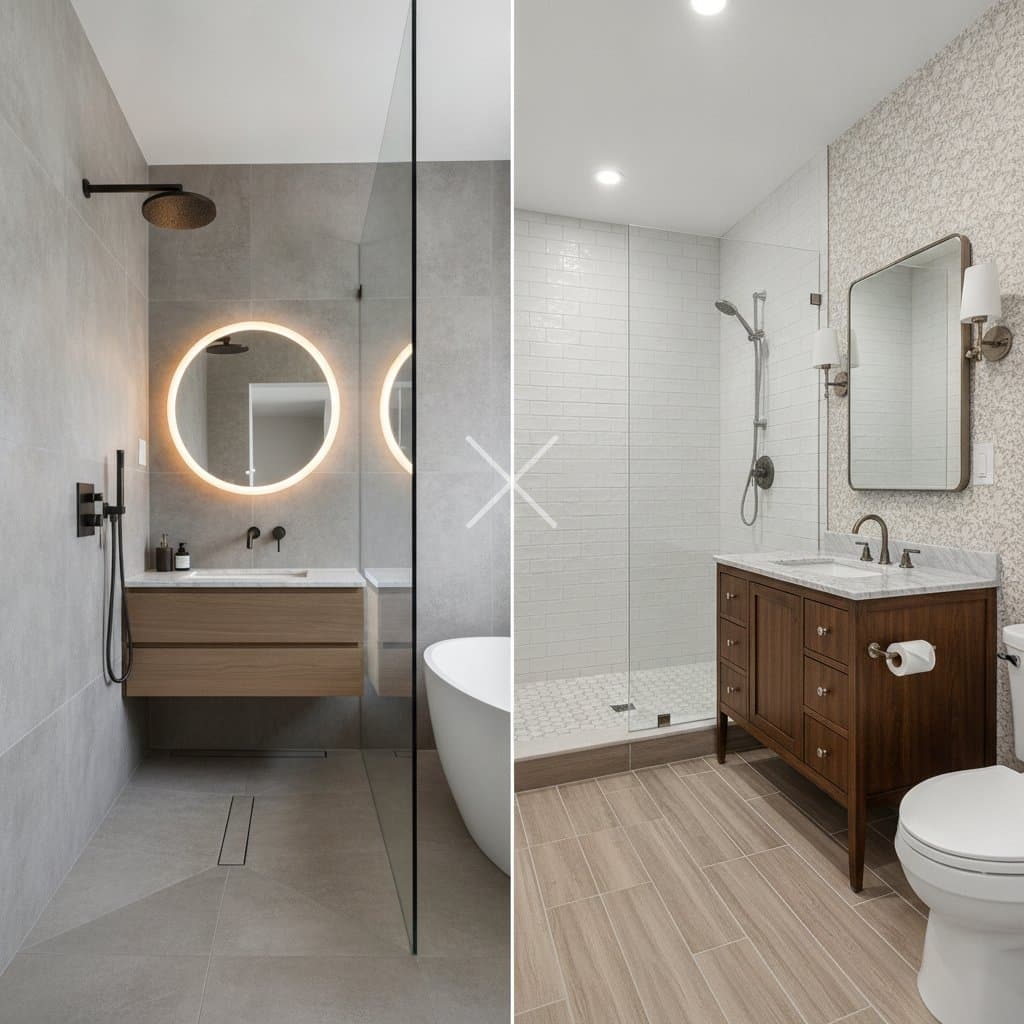
Universal design does not have to look clinical. Neutral colors, layered lighting, and thoughtful materials create a comfortable aesthetic. Prioritize contrast to help with visibility, and select finishes that resist moisture and wear. Subtle details, like matte cabinet hardware and rounded corners, increase safety without drawing attention.
Making Smart Budget Choices
Start by identifying high-use areas. Upgrading bathrooms and entries often delivers the greatest benefit. Combine projects when possible to save on labor and materials. If you plan to stay long term, invest in durable products that reduce maintenance. For large-scale work, hire professionals familiar with accessibility codes and universal design standards.
Maintaining Your Investment
Once your remodel is complete, keep it in good condition. Schedule regular checks for grab bar stability, flooring wear, and lighting performance. Small maintenance tasks protect your investment and ensure your home continues to meet your needs comfortably and safely.