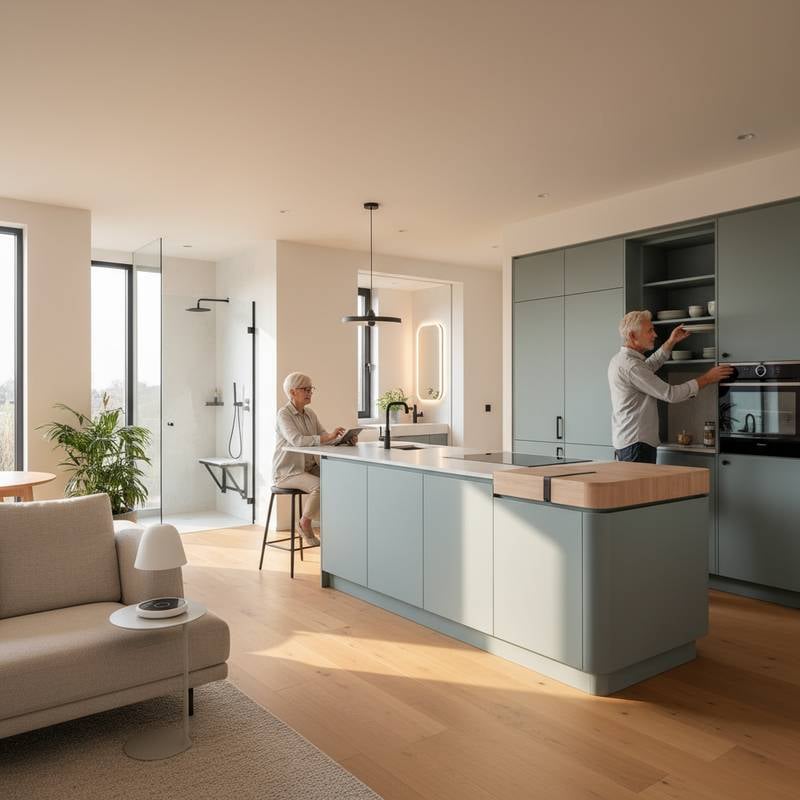
Must-Have Features and Costs for Aging in Place
Creating a home that supports comfort, safety, and independence as individuals age enables them to remain in familiar surroundings for extended periods. This guide details essential remodeling features that simplify daily tasks and enhance security, accompanied by typical cost estimates to facilitate informed planning.
Understanding Aging-in-Place Design
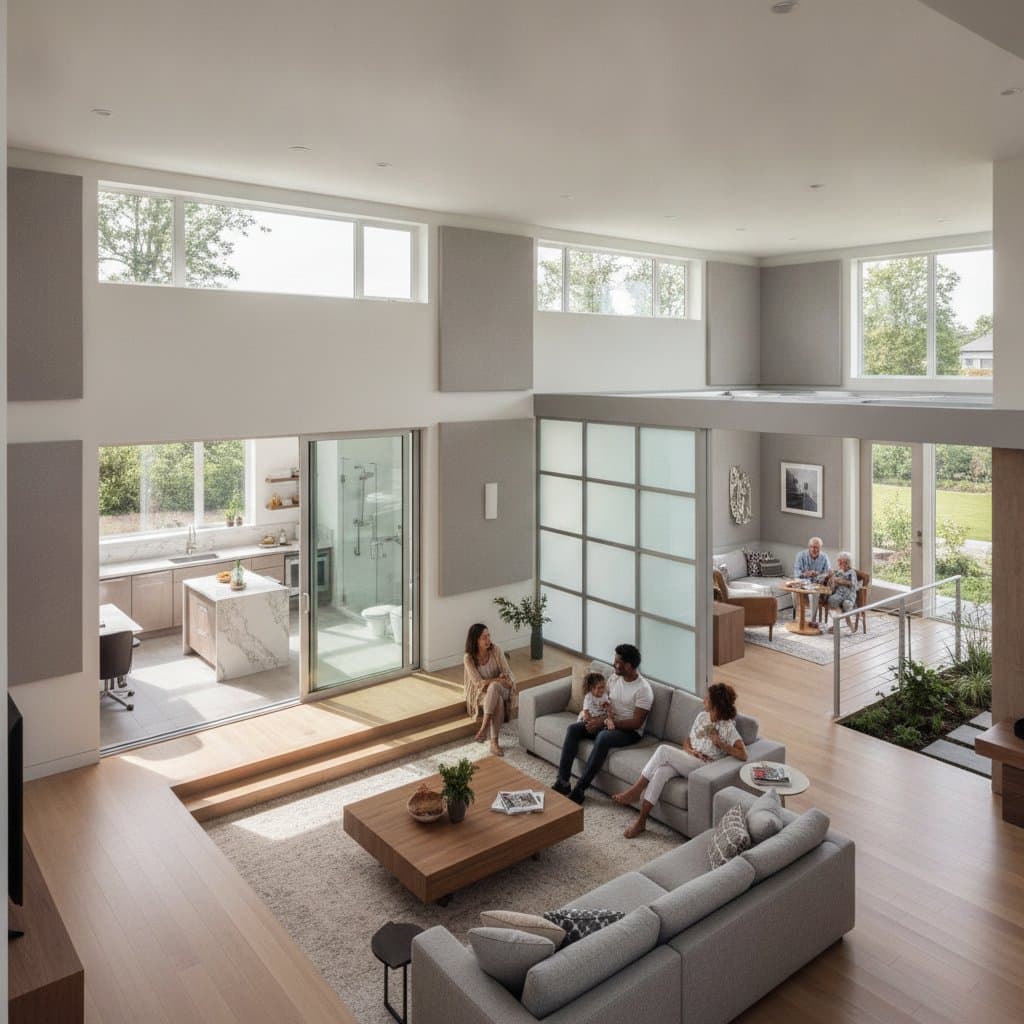
Aging-in-place design emphasizes accessibility, minimal upkeep, and flexibility to accommodate changing needs. The objective is to eliminate obstacles, bolster safety measures, and streamline routine activities for greater ease. These modifications adhere to universal design principles, ensuring the space accommodates users of diverse ages and capabilities. Effective implementation merges functionality with aesthetic appeal, resulting in an environment that remains welcoming and responsive.
1. Step-Free Entryways
Why it works: A zero-step entry facilitates seamless passage for mobility aids such as walkers or wheelchairs, while also mitigating risks of stumbling.
Design tips: Incorporate subtle ramps or sloped pathways in place of stairs. Select durable, slip-resistant surfaces like brushed concrete or interlocking pavers with enhanced traction.
Cost range: Temporary ramps might cost $200 to $500, whereas permanent installations integrated into the landscape often range from $2,000 to $5,000, depending on length and materials.
2. Wider Doorways and Hallways
Why it works: Narrow doors impede the use of assistive devices; broadening them to a minimum of 36 inches wide streamlines navigation between spaces.
Design tips: Opt for lever-style handles over traditional knobs for effortless operation. Maintain uniform flooring heights to avoid abrupt changes that could cause trips.
Cost range: Each doorway expansion typically costs $300 to $800, influenced by wall composition, framing adjustments, and finishing touches like paint or trim.
3. Accessible Bathrooms
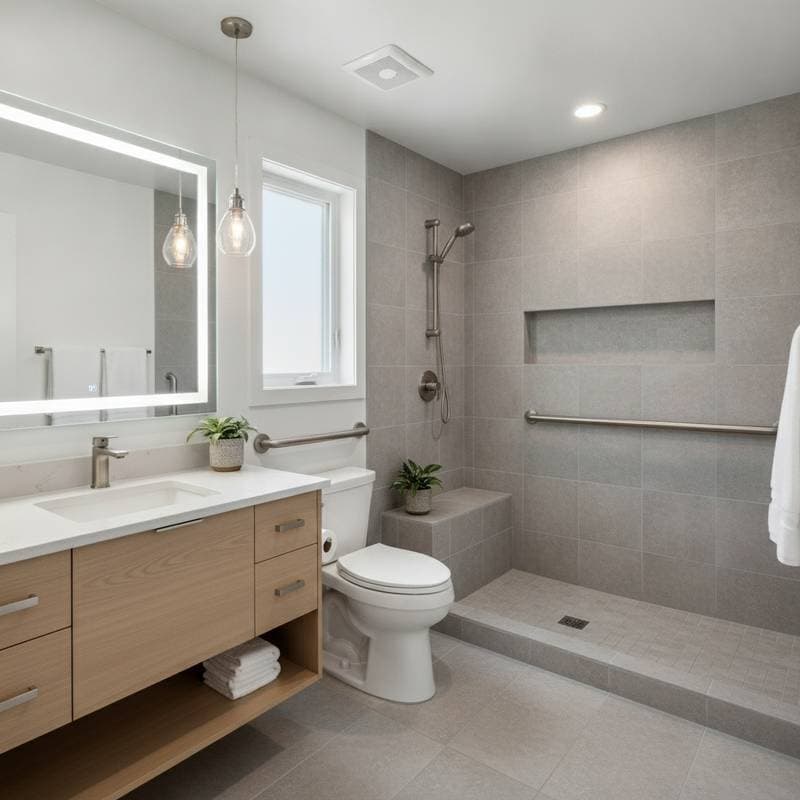
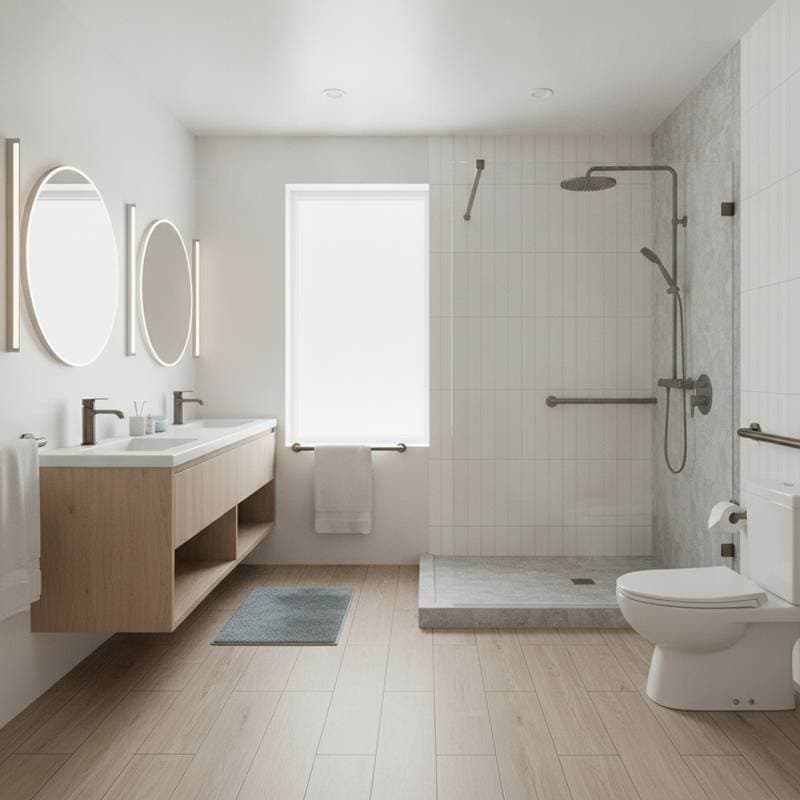
Why it works: Bathrooms present frequent opportunities for accidents due to wet surfaces; features like curbless showers or walk-in tubs provide secure entry without compromising elegance.
Design tips: Position reinforced grab bars adjacent to the toilet and within the shower area. Integrate a adjustable-height handheld showerhead and opt for textured, non-slip flooring tiles. A floating vanity sink offers ample legroom for wheelchair users.
Cost range: Targeted accessibility upgrades start at $5,000 for basic enhancements, escalating to $15,000 or more for comprehensive overhauls involving new plumbing, fixtures, and waterproofing.
4. Kitchen Adjustments
Why it works: Thoughtful kitchen modifications promote ergonomic preparation and cleanup, reducing physical exertion through elements like reachable storage and intuitive controls.
Design tips: Install countertops at variable heights, typically 28 to 34 inches for seated access, paired with pull-out drawers and lazy Susans for pantry organization. Add LED strips beneath cabinets to illuminate workspaces, and consider touchless faucets to minimize bending.
Cost range: Selective modifications, such as hardware replacements and shelving additions, begin at $1,500; a complete kitchen reconfiguration can exceed $20,000 based on cabinetry and appliance selections.
5. Improved Lighting and Contrast
Why it works: Dim or uneven illumination challenges vision as people age; strategic lighting and high-contrast elements sharpen perception of surroundings.
Design tips: Combine overhead ambient lights with focused task lighting over counters and reading areas, supplemented by adjustable wall sconces. Apply paint schemes where floors contrast with walls by at least 70 percent in lightness to highlight edges and obstacles.
Cost range: Basic fixture swaps and bulb upgrades cost $200 to $600; extensive installations with dimmers and smart controls may reach $2,000 to $4,000.
6. Non-Slip Flooring and Clear Pathways
Why it works: Textured yet smooth flooring surfaces curb slippage, while unobstructed routes support confident movement throughout the home.
Design tips: Choose resilient options such as luxury vinyl plank or cushioned cork, both offering inherent slip resistance and comfort underfoot. Remove or secure area rugs, and ensure hallways measure at least 36 inches wide with no protruding furniture.
Cost range: Room-scale flooring replacements average $3 to $8 per square foot, totaling $1,500 to $4,000 for a standard living area, varying by material durability and installation complexity.
7. Smart Home Features
Why it works: Automated systems augment vigilance and ease, allowing remote monitoring and hands-free operation to prevent isolation or oversight.
Design tips: Deploy motion-activated hallway lights, automated door locks, and fall-detection sensors linked to emergency contacts. Prioritize user-friendly interfaces compatible with devices like Amazon Echo or Google Home for voice commands.
Cost range: Individual devices, such as smart bulbs or thermostats, cost $50 to $200 each; comprehensive setups with professional wiring can total $3,000 to $10,000.
Planning and Implementing Your Remodel
Approach aging-in-place updates as a strategic process, beginning with an assessment of high-traffic areas to prioritize interventions that yield the greatest impact on safety and usability. Engage a specialist in universal design for evaluations involving load-bearing alterations or code compliance. Simpler tasks, including installing grab bars or swapping out light bulbs, suit hands-on efforts, whereas structural shifts like ramp construction demand licensed professionals to ensure longevity and adherence to building standards.
These targeted enhancements not only safeguard well-being but also foster an enduring sense of autonomy and serenity within the home.