Mass Timber vs. Traditional Construction: A Detailed Cost Analysis
Selecting mass timber over steel or concrete extends beyond initial design preferences. This choice shapes overall expenses, timeline efficiency, and ongoing upkeep. A thorough evaluation enables project teams to align financial constraints with performance expectations and ecological priorities.
This analysis examines mass timber alongside steel and concrete, highlighting cost variations and projecting outcomes over the building's lifespan.
Essential Cost Components
Cost assessments between mass timber and conventional options demand attention to upfront and ancillary expenditures. The sections below identify opportunities for economies or added investments.
Material Expenses
Mass timber components, such as cross-laminated timber (CLT) panels and glued-laminated (glulam) beams, command a premium per cubic foot relative to untreated concrete or structural steel. This stems from engineered fabrication, reliance on specialized mills, and variable supply chains across locales.
Steel and concrete benefit from abundant domestic production, yielding competitive per-unit pricing. Yet comprehensive evaluations incorporate subsequent treatments and workforce demands.
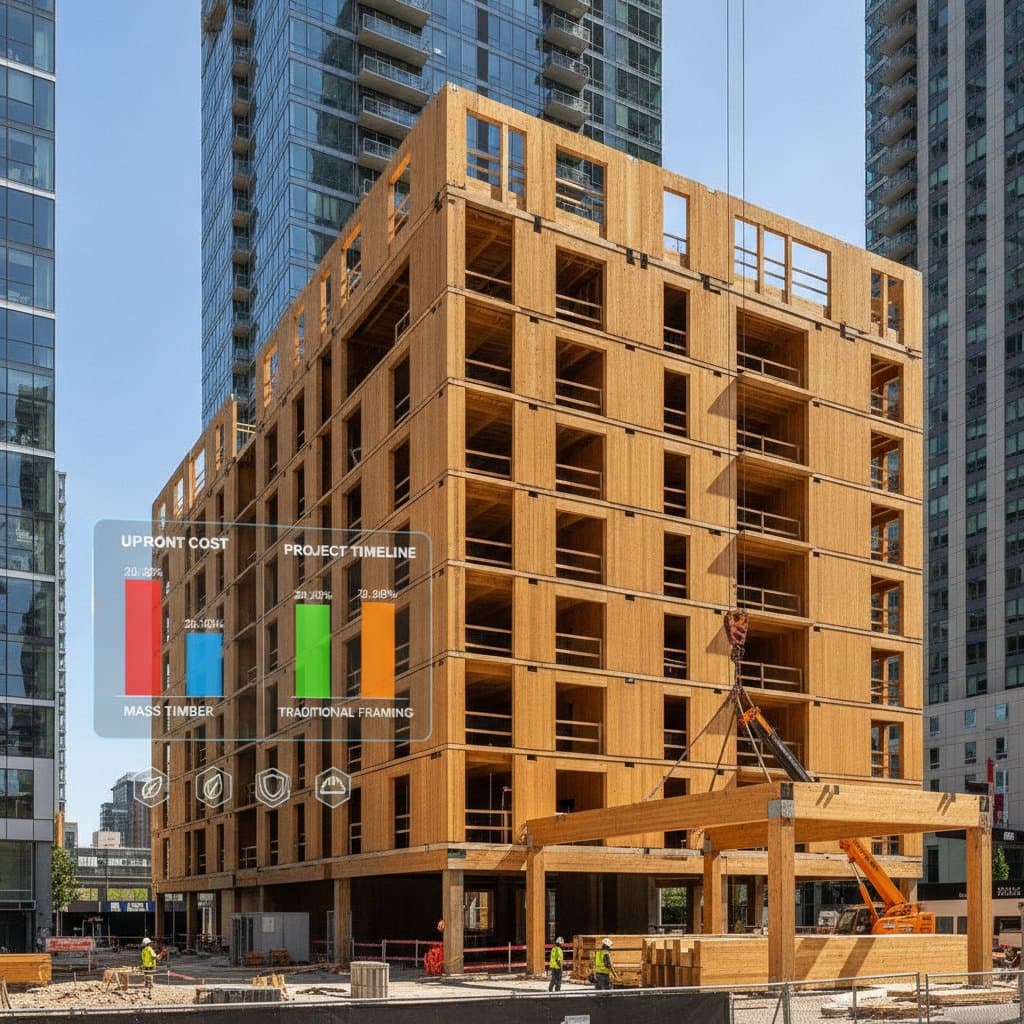
Primary Insight: Initial material outlays represent only one facet of value. Mass timber's off-site assembly frequently trims downstream expenditures.
Workforce and Assembly Demands
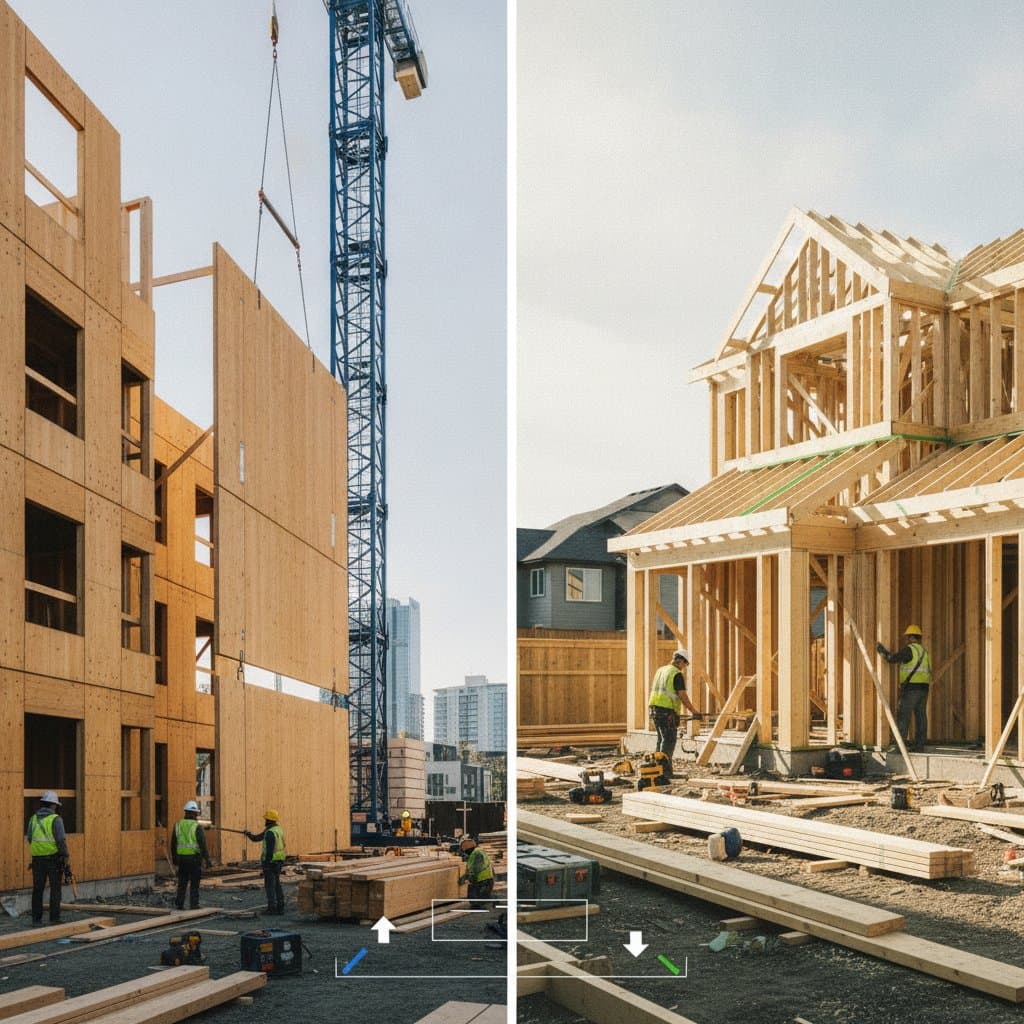
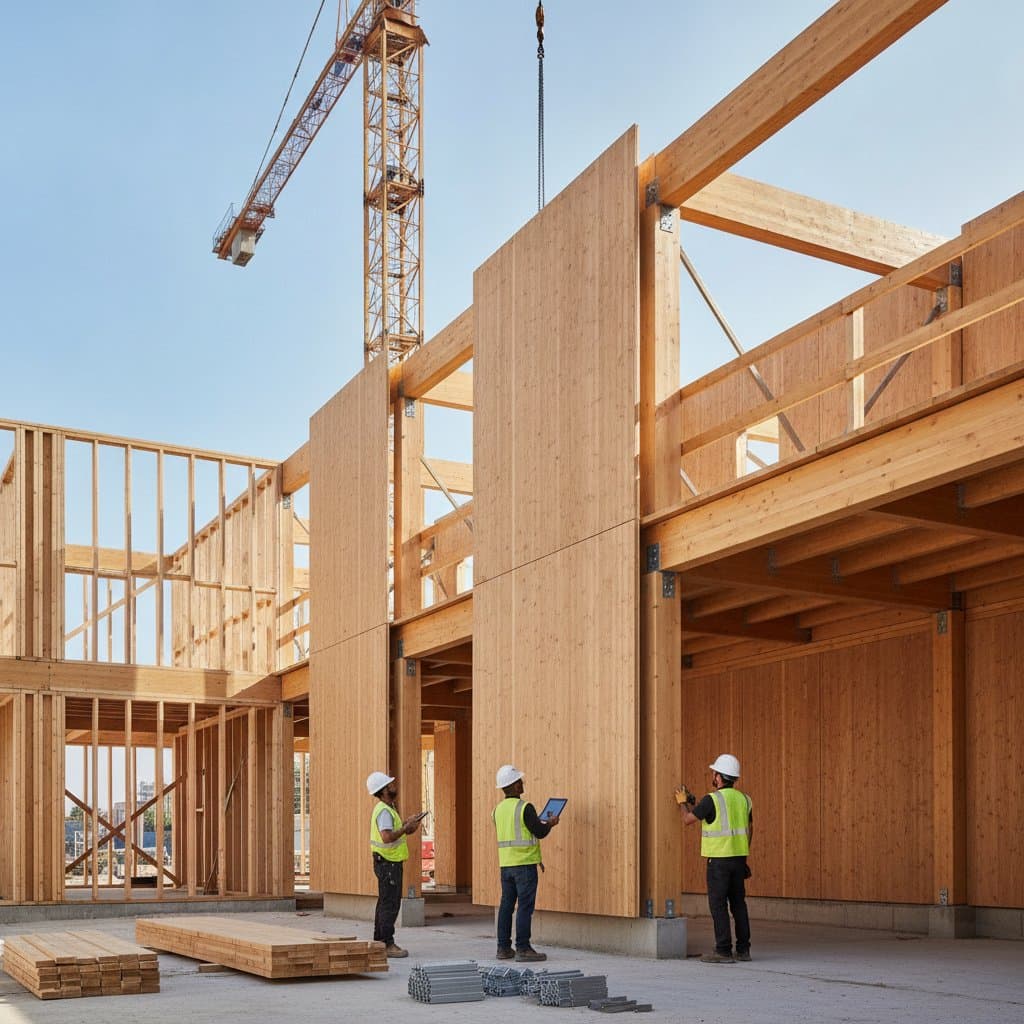
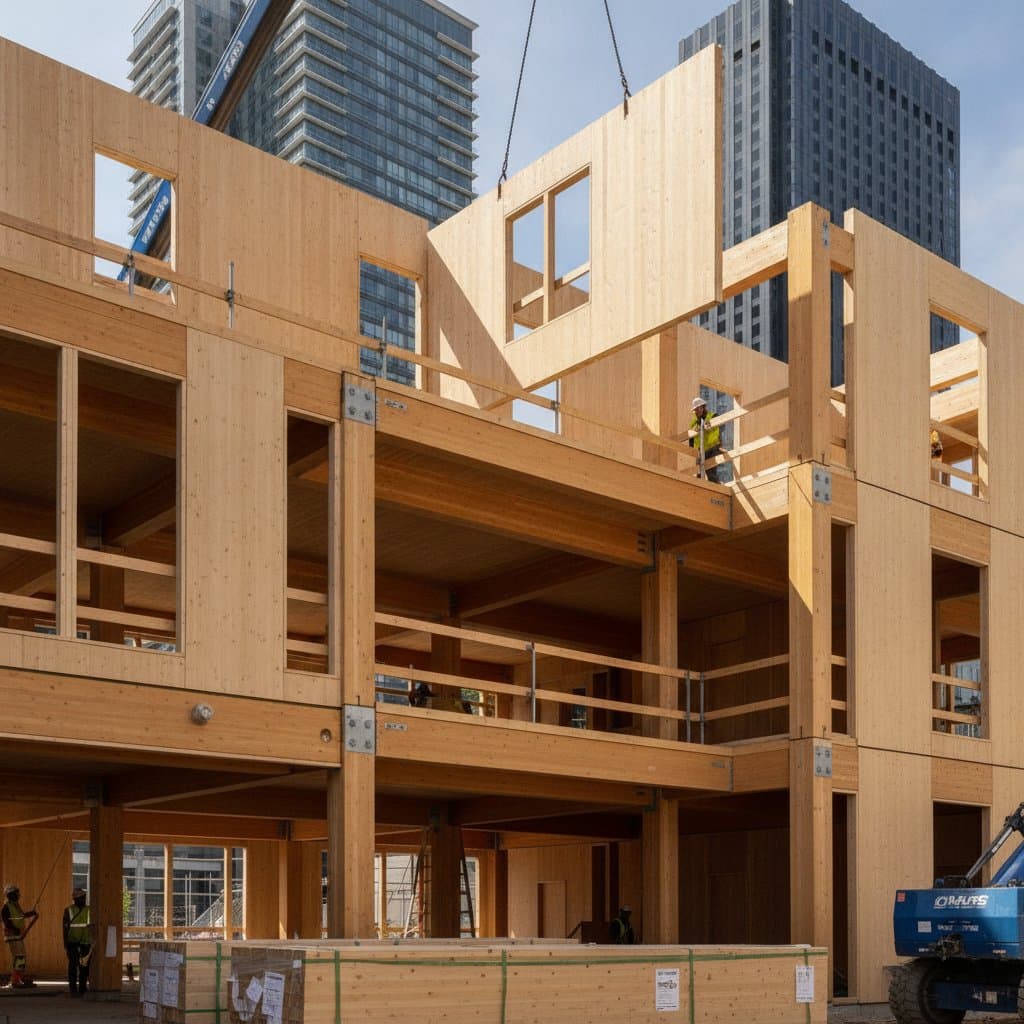
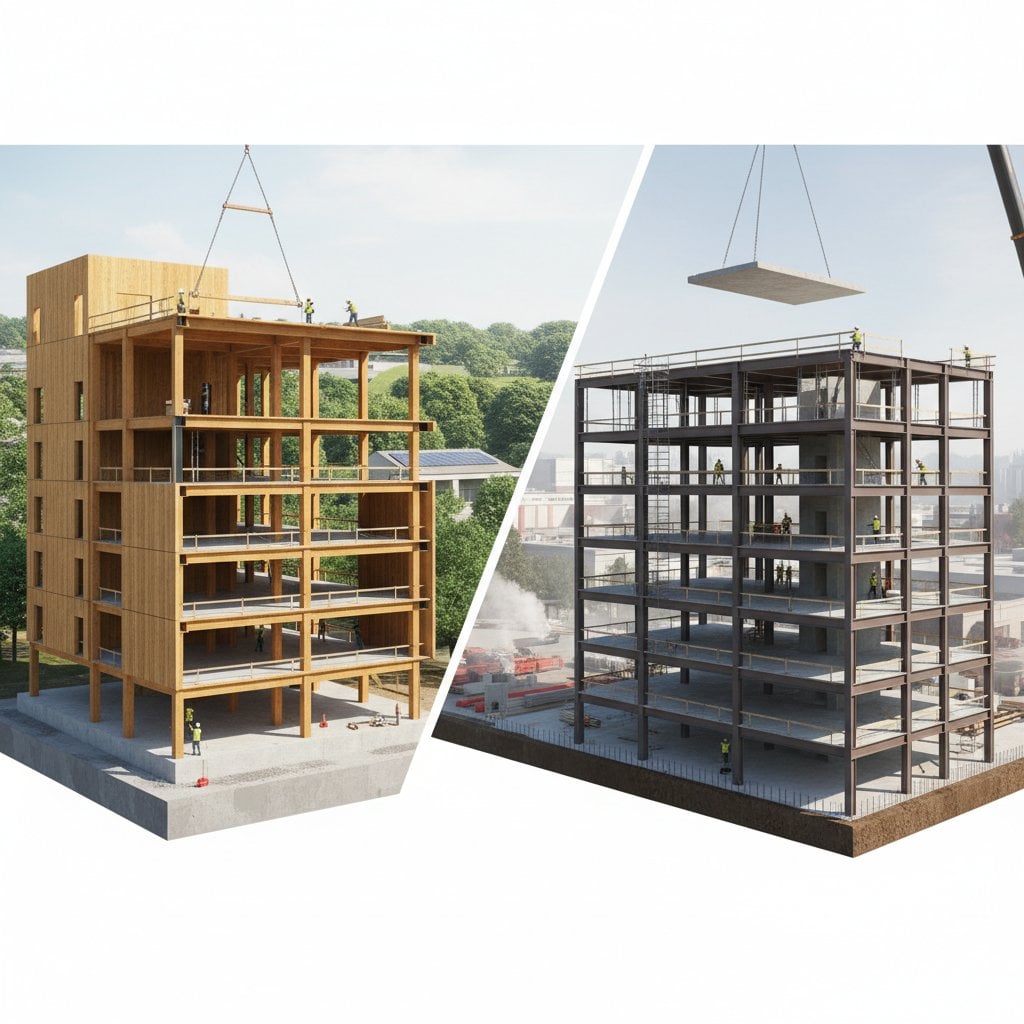
Mass timber elements ship to the site in pre-engineered modules, enabling rapid erection by compact crews across fewer specialties. This approach curtails payroll and compresses timelines.
Conventional methods necessitate extensive field operations, including formwork erection, concrete curing, steel welding, and reinforcement placement. Multiple subcontractors introduce scheduling complexities, while heavy machinery escalates operational fees.
Typical Reductions: Mass timber initiatives commonly achieve 20 to 30 percent fewer labor hours versus standard frameworks, particularly in mid-height or prefabricated designs.
Substructure and Load Considerations
The inherent lightness of mass timber diminishes foundation scale and site preparation scope, yielding savings in preliminary phases. Diminished mass also eases material transport and minimizes crane capacities required.
Concrete's substantial mass and steel's concentrated forces necessitate robust footings and enhanced bracing. Such provisions inflate budgets markedly, especially on unstable ground or in earthquake-prone areas.
Compliance and Protection Measures
Steel and concrete enjoy straightforward fire classifications and routine approval processes. Mass timber may require supplementary testing and expert scrutiny in certain areas. Solutions like gypsum encasement or char-forming treatments satisfy regulations, though they introduce incremental costs.
Mass timber demonstrates resilience in fires, as surface charring shields core integrity. Upon regulatory clearance, these assemblies often secure equivalent or superior safety profiles to legacy systems.
Surface Preparation and Internal Features
Mass timber's organic finish lends itself to exposed applications, bypassing requirements for wallboard, suspended ceilings, or supplementary cladding. This streamlines material procurement and installation efforts.
Steel and concrete demand aesthetic enhancements to foster habitable interiors. Applications of coatings, linings, or overhead systems extend durations and budgets. These elements periodically necessitate refreshes, whereas timber facings develop patina gracefully with basic care.
Thermal Regulation and Efficiency
Wood's insulating properties stabilize interior climates in mass timber assemblies, curbing demands on HVAC systems. Owners realize sustained reductions in utility expenses.
Steel and concrete facilitate heat transfer, mandating thicker insulation layers for parity. These additions elevate material needs and assembly thickness.
Ecological Impact and Enduring Worth
Mass timber sequesters carbon, mitigating production and logistics emissions. Its renewable sourcing supports certification pursuits and diminishes environmental liabilities, enhancing market positioning without direct cost relief.
Steel and concrete generate elevated embodied carbon in fabrication. Their durability offsets this through extended service lives and low intervention needs.
Upkeep and Extended Expenses
Preserving Mass Timber
Sealed mass timber withstands humidity and infestations effectively. Scheduled evaluations and barrier applications preserve condition. Exposed interiors facilitate prompt issue detection and targeted fixes, promoting infrequent interventions and fiscal prudence.
Upkeep for Conventional Options
Concrete and steel endure environmental stresses yet face risks of fractures, rust, or surface degradation. Remediation involves expert labor and site interruptions. Protective layers on steel demand renewal approximately every ten years.
Coverage and Market Dynamics
Mass timber structures may encounter elevated insurance rates in nascent markets owing to sparse performance records. Evolving standards and data accumulation should normalize these. Conventional materials leverage proven actuarial baselines.
During transfers, mass timber's design allure and green attributes draw premium purchasers, notably in metropolitan settings valuing eco-conscious builds.
Scenarios Favoring Mass Timber
Mass timber proves advantageous under these circumstances:
- Mid-Height or Combined Structures: Suited to four- to twelve-story developments where load capacities align with wood's strengths.
- Constrained City Environments: Modular fabrication limits on-site disturbances, ideal for populated zones.
- Eco-Targeted Initiatives: Timber's renewability accelerates paths to sustainability accreditations.
- Aesthetic-Driven Venues: Uncovered wood imparts inviting textures absent added surfacing.
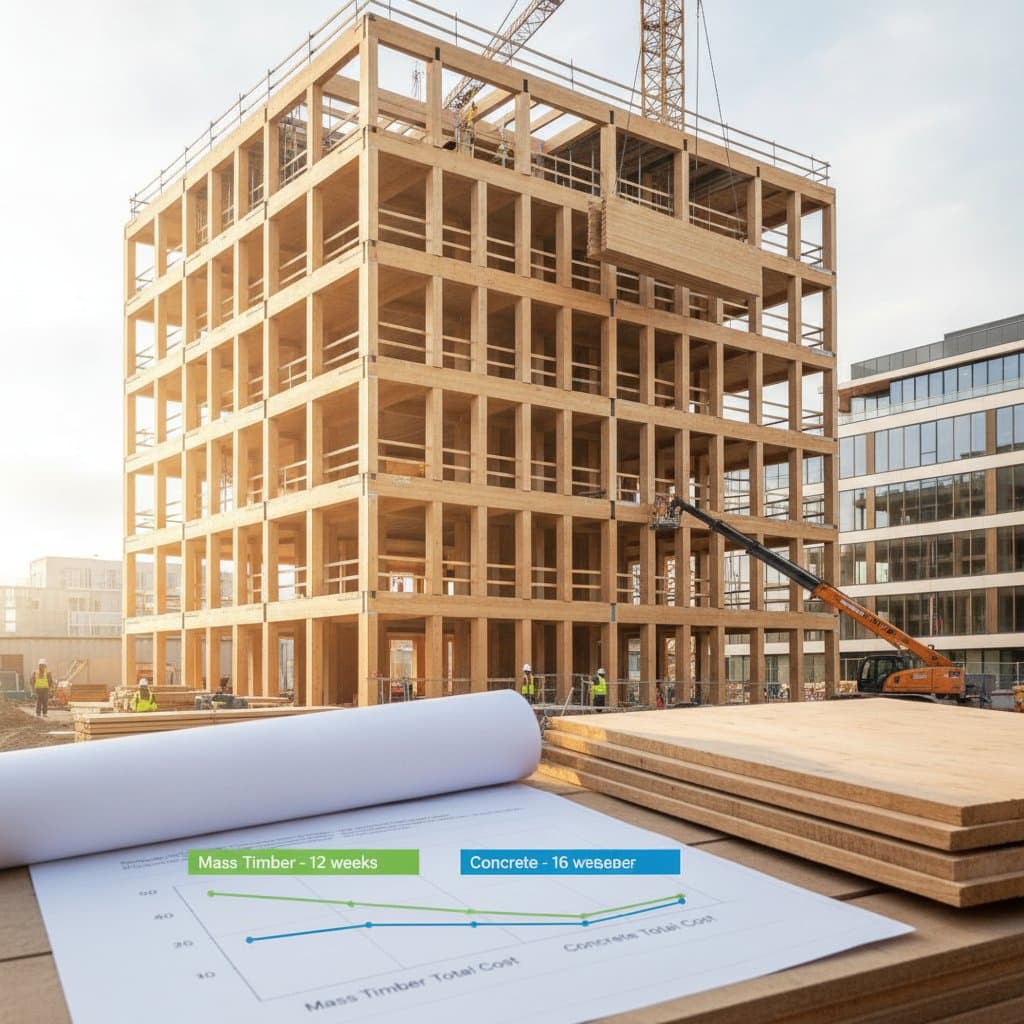
- Streamlined Timelines: Time-sensitive ventures gain from accelerated erection, optimizing overall economics.
Conducting Equitable Evaluations
Valid comparisons encompass holistic project merits beyond upfront figures. Follow these steps for precision:
- Apply Lifecycle Analysis: Encompass upkeep, operational energy, and disposition potential.
- Account for Build Duration: Expedited phases decrease interest and supervisory outlays.
- Align with Vision: Deduct credits for timber's role in forgoing finish work.
- Incorporate Eco-Benefits: Explore rebates or subsidies for reduced-emission choices.
- Engage Regulators Promptly: Initial dialogues prevent mid-process adjustments.
Optimizing Your Construction Strategy
Decisions between mass timber and established methods transcend square-foot pricing. They harmonize efficiency, ecological responsibility, functionality, and future returns. Mass timber's modular efficiency and weight advantages counterbalance material premiums, complemented by its stylistic and planetary merits. Steel and concrete persist as viable selections for rigorous loads or supply-secure territories.