Evaluate Mass Timber Against Traditional Framing Expenses
Essential Overview
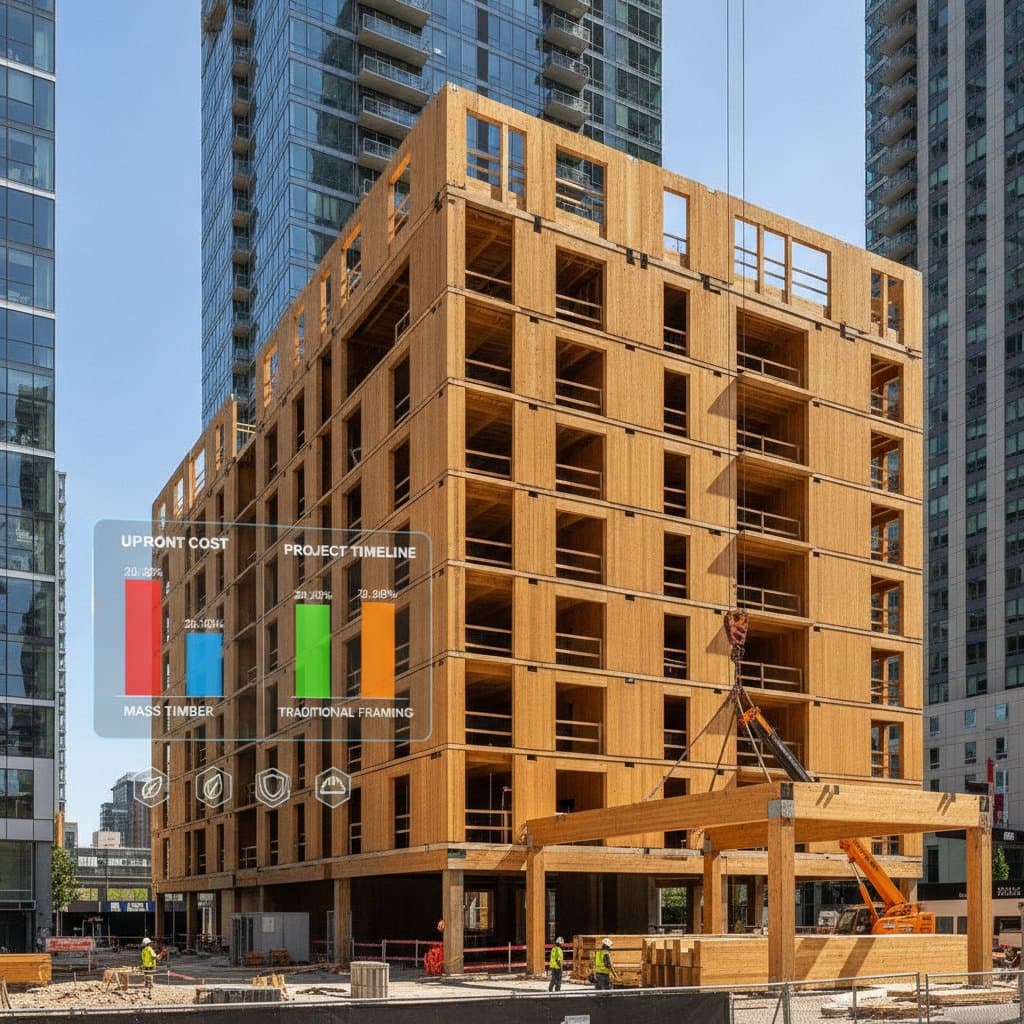
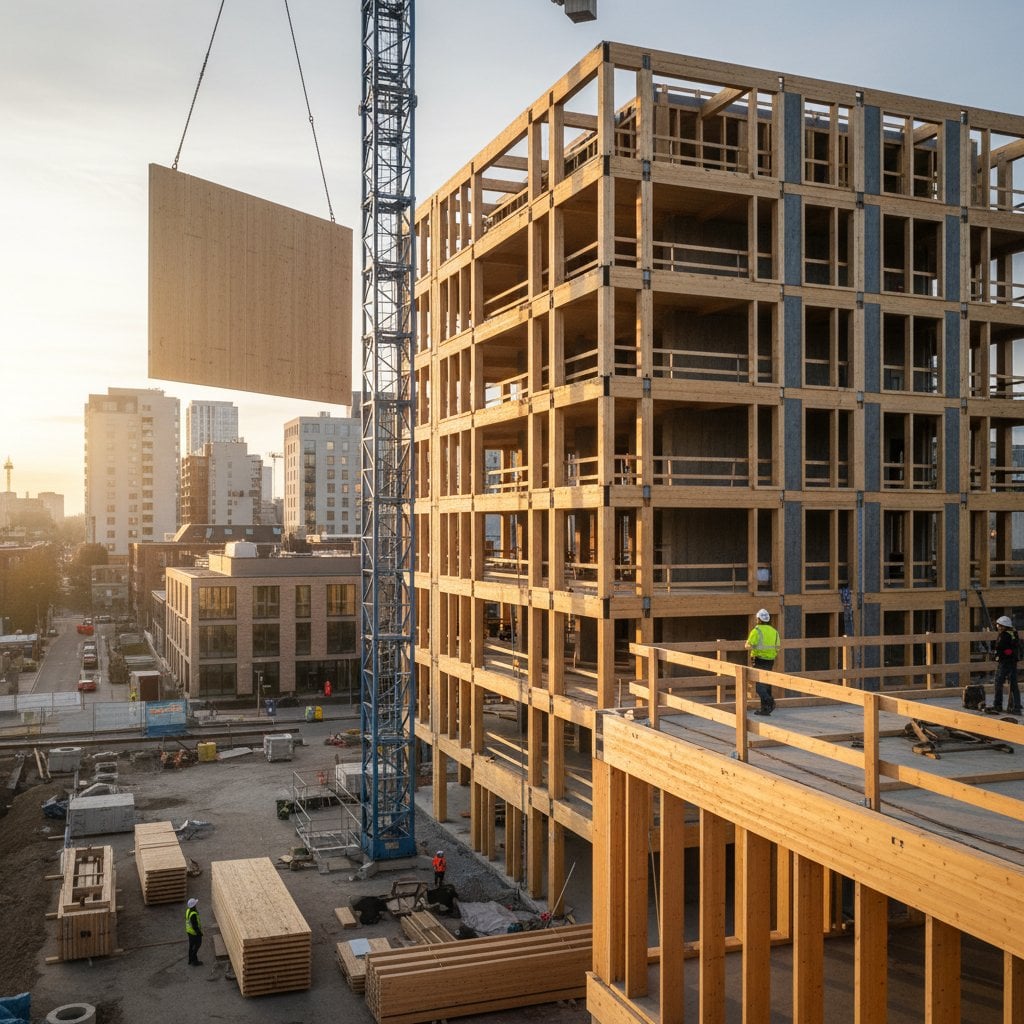
Mass timber employs engineered wood elements, such as cross-laminated timber (CLT), to substitute for steel or concrete in structural frameworks. This approach proves ideal for mid-rise structures and commercial developments. Projects typically incur marginally higher initial costs, yet these diminish through abbreviated labor durations and sustained operational economies. Anticipate reasonable reductions in labor and foundational expenditures, resulting in overall costs comparable to those of standard framing techniques. This method fits builders and property owners prepared to collaborate intimately with structural engineers. Associated risks remain moderate, primarily stemming from the demand for exacting installation procedures.
Detailed Assembly Guidelines
1. Validate Design and Structural Integrity
Present the proposed design to a licensed structural engineer experienced in mass timber applications. The professional will assess load distribution, required panel dimensions, and fastening mechanisms.
Verification Step: Confirm that the approved engineering drawings align precisely with site-specific conditions and foundational configurations.
2. Procure CLT or Glulam Elements
Transmit finalized design specifications to a certified fabricator. The supplier will precision-cut and tag components according to project requirements.
Verification Step: Ascertain that delivery timelines coincide with site readiness and that adequate protected storage exists prior to transport.
3. Establish Site and Base Structure
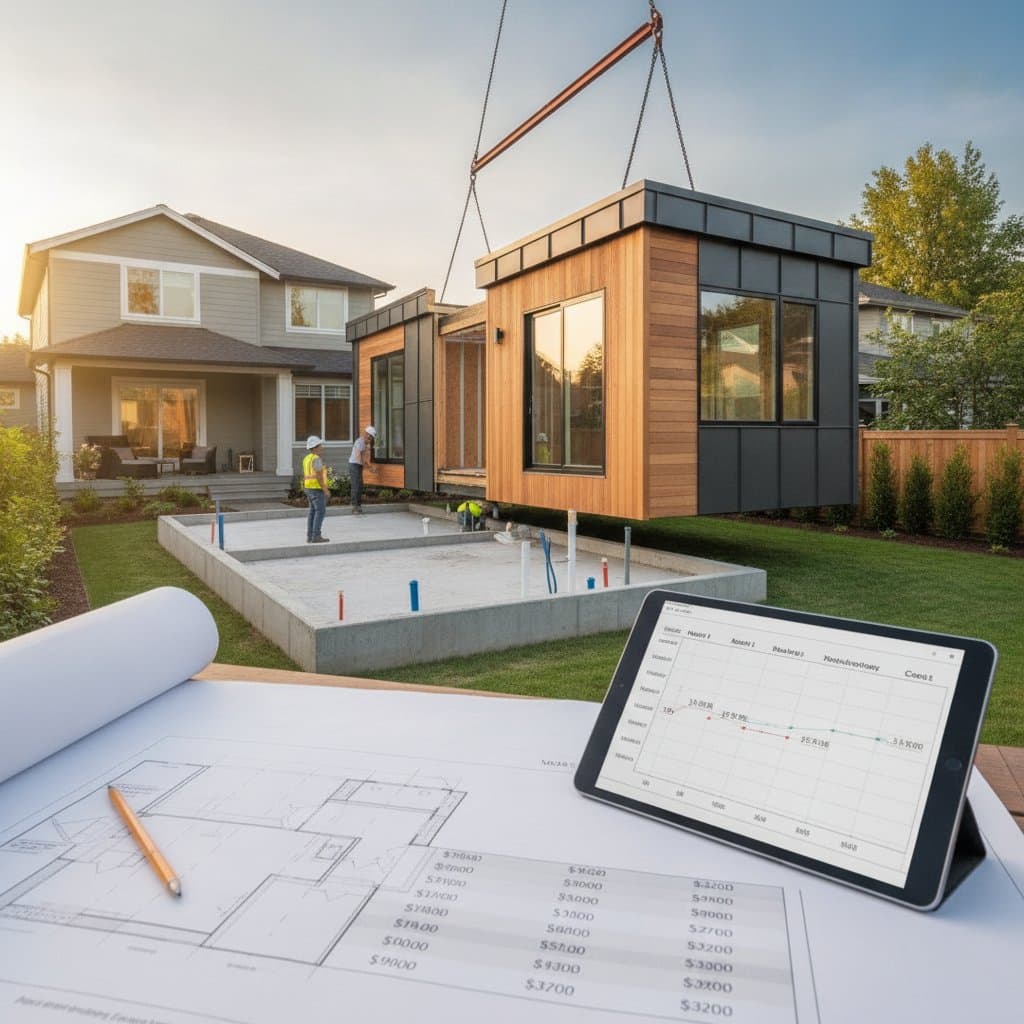
Construct a precisely leveled foundation incorporating pre-set anchors synchronized with the timber framework. The reduced weight of mass timber compared to concrete or steel permits shallower foundational depths in many cases.
Verification Step: Ensure anchor placements correspond exactly to the detailed fabrication plans.
4. Position and Safeguard Panels
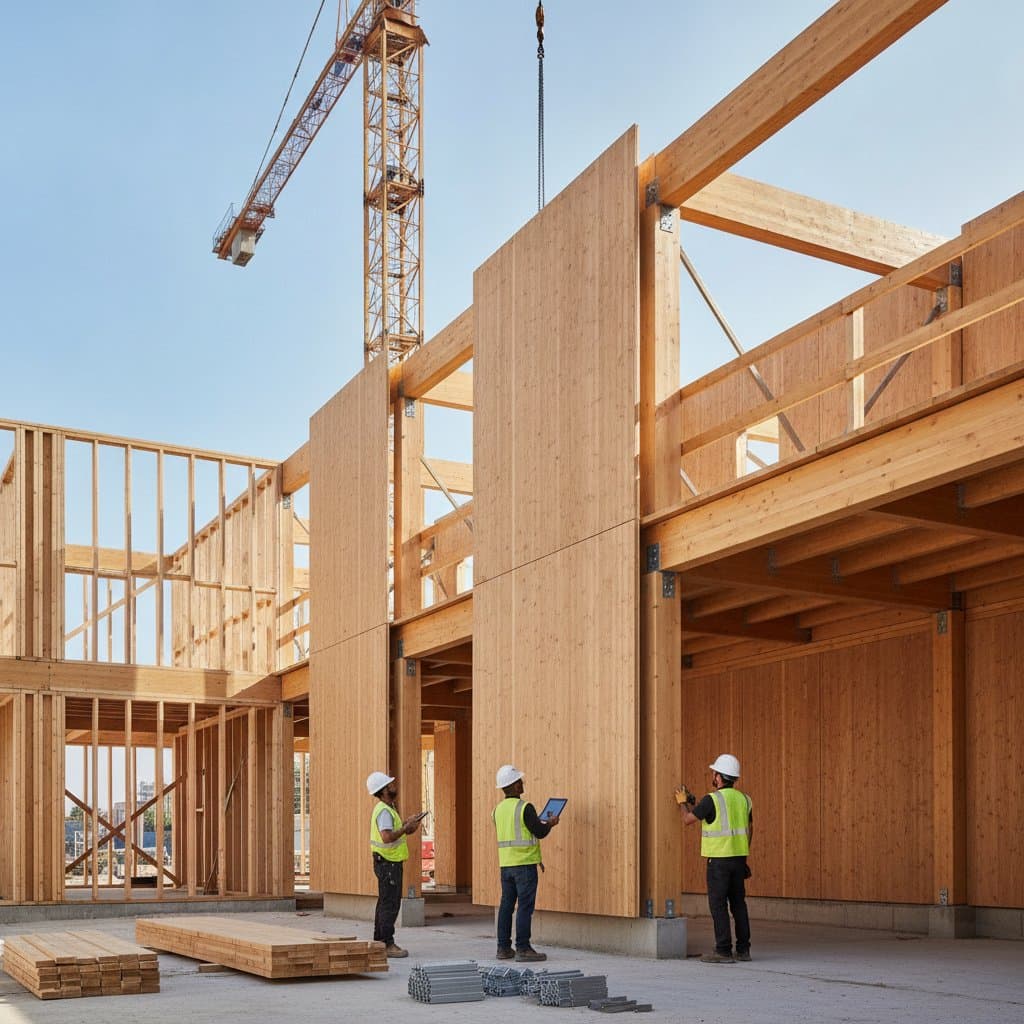
Employ a forklift or crane to offload panels onto stable, elevated platforms. Encase them with breathable waterproof coverings to prevent environmental damage.
Verification Step: Confirm no panels contact soil directly or encounter moisture accumulation.
5. Initiate Framework Construction
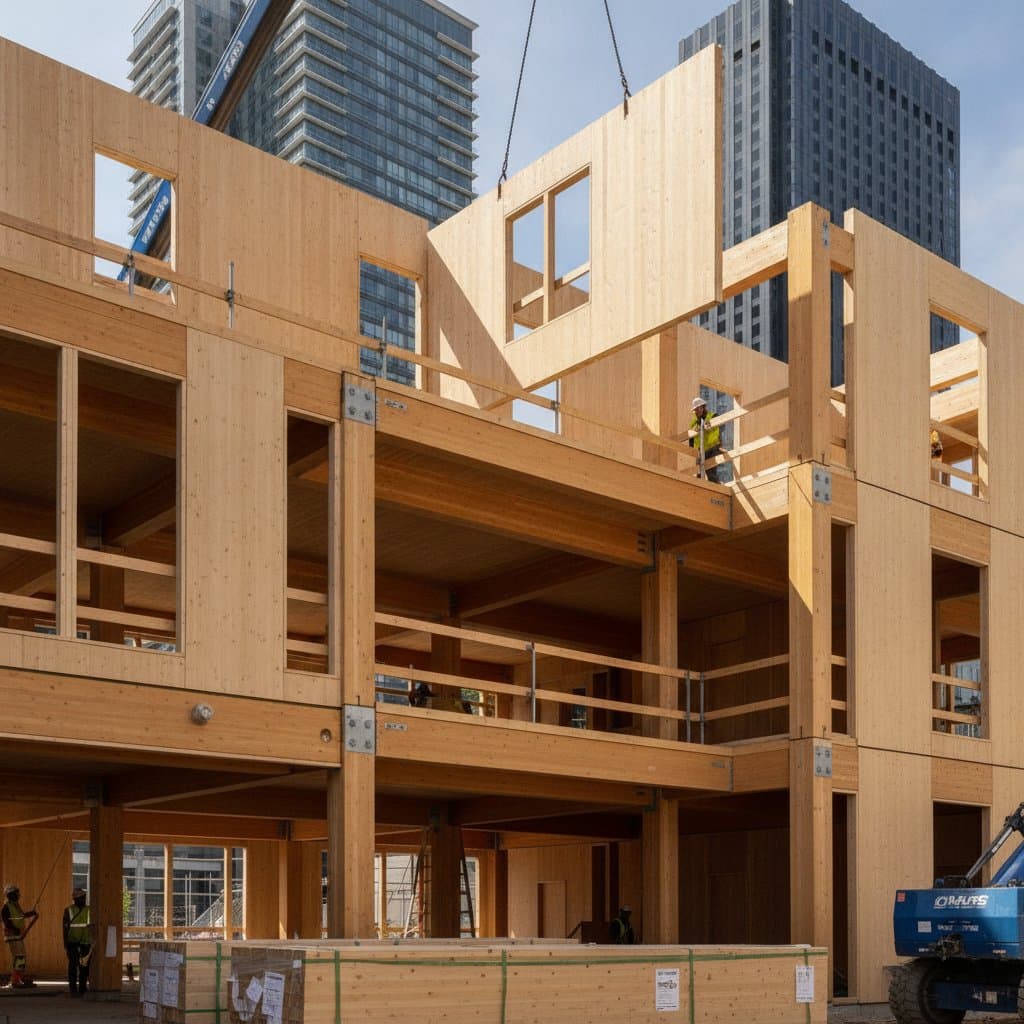
Hoist and position panels sequentially, adhering to sectional progression. Fasten using specified structural screws or metallic connectors as outlined in engineering documents.
Safety Alert: Personnel must avoid positions under lifted panels; certified rigging specialists alone direct installations.
Verification Step: Maintain panel-to-panel separations within prescribed tolerances throughout assembly.
6. Protect Joints and Perimeters
Administer sealants or specialized tapes to all visible seams, thereby minimizing potential water penetration.
Verification Step: Achieve complete coverage of every joint prior to enclosing walls or flooring elements.
7. Assess Structural Alignment
Deploy laser leveling tools to verify the framework's squareness and verticality across the entire assembly.
Verification Step: Address and rectify any deviations promptly before advancing to subsequent phases.
Inspection Protocols and Issue Resolution
Frequent Challenges
- Distortion or Expansion: Signals prior moisture contact. Allow panels to air-dry in controlled conditions before enclosure.
- Insecure Connections: Tighten structural fasteners to exact manufacturer guidelines.
- Improper Panel Alignment: Consult the supplier immediately prior to any adjustments like cutting or perforating; structural integrity demands unaltered components absent formal authorization.
Practical Remedies
- Employ moisture detection devices pre-sealing to guarantee panel humidity levels remain under 15 percent.
- Renew joint sealants should gaps emerge during environmental adaptation periods.
Engaging Professional Expertise
Retain a licensed contractor or structural engineer under these circumstances:
- When the structure surpasses three levels in height.
- If alterations to primary load-bearing elements become necessary.
Standard Professional Expenses:
- Structural engineering consultation: moderate hourly fees.
- Crane rental with operator: substantial daily charges.
Select contractors with documented mass timber experience, including verifiable supplier endorsements. Examine their insurance policies and surety bonds thoroughly before commencing operations.
Comprehensive Cost Analysis
Material Expenditures
Mass timber panels generally command higher prices per square foot relative to sawn lumber, though they undercut structural steel equivalents. Regional variations and vendor selections influence pricing. Account for production delays and transportation fees, which escalate totals when sourcing from remote facilities.
Workforce Expenditures
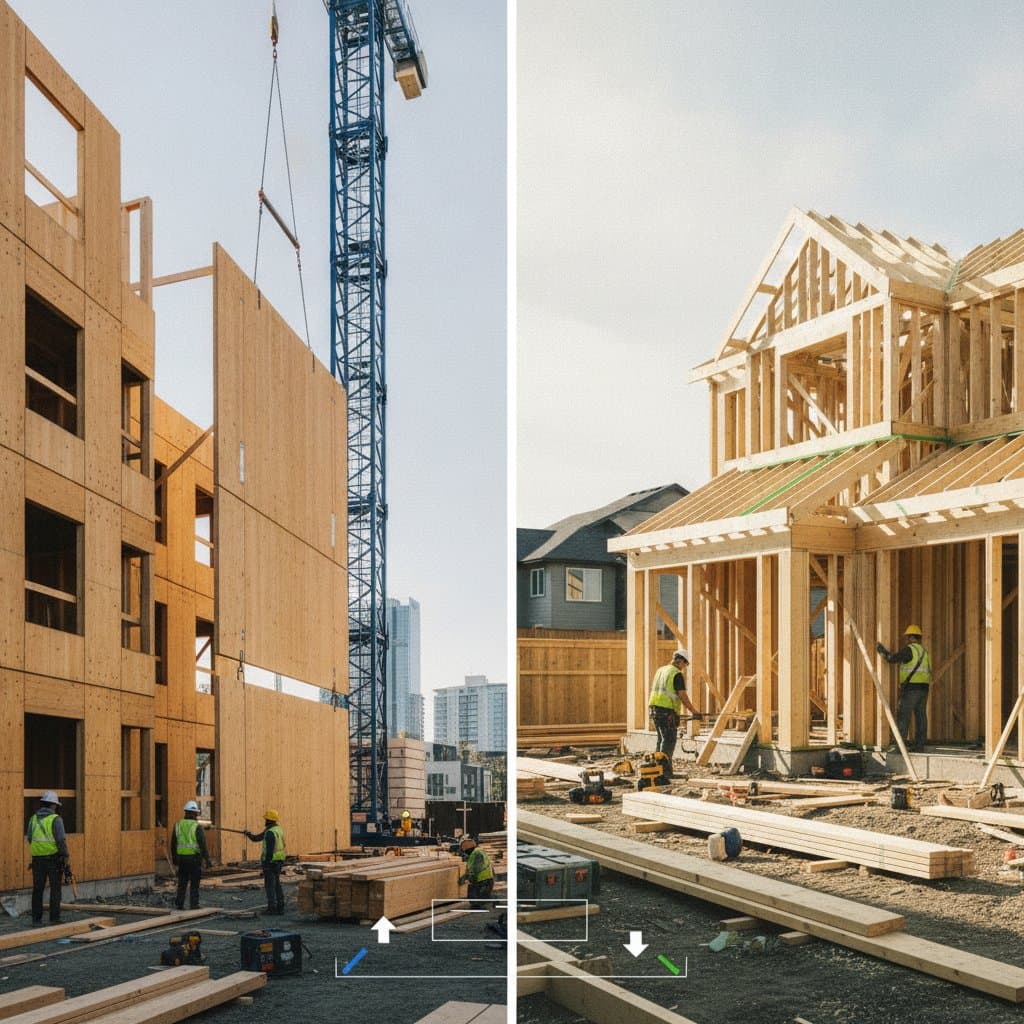
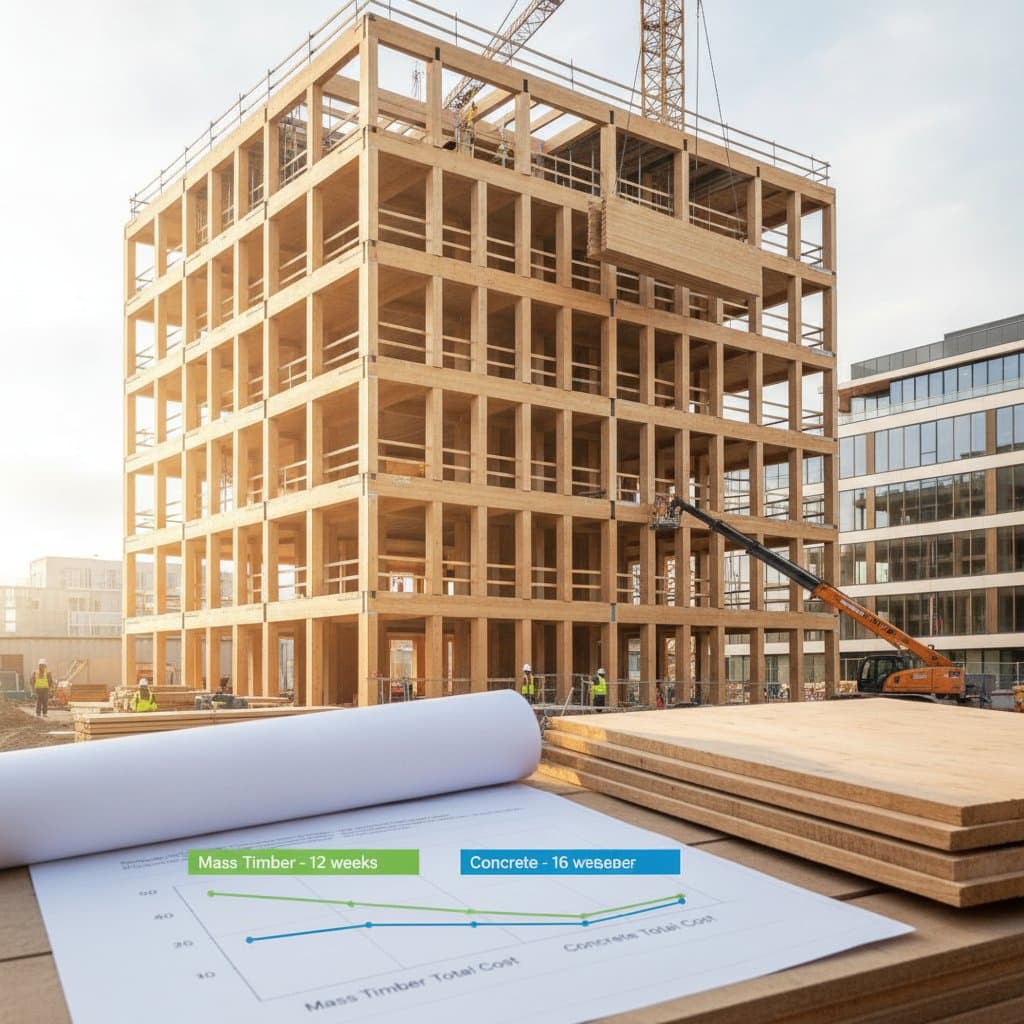
Factory prefabrication typically trims on-site labor by 20 to 30 percent. Assembly teams complete frameworks more swiftly than with conventional methods, curtailing needs for scaffolding and machinery rentals. Accelerated timelines frequently neutralize elevated material outlays.
Foundational and Support Systems
The lighter profile of mass timber enables economies in foundation depth and reinforcement materials. Benefits depend on geotechnical properties and project scale.
Completion Expenditures
Visible timber surfaces obviate extensive drywall applications, thereby lessening finishing labor and supplies. Compliance with regulations may necessitate unique fire-retardant treatments or enhanced fire suppression systems.
Holistic Assessment
Incorporating labor efficiencies and schedule compressions, aggregate expenses align closely with or surpass traditional approaches modestly. Enduring advantages in thermal performance and carbon sequestration enhance appeal, particularly for commercial or public sector endeavors pursuing green building accreditations.
Strategies for Optimal Implementation
- Initiate dialogues among architects, engineers, and fabricators at project outset.
- Prioritize moisture management from receipt of materials to final treatments.
- Select fasteners engineered for timber compatibility, as conventional options risk fracturing.
- Conduct evaluations following each significant construction milestone.
- Reserve surplus panels or members to mitigate delivery-related impairments.
Mass timber construction facilitates expedited, streamlined, and resource-efficient outcomes with diligent oversight. Grasping the nuances of financial exchanges and collaborative demands empowers informed choices on surpassing conventional framing in forthcoming endeavors.