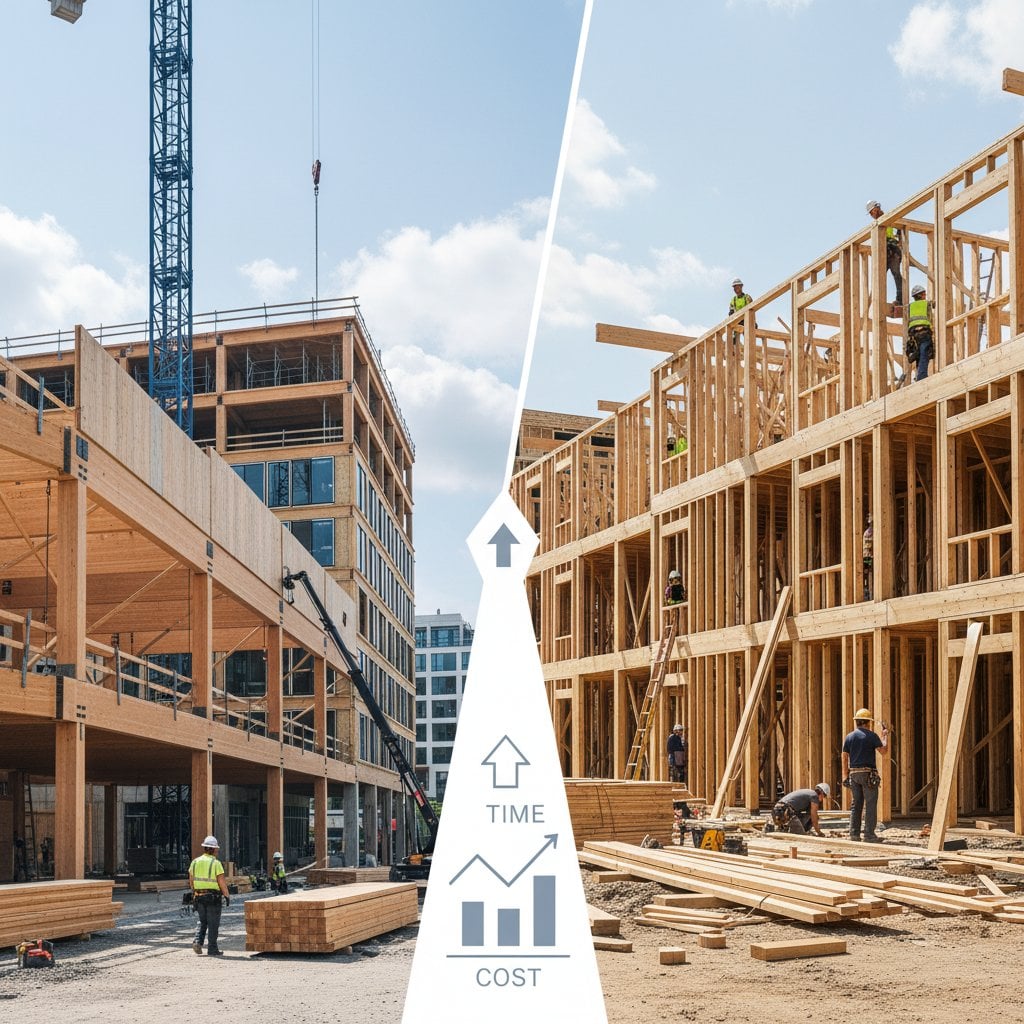
Introduction to Mass Timber and Traditional Framing
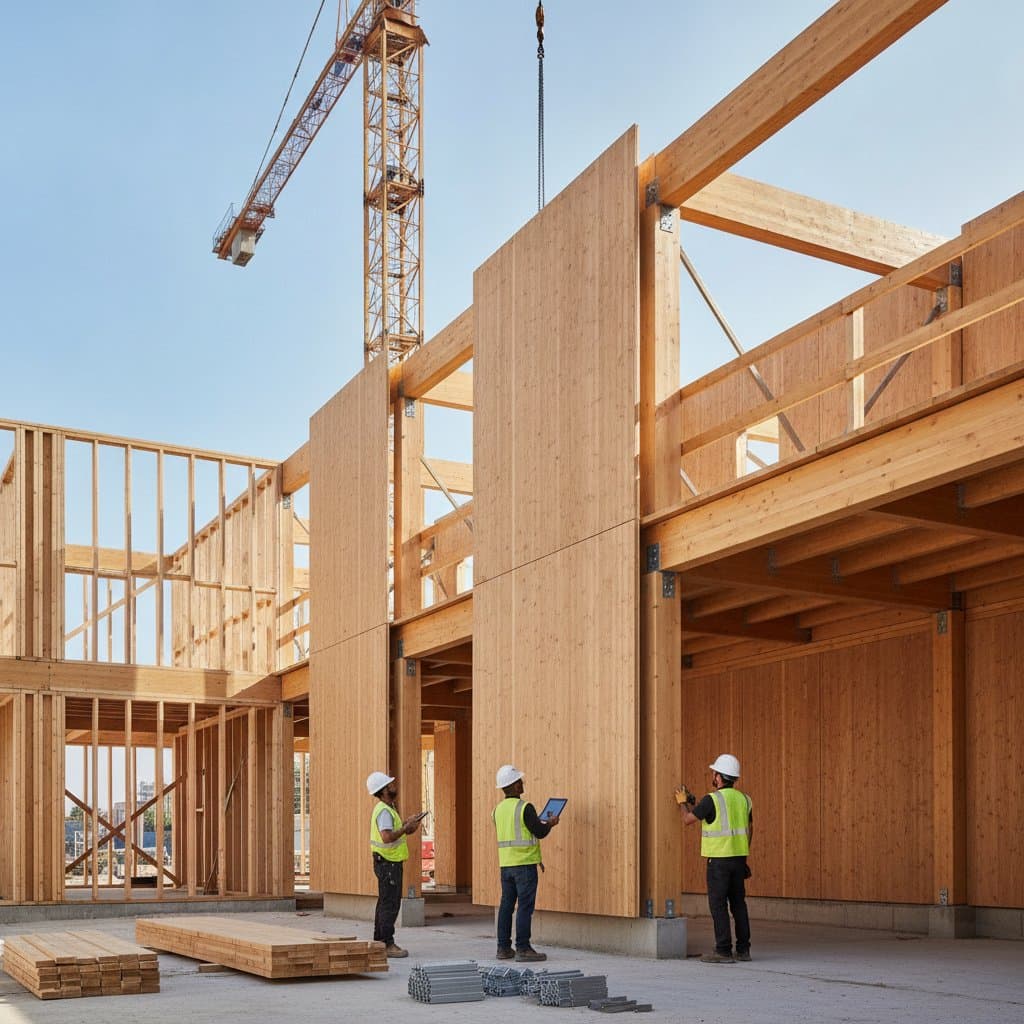
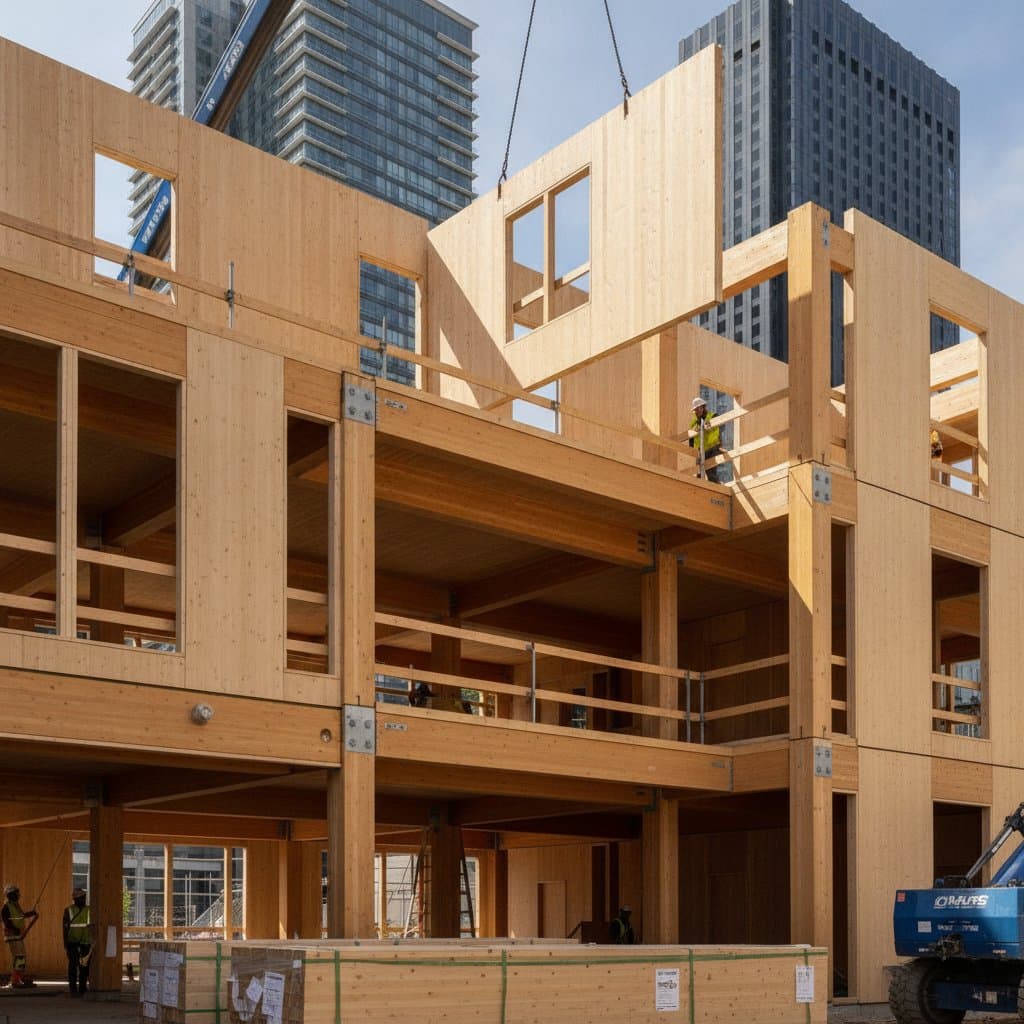
Mass timber construction utilizes large, engineered wood panels such as cross-laminated timber (CLT) and glued-laminated timber (glulam). These materials enable the creation of sturdy, multi-story buildings with a reduced carbon footprint compared to steel or concrete alternatives. Traditional framing, on the other hand, relies on dimensional lumber, plywood sheathing, and on-site assembly techniques that have defined residential and light commercial builds for decades.
The choice between these methods influences not only aesthetics and sustainability but also project economics and timelines. Builders often weigh initial material expenses against long-term efficiencies. This article delves into key factors to inform your decision-making process.
Upfront Material Costs: Where Traditional Framing Leads
Mass timber typically commands a premium price due to its engineered composition and manufacturing processes. For instance, CLT panels can cost 20 to 30 percent more per square foot than standard lumber and sheathing in traditional setups. This difference arises from the precision milling and quality controls required for mass timber production.
Traditional framing benefits from widespread availability and lower processing demands, keeping material budgets modest. A typical single-family home frame might require lumber priced at $5 to $8 per square foot, excluding fasteners and treatments. However, these savings come at the expense of potential waste and variability in on-site cutting.
Labor Savings: Mass Timber's Key Advantage
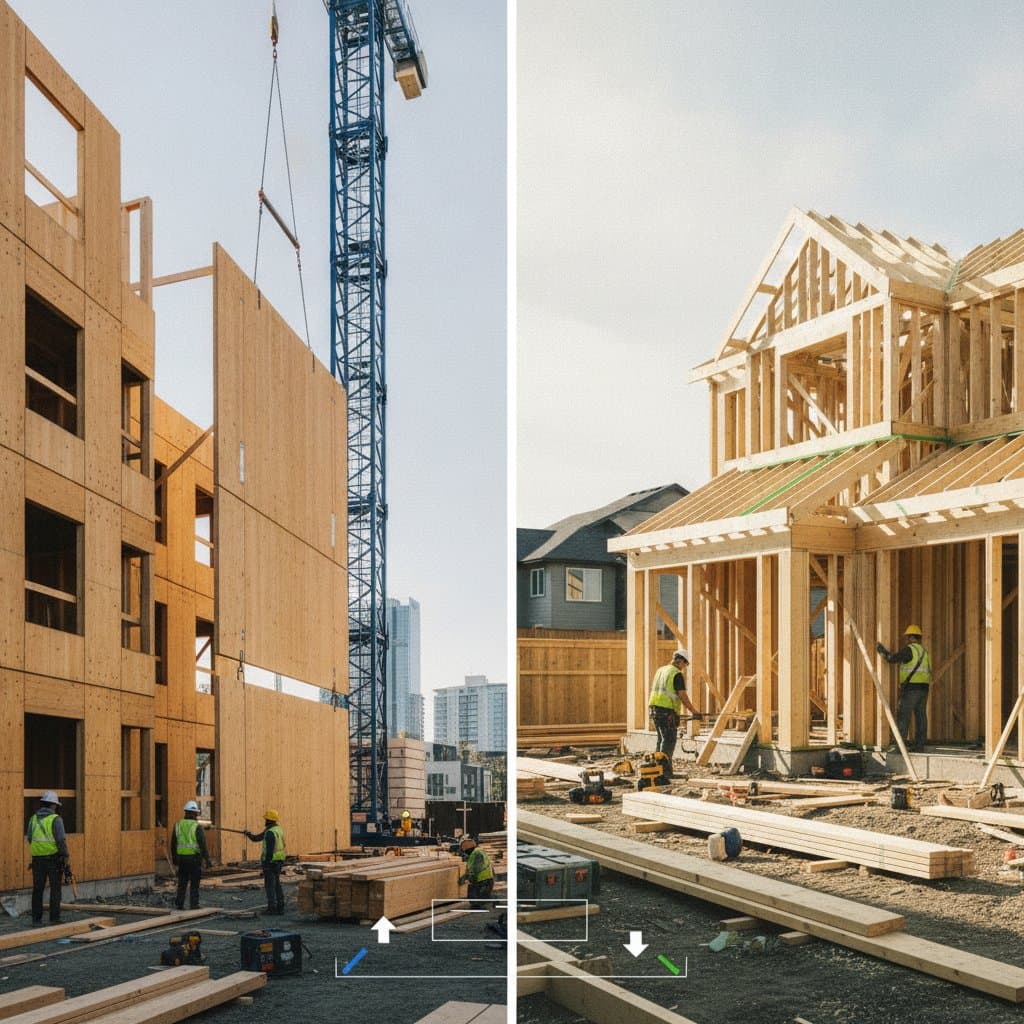
One of mass timber's standout benefits lies in labor efficiency. Prefabricated panels arrive ready for installation, allowing crews to erect structures in days rather than weeks. Projects using mass timber often reduce on-site labor by up to 50 percent, as assembly resembles a large-scale puzzle rather than piece-by-piece carpentry.
In contrast, traditional framing demands extensive cutting, nailing, and bracing by skilled workers, extending timelines significantly. A two-story residential frame might take four to six weeks with traditional methods, involving 10 to 15 carpenters daily. Mass timber shifts much of this work to factories, minimizing weather delays and crew coordination challenges.
To illustrate, consider a 10,000-square-foot commercial building. Traditional framing could require 5,000 labor hours, while mass timber might achieve the same with 2,500 hours, translating to substantial payroll reductions.
Permitting and Regulatory Considerations
Navigating permits for mass timber involves demonstrating compliance with updated building codes, such as those addressing seismic and wind loads. Many jurisdictions now recognize mass timber's performance, but initial approvals may require additional engineering reports, adding 5 to 10 percent to soft costs. Once certified, however, subsequent projects benefit from streamlined processes.
Traditional framing enjoys familiarity with local inspectors, often resulting in quicker permit issuance without specialized documentation. Fees remain comparable, typically 1 to 2 percent of project value, but the review period for traditional methods averages two to four weeks versus three to six for mass timber in emerging markets.
Builders should consult local authorities early to anticipate any code amendments, ensuring smooth progression from design to groundbreaking.
Fire Performance and Safety Features
Mass timber's fire resistance surprises many, as thick panels char slowly on the surface while the core remains protected. Encapsulation techniques, such as gypsum board layers, further enhance safety, meeting or exceeding standards for mid-rise structures. Testing shows mass timber assemblies can achieve two-hour fire ratings, comparable to concrete.
Traditional framing, treated with fire-retardant chemicals, performs adequately in low-rise applications but may require sprinklers in taller builds. Its lighter weight offers flexibility in retrofits, yet vulnerability to rapid spread in untreated scenarios necessitates vigilant detailing.
Both methods prioritize occupant safety through code-compliant designs, but mass timber's inherent properties reduce reliance on additives, appealing to eco-conscious developers.
Total Installed Costs: A Balanced View
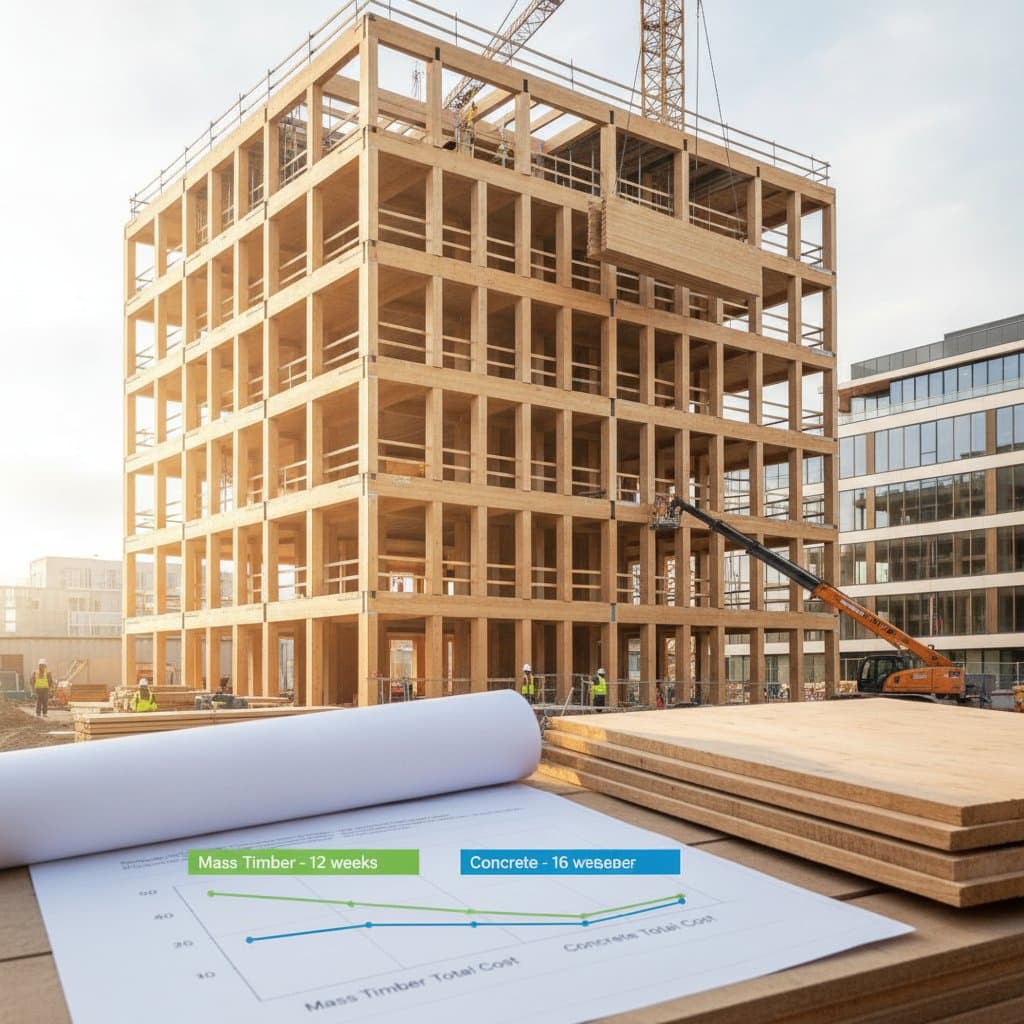
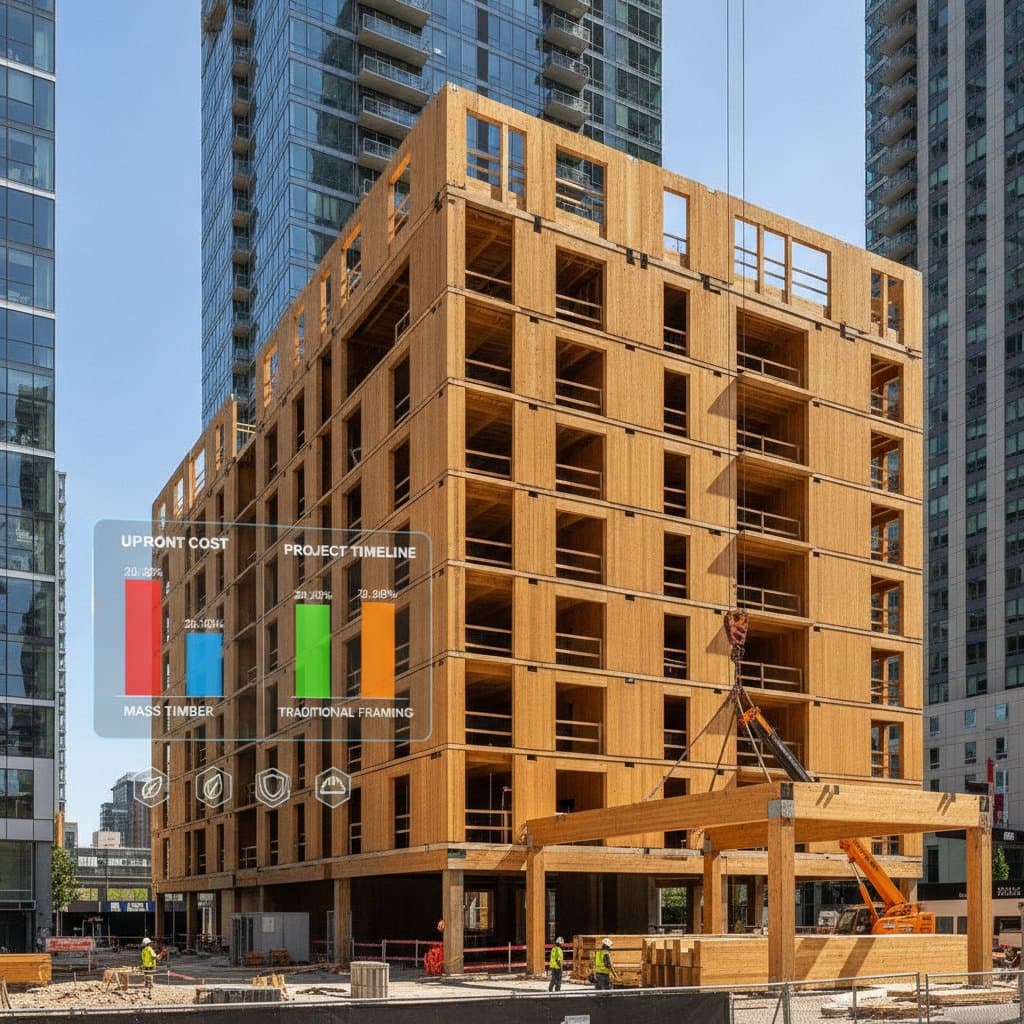
When factoring in labor, materials, and overhead, mass timber often levels the playing field. Initial outlays of $15 to $25 per square foot contrast with traditional framing's $10 to $18, but time savings offset the gap. A mid-sized project might see total costs converge within 10 percent, especially when accounting for accelerated occupancy and financing benefits.
Additional expenses for mass timber include transportation of large panels, which can add $1 to $2 per square foot depending on proximity to mills. Traditional methods incur higher waste disposal and tool wear costs over extended schedules.
Economies of scale favor mass timber in urban or repetitive builds, where speed translates to revenue sooner. For custom, low-volume projects, traditional framing retains its edge in predictability.
Sustainability and Long-Term Value
Mass timber sequesters carbon during growth and production, offering a net environmental gain over fossil-fuel-intensive alternatives. Its renewability supports green certifications like LEED, potentially unlocking incentives or higher resale values. Lifecycle analyses indicate 20 to 40 percent lower embodied carbon compared to traditional wood framing with steel connectors.
Traditional framing, while sourced from sustainable forests, generates more site waste and energy use in assembly. Upgrading to FSC-certified lumber mitigates some impacts, but it lacks mass timber's prefabrication efficiencies.
Investing in mass timber aligns with global trends toward low-carbon construction, future-proofing projects against evolving regulations.
Choosing the Right Method for Your Project
Evaluate your priorities: if budget constraints dominate and timelines allow flexibility, traditional framing provides a reliable path. For accelerated schedules, sustainability goals, or urban density, mass timber delivers unmatched efficiencies.
Consult structural engineers and cost estimators to model scenarios specific to your site. Pilot elements, such as a mass timber facade on a traditional base, can test feasibility without full commitment.
Ultimately, the decision hinges on balancing immediate costs with enduring benefits, ensuring your build stands strong and smart for years ahead.