Essential Bathroom Upgrades for Aging in Place in 2025
Planning a bathroom that facilitates aging in place requires attention to safety, ease, and enduring practicality. Such a design empowers individuals to maintain independence and minimizes accident risks. These elements integrate functionality with visual appeal, ensuring the area remains welcoming and reliable over time.
Overview of Remodeling Expenses
A bathroom renovation focused on aging in place generally ranges from $12,000 to $35,000, with a typical midpoint of $22,000. Factors such as room configuration, selected materials, and chosen accessibility elements influence the final figure. Professional labor constitutes 40 to 60 percent of the overall budget, particularly when adjustments to plumbing or electrical systems prove necessary.
Key elements that drive expenses include:
- Transitioning from bathtubs to barrier-free showers
- Mounting support bars and fortifying underlying structures
- Enhancing illumination and installing anti-slip surfaces
- Expanding entryways to accommodate wheeled devices
- Incorporating elevated fixtures and reachable storage units
Core Benefits and Observations
- Barrier-free showers offer superior safety and simpler entry compared to conventional bathtubs.
- Anti-slip floor coverings play a vital role in preventing falls.
- Strategic illumination and easy-grip hardware foster greater self-reliance.
- Expenses for labor rise when structural or utility modifications arise.
- Universal design principles serve individuals across all life stages, extending beyond senior needs.
Engaging Professionals Versus Self-Directed Efforts
Selecting a qualified remodeler guarantees adherence to safety protocols and regulatory requirements for accessibility. Professionals bill between $75 and $150 hourly, varying by expertise and geographic area. Tasks like plumbing adjustments or surface installations command premium rates due to their complexity.
Individuals may tackle modest enhancements independently, such as affixing support bars or updating spigots. However, endeavors involving moisture barriers, wiring, or significant alterations demand certified expertise. Errors in these domains can result in water damage, safety violations, or substantial corrective outlays.
Key Accessibility Enhancements for Bathrooms
1. Barrier-Free or Roll-In Shower
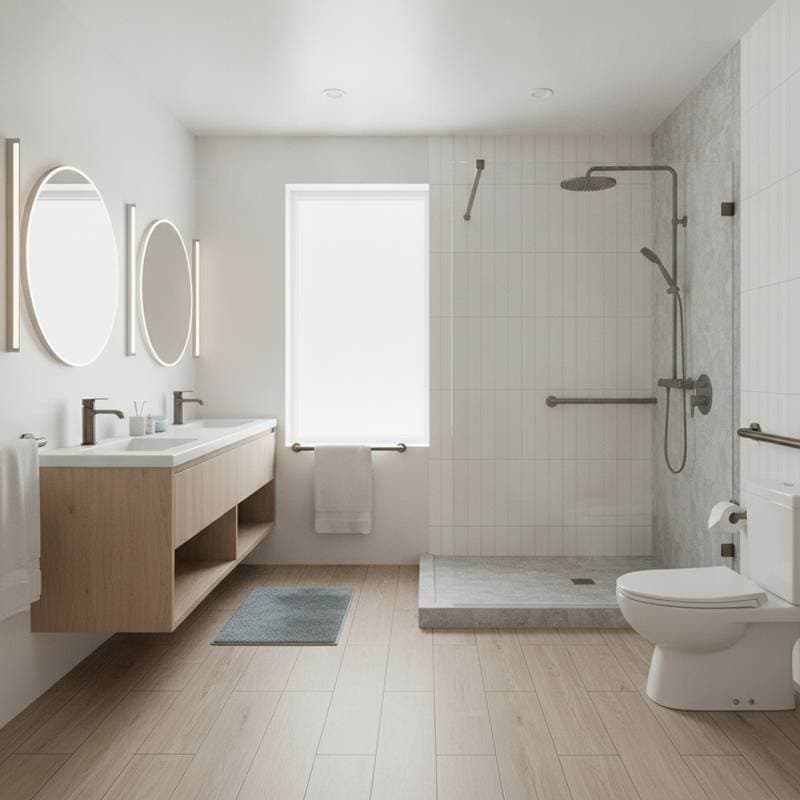
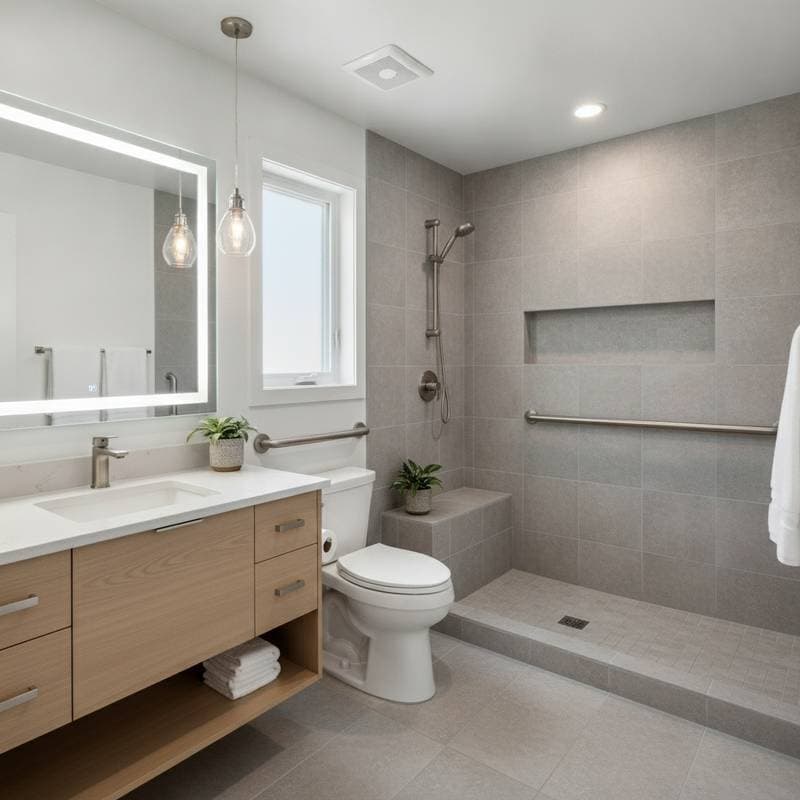
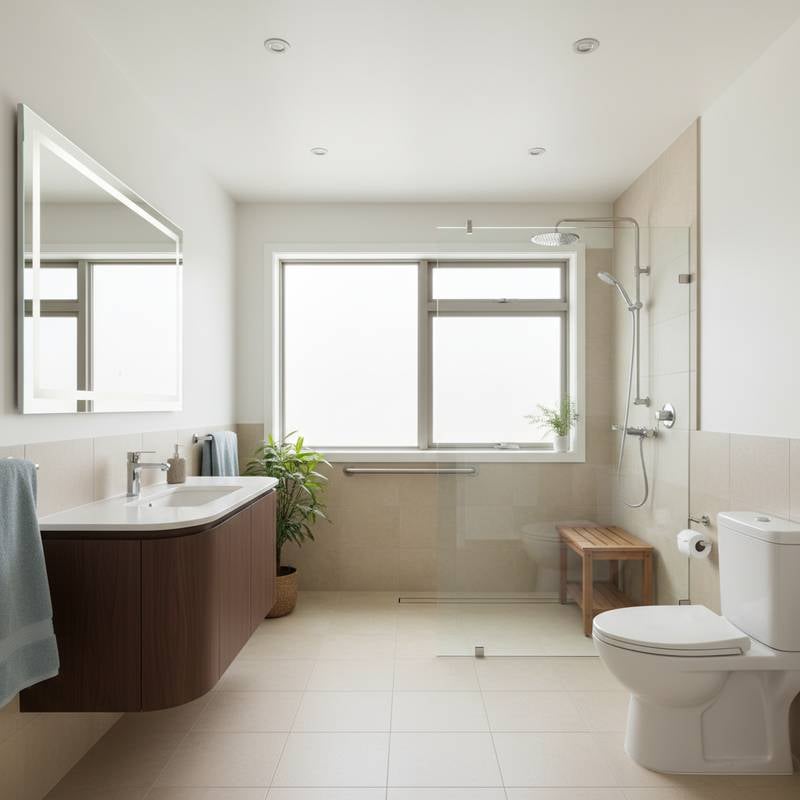
A shower without a raised threshold eliminates obstacles, permitting seamless entry on foot or via mobility aids. Incorporate a collapsible bench and adjustable shower wand to accommodate diverse needs. Allocating $6,000 to $10,000 covers a comprehensive installation.
2. Support Bars and Structural Reinforcement
Robust bars positioned adjacent to lavatories, showers, and bathing areas deliver essential stability. Strengthening walls prior to finishing materials ensures durability. Each bar installation ranges from $200 to $500, influenced by location and preparatory work.
3. Slip-Resistant Floor Surfaces
Options like textured vinyl, patterned ceramic, or resilient rubber diminish sliding dangers. Plan for $5 to $10 per square foot to secure long-lasting, effortless-to-clean solutions.
4. Elevated Lavatory Fixtures
Opt for taller toilets or added risers to alleviate pressure on joints during use. Installed units fall between $250 and $600.
5. Enhanced Illumination Systems
Combine overhead panels, task-oriented mirrorside lamps, and automatic sensors for optimal sightlines. Comprehensive upgrades total $800 to $2,000.
6. Easy-Operation Hardware and Automated Controls
Lever mechanisms simplify use for those with reduced hand strength. Sensor-activated taps minimize germ transmission. Individual pieces cost $150 to $400.
Assessing Financial Returns
Modifications for accessibility deliver tangible economic and personal advantages. Sellers recoup 50 to 60 percent of expenditures upon listing, provided the updates reflect contemporary standards and quality craftsmanship. Beyond monetary recovery, these adaptations support extended home occupancy, sidestepping the steep fees of alternative housing arrangements.
Principles of inclusive design broaden appeal to diverse purchasers, thereby elevating market desirability and potential sale prices.
Practical Considerations for Implementation
For straightforward tasks like surface refreshes, hardware swaps, or temporary support additions, self-guided approaches suit well. Extensive undertakings, including threshold eliminations or circuit overhauls, necessitate skilled intervention. Professionals provide assurances on moisture resistance, legal conformity, and protective guarantees. Although independent efforts may trim initial costs by 30 to 40 percent, oversights often escalate into costly fixes.
Expense projections draw from nationwide benchmarks, specialist estimates, and vendor data. Local economic conditions, selections in finishes, and workforce pricing adjust these figures. Assumptions center on moderate-quality components and conventional spatial arrangements.
Common Questions Addressed
What is the typical expense for an aging-in-place bathroom renovation?
Homeowners allocate $12,000 to $35,000, scaled to dimensions and inclusions.
Does a barrier-free shower surpass a bathtub in safety?
Indeed, it curtails stumbling risks and simplifies integration with assistive tools.
Sustaining Accessibility Over Time
Regular upkeep preserves the efficacy of these investments. Schedule annual inspections for fixtures and surfaces to detect wear early. Clean non-slip areas gently to maintain traction without degradation. Update lighting bulbs promptly to ensure consistent visibility. These habits extend the lifespan of upgrades, reinforcing both safety and home value for the long term.