Soundproofing Walls: Costs and Materials Breakdown
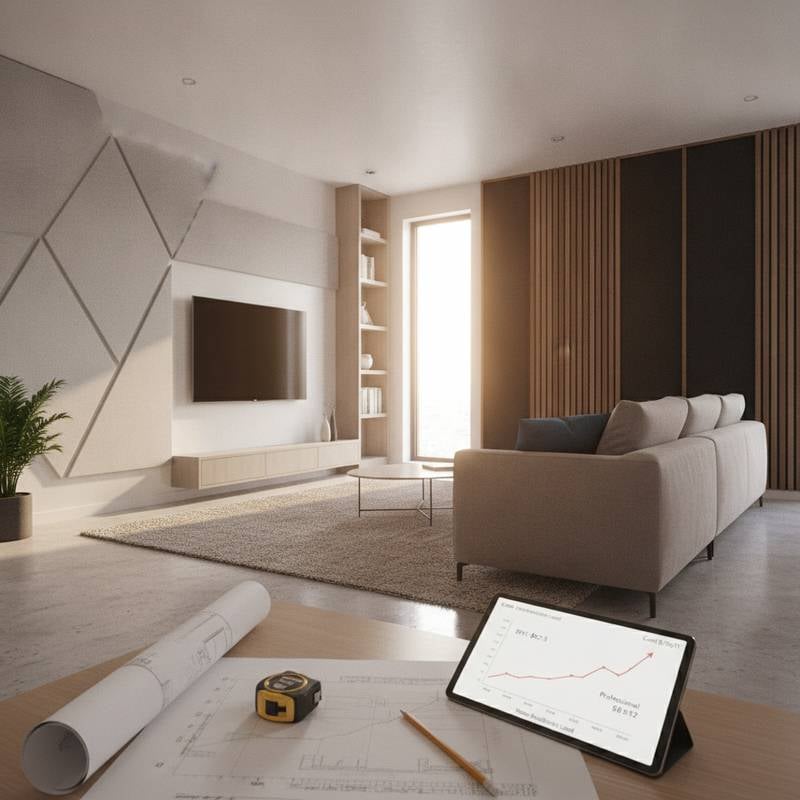
Soundproofing a wall requires planning around material selection and installation steps. Budgets for a typical room range from 1000 to 3000 dollars. The average project lands near 2000 dollars for one standard interior wall.
Primary Cost Influences
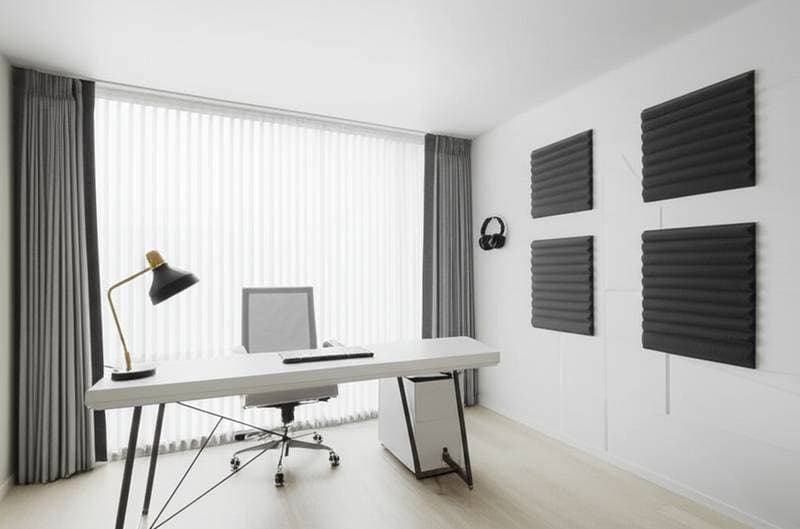
Material selection drives much of the expense. Options include acoustic panels, insulation fills, and specialized sound damping drywall. Labor for cutting, fitting, and sealing adds another major portion. Room dimensions and existing wall construction also affect the final total.
Basic treatments using insulation or foam panels fall between 2 and 4 dollars per square foot. Professional systems that incorporate specialty drywall and perimeter seals reach 8 to 12 dollars per square foot. Labor accounts for 40 to 60 percent of most budgets. Layered assemblies that both block and absorb sound deliver the strongest results.
Project Scale Examples
A bedroom or office wall measuring roughly 120 square feet costs 500 to 1200 dollars with standard materials. Larger rooms or units with several shared walls often exceed 2500 dollars. Full wall upgrades break down into three tiers.
Basic do it yourself kits that rely on acoustic foam or fiberglass insulation run 100 to 300 dollars per wall. Mid level approaches that add sound damping drywall and resilient channels fall between 800 and 1800 dollars. Premium multi layer builds with complete sealing and professional labor total 2000 to 3000 dollars.
Professional Labor Rates
Contractors charge 50 to 90 dollars per hour. Most wall projects require one or two full days. The work sequence includes removal or modification of existing drywall, insertion of insulation or damping layers, and final gap sealing.
Additional trades may be needed when electrical boxes or HVAC ducts require relocation. These steps increase both time and cost.
Key Variables That Shift Pricing
Material performance levels vary widely. Mass loaded vinyl, soundproof drywall, and acoustic panels each carry distinct price points and sound reduction ratings. Older walls frequently need surface repairs before new layers can be added. Tight layouts or built in cabinetry extend labor hours. Most residential jobs do not require permits, yet local codes should be checked in advance.
Mid tier material combinations usually give the strongest value for typical homes.
Decision Between DIY and Professional Help
Simple panel hanging or insulation stuffing stays within reach for many homeowners. Material costs for these tasks run 1 to 3 dollars per square foot. Such measures suit light noise control or short term needs.
Structural changes, electrical adjustments, or multi layer drywall assemblies benefit from professional execution. Trained crews produce more consistent Sound Transmission Class ratings and can improve noise reduction by up to 50 percent over average do it yourself outcomes. Professional fees commonly double or triple material expenses alone.
Budget Control Strategies
Target only the walls that face noise sources. Pair soundproofing work with insulation upgrades to lower ongoing energy use. Resilient channels combined with acoustic sealant improve performance without premium drywall. Bulk purchases reduce per unit material costs across multiple rooms. Sealing electrical outlets and baseboard gaps with acoustic caulk yields immediate gains at minimal expense.
Practical Benefits
Soundproofing improves daily comfort and privacy even when it does not directly increase resale value. Multi family properties see fewer neighbor complaints. Home offices and recording spaces gain measurable productivity advantages. When completed alongside insulation work, the same project also trims heating and cooling loads over time.
Maintenance After Installation
Finished soundproof walls require only routine care. Keep surfaces dry and inspect perimeter seals every few years. Panels can often be salvaged during later renovations if removal is performed with care.
Common Questions
How much does one wall cost? Plan on 500 to 1500 dollars depending on chosen materials and labor.
Does do it yourself work deliver results? Moderate noise reduction is achievable. Full isolation usually requires professional installation.
Which material blocks sound most effectively? Soundproof drywall and mass loaded vinyl rank highest among standard choices.
Can existing drywall remain in place? It can in many cases, yet adding a new layer or resilient channels raises performance.