2025 Universal Design Costs for Aging in Place
Aging-in-place renovations enable individuals to remain comfortable and independent within their homes by addressing mobility challenges, safety concerns, and accessibility needs. Universal design principles create environments that function effectively for people across all ages and abilities. By grasping the associated costs, homeowners can make informed decisions that align with their lifestyle and financial parameters.
Defining Universal Design in the Context of Aging in Place
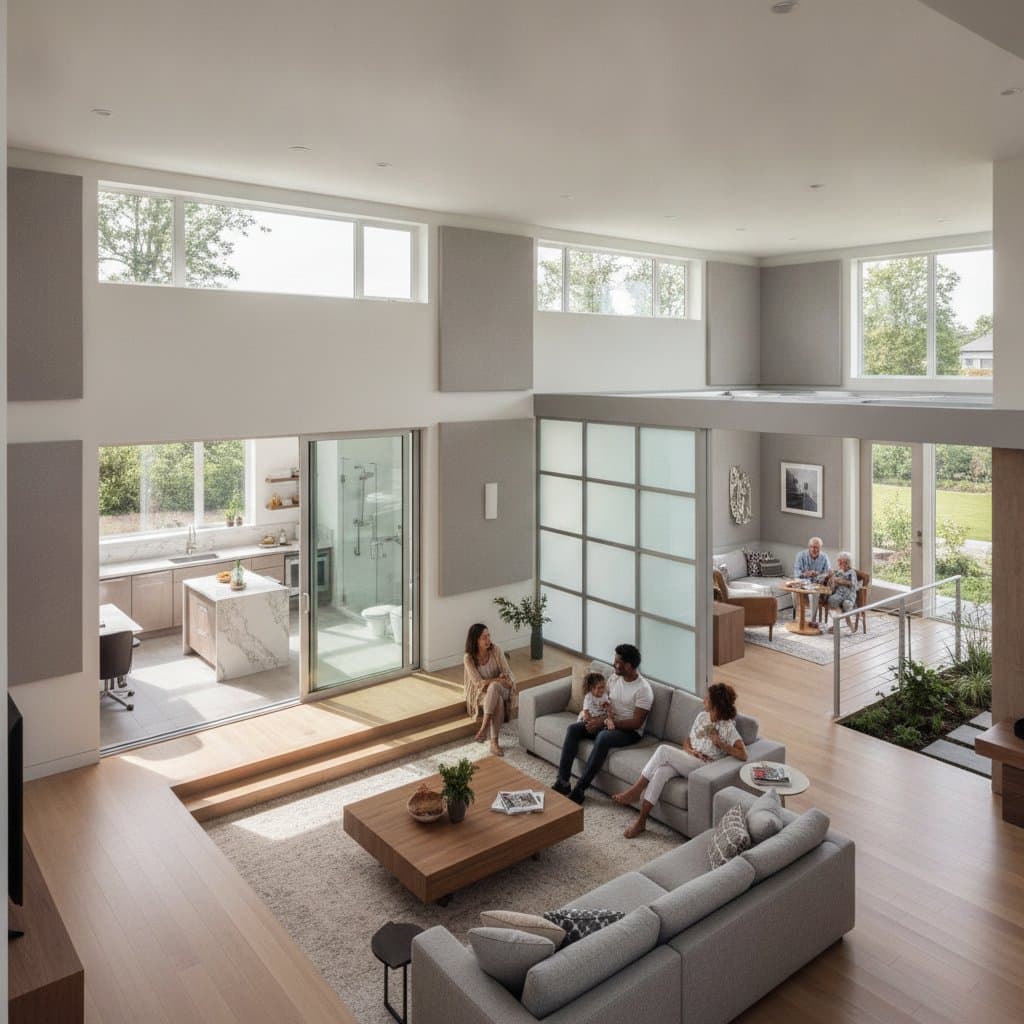
Universal design develops residences that accommodate varying ages and physical capabilities. This approach eliminates physical barriers and enhances overall comfort, all while preserving aesthetic appeal. Such modifications prove advantageous not only for older adults but also for multigenerational households.
The primary objective involves simplifying daily activities through strategic adjustments to movement, reach, and interaction within living spaces. Key principles encompass:
- Accessibility: Unobstructed pathways, entrances without steps, and controls positioned at reachable heights.
- Safety: Surfaces resistant to slipping, enhanced illumination, and sturdy support elements.
- Flexibility: Features that adjust to evolving requirements over time.
- Ease of Use: Hardware that operates intuitively, broader doorways, and integrated smart technologies.
Implementing these elements results in a residence that prioritizes security and ease, while upholding its distinctive character.
Overview of Costs for Universal Design Renovations
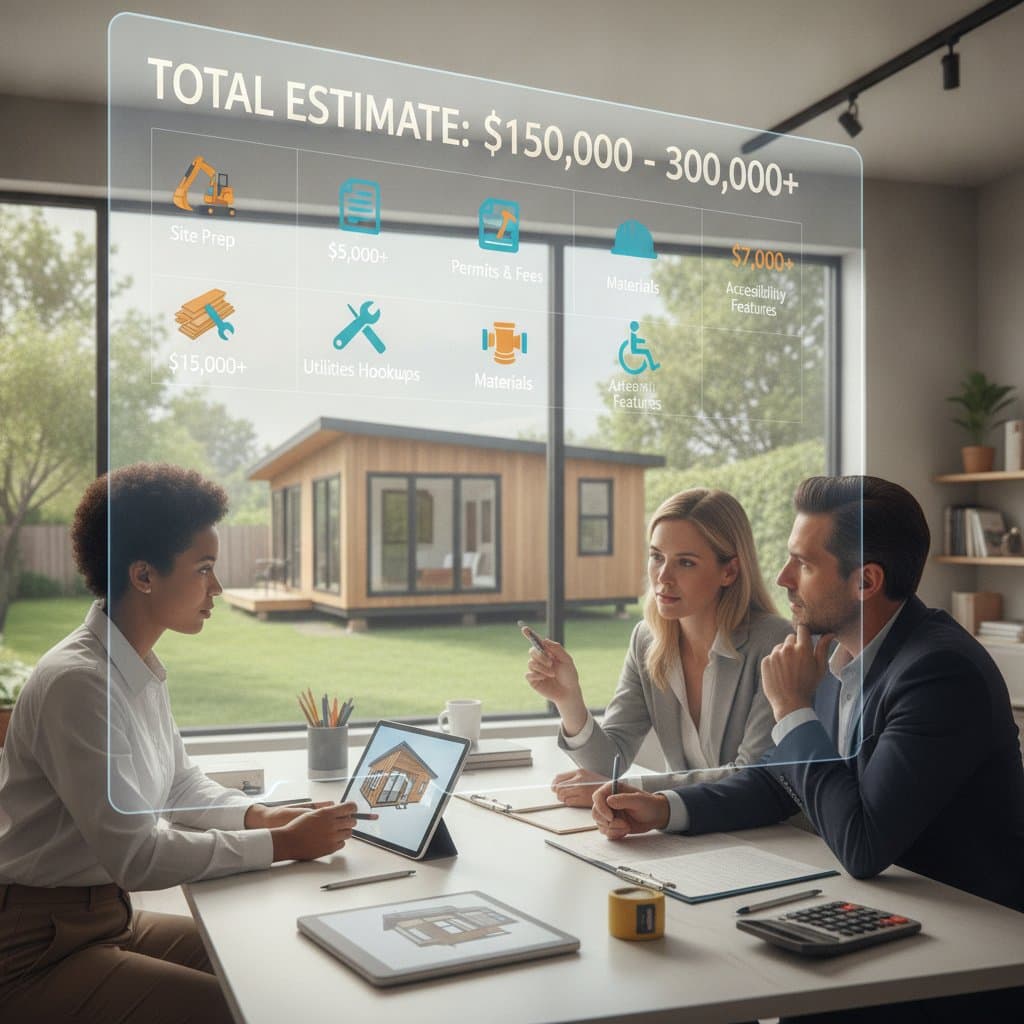
Costs vary based on the residence's dimensions, existing configuration, selected materials, and regional labor rates. Certain initiatives suit standalone execution, whereas others integrate seamlessly into comprehensive remodeling efforts. The following outlines representative investment ranges for 2025, drawn from industry averages.
- Entry and Exterior Access Improvements
- Included Elements: Entrances without thresholds, permanent ramps, doors widened to 36 inches, and lever-style handles.
- Significance: These modifications minimize fall hazards and facilitate entry for mobility aids such as wheelchairs or walkers.
- Cost Range: A durable concrete ramp measures $2,000 to $5,000, depending on length and incline. Door replacements with reinforced frames and hardware add $800 to $2,500 per entry.
- Bathroom Adaptations
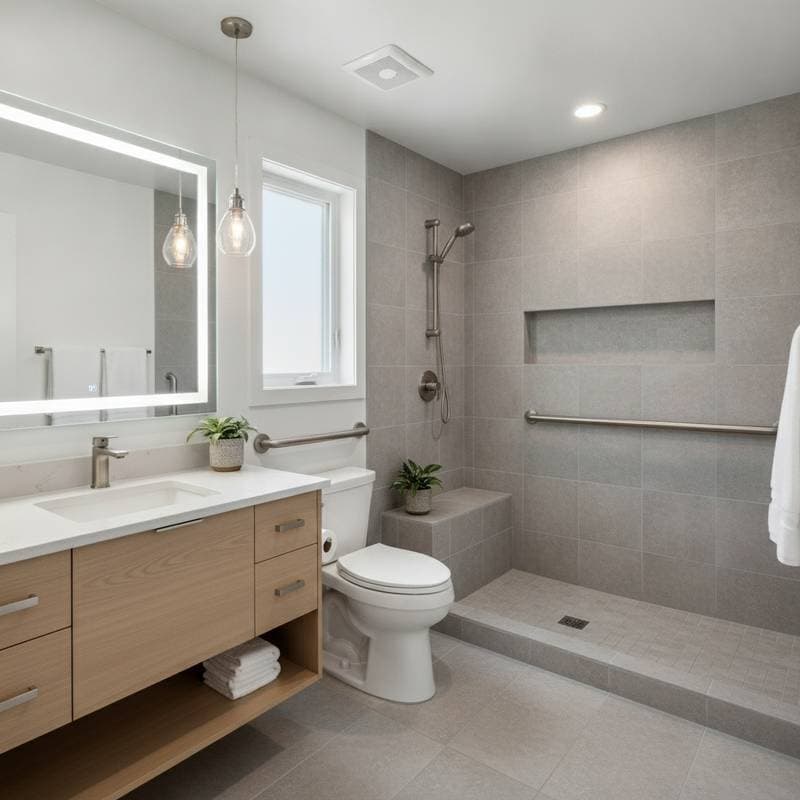
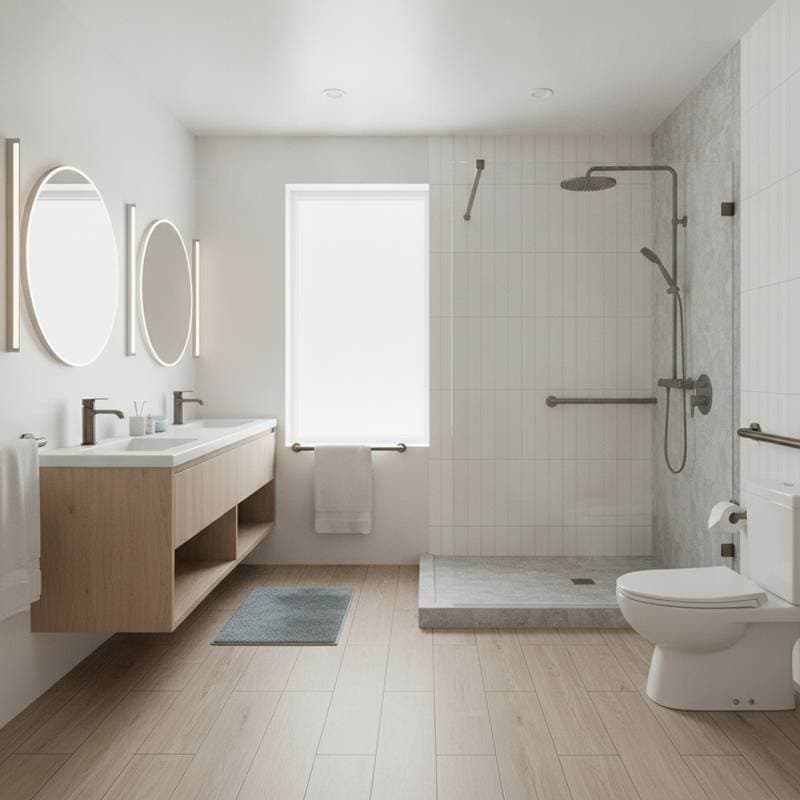
- Included Elements: Showers without curbs, reinforced grab bars, toilets at 17- to 19-inch heights, and flooring with high traction coefficients.
- Significance: Bathrooms represent frequent sites for accidents; these enhancements bolster stability without compromising visual harmony.
- Cost Range: Installing grab bars and slip-resistant tiles starts at $500 to $1,500. Complete overhauls featuring zero-barrier showers and luxury finishes range from $10,000 to $25,000.
- Kitchen Accessibility Enhancements
- Included Elements: Countertops adjustable to 34 inches, pull-out shelving units, drawer-integrated dishwashers, and sensor-activated faucets.
- Significance: Reductions in required reaching and stooping streamline meal preparation and maintenance tasks.
- Cost Range: Cabinet modifications and appliance swaps begin at $3,000 to $7,000. A full kitchen reconfiguration with premium materials escalates to $20,000 to $50,000.
- Lighting and Electrical Modifications
- Included Elements: Layered LED fixtures for uniform brightness, rocker-style switches at 48-inch heights, and outlets positioned 15 to 48 inches from the floor.
- Significance: Improved illumination counters visual decline and accident risks, while accessible controls simplify operations.
- Cost Range: Fixture installations and minor wiring updates cost $500 to $2,000 per room. Extensive rewiring for whole-home systems reaches $5,000 to $10,000.
- Flooring Upgrades
- Included Elements: Materials with slip ratings above 0.6, carpets under 0.5-inch pile, and beveled transitions between surfaces.
- Significance: Consistent, hazard-free flooring promotes seamless navigation and reduces trip incidents.
- Cost Range: Vinyl or laminate installations average $3 to $8 per square foot, totaling $1,500 to $4,000 for a standard room. Engineered hardwood with textured finishes adds $5 to $12 per square foot.
- Doorway and Hallway Expansions
- Included Elements: Openings broadened to 32 to 36 inches, hallways at least 36 inches wide, and swing-clear hinges.
- Significance: Expanded passages enhance mobility for all occupants, including those using assistive devices.
- Cost Range: Non-structural door widenings cost $1,000 to $3,000 each. Interventions involving load-bearing walls require engineering and range from $5,000 to $15,000.
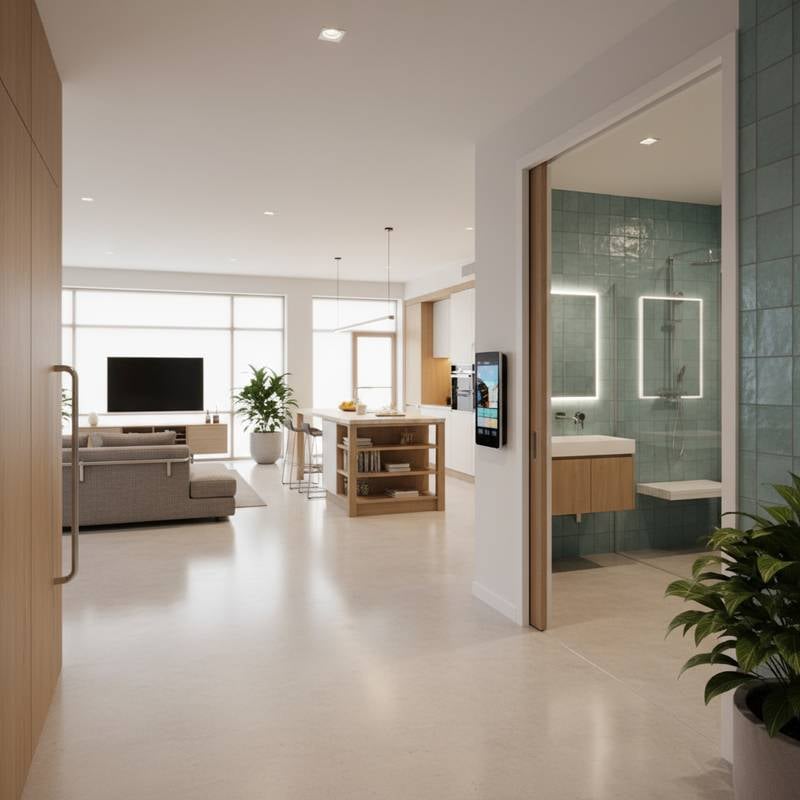
- Smart Home Integration
- Included Elements: Voice-activated lighting, programmable thermostats, automated locks, and monitoring cameras.
- Significance: Automation diminishes physical demands and fosters greater autonomy.
- Cost Range: Entry-level hubs with basic controls start at $200 to $1,000. Comprehensive systems linking lights, security, and appliances total $2,000 to $8,000.
Strategies for Budgeting and Planning Costs
Develop renovation plans by emphasizing safety and accessibility first, followed by enhancements for comfort and aesthetics. Consider these steps to manage expenses effectively.
- Identify Core Priorities: Focus initially on bathrooms, entrances, and flooring, as these yield the greatest safety dividends.
- Integrate Multiple Projects: During larger remodels, embed universal design elements to consolidate labor costs and material efficiencies.
- Evaluate Material Options: Select accessible products in diverse finishes; opt for low-maintenance, durable choices that complement existing decor.
- Anticipate Long-Term Adaptations: Reinforce structures for future installations, such as blocking for grab bars or reserving space for lifts.
- Consult Specialists: Engage contractors versed in accessibility standards to propose compliant, efficient solutions.
Variables Impacting Renovation Expenses
Multiple factors shape the overall expenditure for aging-in-place projects.
- Residence Age and Structure: Vintage properties often necessitate foundational reinforcements for ramps or widened openings, adding 20 to 50 percent to base costs.
- Material Choices: Premium selections like quartz countertops or antimicrobial tiles elevate prices, yet enhance durability and resale potential.
- Professional Labor: Skilled tradespeople command $50 to $150 per hour; expertise in universal design justifies the investment for code adherence.
- Geographic and Regulatory Influences: Urban areas incur higher labor fees, while permits for structural alterations range from $200 to $2,000.
Obtain bids from at least three contractors who demonstrate knowledge of universal design guidelines to ensure accurate projections.
Integrating Style with Practical Functionality
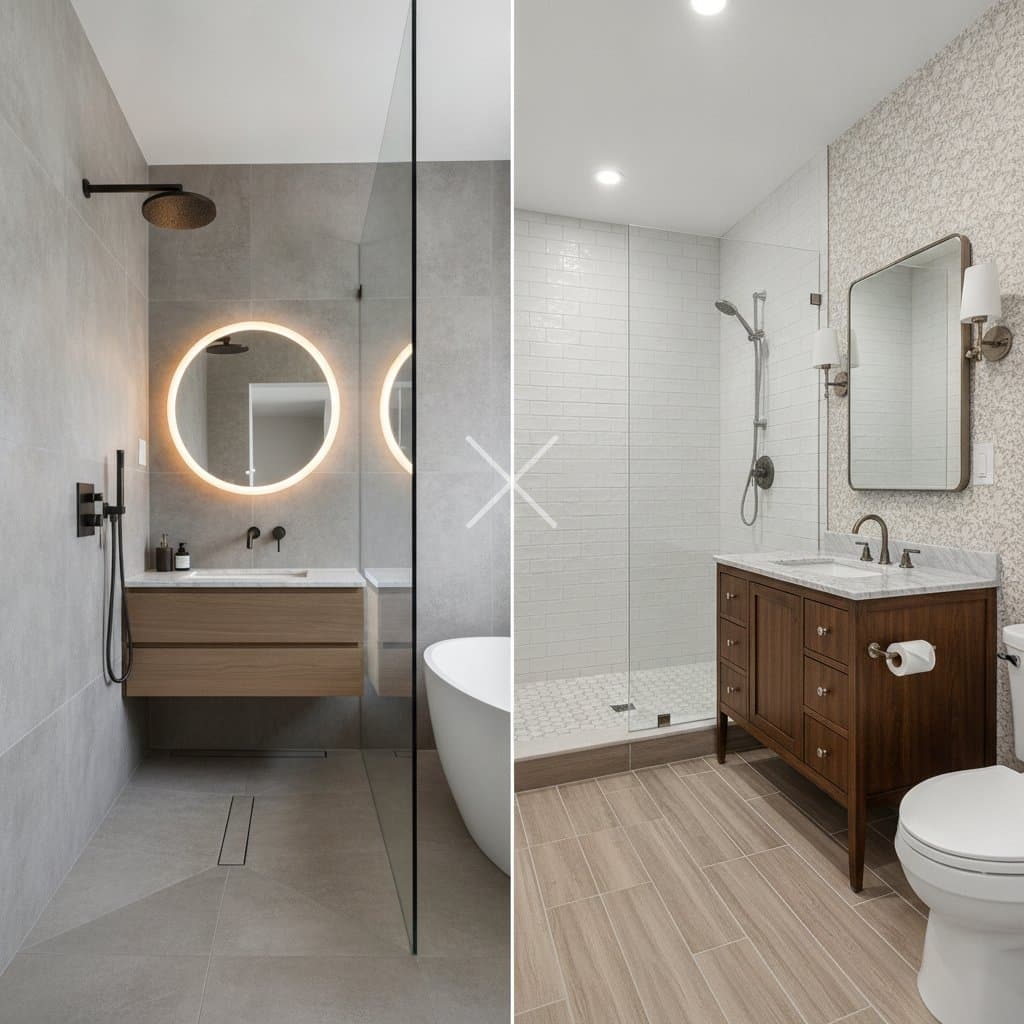
Universal design harmonizes utility and elegance through contemporary innovations. Examples illustrate this balance.
- Walk-in showers incorporate seamless glass enclosures and oversized porcelain tiles, evoking spa-like serenity.
- Lever handles in oil-rubbed bronze or chrome accents coordinate with varied interior motifs.
- Recessed under-cabinet LEDs provide task illumination alongside warm ambient glows in kitchens.
- High-contrast color schemes delineate spatial boundaries for visual impairment, while maintaining sophisticated palettes.
Thoughtful selection ensures the residence remains inviting and versatile for residents and guests alike.
Deciding Between DIY and Professional Execution
Certain modifications lend themselves to homeowner involvement, while others mandate expert oversight.
- Suitable for DIY: Securing grab bars with wall anchors, swapping knobs for lever pulls, or retrofitting LED bulbs.
- Requiring Professionals: Framing doorway expansions, plumbing curbless shower pans, or upgrading electrical panels.
Professionals guarantee compliance with building codes and structural integrity. Homeowners retain influence by specifying design preferences and material selections.
Sustaining Universal Design Investments
These adaptations increase property longevity by averting subsequent overhauls. Routine upkeep preserves their efficacy.
- Inspect grab bars quarterly for tightness and corrosion.
- Apply sealants annually to grout lines and flooring edges against moisture intrusion.
- Upgrade to energy-efficient lighting as advancements emerge.
- Test hardware mechanisms biannually to confirm smooth operation.
Consistent care safeguards functionality and adaptability amid evolving circumstances.
Advancing Your Aging-in-Place Renovation
Embracing universal design fosters enduring comfort and self-reliance. Strategic cost awareness empowers selections that align with present routines and future aspirations. Initiate consultations with experts to blueprint a residence that evolves alongside its inhabitants.