Remodeling Basements to Survive Floods and Water Damage
A basement offers valuable living space in many homes. It also faces the greatest risk of flooding and moisture intrusion. Remodeling with water resistance in mind protects the investment and keeps the area usable in any weather. This guide details the steps required to create a basement that resists floods, limits water damage, and maintains durability over time.
Understanding Water Challenges in Basements
Basements lie below ground level. They collect moisture through soil contact, foundation cracks, and inadequate drainage. Heavy storms or rising groundwater can turn minor leaks into full flooding. Planning must address both everyday dampness and major water events.
The objective extends beyond comfort. Every material and system must safeguard the home structure while creating a dry interior.
Core Principles of Waterproof Remodeling
Successful waterproof renovations rest on three principles: prevention, protection, and recovery.
- Prevention keeps water out through drainage improvements, proper grading, and sealants.
- Protection selects materials that resist damage when moisture appears.
- Recovery designs the space for faster cleanup and repair after any flood.
These principles shape decisions from foundation work to final finishes.
Improve Drainage Before Finishing
Inspect exterior water flow before interior work begins. Poor drainage causes most basement floods.
- Regrade soil so it slopes away from the foundation walls.
- Extend downspouts several feet beyond the house to avoid pooling.
- Clean and repair gutters to direct roof runoff safely outward.
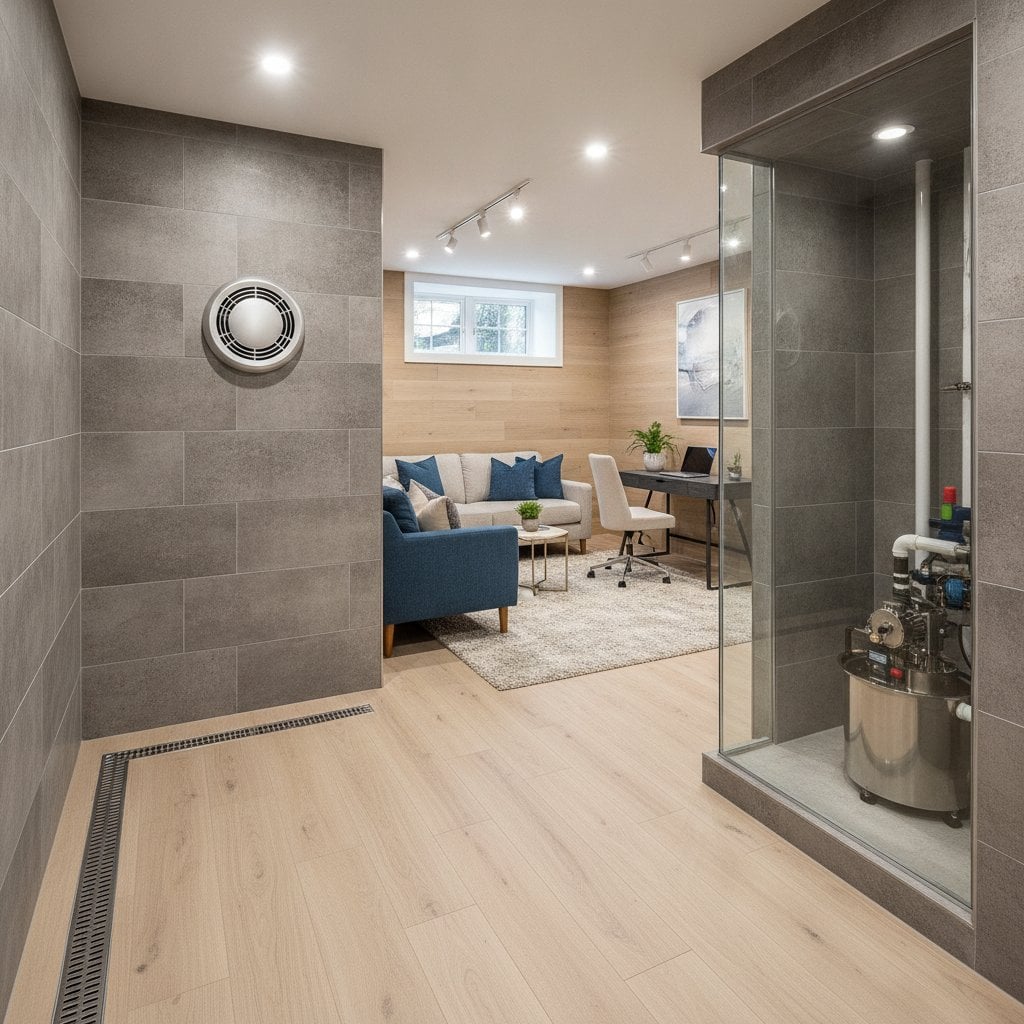
Inside, install a perimeter drain or French drain. This system collects seepage and routes it to a sump pump for removal.
Seal and Reinforce the Foundation
Cracks and porous concrete allow water entry. Apply a cementitious waterproof coating or elastomeric sealant to interior walls during renovation. These products form a barrier yet permit the concrete to breathe.
For active leaks, use injection grouting to fill cracks with expanding resin. When the exterior foundation is accessible, add waterproof membranes and drainage boards for added defense.
Choose Flood-Resistant Wall and Floor Materials
Select materials that tolerate water contact without warping or mold growth.
Recommended wall options include cement board in place of drywall, closed-cell spray foam insulation to seal gaps, and PVC or fiberglass panels that clean easily after exposure.
Floor choices include epoxy coatings for seamless, disinfectable surfaces, luxury vinyl tile rated for below-grade use, and polished concrete for low maintenance. Carpet, solid wood, and laminate should be avoided in any flood-prone area.
Install a Reliable Sump Pump System
A sump pump removes collected water before it reaches floor level. Include a primary pump for routine groundwater, a battery or water-powered backup for outages, and a check valve to prevent backflow. Test the unit, clear debris from the pit, and replace batteries on a fixed schedule.
Add Dehumidification and Ventilation
Humidity damages finishes even without standing water. Size a dehumidifier to the basement square footage and pair it with mechanical ventilation. Use mineral-based paints rather than vinyl coverings so moisture can escape.
Elevate Utilities and Electrical Components
Raise outlets several feet above the floor. Place HVAC equipment, water heaters, and laundry appliances on platforms. Specify moisture-rated wiring and fixtures. Elevated systems reduce repair costs if water enters the space.
Plan the Layout for Easier Cleanup
Position cabinets and storage above expected water lines. Choose modular furniture that moves quickly. Install half-height wall panels or removable baseboards so damaged sections can be replaced without full demolition.
Integrate Flood Sensors and Smart Alerts
Place water leak sensors near the sump pit, water heater, and windows. These devices send phone alerts at the first sign of moisture and can link to smart home systems for remote monitoring during storms.
Consider Long-Term Maintenance and Inspection
Examine the foundation twice yearly for new cracks. Clean gutters, test the sump pump, and reapply sealants as needed. Early attention prevents small issues from becoming major repairs.
When to Hire a Professional
Painting and vinyl flooring suit skilled DIY efforts. Drainage corrections, structural fixes, and sump pump installation benefit from experienced contractors. Professional work ensures systems function together and avoids errors in grading or sealing.
Ongoing Care for Sustained Performance
A completed waterproof basement delivers usable space and reduced risk during storms. Durable surfaces, effective drainage, and regular checks maintain that performance. Consistent attention keeps the area functional and dry through every season.