Understanding ADU Costs for 2026
Accessory Dwelling Units, known as granny flats or backyard cottages, offer homeowners added property value and versatile living options. These structures range from standalone buildings to garage conversions. This guide details expected expenses, sources of those costs, and strategies for effective project planning.
Overview of Expenses and Timelines
The following sections provide a complete breakdown of ADU construction costs, encompassing design, permits, site preparation, building, and final touches. Readers gain insight into elements that affect pricing and methods to control spending for optimal returns.
Estimated Costs and Durations
Typical Cost Range:
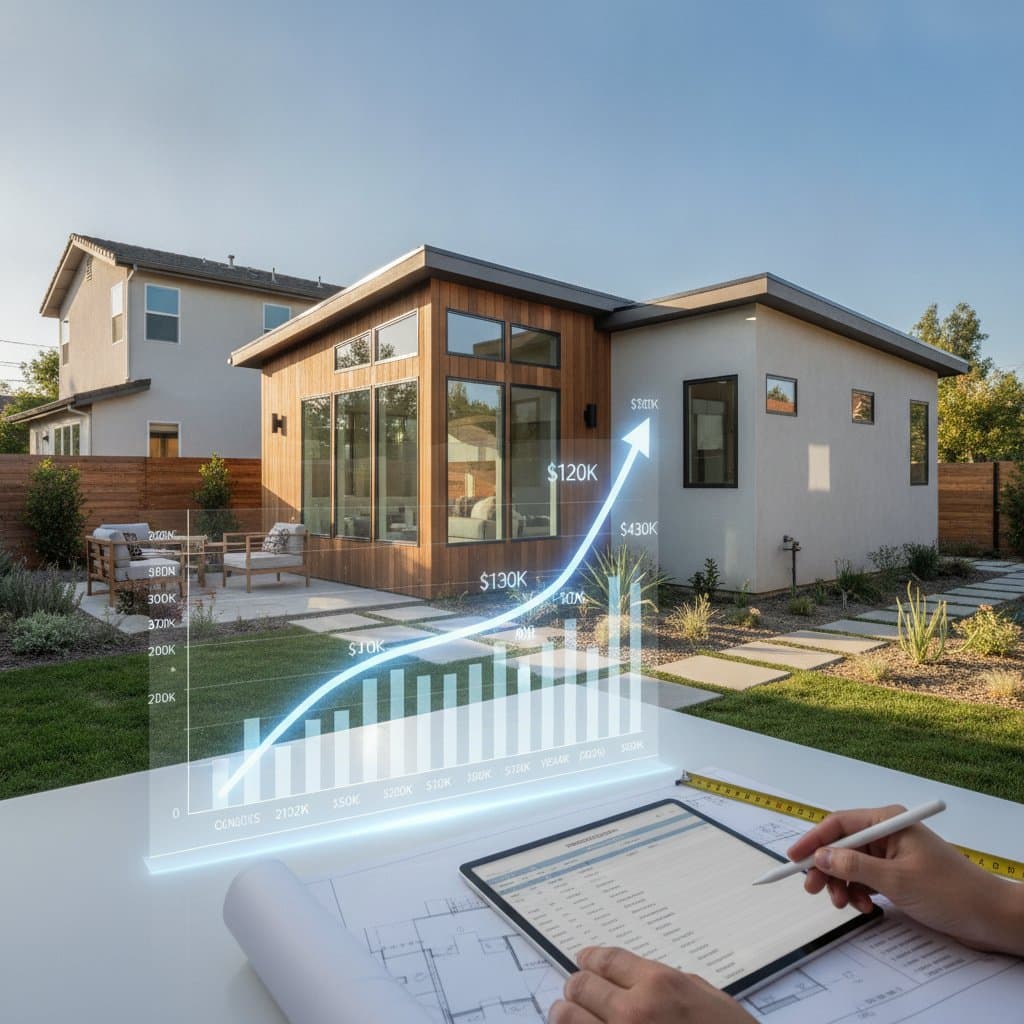
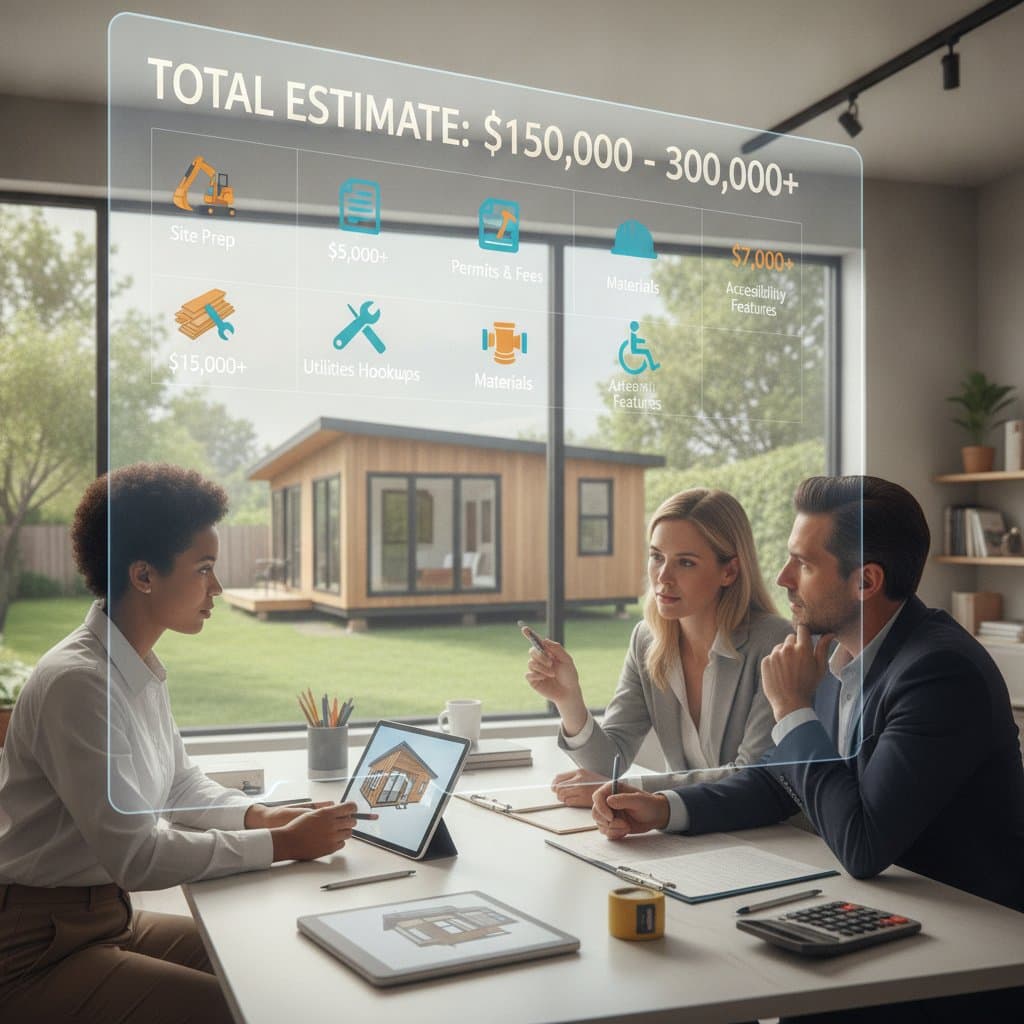
Plan for $150,000 to $400,000 on a detached ADU. Attached versions or garage conversions often fall between $100,000 and $250,000.
Influencing Factors:
- Unit Size: Greater square footage demands more materials and labor hours.
- Design Elements: Intricate layouts or high-end materials elevate expenses.
- Site Challenges: Uneven terrain, poor drainage, or restricted access necessitate extra foundation and earthwork.
- Regulatory Fees: Permit and impact charges differ across municipalities.
- Infrastructure Needs: Extending water, sewage, or power lines adds to the total.
Project Timeline:
- Owner-Managed Build: Spans 9 to 18 months, based on skill level and availability.
- Contractor-Led Build: Takes 6 to 12 months, covering planning, approvals, and execution.
Project Complexity: High. ADU development involves foundational, electrical, and plumbing tasks that adhere to strict regulations.
Choosing Between DIY and Professional Approaches
DIY Possibilities:
Homeowners with building knowledge may handle basic conversions, like transforming a garage into a compact studio. Suitable activities include applying paint, laying floors, or tending landscapes.
Situations Requiring Experts:
- Projects involving load-bearing frames, bases, or roofing.
- Modifications to wiring or piping systems.
- Jurisdictions mandating certified specialists for compliance.
- Preparations needing certified blueprints or technical assessments for approvals.
Expense Comparison:
- Partial DIY Effort: Ranges from $80,000 to $150,000, omitting certified specialist fees.
- Complete Professional Execution: Totals $200,000 to $400,000, incorporating planning, fees, and verifications.
Engaging qualified builders minimizes errors, avoids expensive corrections, and guarantees adherence to standards.
Detailed Construction Phases
Phase 1: Planning and Drafting
Select the ADU style, whether independent, joined to the primary residence, or a retrofit. Specify dimensions, arrangement, and purpose. Engage an architect to produce compliant schematics.
Verification Point: Confirm designs align with zoning rules, boundaries, and elevation restrictions.
Phase 2: Securing Approvals
Present schematics to the municipal authority. Cover fees for reviews, permits, and assessments. Secure endorsements for infrastructure integrations.
Verification Point: Obtain every necessary permit for building and specialties prior to commencement.
Phase 3: Preparing the Location
Remove plants and waste. Level the ground to promote runoff. Identify buried lines ahead of digging.
Alert: Hidden Lines Danger. Contact services for line marking prior to any ground disturbance.
Verification Point: Ensure the area sits evenly with all services clearly identified.
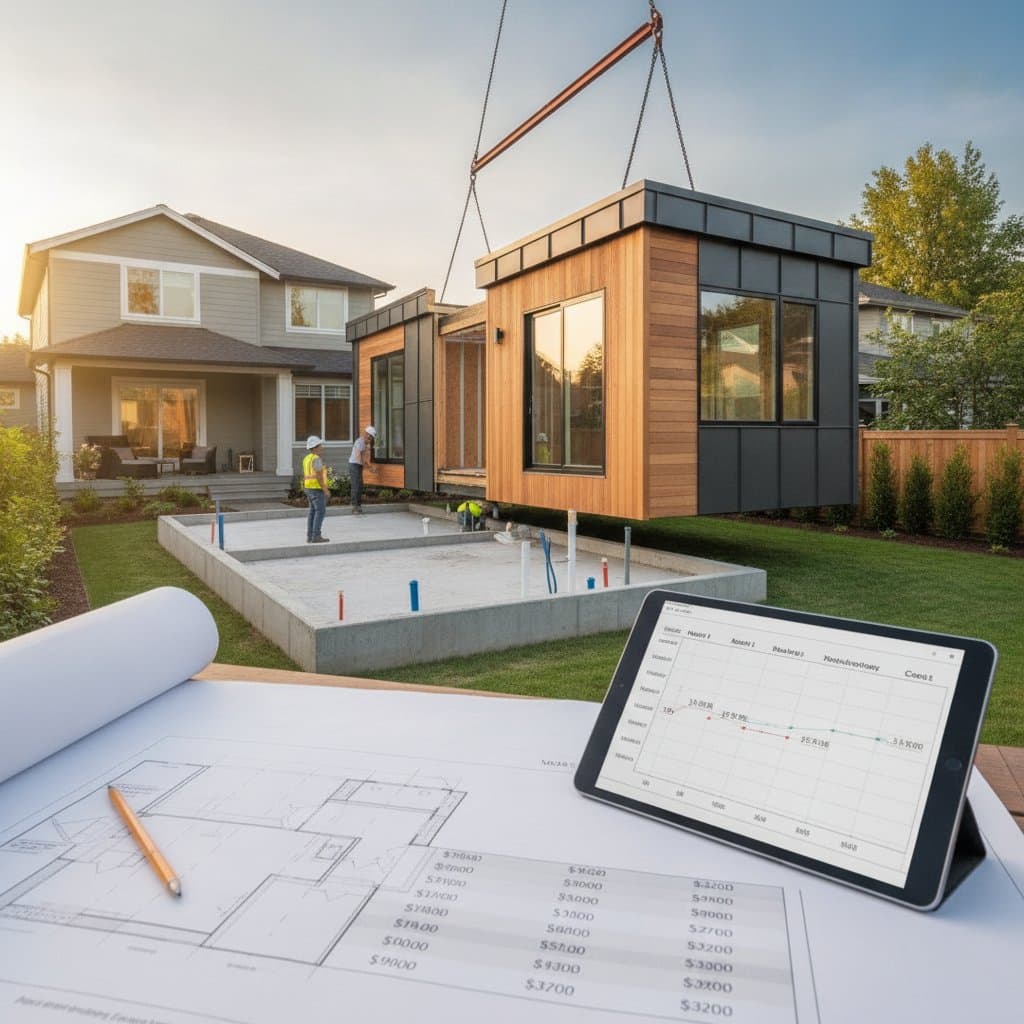
Phase 4: Establishing the Base
Dig and set concrete supports or a slab. Place waterproofing and strengthening elements.
Verification Point: Base levels correctly and clears initial review.
Phase 5: Erecting the Structure
Assemble walls, roof supports, and coverings. Cut openings for entries and views.
Alert: Height-Related Falls. Employ stable platforms and safety gear at elevations.
Verification Point: Vertical elements stand true, and roof assembly holds firm.
Phase 6: Installing Core Systems
Lay wiring paths, water feeds, and waste conduits. Add fuel lines as needed.
Alert: Power Dangers. Disconnect electricity before linking components.
Verification Point: Preliminary checks pass for all systems prior to enclosing surfaces.
Phase 7: Adding Barriers and Surfaces
Fit insulation to standards for thermal performance. Mount, seal, and smooth wallboard.
Verification Point: Surfaces appear even and prepared for coatings.
Phase 8: Applying Inner Elements
Apply protective layers to walls. Set down surfaces, edges, storage, and appliances.
Verification Point: Elements fit uniformly and fasten solidly.
Phase 9: Linking Services and Final Reviews
Attach systems to the home supply or independent gauges. Arrange concluding assessments across trades.
Verification Point: Achieve overall clearance and occupancy certification.
Essential Safety Measures
- Power Risks: Retain certified electricians for main integrations.
- Elevation Hazards: Position ladders steadily and anchor elevated supports.
- Breathing Safeguards: Use protective coverings during dust-generating tasks like sawing or blending aggregates.
Maintain extinguishers nearby and ensure unobstructed pathways throughout the work.
Addressing Challenges and Verifications
Frequent Problems:
- Irregular Base: Double-check molds prior to filling.
- Damp Subfloors: Incorporate sealing layers and enhance water flow.
- Elevated Service Expenses: Confirm barrier placement and seals.
Performance Reviews:
- Entries and views function without resistance.
- Power points and lights perform reliably.
- Water systems maintain seals under load.
Managing Waste and Finalizing
Sort items like metals and usable wood for recycling. Transport wallboard, coatings, and aggregates to designated sites. Clear the area of hazards like fasteners during the concluding inspection.
Upkeep and Durability
Examine outer elements biannually for protective layers, seals, and roof integrity. Clear channels routinely and verify alarms regularly. Key features like coverings and exteriors endure 20 to 30 years under care. Inner surfaces such as grounds may require updates every 10 to 15 years based on activity.
Indicators for Professional Intervention
Engage Specialists If:
- Cracks appear in supports or bases shift.
- Water or power setups fail reviews.
- Extensions or upper levels enter planning.
Standard Fees:
- Oversight by lead builders: 10 to 20 percent of overall budget.
- Certified pipe or wire experts: $100 to $200 hourly.
- Frame analysts: $1,000 to $3,000 for plans and evaluations.
Builder Evaluation List:
- Confirm credentials and protection policies.
- Gather three or more endorsements and examine prior projects.
- Secure a formal agreement detailing work, dates, and payments.
- Clarify guarantees on labor and supplies.
Strategies for Optimal Results
Address service links at the outset, as capacity limitations often cause setbacks. Procure entries and views ahead of structural work to align with delivery schedules. Document progress with records, approvals, and images for fiscal or market purposes.
Select efficient options like energy-saving lights and sealed views to lower ongoing expenses. Opt for resilient choices such as composite exteriors and synthetic grounds to extend service life.
Realizing Value Through Your ADU
Constructing an ADU represents a significant commitment that yields reliable revenue or familial support. Thorough preparation, regulatory adherence, and skilled execution maintain expenses within bounds and ensure reliability. With sound financial planning and expert input, this addition transforms into a source of sustained utility and worth.