Designing Bathrooms for Long-Term Living: Aging-in-Place Trends for 2026
Aging-in-place bathroom remodels enable homeowners to maintain independence as they age by incorporating safety and accessibility features. These updates transform standard bathrooms into functional spaces that support mobility and reduce fall risks. In 2026, expect a focus on seamless integration of modern design with practical modifications.
Overview of Remodel Costs
The total cost for an aging-in-place bathroom remodel typically ranges from $14,000 to $28,000, with an average of $20,000 for a standard mid-size bathroom. Labor accounts for approximately 50 percent of the budget, while the remaining expenses cover fixtures, materials, and specialized accessibility elements. Common modifications include converting tubs to walk-in showers, installing grab bars, and enhancing lighting to improve visibility and ease of use.
To estimate your project accurately, consider the bathroom size and desired features. For instance, a basic update might involve adding non-slip surfaces and lever-style handles, while a comprehensive overhaul could include rerouting plumbing for a barrier-free layout.
Essential Accessibility Features
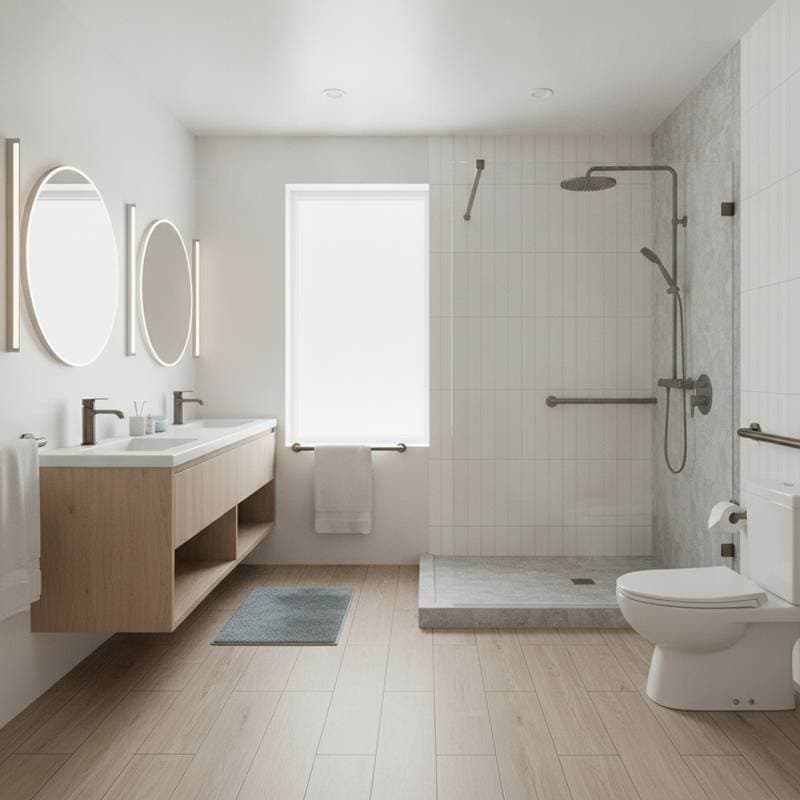
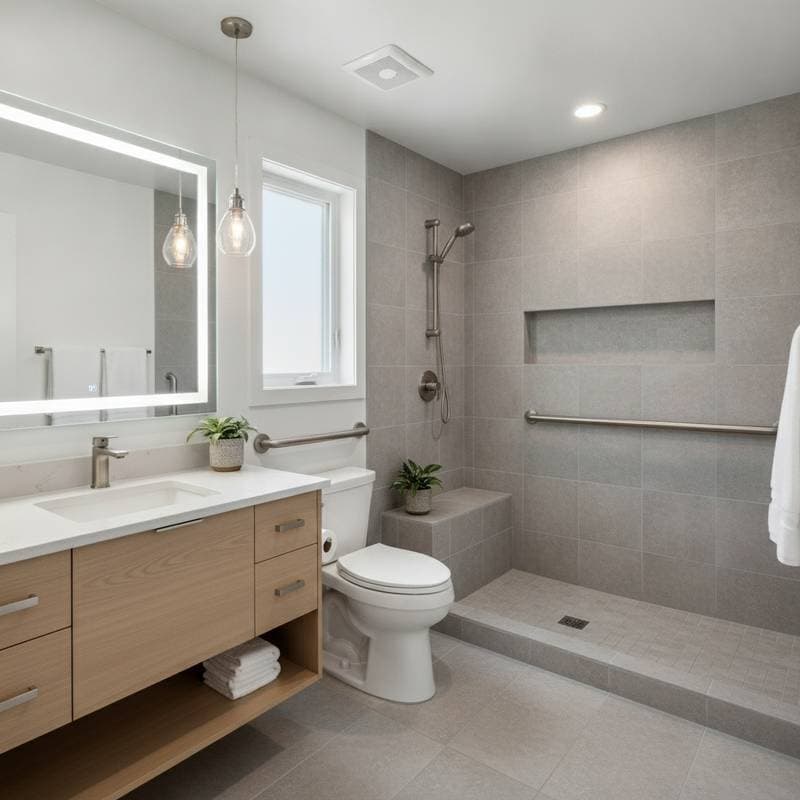
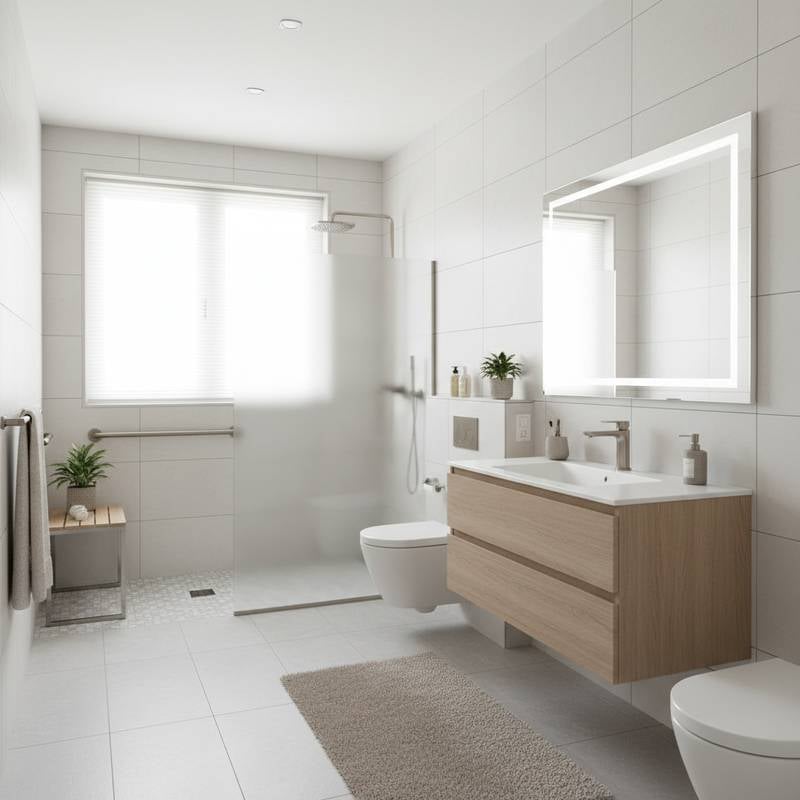
Prioritize features that enhance safety without compromising aesthetics. Walk-in showers with zero thresholds allow easy entry and exit, minimizing trip hazards. Pair these with built-in benches and adjustable showerheads for seated bathing options.
Non-slip flooring, such as textured porcelain tiles, provides reliable traction in wet areas. Wider doorways, at least 32 inches, accommodate wheelchairs or walkers. Motion-activated lighting automatically illuminates paths at night, and lever handles on faucets and doors require less grip strength than traditional knobs.
- Install grab bars near toilets and showers, positioned at 33 to 36 inches above the floor for optimal support.
- Choose comfort-height toilets at 17 to 19 inches to reduce bending.
- Opt for vanities with open space underneath or pull-out shelves for wheelchair access.
These elements comply with ADA guidelines and improve daily usability for all household members.
Costs Based on Bathroom Size and Scope
Small bathrooms, often under 50 square feet, require targeted updates like grab bar installation, comfort-height toilets, and slip-resistant flooring. Such projects generally cost between $10,000 and $15,000.
For mid-size bathrooms around 60 to 80 square feet, a full remodel incorporating layout adjustments, curbless showers, and integrated seating falls in the $20,000 to $35,000 range. Larger master bathrooms, exceeding 100 square feet, may involve premium finishes, custom cabinetry, and advanced smart lighting, pushing costs above $40,000.
Powder rooms benefit from simpler changes, such as raising fixture heights or widening doors, keeping expenses under $10,000. Master suites demand more investment due to extensive plumbing and electrical work.
Labor and Professional Considerations
Contractor labor rates vary from $75 to $150 per hour, influenced by location and expertise. Professionals manage subcontractors, including plumbers and electricians, to ensure all modifications meet building codes and accessibility standards.
Hire a licensed contractor for projects involving structural alterations or electrical upgrades. They verify proper installation of support systems behind walls for grab bars and maintain waterproofing in shower areas.
While DIY approaches suit minor tasks, such as mounting grab bars or swapping faucets, they risk errors in complex areas. Professional oversight prevents costly fixes and guarantees longevity.
Factors Influencing Total Expenses
Several variables impact the budget beyond basic labor and materials.
Plumbing relocation, necessary for curbless showers, adds $1,000 to $3,000. Non-slip flooring installation ranges from $8 to $15 per square foot, depending on material durability.
ADA-compliant fixtures, including toilets and vanities, cost $500 to $1,200 apiece. Lighting systems with motion sensors or dimmers contribute $500 to $1,000.
Permits range from $200 to $800, varying by local regulations. Select mid-tier materials and straightforward designs to balance quality and affordability.
Strategies to Control Costs
Preserve the current layout to avoid expensive plumbing shifts. Choose resilient options like vinyl composite or porcelain tiles over luxury stone for flooring.
Incorporate versatile elements, such as handheld shower wands with adjustable heights, to adapt to changing needs. Integrate energy-efficient LED bulbs in lighting upgrades to lower utility bills over time.
Negotiate bundled services with a single contractor for multiple upgrades, potentially reducing overall labor by 10 to 20 percent. Plan phased implementations if budget constraints arise, starting with high-priority safety features.
Investment Value and Resale Impact
These remodels recoup 55 to 65 percent of costs upon home sale, according to national data. Beyond financial returns, the features promote extended independent living, delaying the need for assisted care.
Prospective buyers, particularly in multigenerational households, appreciate universal design elements that future-proof the home. Accessible bathrooms signal thoughtful preparation, enhancing market appeal.
Basis for Cost Estimates
These figures draw from current national remodeling reports, contractor bids, and average material prices. They assume standard residential applications with moderate finishes and regional labor norms.
Adjust estimates for local market conditions, such as higher costs in urban areas. Consult professionals for personalized quotes.
Choosing Between DIY and Professional Help
Tackle straightforward updates yourself, like securing grab bars with wall anchors or installing anti-scald devices on faucets. These tasks require basic tools and save on labor.
Delegate plumbing, electrical, or framing work to experts. They ensure showers slope correctly for drainage, walls support added weight, and installations resist moisture.
Professional involvement minimizes risks of leaks, electrical hazards, or non-compliant builds that could void warranties.
Preserving Your Updated Bathroom
Regular upkeep extends the lifespan of accessibility features. Inspect caulking and grout quarterly to seal against water intrusion.
Wipe surfaces promptly to keep floors dry and free of obstacles, maintaining slip resistance. Test grab bars and lighting monthly for security.
Modular components, such as removable benches or height-adjustable fixtures, allow easy modifications as mobility evolves. These proactive steps safeguard health, comfort, and property value for decades.