2026 Costs: Universal Design for Aging in Place
Quick Overview
Universal design remodeling enables individuals to remain in their homes securely as they age. This approach emphasizes accessibility, comfort, and self-reliance. A complete home upgrade typically costs between $20,000 and $150,000. Minor enhancements, such as installing grab bars or widening doorways, range from $500 to $5,000. Projects of this nature generally require one to six months, with complexity rated as moderate to advanced. Potential hazards involve electrical modifications, plumbing adjustments, and structural alterations, all of which demand the expertise of licensed professionals.
Step-by-Step Guide to Implementation
1. Evaluate Current Accessibility
Examine each room systematically, focusing on mobility and usability. Measure doorway widths, inspect floor levels, assess lighting conditions, and review reach distances to cabinets and controls.
- Standard doorways need a minimum clear width of 32 inches to accommodate wheelchairs.
- Note potential obstacles like elevated thresholds or unsecured floor coverings.
Verification: Ensure every area supports fluid, hazard-free navigation.
2. Enhance Entryway Accessibility
Incorporate a step-free entrance or install a ramp featuring a gradual incline of no more than 1:12 ratio.
- Caution: Any structural modifications necessitate building permits and involvement from certified contractors.
- Select materials with high traction and equip ramps with robust handrails positioned 34 to 38 inches above the surface.
Verification: Traverse the entry route to confirm secure footing and seamless progression.
3. Expand Doorways and Passageways
Modify existing frames by removing moldings and resizing openings where necessary.
- Opt for offset hinges or swing-clear designs to increase usable space without extensive rebuilding.
- Maintain hallway widths at a minimum of 36 inches for unobstructed passage.
Verification: Simulate movement using assistive devices to validate adequate clearance.
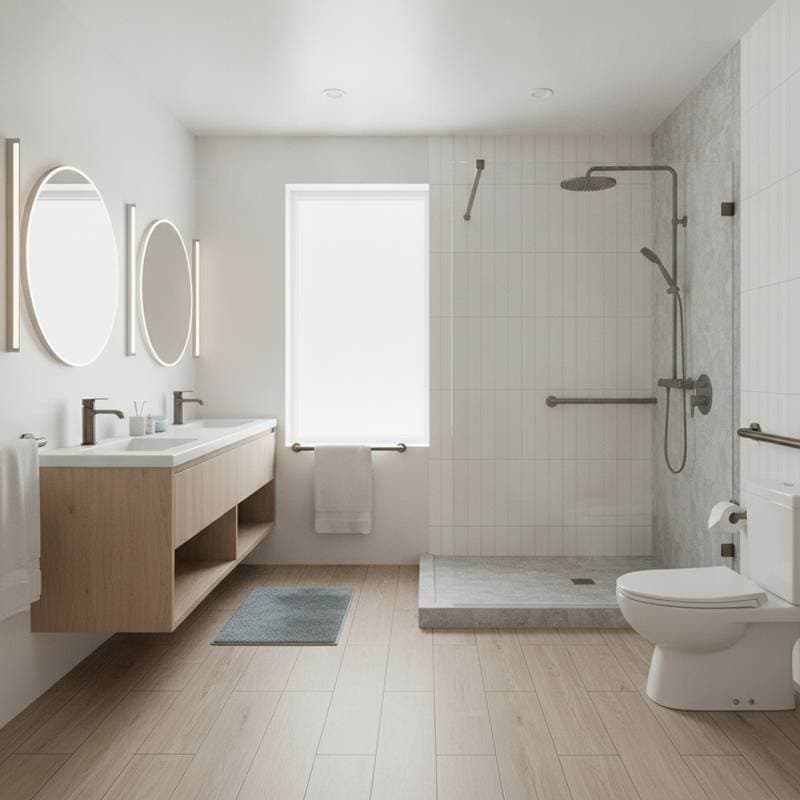
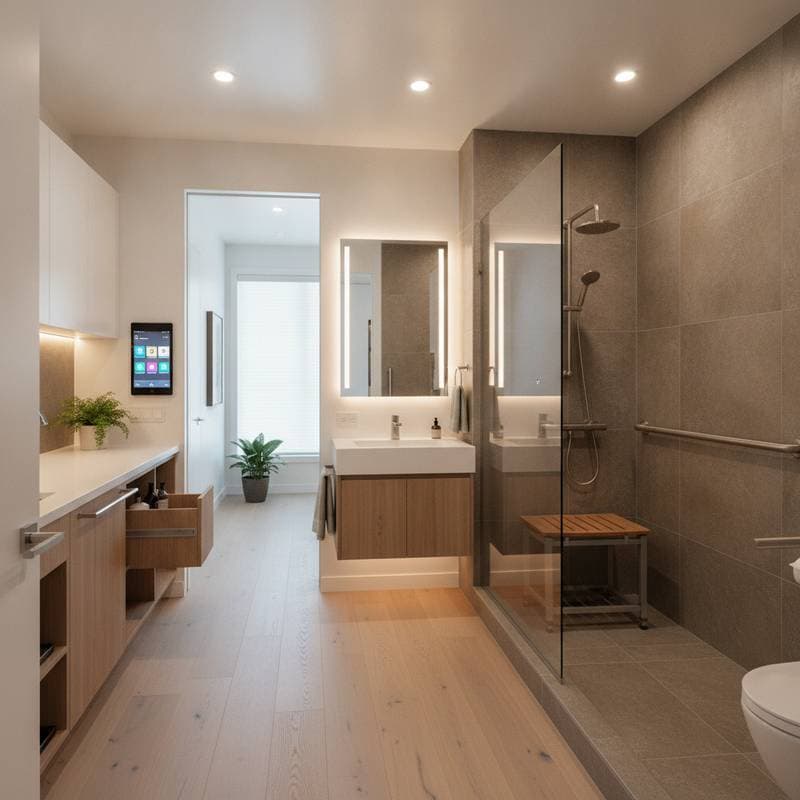
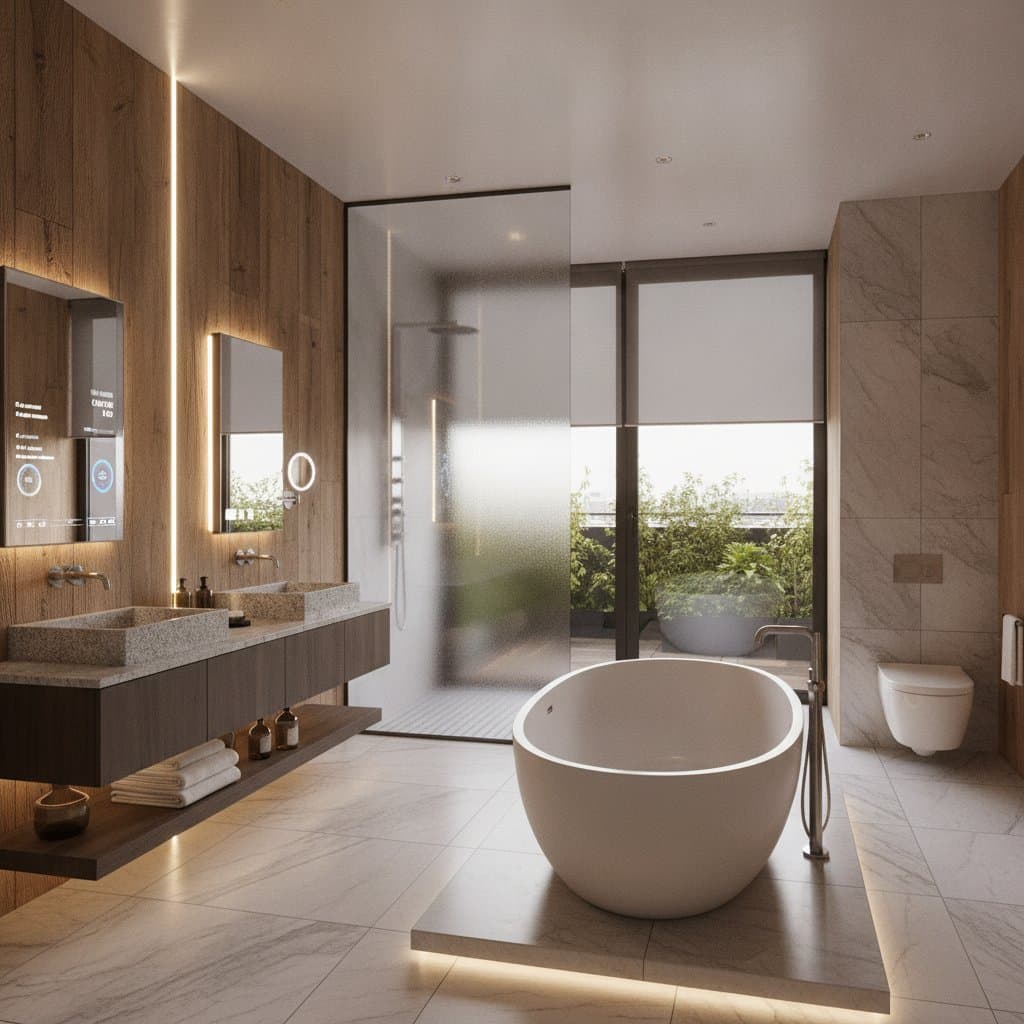
4. Retrofit Bathrooms for Fall Prevention
Bathrooms present significant slip and fall risks, warranting priority attention.
- Convert traditional bathtubs to low-threshold showers or accessible soaking tubs with built-in seating.
- Secure grab bars capable of supporting 250 pounds or more, anchored directly into studs.
- Install flooring with a wet coefficient of friction exceeding 0.6 for optimal grip.
Verification: Simulate use by gripping supports and testing surfaces under damp conditions.
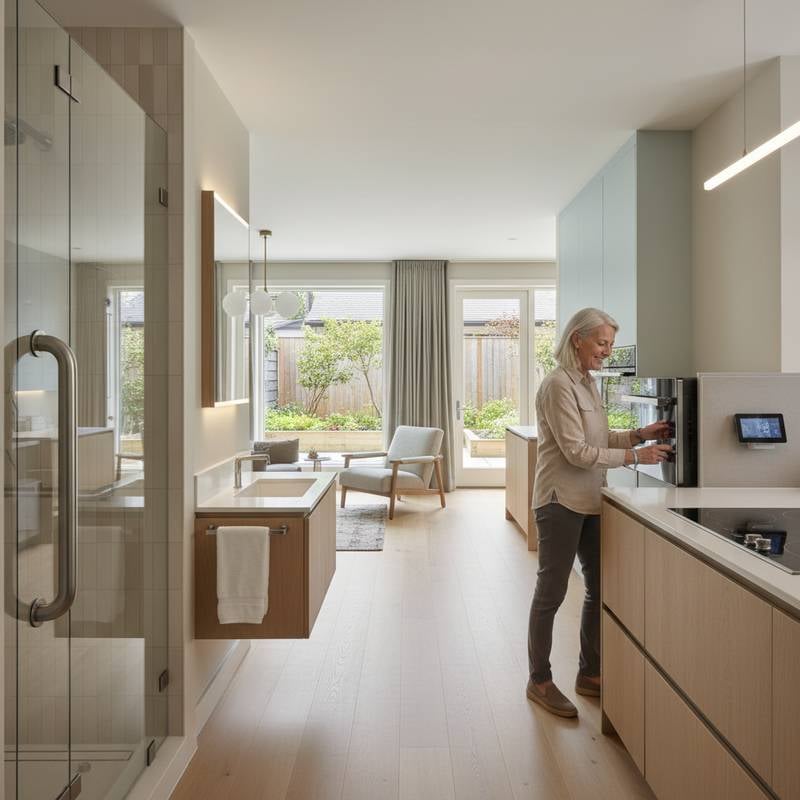
5. Reconfigure Kitchen Workspaces
Adapt counter heights to include sections at 28 to 34 inches for seated access, alongside standard levels.
- Substitute twist knobs with ergonomic lever handles on appliances and cabinets.
- Allocate at least 40 inches of clearance between opposing counters to facilitate turning and maneuvering.
- Integrate adjustable shelving and glide-out storage to minimize stretching.
Verification: Navigate the space with simulated mobility limitations to assess reach and comfort.
6. Optimize Lighting and Control Mechanisms
Adequate illumination minimizes accidents and supports daily tasks.
- Position rocker switches or motion sensors at 36 to 48 inches from the floor, accessible from multiple heights.
- Incorporate task lighting under cabinets and automatic pathway illumination in corridors.
Verification: Activate controls from both standing and seated postures to ensure functionality.
7. Revise Flooring and Junctions
Transition to level, resilient surfaces that eliminate unevenness.
- Choose low-pile options like luxury vinyl plank, cork, or rubberized materials with inherent slip resistance.
- Limit height differences at material changes to one-quarter inch, beveled for smoothness.
Verification: Roll assistive devices over junctions to detect any snags or resistance.
8. Integrate Smart Technology Solutions
Automated systems for lighting, climate control, and monitoring enhance daily independence.
- Select compatible devices with voice activation and physical backup controls.
- Caution: All electrical integrations must comply with local codes; engage a qualified electrician for installations.
Verification: Operate each feature to confirm consistent performance and redundancy.
Troubleshooting and Quality Assurance
Frequent Challenges
- Inadequate anchoring causing grab bars to detach from walls.
- Controls mounted beyond comfortable reach.
- Abrupt floor edges impeding wheeled mobility.
- Inadequate slope leading to water accumulation in shower areas.
Targeted Remedies
- Reinforce installations with heavy-duty toggles or direct stud attachments.
- Relocate switches to 36 through 44 inches from the finished floor.
- Apply beveled ramps or flexible thresholds at seams.
- Adjust shower bases to a 1/4-inch-per-foot drain slope.
Engaging Professional Services
Consult certified experts for any work involving load-bearing elements, pipe rerouting, or circuit updates.
- Cost Breakdown:
- Grab bar placement: $150 to $300 each.
- Doorway expansion: $700 to $2,000 per opening.
- Walk-in shower conversion: $10,000 to $15,000.
- Comprehensive accessibility overhaul: $20,000 to $150,000.
Selecting Reliable Contractors
- Confirm valid licensing, bonding, and liability coverage.
- Review portfolios of comparable accessibility projects.
- Obtain detailed proposals specifying materials, labor hours, and completion schedules.
- Prioritize firms with specialized training in universal design principles.
Strategies for Effective Execution
- Initiate with incremental changes, such as enhanced illumination or support fixtures, prior to extensive overhauls.
- Employ color contrasts on edges and controls to aid visual navigation.
- Specify lever mechanisms for all operable elements to ease operation.
- Arrange furnishings to preserve 36-inch pathways throughout living areas.
- Anticipate evolving requirements, including provisions for expanded care support.
Frequently Asked Questions
What defines universal design?
Universal design creates environments that accommodate diverse abilities and ages without specialized adaptations.
Are permits required for these modifications?
Permits apply to alterations affecting structure, electricity, or water systems.
What budget should one allocate for a complete remodel?
Expect $20,000 to $150,000, influenced by home size, material selections, and regional labor rates.
Is DIY feasible for portions of the project?
Basic cosmetic updates suit self-installation, but delegate technical tasks to professionals.
What duration do these projects entail?
Minor adjustments complete in days; extensive renovations span weeks to months.
Which updates yield the most immediate safety gains?
Prioritize entry modifications, bathroom reinforcements, and comprehensive lighting improvements.
Preserving Accessibility Features
Universal design investments safeguard long-term well-being and home value. Adhere to established construction standards and premium components to minimize upkeep needs. Conduct periodic reviews and routine care to sustain optimal performance and prevent deterioration.