Understanding 2025 Costs for Aging-in-Place Bathrooms
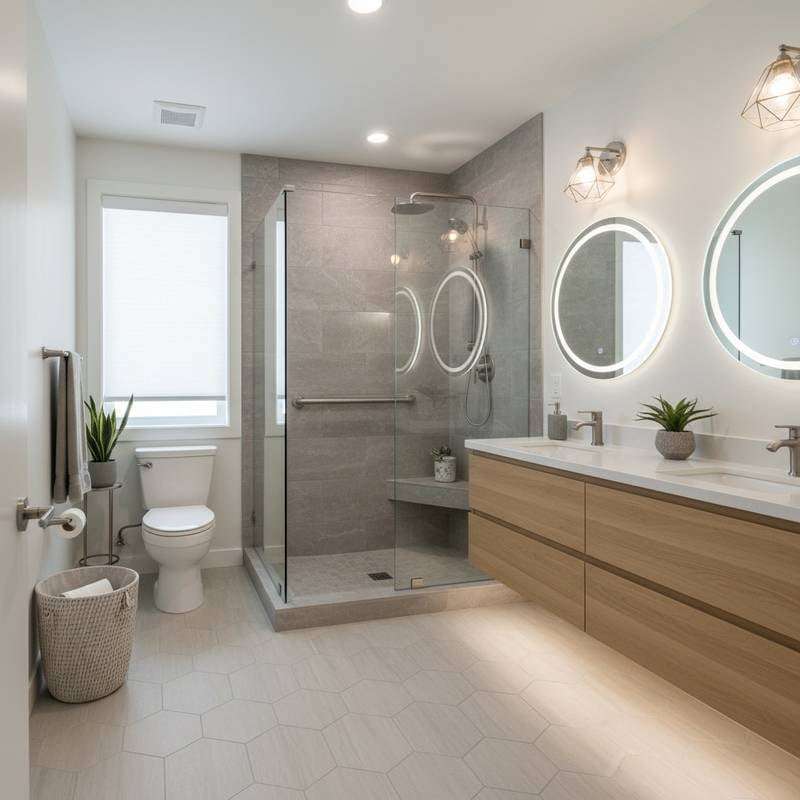
Aging-in-place bathrooms enable individuals to remain in their homes safely as mobility needs evolve. These spaces incorporate features that enhance accessibility and reduce fall risks. This guide details current pricing trends, factors that affect expenses, and strategies to plan a remodel aligned with personal requirements and financial constraints.
Project Overview
This resource outlines the elements that determine the cost of constructing or renovating an aging-in-place bathroom. Readers gain insights into expense ranges, preparation steps, essential safety elements, and scenarios where professional involvement ensures durability and compliance.
Cost and Timeline Projections
Aging-in-place bathroom renovations typically range from $10,000 to $35,000, influenced by room dimensions, material selections, and necessary modifications to the structure.
- Basic enhancements, including grab bars, slip-resistant surfaces, and elevated fixtures, fall between $3,000 and $7,000.
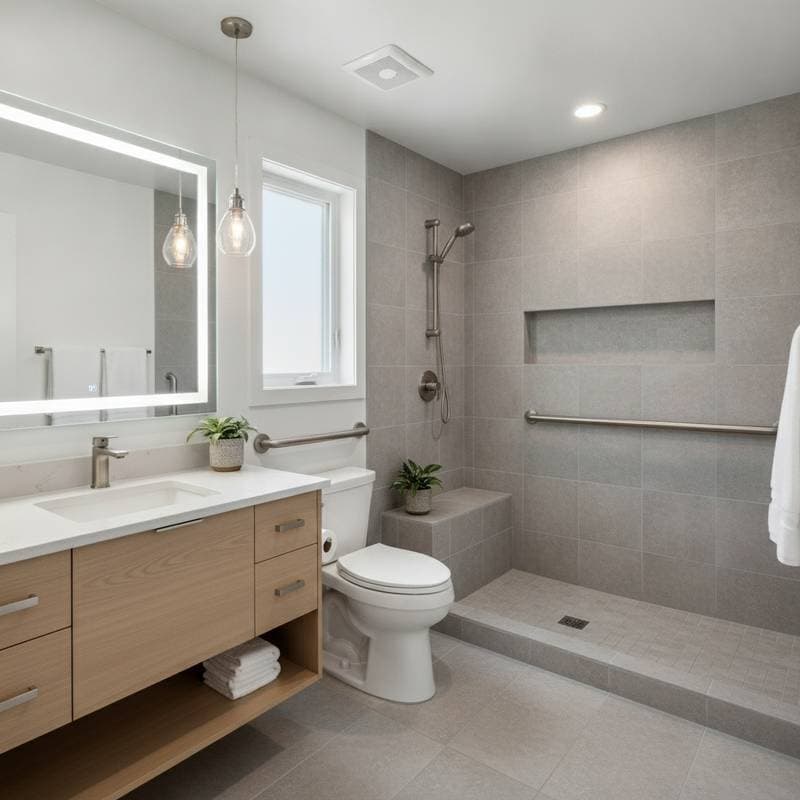
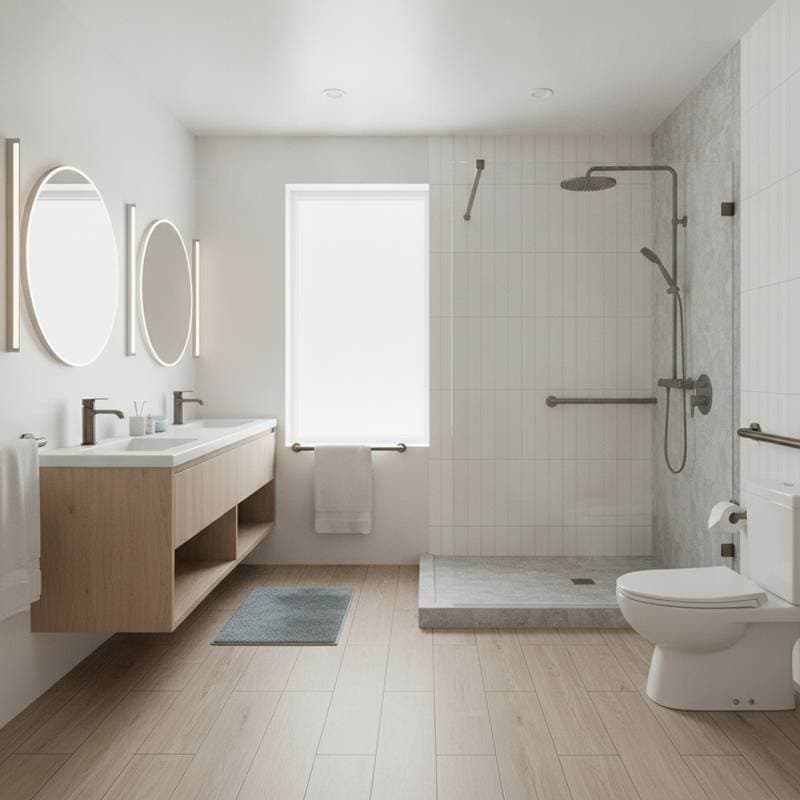
- Moderate renovations featuring walk-in showers, expanded entryways, and enhanced illumination cost $10,000 to $20,000.
- Comprehensive overhauls with seamless-entry showers, bespoke storage, and extensive plumbing or electrical revisions exceed $25,000, potentially reaching $35,000.
Key cost drivers include:
- Alterations to structural elements like walls or piping.
- Fixture quality and material durability.
- Regional labor costs and required permits.
- Specialized aids such as integrated seating, transfer lifts, or automated lighting.
Expected duration:
- Self-directed modifications: 2 to 4 weekends.
- Complete contractor-led projects: 2 to 5 weeks.
Complexity level: Moderate to advanced. Tasks involving plumbing, moisture barriers, and regulatory adherence demand specialized expertise.
Self-Directed Work Versus Expert Assistance
Individuals with foundational skills and equipment can manage certain updates independently. Accessibility improvements often require attention to load-bearing and hazard prevention, however.
Suitable for independent efforts:
- Securing grab bars with appropriate wall reinforcements.
- Upgrading showerheads or taps.
- Applying non-slip mats or adhesive flooring.
- Replacing overhead lights and reflective surfaces.
Require professional expertise for:
- Broadening openings or shifting partitions.
- Creating barrier-free showers or repositioning drainage.
- Adjusting circuits or airflow systems.
- Relocating lavatories or basins.
Expense breakdown:
- Independent material purchases: $3,000 to $8,000.
- Contractor-managed full projects: $15,000 to $35,000, encompassing labor and approvals.
Engaging certified specialists guarantees adherence to standards, effective sealing against water intrusion, and sustained hazard mitigation.
Essential Tools and Supplies
Required tools:
- Power drill and screwdriver assortment.
- Wall stud locator.
- Spirit level.
- Versatile pliers.
- Tile cutting device.
- Sealant applicator.
- Precision measuring tool.
Recommended materials:
- Textured, low-slip ceramic or resilient flooring.
- Support rails supporting a minimum of 250 pounds.
- Elevated lavatory (seat height of 17 to 19 inches).
- Adjustable wand shower with mounting rail.
- Single-lever controls for taps.
- Wall reinforcements for subsequent rail additions.
- Energy-efficient directional and general illumination.
- Integrated or collapsible shower seating.
Detailed Renovation Guide
1. Evaluate Mobility Requirements
Determine precise needs related to movement and hazard avoidance.
- Gauge open areas surrounding appliances.
- Identify obstacles like uneven surfaces or dim areas.
- Account for maneuvering room for mobility aids.
Validation point: Compile a prioritized list of enhancements, including measurements and objectives for security.
2. Design the Spatial Arrangement
Draft a configuration ensuring a minimum of 30 inches of unobstructed space before each appliance.
- Expand access points to 32 inches minimum.
- Allocate a 60-inch circular area for mobility device navigation if applicable.
Validation point: The design facilitates unrestricted, secure navigation absent confined angles.
3. Enhance the Floor Surface
Extract existing coverings and inspect the underlying base for integrity.
- Select durable, grippy tiles or continuous vinyl with surface texture.
- Incorporate moisture-proof subflooring.
Risk alert: Slip potential. Utilize protective padding and ensure thorough surface preparation prior to laying.
Validation point: The surface remains stable and resistant to sliding under damp conditions.
4. Integrate a Seamless-Entry Shower
Consult a plumbing specialist for any drainage adjustments.
- Employ a minimal or absent curb foundation.
- Incorporate an adjustable-height wand with secure attachment.
- Add fixed or pivoting seating within the enclosure.
Hazard notice: Moisture breach. Inadequate barriers lead to seepage and fungal development.
Validation point: Drainage occurs efficiently without residual accumulation.
5. Incorporate Support Rails and Structural Supports
Position linear rails adjacent to the lavatory, shower, and bathing area.
- Anchor to fortified backing concealed within walls.
- Set heights at 33 to 36 inches from the ground.
Validation point: Rails withstand vigorous testing without movement.
6. Upgrade to User-Friendly Appliances
Opt for ergonomic lever mechanisms over rotational ones.
- Install an elevated lavatory unit.
- Position basin counters at 32 to 34 inches for seated usability.
Validation point: All components function effortlessly with reduced physical strain.
7. Optimize Illumination and Airflow
Incorporate vivid, non-reflective LED sources.
- Direct focused beams toward reflective panels.
- Enhance exhaust systems to control vapor levels.
Risk alert: Circuit danger. Disconnect power sources before any electrical modifications.
Validation point: Uniform brightness prevails, and post-use dryness is achieved.
8. Implement Accessible Organization
Position storage at arm's reach, eschewing high enclosures.
- Favor extendable compartments or exposed racks.
Validation point: Essential items remain attainable without excessive extension or flexion.
Essential Safety Guidelines
- Confirm electrical modifications align with regional regulations.
- Ensure routes remain clear of wiring or loose coverings.
- Employ shatter-resistant panels for enclosures.
- Sustain adequate exhaust to avert condensation.
- Calibrate temperature controls to avoid burns.
Prioritizing risk reduction in every choice fosters autonomy.
Issue Resolution and Verification
Frequent challenges:
- Accumulation at shower access: Verify gradient to outflow and refine entry elevation.
- Unstable rails: Secure with reinforced supports or heavy-duty fasteners.
- Condensation on surfaces or finish degradation: Augment airflow and apply vapor-tolerant coatings.
Inspection criteria:
- Even, grippy flooring.
- Efficient drainage absent stagnation.
- Consistent, ample lighting.
- Seamless appliance performance.
Post-Project Cleanup
Handle demolition waste in compliance with local protocols.
- Inquire with municipal services regarding debris handling.
- Salvage metallic components and wrappings.
- Polish areas using gentle agents to preserve coatings.
Thorough tidying averts accidents and readies the area for evaluation.
Ongoing Care and Durability
Preserve functionality through:
- Routine weekly cleansing of supports, appliances, and surfaces.
- Biannual review of barriers and sealants.
- Periodic renewal of light sources and filters.
- Annual to biennial reapplication of protective layers on tiled areas.
Quality upkeep extends the utility of these installations to 15 through 25 years.
Indicators for Professional Intervention
Seek certified help for:
- Subfloor or wall moisture intrusion.
- Fungal proliferation or compromised bases.
- Circuit malfunctions.
- Inadequate outflow or flow rates.
Specialist rates:
- Project overseer: $75 to $150 hourly.
- Plumbing expert: $80 to $200 hourly.
- Wiring specialist: $70 to $150 hourly.
Selection protocol:
- Validate credentials and coverage.
- Obtain detailed proposals and schedules.
- Solicit prior client feedback and assurances.
- Verify familiarity with inclusion norms.
Skilled oversight confirms regulatory and functional standards.
Expert Recommendations
- Embed supports during initial construction phases, even for deferred installations.
- Select high-contrast hues for floors and walls to aid perception.
- Position electrical access points adjacent to preparation areas for device needs.
- Integrate underfloor warming for ease and accelerated evaporation.
- Store vital response details near communication or entry points.
Such refinements boost practicality and reassurance.
Frequently Asked Questions
What dimensions suit a mobility-aid compatible bathroom?
A 60-inch maneuver zone and 32-inch minimum entries are advised.
Do integrated soaking units justify their expense?
These offer secure entry for those with reduced agility, though setup and energy demands elevate costs.
Is standard ceramic suitable for shower bases?
Select variants with inherent grip and thorough sealing.
Are approvals necessary for modifications?
Plumbing or electrical alterations generally mandate permits and reviews.
Sustaining Long-Term Value
An aging-in-place bathroom represents a strategic enhancement for security and ease. Thoughtful preparation, resilient choices, and consistent upkeep maximize its benefits and longevity.