2026 Costs for Aging-in-Place Universal Design
Quick Answer Box
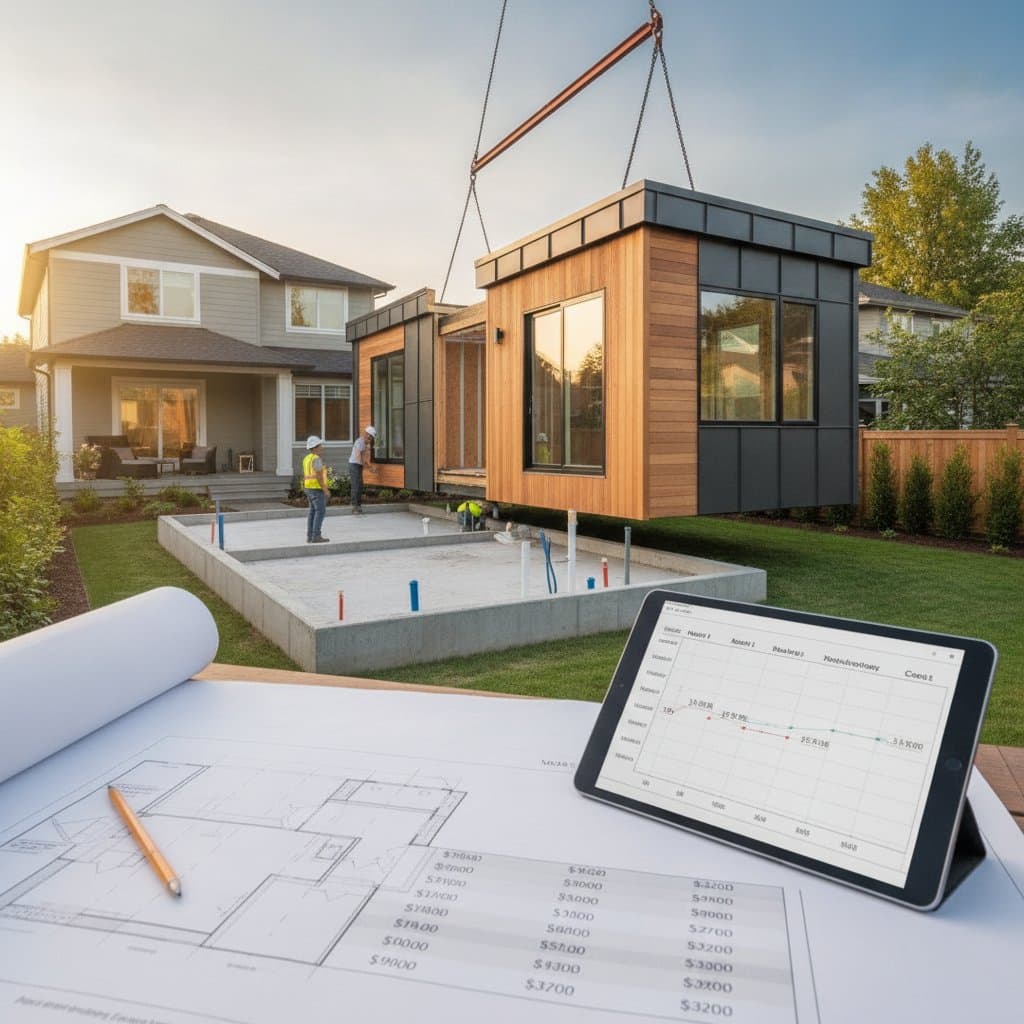
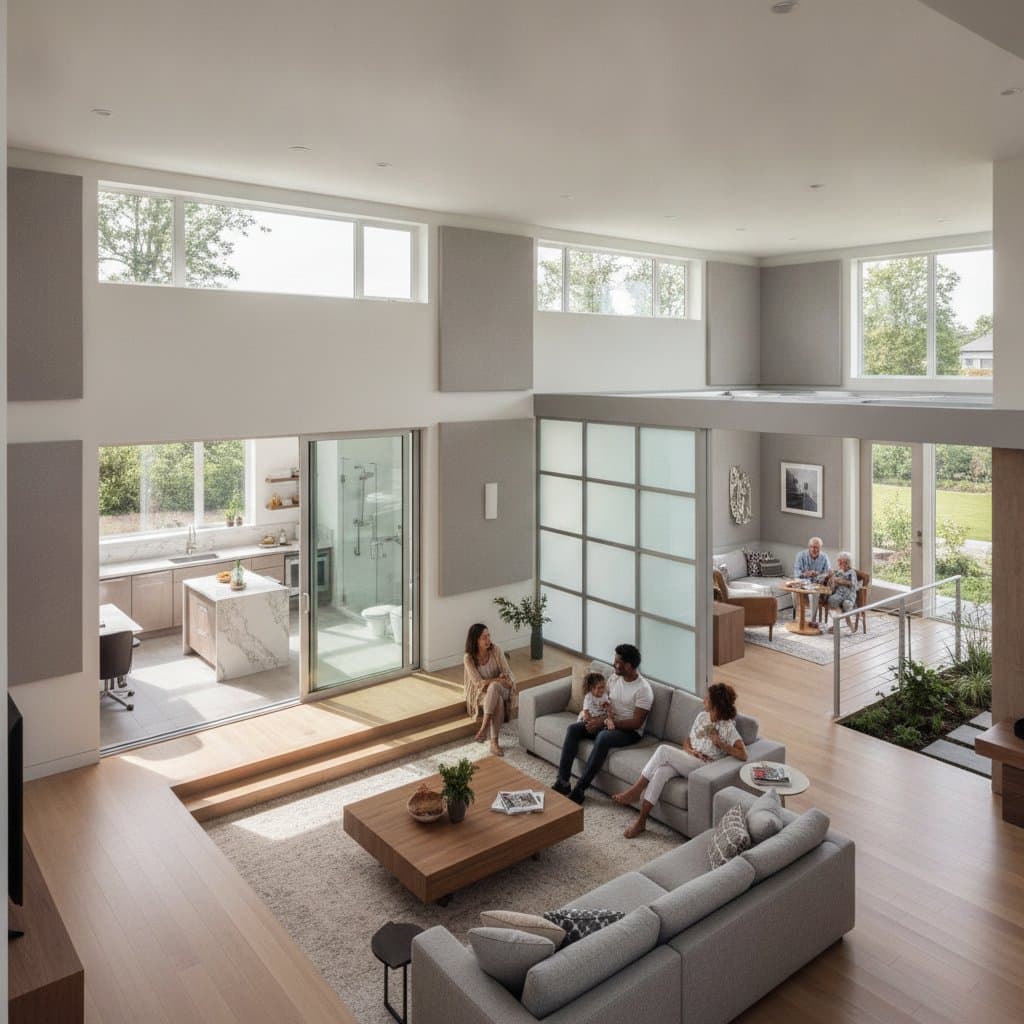
Aging-in-place remodeling applies universal design principles to create homes that remain safe and accessible throughout various life stages and ability levels. A comprehensive whole-home project generally ranges from $20,000 to $125,000, based on the property size and extent of modifications. Targeted improvements, such as installing grab bars or expanding doorways, involve lower expenses. Projects often span two to six weeks for simpler elements suitable for DIY efforts, while extensive remodels require additional time. These renovations present moderate to high risks, particularly with alterations to plumbing, electrical systems, or structural components, which necessitate involvement from licensed specialists.
Step-by-Step Instructions
1. Assess Your Current Home Layout
Examine each room to pinpoint potential barriers to mobility and safety. Look for doorways narrower than 32 inches. Measure the width of hallways. Inspect the height of steps and transitions between flooring types.
Check: Compile a prioritized list of modifications focused on safety and routine activities.
2. Plan for Entry and Exit Access
Incorporate ramps or alter entrances to accommodate wheelchairs or walkers. Exterior ramps constructed from wood or aluminum typically range from $1,200 to $4,000. Maintain a gentle slope, with one inch of rise for every 12 inches of horizontal distance.
Check: Verify independent entry and exit without external support.
3. Widen Doorways and Hallways
Substitute narrow doors with 36-inch versions or employ offset hinges for added clearance. Widening a single door opening costs $400 to $1,200. Refrain from altering load-bearing walls.
Check: Ensure wheelchairs or walkers navigate spaces without contact to frames.
4. Install Lever Handles and Touch Faucets
Swap traditional round knobs for lever-style handles to simplify operation. Each lever handle ranges from $25 to $50. Motion-activated or touch-sensitive faucets enhance usability for those with reduced grip strength.
Check: Confirm operation of all handles with a single hand.
5. Upgrade Bathroom Accessibility
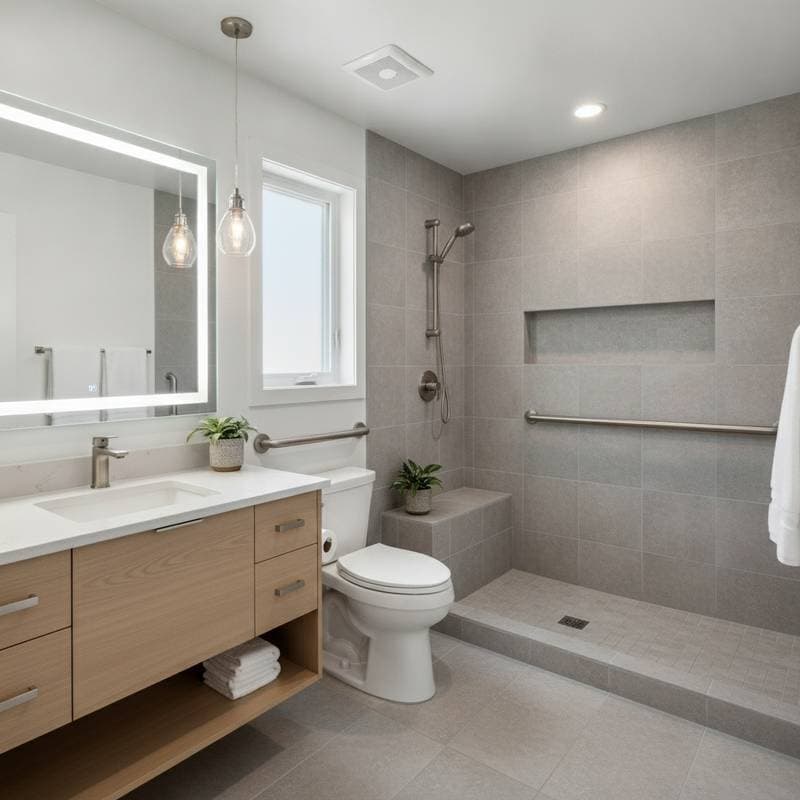
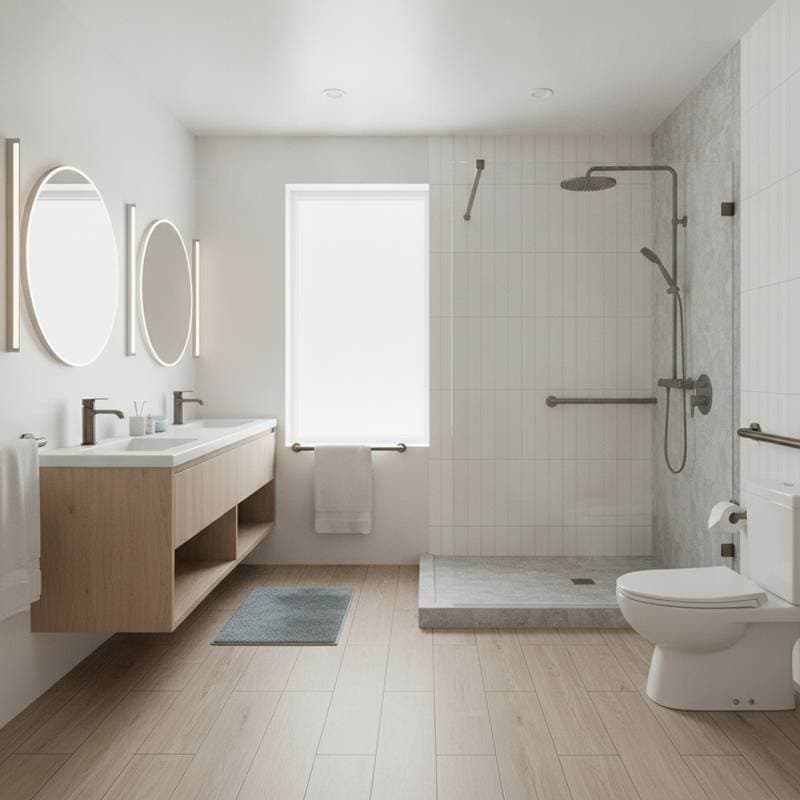
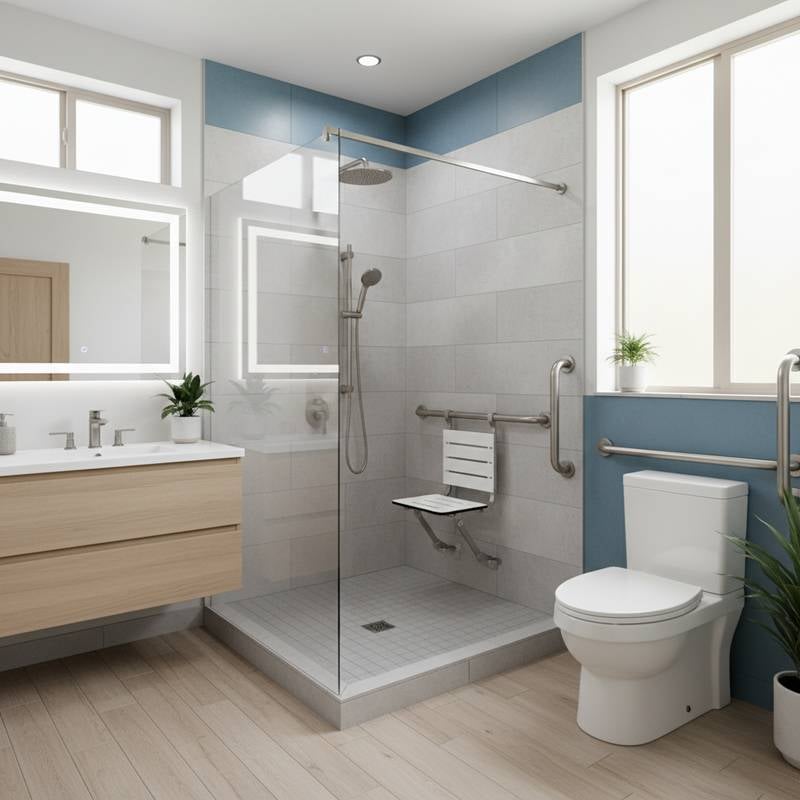
Bathrooms rank among the highest-risk zones for falls in the home. Install grab bars adjacent to toilets and showers, with installation costs of $100 to $300. Convert standard tubs to low-threshold showers or walk-in models, priced at $3,000 to $8,000. Apply non-slip flooring at $5 to $15 per square foot. Select comfort-height toilets, available for $250 to $600.
Check: Evaluate bathing, toileting, and handwashing for stability and security.
6. Improve Lighting and Visibility
Incorporate motion-sensor lights in hallways, bathrooms, and kitchens to eliminate shadows. Fixtures and installation per area range from $200 to $700. Opt for LED bulbs that deliver bright, uniform illumination.
Check: Eliminate remaining dark areas or sources of glare.
7. Lower or Adjust Countertops and Cabinets
Design work surfaces accessible from a seated position. Adjustable countertops cost $2,000 to $4,000 to install. Pull-down shelving inserts for cabinets range from $100 to $400 apiece.
Check: Access cooking utensils and dishware with ease from a comfortable height.
8. Update Flooring for Safety
Select materials like non-slip vinyl, cork, or rubber to replace hazardous surfaces. These options cost $3 to $12 per square foot. Steer clear of deep-pile carpets that impede walker mobility.
Check: Confirm walking surfaces provide consistent stability.
9. Add Smart Home Features
Integrate sensors and automation systems to bolster daily independence. Voice-controlled lighting, thermostats, and locks per zone range from $200 to $1,000. Select straightforward systems that demand minimal upkeep.
Check: Verify responsive operation through voice or simple touch inputs.
10. Test Every Modification
Upon completion of installations, evaluate all elements for practical usability. Simulate daily routines by sitting, standing, and traversing spaces. Fine-tune the positioning of grab bars or lighting as necessary.
Check: Assess each area for safety, accessibility, and overall comfort.
Quality Checks and Troubleshooting
Common Issues
- Loose grab bars: Secure them by anchoring to wall studs or using specialized supports rated for heavy loads.
- Uneven flooring: Level the subfloor through sanding or filling before laying new materials.
- Door rubbing or sticking: Realign hinges or trim door edges for smooth operation.
- Low water pressure after faucet replacement: Clear or substitute aerators to restore flow.
Simple Fixes
Tighten all hardware on a regular basis. Reapply sealant to bathroom tiles annually. Swap out faded bulbs and verify motion sensor functionality each month.
Check: Confirm that every safety and accessibility component functions reliably.
When to Call a Pro
Work Requiring Licensed Help
- Electrical updates: Engage a licensed electrician for installing new circuits or outlets to meet code standards.
- Plumbing work: Consult a licensed plumber for relocating fixtures or modifying drains.
- Structural changes: Employ a contractor experienced in accessibility to expand walls or reframe elements.
- Ramp or lift installation: Professionals guarantee appropriate slopes, secure anchoring, and compliance with regulations.
Cost Ranges for Professional Help
Electricians charge $75 to $150 per hour. Plumbers bill $90 to $180 per hour. General contractors for complete remodels quote $50,000 to $125,000, scaled to the home's dimensions.
Vetting a Contractor
Obtain detailed written estimates that break down materials and labor. Confirm possession of valid licenses and comprehensive insurance. Request references from comparable accessibility initiatives. Insist on securing building permits and scheduling required inspections.
Check: The selected contractor delivers transparent updates, adheres to codes, and furnishes written warranties.
Frequently Asked Questions
What is universal design?
Universal design develops environments that accommodate individuals of all ages, mobility levels, and abilities without specialized adaptations.
Is aging-in-place remodeling worth the cost?
Such investments promote sustained safety and autonomy at home, often offsetting expenses associated with institutional care over time.
Do I need a permit for grab bars?
Permits prove unnecessary for grab bar installations in most cases, though expanding doorways or shifting plumbing demands local approval.
Can I do any of this work myself?
Individuals may handle grab bars, lever handles, and basic lighting with adherence to safety protocols. Delegate plumbing and electrical tasks to qualified experts.
How long does a full universal design remodel take?
Anticipate four to ten weeks for extensive projects, accounting for material procurement and inspection schedules.
What flooring is safest for aging-in-place?
Non-slip vinyl or rubber variants provide superior grip and require little maintenance.
Are walk-in tubs worth it?
These fixtures reduce fall risks and enhance self-sufficiency for those with mobility challenges, though they necessitate expert setup.
Can I use smart devices instead of remodeling?
While smart technologies offer practical aids, they cannot substitute structural enhancements like ramps or support bars.
Does insurance cover universal design updates?
Certain insurance plans or healthcare programs may offset costs for accessibility modifications, provided documentation supports medical necessity.
How do I know if my home qualifies for universal design upgrades?
Every residence lends itself to adaptation. Feasibility hinges on existing layout, structural integrity, and personal requirements.
Sustaining Accessibility Over Time
Aging-in-place modifications safeguard comfort, security, and self-reliance for the long term. Routine upkeep averts minor problems from escalating into serious threats. Maintain an annual inspection schedule that covers cleaning, testing, and minor adjustments. Address any signs of wear, such as shifting tiles, intermittent lighting, or wobbly installations, promptly through targeted repairs.
Anticipate evolving needs by incorporating periodic enhancements. Advances in technology, durable materials, and regulatory standards evolve continuously. Incremental updates prolong the effectiveness of initial investments. Through diligent maintenance and occasional professional input, the home remains a reliable haven, equipped for whatever life brings.