Discover 2025 Costs and Designs for Aging-in-Place Homes
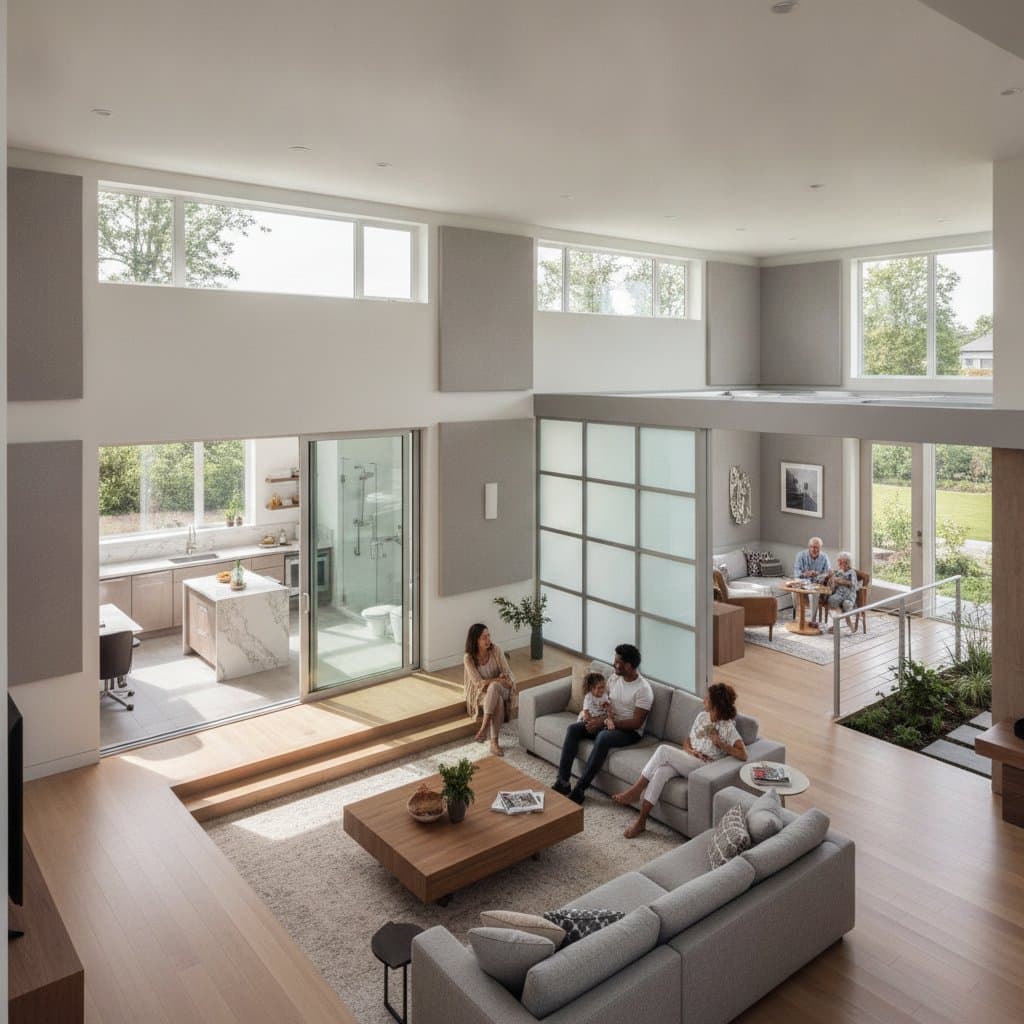
Homeowners increasingly choose to remain in their residences as they age, which elevates the importance of aging-in-place remodeling within residential design. These modifications aim to foster independence, comfort, and safety throughout life's stages. This guide details current trends in aging-in-place design, outlines cost estimates, and offers guidance on engaging professional contractors.
What This Guide Covers
- Essential remodeling projects that enhance accessibility and autonomy
- Standard costs and potential returns on investment for significant updates
- Design elements that integrate functionality with aesthetics
- Scenarios for self-managed tasks versus those requiring expert intervention
- Practical advice on planning, budgeting, and ongoing upkeep
Cost Overview for Aging-in-Place Remodeling
Project specifics and home characteristics vary, yet national averages serve as a solid benchmark. These estimates encompass labor and materials.
| Project Type | Average Cost Range | Typical ROI |
|---|---|---|
| Whole-home accessibility remodel | $50,000 to $150,000 | 50% to 70% |
| Bathroom conversion (curbless shower, grab bars, fixtures) | $10,000 to $30,000 | 60% to 75% |
| Kitchen modification (lowered counters, easy-access storage) | $20,000 to $45,000 | 55% to 65% |
| Entry and ramp installation | $3,000 to $12,000 | 40% to 60% |
| Stair lift or elevator installation | $5,000 to $35,000 | 40% to 50% |
| Widening doors and halls | $800 to $2,500 per doorway | 50% to 70% |
Cost Variables
- Home age and layout: Structures in older properties frequently require foundational modifications.
- Material selections: Options for tile, flooring, cabinetry, and fixtures differ significantly in price.
- Regional labor rates: Costs in metropolitan areas often exceed averages by 15% to 25%.
- Technology integrations: Automated systems and smart features enhance usability yet increase expenses.
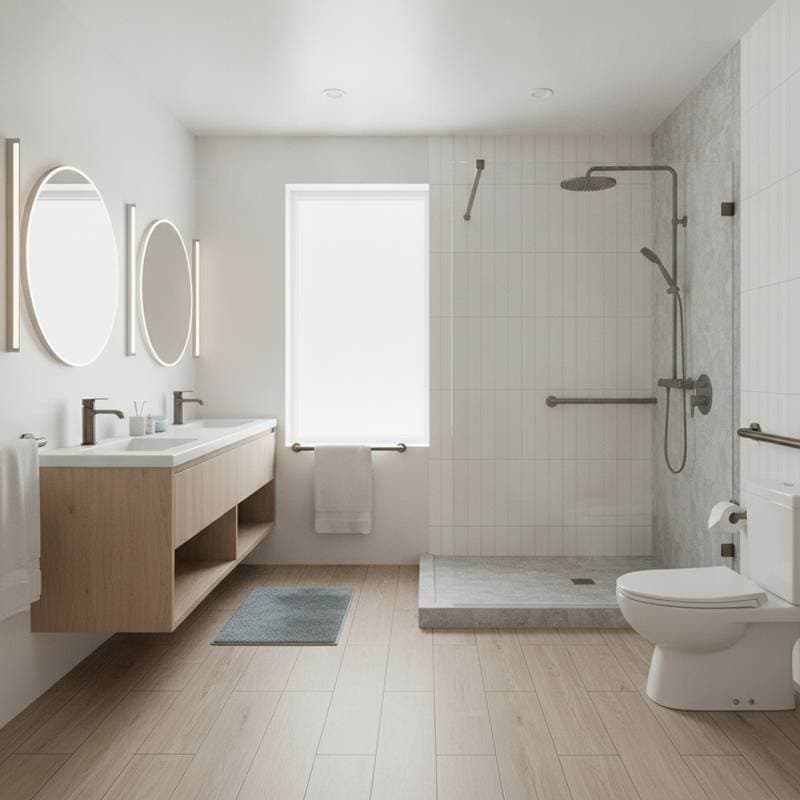
1. Bathroom Modifications for Accessibility
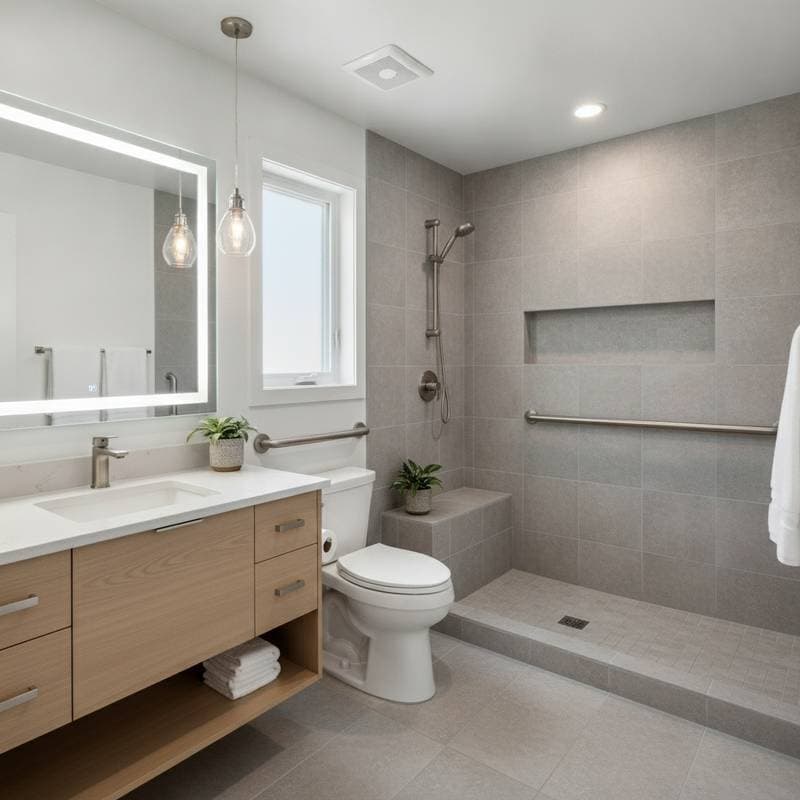
Accessible bathrooms prioritize safety and convenience, particularly in wet areas prone to slips.
Why It Matters: Bathrooms present high risks for falls, and thoughtful updates prevent accidents while supporting daily routines.
Cost Range: $10,000 to $30,000, influenced by fixture replacements, waterproofing, and layout adjustments.
DIY vs Pro: Installing grab bars or anti-slip mats suits capable individuals. Plumbing alterations, shower conversions, or wall reinforcements demand licensed specialists.
Design Tips:
- Opt for curbless showers with built-in benches and handheld sprayers.
- Position toilets at 17 to 19 inches high with support rails nearby.
- Select slip-resistant flooring and lever-style faucets.
- Incorporate pocket doors to maximize space without sacrificing style.
2. Kitchen Adjustments for Accessibility
Kitchens designed for accessibility emphasize ergonomic layouts and reachable storage solutions.
Why It Matters: As the heart of the home, kitchens benefit from changes that simplify meal preparation and reduce physical strain.
Cost Range: $20,000 to $45,000, based on cabinet modifications, appliance selections, and workflow optimizations.
DIY vs Pro: Tasks like swapping cabinet pulls or organizing shelves work for DIY efforts. Structural shifts, wiring updates, or gas line adjustments require professional oversight.
Design Tips:
- Adjust counter heights to 34 inches or add pull-out sections for seated use.
- Replace lower cabinets with open shelving or lazy Susans.
- Install wall ovens at mid-height and dishwashers with front-loading access.
- Integrate pull-out trash bins and touch-activated controls.
3. Entryways, Doors, and Hallways for Seamless Access
Modifying entrances and pathways eliminates barriers and eases movement throughout the home.
Why It Matters: Clear pathways support mobility aids and prevent injuries from narrow spaces or thresholds.
Cost Range: $3,000 to $12,000 for ramps and $800 to $2,500 per door or hallway widening.
DIY vs Pro: Adding temporary ramps or weather stripping fits DIY skills. Permanent installations involving concrete, framing, or electrical components need experts.
Design Tips:
- Widen doorways to at least 32 inches for wheelchair passage.
- Install threshold ramps or level entries with gradual slopes.
- Use pocket or swing-clear hinges to expand usable space.
- Apply contrasting colors to highlight changes in floor levels.
4. Flooring and Lighting Upgrades
Enhancements to surfaces and illumination yield substantial safety gains and aesthetic appeal.
Why It Matters: Even flooring and adequate lighting minimize trip hazards and aid navigation, especially in low-light conditions.
Cost Range: $5,000 to $15,000 for comprehensive flooring and $2,000 to $8,000 for advanced lighting setups.
DIY vs Pro: Changing bulbs or adding LED strips proves feasible for homeowners. Subfloor repairs, full installations, or circuit modifications call for professionals.
Design Tips:
- Select durable, low-maintenance options such as luxury vinyl or cork.
- Eliminate loose rugs and ensure flush transitions between rooms.
- Deploy automatic sensors and adjustable LEDs in key areas.
- Layer ambient, task, and accent lights to eliminate shadows.
Strategies to Save Costs and Enhance Value
- Bundle upgrades: Coordinate multiple changes to streamline permitting and labor, cutting overall expenses.
- Target priority zones: Address bathrooms, kitchens, and entrances first to maximize immediate benefits.
- Embrace versatile materials: Invest in durable, attractive finishes that comply with accessibility codes.
- Seek incentives: Investigate municipal rebates or credits for sustainable and adaptive improvements.
- Anticipate needs: Incorporate forward-thinking elements, like reinforced walls, during routine maintenance.
Perspectives from Design Professionals
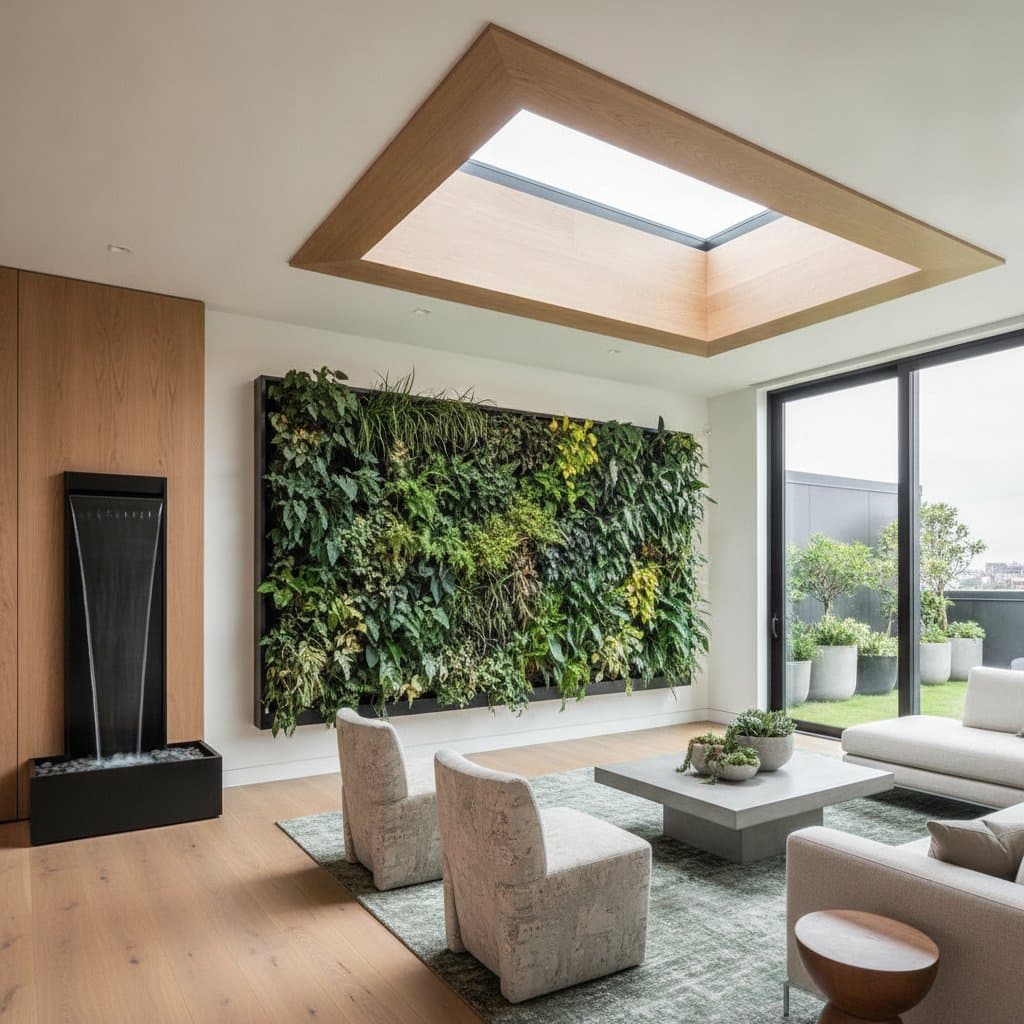
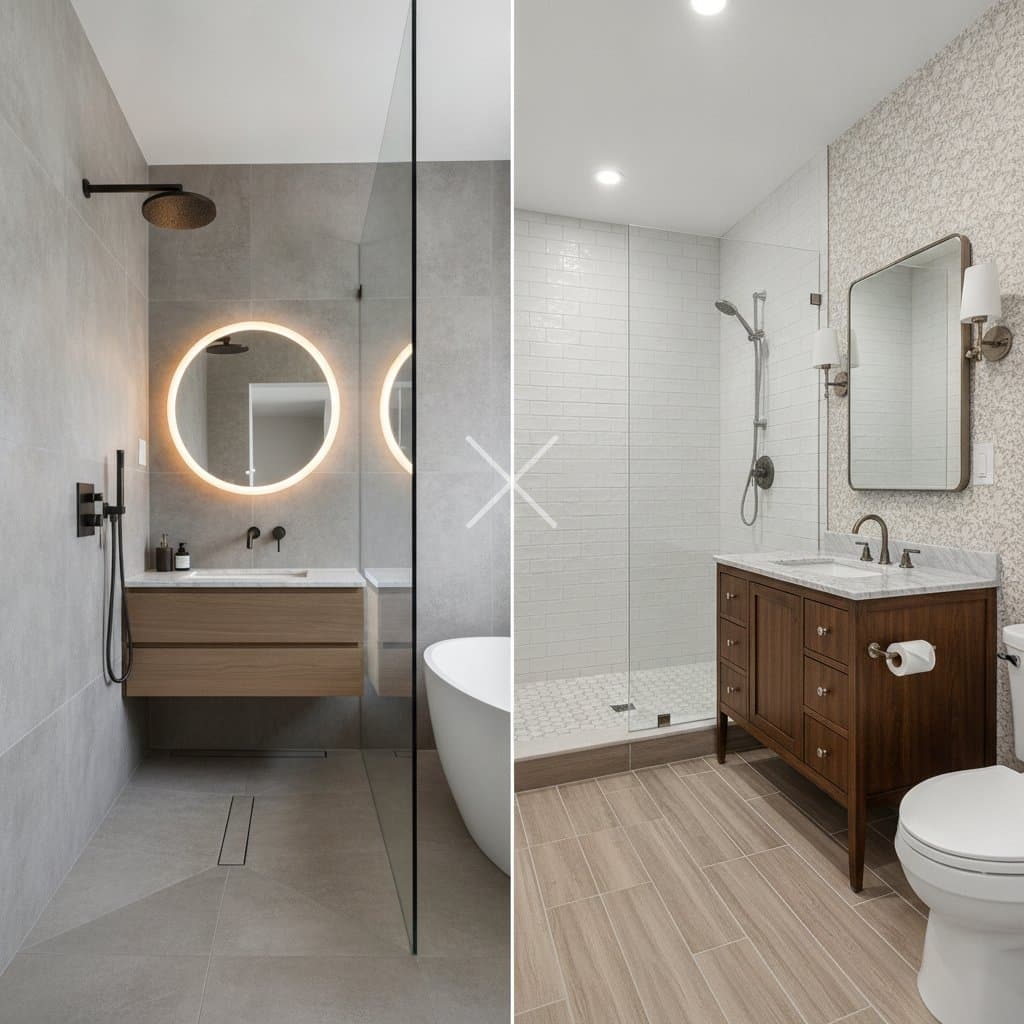
Experts in the field highlight the harmony between accessibility and elegance in contemporary homes. Subtle integrations, such as hidden grab bars and seamless ramps, maintain visual cohesion. Professionals recommend neutral tones, abundant natural light, and tactile elements to cultivate a serene atmosphere.
Forward planning proves more economical than crisis responses. Incremental steps, including pre-wiring for lifts or bolstering supports, defer larger outlays. Data from industry reports indicate that properties with inherent accessibility sell more quickly and command premium prices, reflecting buyer preferences for enduring livability.
Common Questions About Aging-in-Place Remodeling
What distinguishes universal design from aging-in-place remodeling?
Universal design creates environments suitable for all abilities from the outset, whereas aging-in-place remodeling retrofits existing spaces to accommodate aging or mobility limitations.
Are permits necessary for accessibility work?
Local codes typically mandate approvals for alterations involving structure, plumbing, or electricity; consult authorities prior to commencement.
Do these modifications boost property value?
Indeed, features like unobstructed access and safety enhancements broaden market appeal and often yield favorable resale outcomes.
What financing options exist?
Specialized loans, equity lines, or community grants support such initiatives, with some programs targeting adaptive housing.
How much time do renovations require?
Minor additions like supports may conclude in a day, but comprehensive overhauls span weeks, contingent on complexity.
Steps to Secure Enduring Home Adaptability
Aging-in-place transformations represent investments in autonomy and well-being. Early interventions mitigate future disruptions and expenses, while inclusive designs benefit all residents.
Engage specialists for evaluations to pinpoint priorities. Balance practical needs with aesthetic preferences to avoid institutional appearances. With strategic budgeting and reliable partners, your residence evolves to support vitality across decades.