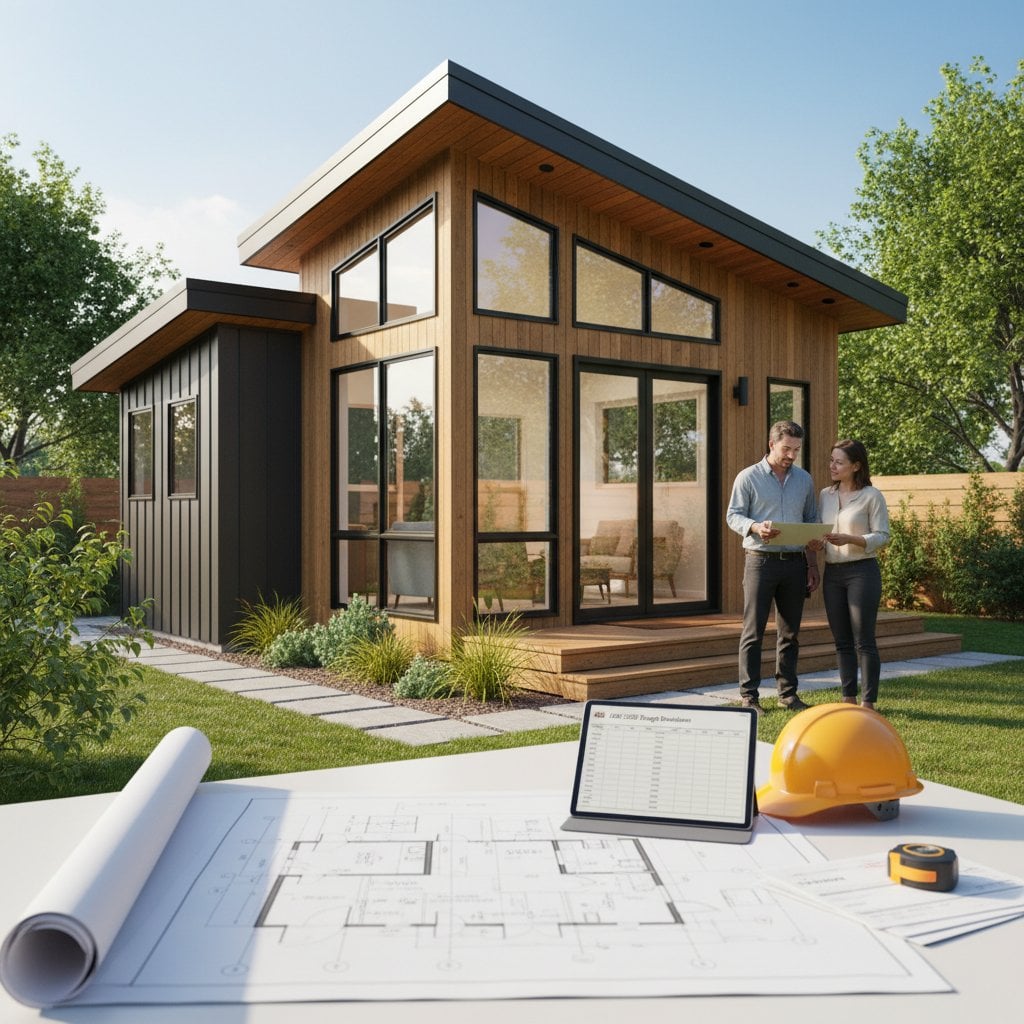
Strategies to Lower 2026 Prefab ADU Costs and Permit Expenses
Prefabricated accessory dwelling units provide an efficient way to expand living space on your property, often at a lower cost and faster pace than site-built structures. This guide details methods to reduce overall expenses, navigate permitting processes, and determine the appropriate level of professional assistance. Implementing these approaches enables the creation of a compliant backyard dwelling, such as a cottage or guest house, while avoiding unnecessary expenditures and delays.
Project Overview
This resource focuses on managing the full expenses of a prefab ADU initiative. Readers gain insights into allocating funds for materials, labor, permits, and site preparation, along with comparisons between self-managed and expert-led approaches. The outlined process ensures adherence to regulations and maintains project momentum.
Estimated Costs and Timelines
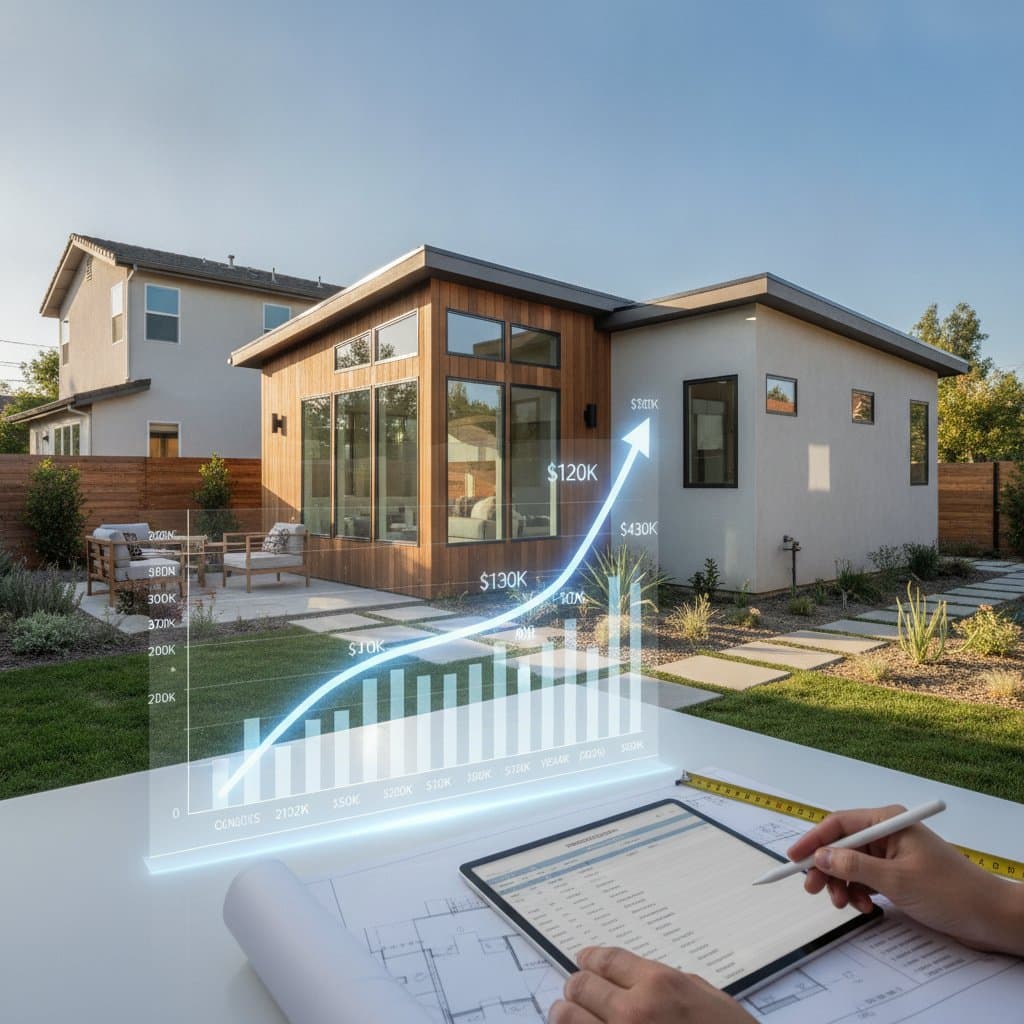
The price of prefab ADUs fluctuates based on dimensions, building materials, and regional factors. A fully finished unit generally ranges from $140,000 to $280,000. Compact studio designs fall toward the lower end, whereas expansive two-bedroom configurations approach the higher figure. These estimates encompass the prefab module, foundational elements, utility integrations, and permitting.
Standard cost allocation:
- Prefab module and transport: $80,000 to $160,000
- Site preparation and base: $20,000 to $40,000
- Utility linkages: $15,000 to $35,000
- Permitting, engineering, and verifications: $5,000 to $15,000
- Additional enhancements and detailing: $10,000 to $30,000
Project duration projections:
- Self-directed assembly: 3 to 6 months
- Expert-led setup: 2 to 4 months
Complexity level: Moderate to advanced. Projects demand knowledge of structural assembly, electrical systems, and plumbing, frequently necessitating certified specialists.
Self-Managed Versus Expert Assistance
Partial self-management suits prefab ADUs for individuals with substantial construction background. Tasks like obtaining permits, clearing the site, or completing interior details can proceed independently. However, foundational pouring, electrical installations, and plumbing connections require certified professionals to avert inspection failures or risks to safety.
Scenarios for self-management:
- Acquisition of a pre-assembled module requiring only positioning.
- Availability of even terrain and straightforward utility routes.
- Execution of surface treatments, such as painting, flooring installation, or trim application.
Instances requiring experts:
- Necessity for land grading, excavation, or support structures.
- Installation of fresh water, sewage, or power lines.
- Mandates for certified engineering documents on structure or efficiency.
Expense contrasts:
- Self-managed with selective professional input: $100,000 to $180,000 overall.
- Complete expert oversight: $160,000 to $280,000 overall.
Detailed Process Guide
1. Review Regional ADU Standards
Examine municipal or county zoning ordinances to identify restrictions on placement, elevation, and size limits. Certain jurisdictions prohibit temporary rentals or enforce primary residence rules.
Verification milestone: Obtain a documented summary of all applicable local standards prior to commencing design.
2. Select an Appropriate Prefab Design
Identify a model compatible with your land and regulatory constraints. Evaluate dimensions, internal configuration, roofing angle, and component durability.
- Request detailed layouts and base specifications.
- Ensure thermal performance aligns with efficiency mandates.
Verification milestone: Confirm the design integrates seamlessly within site boundaries and complies with zoning.
3. Ready the Construction Area
Remove plants, clear refuse, and adjust terrain for proper water runoff.
- Employ a leveling instrument to assess inclination.
- Delineate routes for essential services like water, waste, and electricity.
Alert: Risk of falls. Utilize footwear with grip and demarcate dug zones clearly.
Verification milestone: Achieve a stable, firm, and vehicle-accessible surface.
4. Obtain Necessary Approvals
Present a comprehensive documentation package for evaluation, incorporating base schematics, load-bearing details, and service diagrams.
- Certain manufacturers offer prefabricated, pre-vetted documents to expedite approval.
- Arrange all mandatory assessments in advance of work initiation.
Verification milestone: Secure formal authorization and a timetable for examinations.
5. Establish Base or Supports
Most prefab ADUs employ slab foundations, support piers, or encircling bases.
- Adhere to regional freeze line specifications.
- Position reinforcement bars and securing fasteners according to technical guidelines.
Alert: Concrete risks. Don protective handwear and eyewear during preparation and placement.
Verification milestone: Attain precise leveling, within 1/8 inch over the full area.
6. Coordinate Transport and Positioning
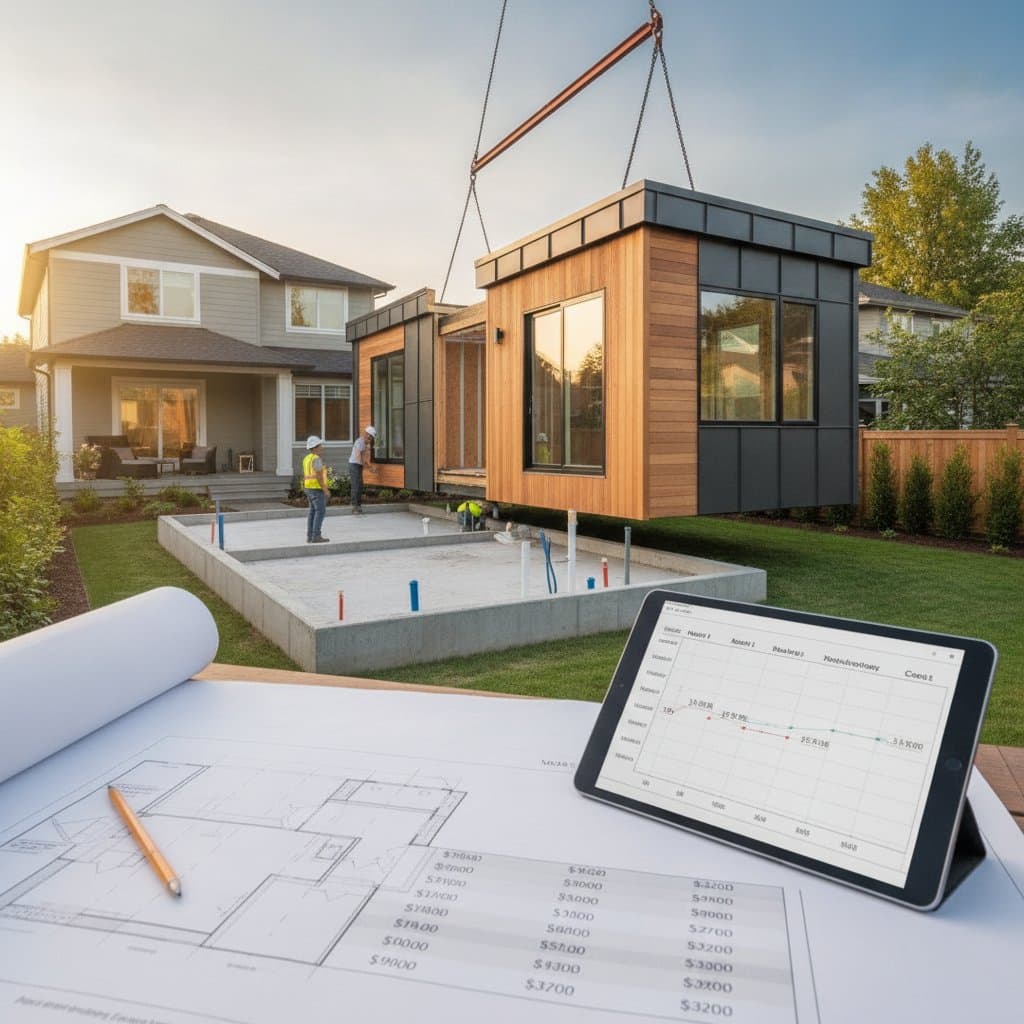
Organize heavy equipment for module arrival and setup. Verify unobstructed pathways from roadway to foundation.
- Assess vertical space beneath overhead wires and foliage.
- Prepare stabilization materials and fasteners for securement.
Verification milestone: Position the module evenly on the base with all connections fastened.
7. Integrate Essential Services
Engage qualified technicians for hydration, drainage, and power linkages.
- Validate electrical earthing and continuity.
- Conduct pressure evaluations on pipes prior to enclosure.
Alert: Electrical dangers. Disconnect energy sources before any attachments.
Verification milestone: Confirm all components clear evaluations and function securely.
8. Finalize Internal and External Elements
Apply floor coverings, edging, coatings, and outer cladding or platforms. Modules often arrive with preliminary completions.
- Seal junctions and openings to block water ingress.
- Align frames for openings before securing perimeters.
Verification milestone: Ensure all surfaces appear neat, secure, and resistant to elements.
9. Arrange Concluding Evaluation
Local authorities will confirm regulatory adherence.
- Facilitate entry to utility compartments.
- Supply evaluators with product documentation.
Verification milestone: Receive official clearance for habitation.
Essential Safety Measures
- Electrical risks: Avoid active wiring; use a tester to verify deactivation.
- Fall hazards: Employ reliable platforms and slip-resistant attire for elevated tasks.
- Material exposure: Don respiratory protection during concrete sawing or panel handling.
- Load management: Rely on mechanical aids for shifting heavy components.
Maintain medical supplies on location and display urgent contact information. Incidents commonly arise from material movement, sectioning, or wiring tasks.
Issue Resolution and Verification Protocols
Frequent challenges:
- Irregular base: Reassess alignment and insert spacers prior to attachment.
- Seepage at joints: Install protective barriers and adhesives at interfaces.
- Inadequate flow: Inspect conduit dimensions, controls, and potential blockages.
- Circuit interruptions: Verify conductor gauge and earthing integrity.
Performance assessments:
- Openings for entry operate without resistance.
- Surfaces provide firm support absent flex or voids.
- Fluid systems function silently, leak-free.
- Power receptacles register properly via basic testing devices.
Waste Management Practices
Construction yields wrappings, base remnants, and excess items.
- Categorize timber, metals, and fibers for reuse programs.
- Transport solid and partition wastes to designated sites.
- Gather residual coatings, bonds, and barriers for specialized disposal.
Preserve site tidiness to eliminate obstacles and regulatory issues.
Upkeep and Durability
Proper attention extends prefab ADU longevity comparable to standard residences. Conduct biannual reviews of roofing, exteriors, and supports.
- Clear drainage channels to avoid backups.
- Refresh outer coatings and seals periodically.
- Examine alert devices for fire and gases each month.
- Replace climate control components quarterly.
Regular maintenance supports decades of service prior to significant overhauls.
Indicators for Expert Intervention
Engage certified specialists for systems involving electricity, fuel, or fluids. Seek assistance also for terrain drainage concerns or ground instability, which impact stability and security.
Specialist fee estimates:
- Power integration: $5,000 to $10,000
- Fluid and waste connections: $5,000 to $12,000
- Base construction: $10,000 to $25,000
- Equipment transport and alignment: $4,000 to $8,000
Selection criteria:
- Confirm credentials and coverage.
- Solicit three regional endorsements.
- Secure a formal agreement detailing tasks, timelines, and finances.
- Inquire about guarantees for workmanship and supplies.
Skilled oversight accelerates verifications and mitigates expenses from regulatory shifts.
Expert Recommendations
Initiate approval requests promptly to circumvent setbacks. Partner with manufacturers known for regulatory-aligned products. Obtain bids from various providers for groundwork and services. Track finances meticulously via organized records. Time assessments to sustain progress. Document buried lines photographically before covering for later access.
Thorough preparation and records minimize uncertainties and preserve financial limits.
Achieving Your Prefab ADU Goals
These units offer adaptable expansion, enhanced utility, and income opportunities. Maximize savings through initial investigations, straightforward configurations, and streamlined oversight. Manage feasible elements personally while delegating complexities to qualified teams. Prioritize regulatory adherence, evaluations, and vendor interactions. The outcome yields a robust, inviting area that elevates property worth enduringly, free from excess spending or interruptions.