Enhancing Property Value Through Granny Flats: Costs and ROI Analysis
A granny flat, known also as an accessory dwelling unit or ADU, elevates property value while opening avenues for additional income. This guide delineates the expenses involved in construction, anticipated returns on investment, and scenarios where professional contractors prove essential.
Estimating Costs and Timelines
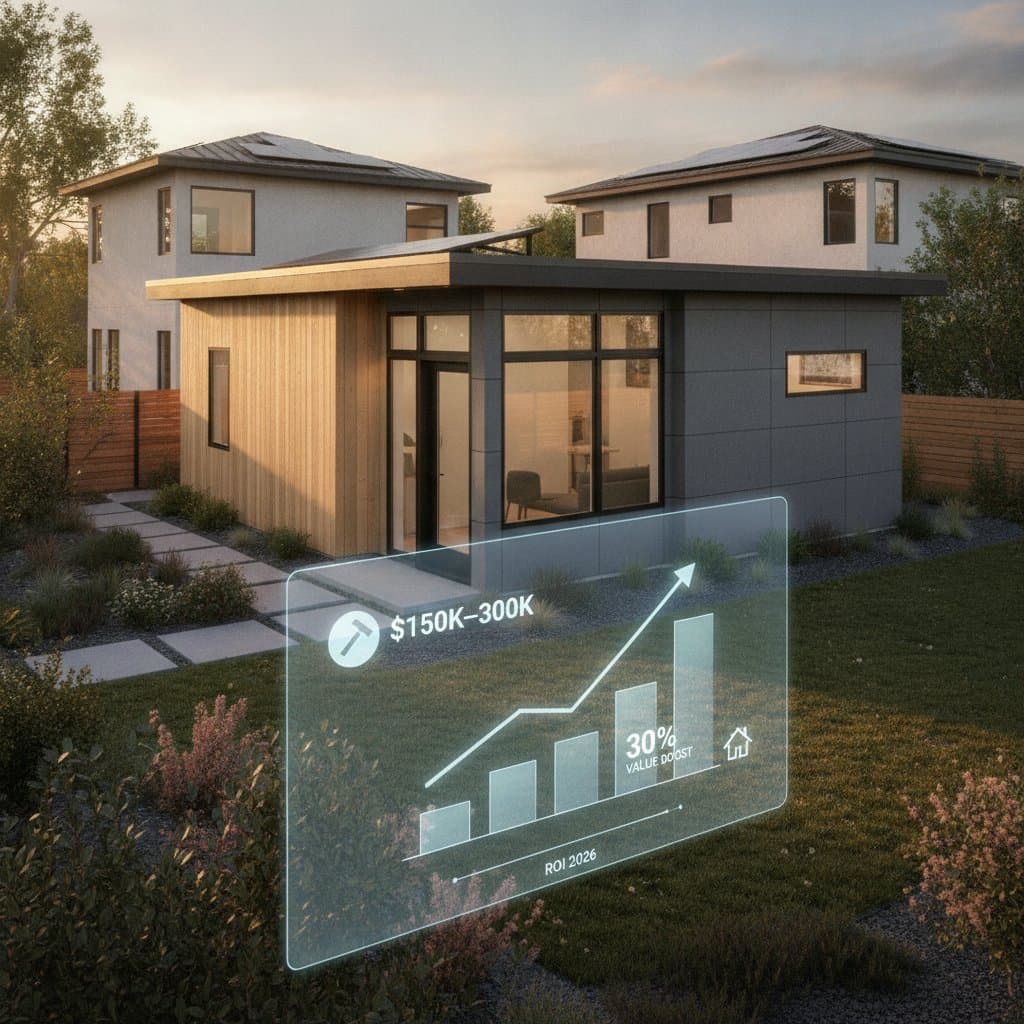
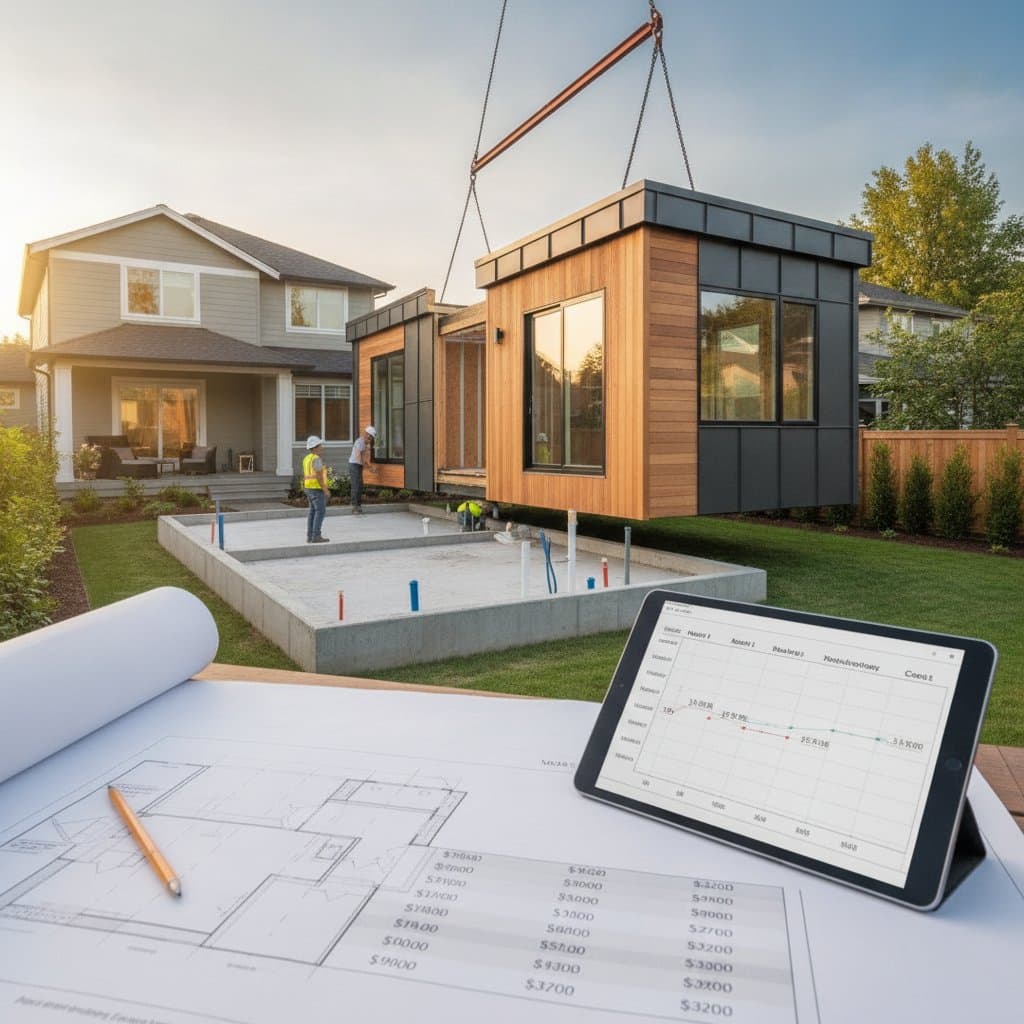
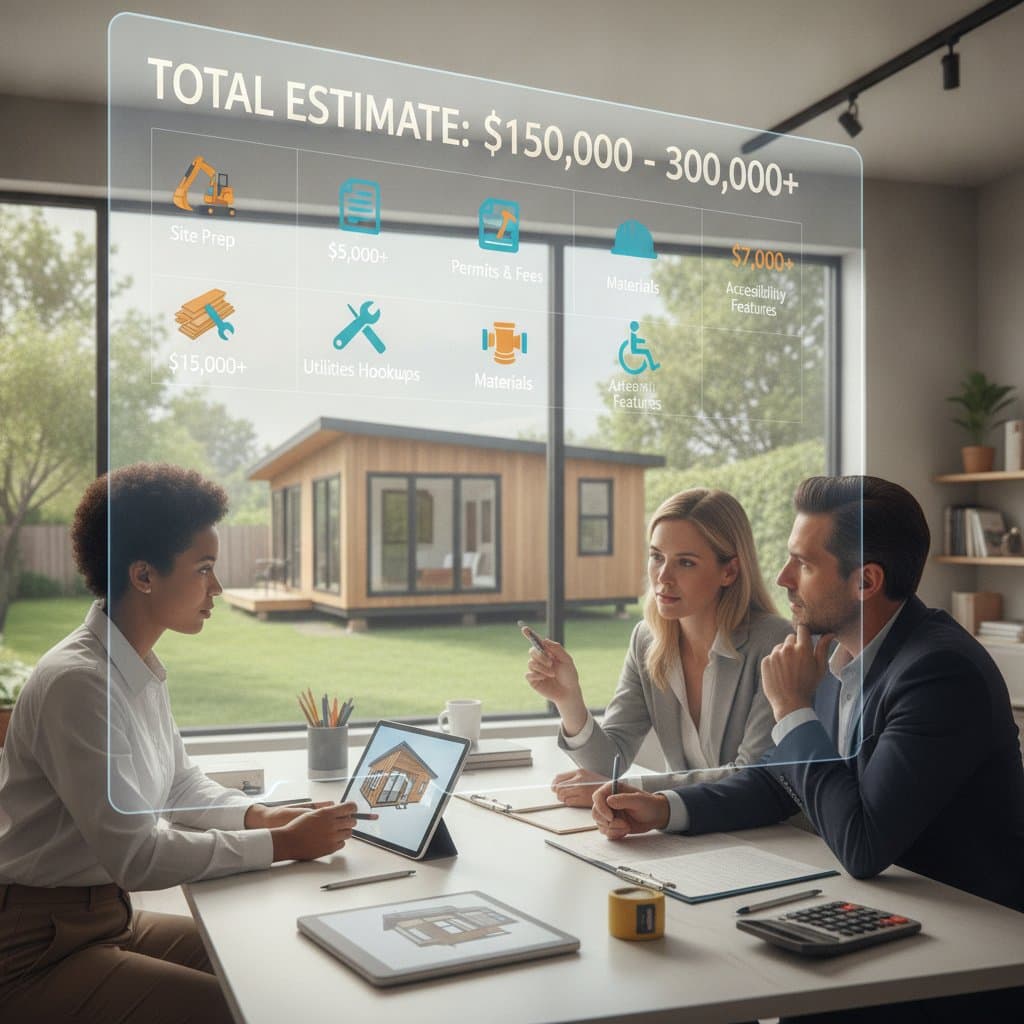
Construction of a granny flat typically ranges from $130,000 to $320,000, influenced by dimensions, configuration, materials, and geographic location. Detached structures incur higher expenses than conversions of garages or attached units, as they necessitate independent foundations, utility extensions, and roofing systems.
Primary Cost Influences
- Dimensions and configuration: Compact studios or single-bedroom units prove more economical than expansive two-bedroom designs.
- Foundation options: Concrete slabs generally cost less than elevated foundations in many regions.
- Utility integrations: Extending water, sewage, and electrical services contributes $8,000 to $25,000.
- Regulatory approvals: Permit and impact fees vary from $3,000 to $15,000 across localities.
- Interior and exterior finishes: Standard vinyl flooring, laminate countertops, and prefabricated cabinetry minimize outlays, whereas luxury selections elevate the total.
Project Duration
- Self-directed construction: Spans 8 to 14 months, contingent upon expertise and scheduling availability.
- Contractor-led construction: Completes in 4 to 8 months, commencing post-permit issuance.
Project Complexity
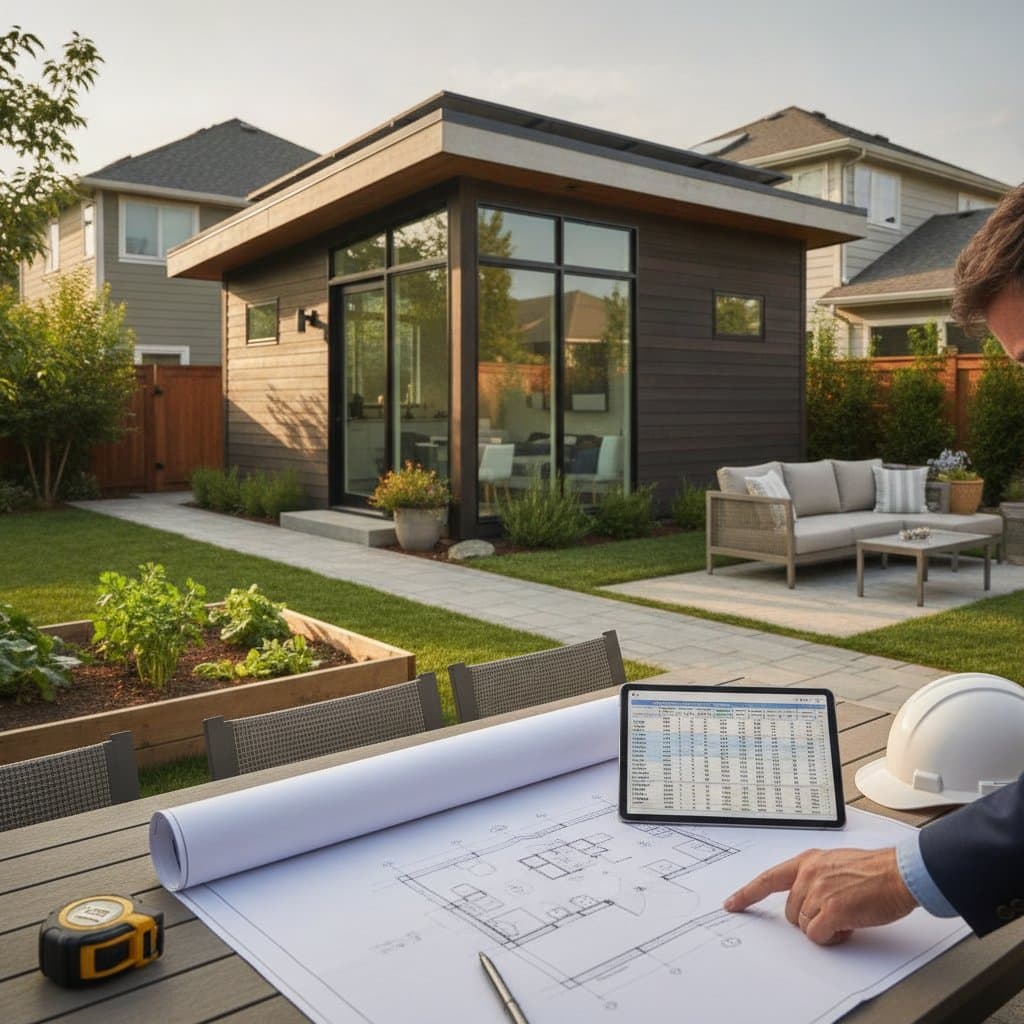
Advanced level. Framing, plumbing, electrical installations, and adherence to building codes demand substantial skill. Experienced builders or certified professionals should oversee comprehensive projects.
Detailed Construction Process
1. Confirm Zoning and Obtain Permits
Examine municipal zoning regulations to ascertain ADU permissibility. Assess stipulations on setbacks, maximum heights, and parking provisions. Submit applications for construction permits and utility linkages.
Verification milestone: Secure documented authorization and endorsed blueprints prior to initiating work.
2. Develop the Floor Plan
Select among attached, detached, or garage conversion formats. Incorporate accessibility features, distinct entryways, and ample natural illumination. Allocate spaces for kitchen, bathroom, and living areas with optimized circulation.
Verification milestone: The plan aligns with site constraints and regulatory boundaries.
3. Site Preparation
Remove foliage and grade the terrain evenly. Identify utility placements before any excavation. Compact the subsoil as necessary to underpin a slab foundation.
Alert: Subsurface Utility Hazards
Contact utility companies in advance of digging to prevent damage to buried lines.
Verification milestone: The site remains stable, unobstructed, and prepared for foundational forms.
4. Foundation Construction
Erect formwork and pour concrete for slabs or footings. Ensure leveling and allow curing in accordance with engineering specifications.
Verification milestone: The foundation achieves levelness within 1/8 inch at all edges.
5. Structural Framing
Employ pressure-treated lumber for sill plates and vertical studs. Assemble exterior and interior walls, roof trusses, and apertures. Apply sheathing and moisture-resistant barriers.
Alert: Elevated Work Hazards
Utilize secure ladders, protective helmets, and safety harnesses for tasks at height.
Verification milestone: Walls stand plumb, and roof assembly measures squarely.
6. Utility System Installation
Route electrical conduits and plumbing pipes in compliance with standards. Integrate HVAC channels or compact split systems for temperature regulation. Arrange inspections prior to enclosing lines.
Warning: Electrical Dangers
Licensed electricians alone may link circuits to primary panels.
Verification milestone: All systems receive approval without mandated alterations.
7. Enclosure and Thermal Insulation
Incorporate insulation into walls, ceilings, and floors. Affix drywall, seal joints, and prime surfaces. Weatherproof perimeters of windows and doors to enhance efficiency.
Verification milestone: The assembly satisfies thermal and insulation evaluations.
8. Interior and Exterior Completion
Apply paint, lay flooring, install cabinetry, and add trim elements. Position lighting, receptacles, and controls following inspection clearance. Finish with siding, roofing, and drainage systems.
Verification milestone: Finishes appear uniform, pristine, and operational.
9. Landscaping and Pathway Integration
Construct pathways, install privacy barriers, and add exterior illumination. Slope the earth to direct water away from the building.
Verification milestone: The addition harmonizes with the landscape and facilitates proper runoff.
Issue Resolution and Inspection Protocols
| Issue | Probable Origin | Resolution |
|---|---|---|
| Uneven flooring | Inadequate subsoil compaction | Regrade and bolster the foundation |
| Air infiltration at windows | Deficient insulation or sealing | Insert foam seals or apply caulk to voids |
| Reduced water flow | Narrow supply piping | Increase pipe sizing |
| Circuit interruptions | Excessive load on breakers | Reallocate appliances or enhance wiring |
| Wall dampness | Insufficient moisture barriers | Renew insulation and reseal enclosures |
Inspection Protocol:
- Confirm smooth operation of all windows and doors.
- Evaluate functionality of outlets and switches.
- Inspect exterior grading for adequate drainage.
- Validate operation of smoke and carbon monoxide alarms.
Upkeep and Durability
A meticulously constructed granny flat endures 40 to 80 years, based on material selection and ongoing care.
Upkeep Schedule
- Examine roofing and gutters biannually for potential leaks.
- Refresh exterior paint every 7 to 10 years to safeguard wood integrity.
- Drain water heaters annually to mitigate sediment accumulation.
- Verify smoke and carbon monoxide detectors each month.
Consistent maintenance sustains asset value and ensures safety for occupants.
Financial Returns and Advantages
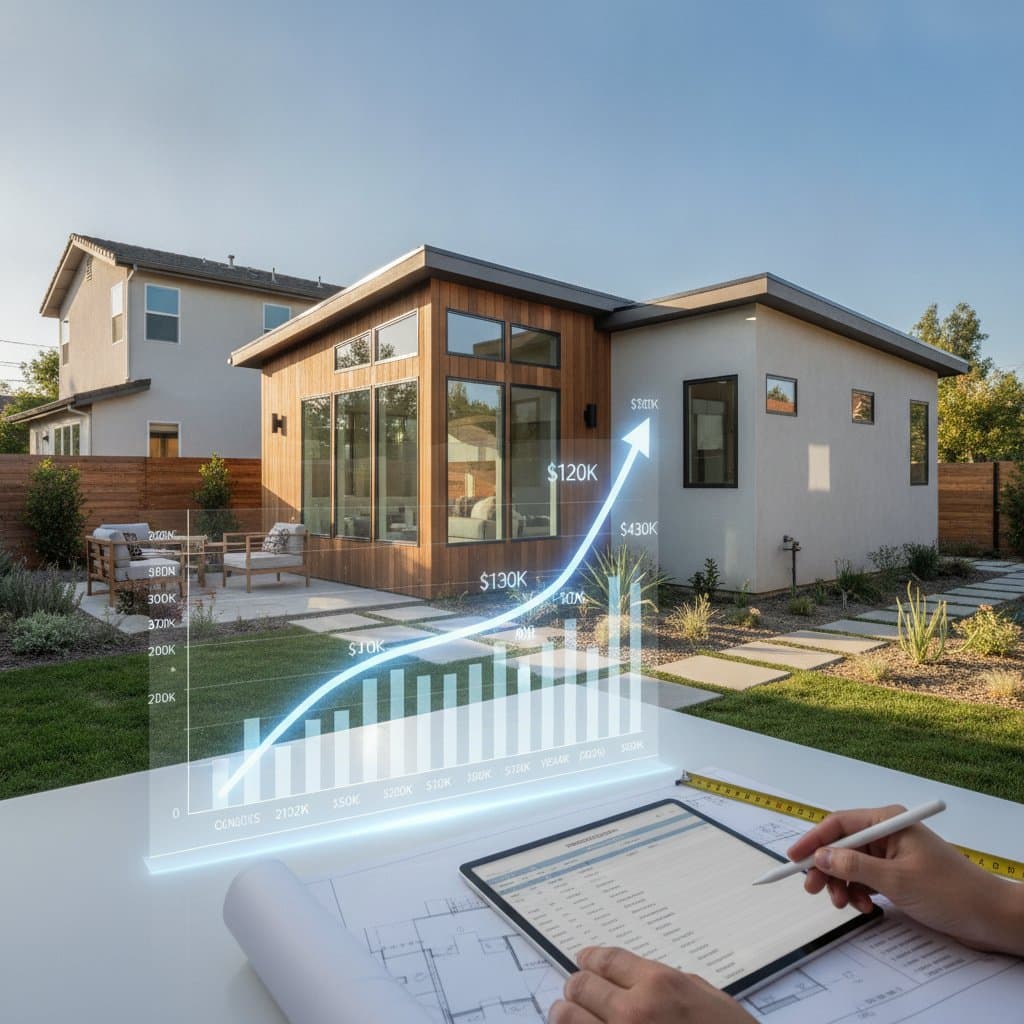
An effectively designed granny flat augments property valuation by 20% to 35%, varying with regional markets and execution quality. Rental yields may deliver 5% to 10% annual returns relative to build expenses.
Elements Enhancing Returns
- Market rental appetite: Regions with strong demand accelerate recoupment.
- Aesthetic and functional design: Efficient, secluded units command premium rents.
- Regulatory adaptability: Sites permitting varied occupancy or temporary lets amplify gains.
- Sustained low upkeep: Resilient components curtail repairs and bolster enduring profitability.
Illustrative Return Projections
| Configuration | Monthly Rental | Yearly Return | Recoupment Timeline |
|---|---|---|---|
| Garage Adaptation | $1,200 | 9% | 11 years |
| Attached Unit | $1,600 | 8% | 12 years |
| Independent Cottage | $2,000 | 7% | 13 years |
Projections fluctuate by locale and economic factors.
Strategies for Optimal Outcomes
Prioritize straightforward, utilitarian designs to curb expenses from complex geometries. Opt for moderate-quality materials that satisfy tenant preferences without excess. Ensure seclusion through dedicated access and acoustic barriers. Integrate energy-saving appliances to lower utility burdens. Retain records of approvals, evaluations, and expenditures to support future transactions.
A thoughtfully executed granny flat expands living options, accommodating relatives, yielding rentals, or hosting visitors.
Common Queries
What dimensions are permissible for a granny flat?
Regulations typically permit 400 to 1,200 square feet, scaled to lot area and zoning classifications.
Is a distinct address or utility metering required?
Certain municipalities mandate separate identifiers or meters for income-generating units; consult local authorities.
Are financing options available for ADUs?
Affirmative; institutions provide equity-based loans or specialized ADU funding.
Does adding a granny flat raise property taxes?
It does, applied solely to the incremental value; assessments follow local methodologies.
Which is preferable: a detached unit or garage conversion?
Detached options provide superior privacy and enduring worth, though at greater initial cost.
Securing Long-Term Value
Constructing a granny flat merges building expertise with fiscal prudence. Thorough preparation, skilled execution, and diligent maintenance optimize returns. Evaluate zoning constraints, establish a precise budget, and engage experts as needed. This investment elevates property appeal and fosters reliable revenue streams.