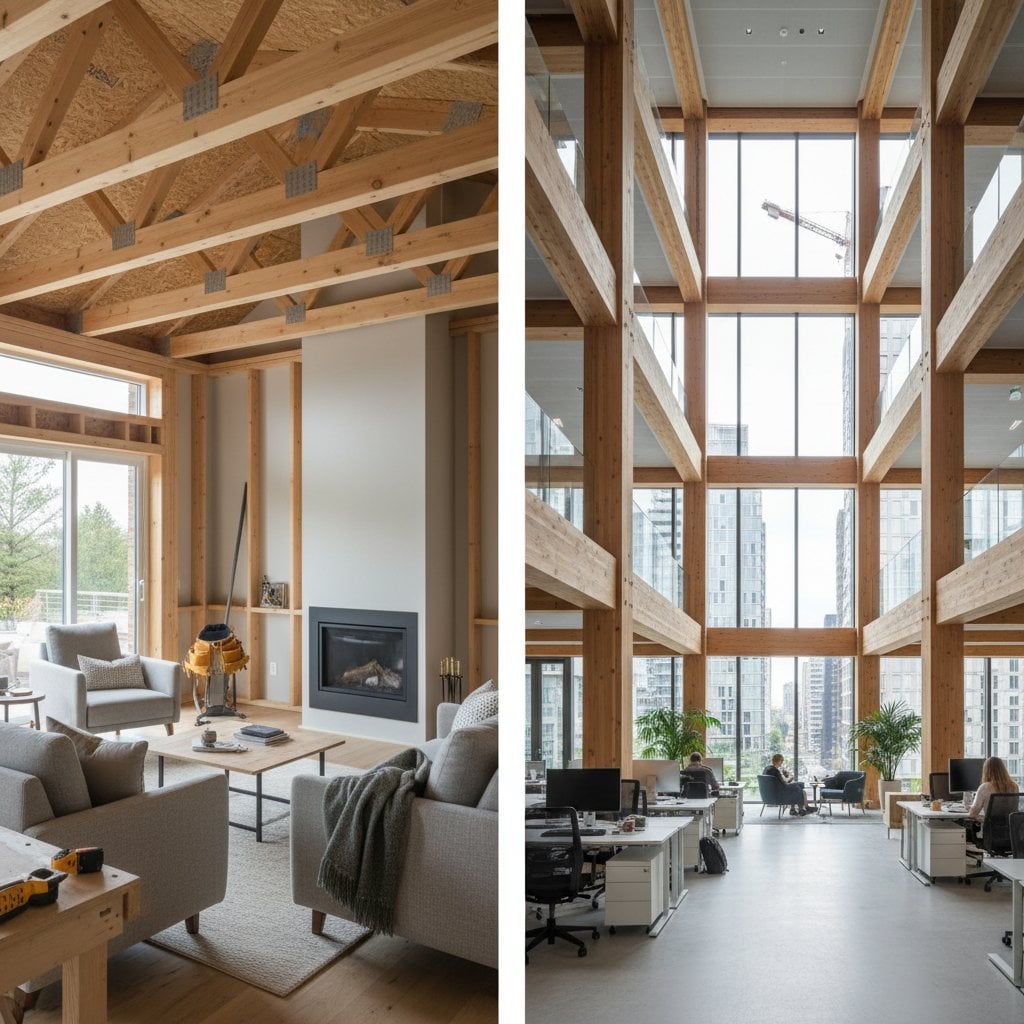
Mass Timber vs. Traditional Framing: Unpacking the Cost Realities
Quick Overview
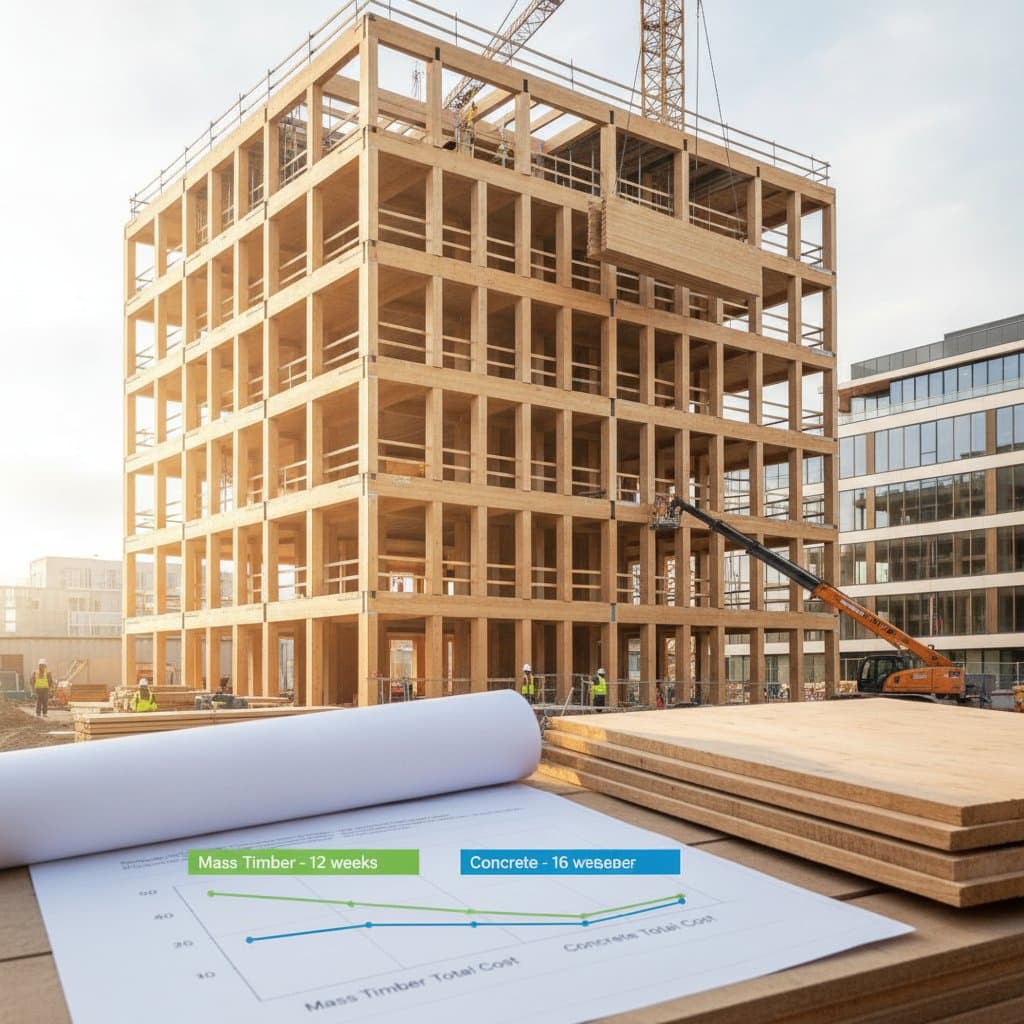
Mass timber employs engineered wood products, such as cross-laminated timber (CLT) panels, to substitute for steel or concrete in construction. Traditional framing relies on dimensional lumber assembled on-site. For small homes, traditional framing typically incurs lower overall costs because of its straightforward materials and labor demands. In contrast, large buildings often achieve cost equivalence or reductions with mass timber, thanks to accelerated assembly times and diminished foundation demands. Projects using either method face moderate to high complexity, with fire risks present during construction and material expenses ranging from moderate to high based on specifications and regional availability. Engage a licensed structural engineer for all load-bearing elements to guarantee compliance and safety.
Detailed Comparison Guide
1. Assess Structural Demands
Identify the loads that walls, floors, and roofs must support, including live loads from occupants and dead loads from the building itself.
- Small homes generally suffice with traditional framing using 2x6 studs at 16-inch centers, which complies with most local codes for basic spans.
- Larger designs benefit from CLT panels or glued-laminated (glulam) beams, which span greater distances and minimize interior supports.
Verification Step: Confirm that the design satisfies live and dead load standards outlined in local building regulations.
2. Secure Engineering Approvals and Permits
Present detailed plans to a qualified structural engineer for review and certification.
- Traditional framing demands minimal specialized analysis, allowing quicker approvals.
- Mass timber necessitates precise panel schematics, connection specifications, and seismic considerations to secure permit clearance.
Verification Step: Obtain engineer-stamped drawings and official permit approvals prior to commencing construction.
3. Design and Build the Foundation
All systems require a stable base, typically a concrete slab or footings.
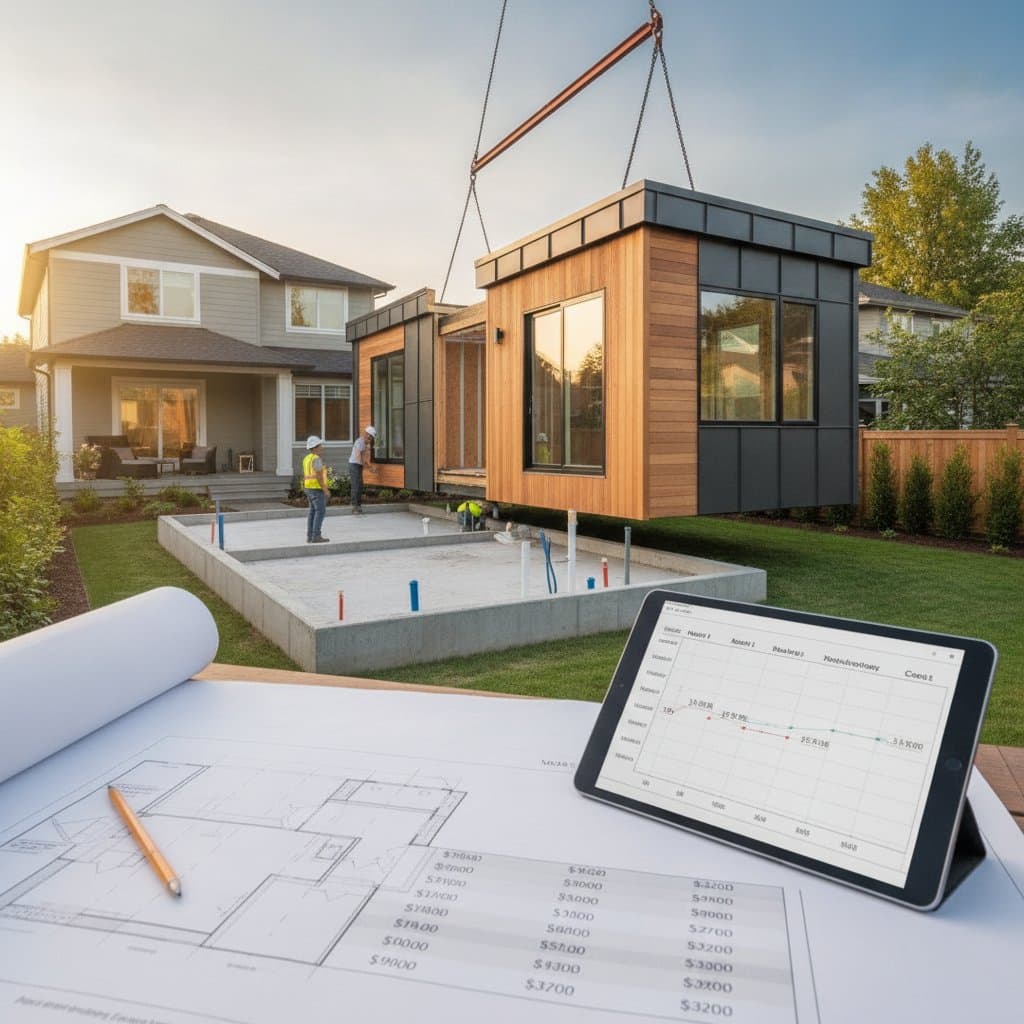
- The lighter profile of mass timber permits shallower or narrower footings, potentially cutting concrete and excavation expenses.
- Traditional framed buildings might demand reinforced or deeper foundations, especially on unstable soils, to handle greater weight.
Verification Step: Level the foundation surface and position anchors accurately before erecting frames or placing panels.
4. Erect Walls and Initial Structure
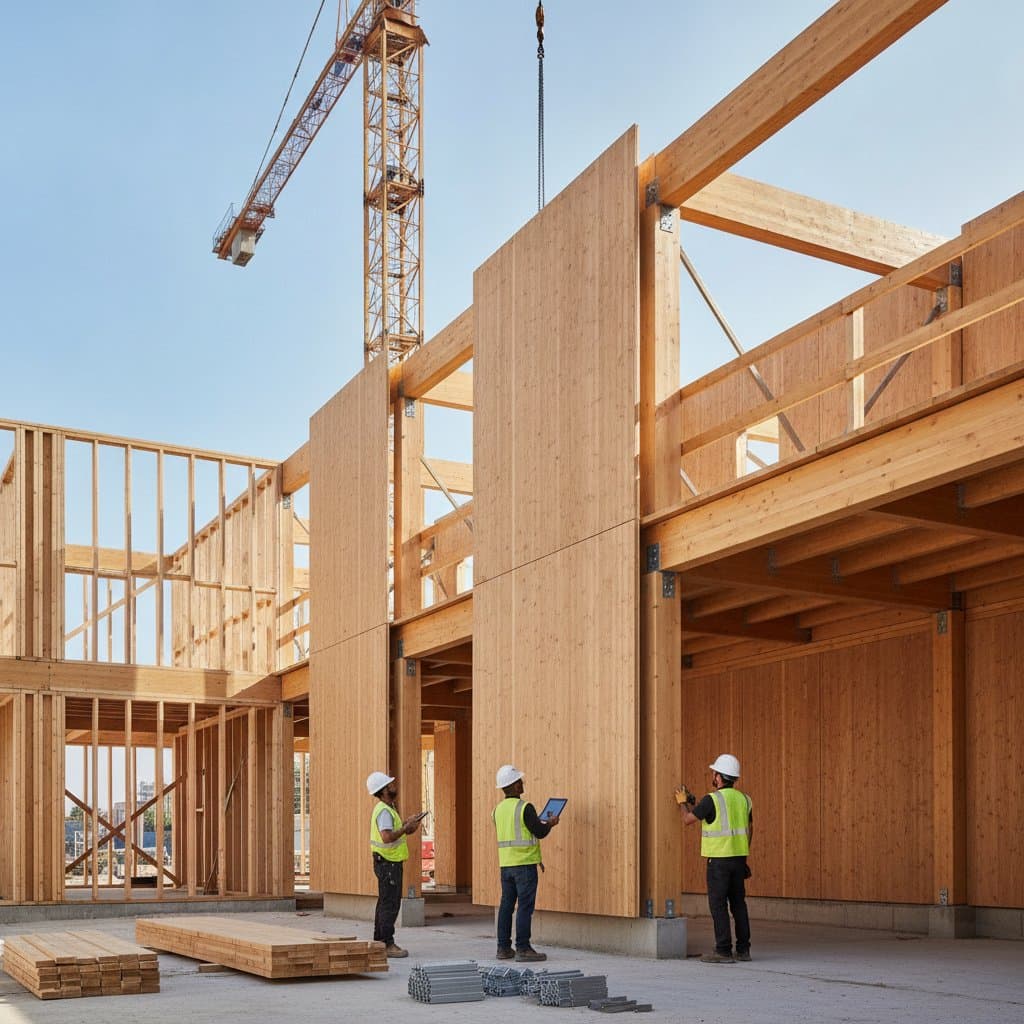
Traditional Framing Process:
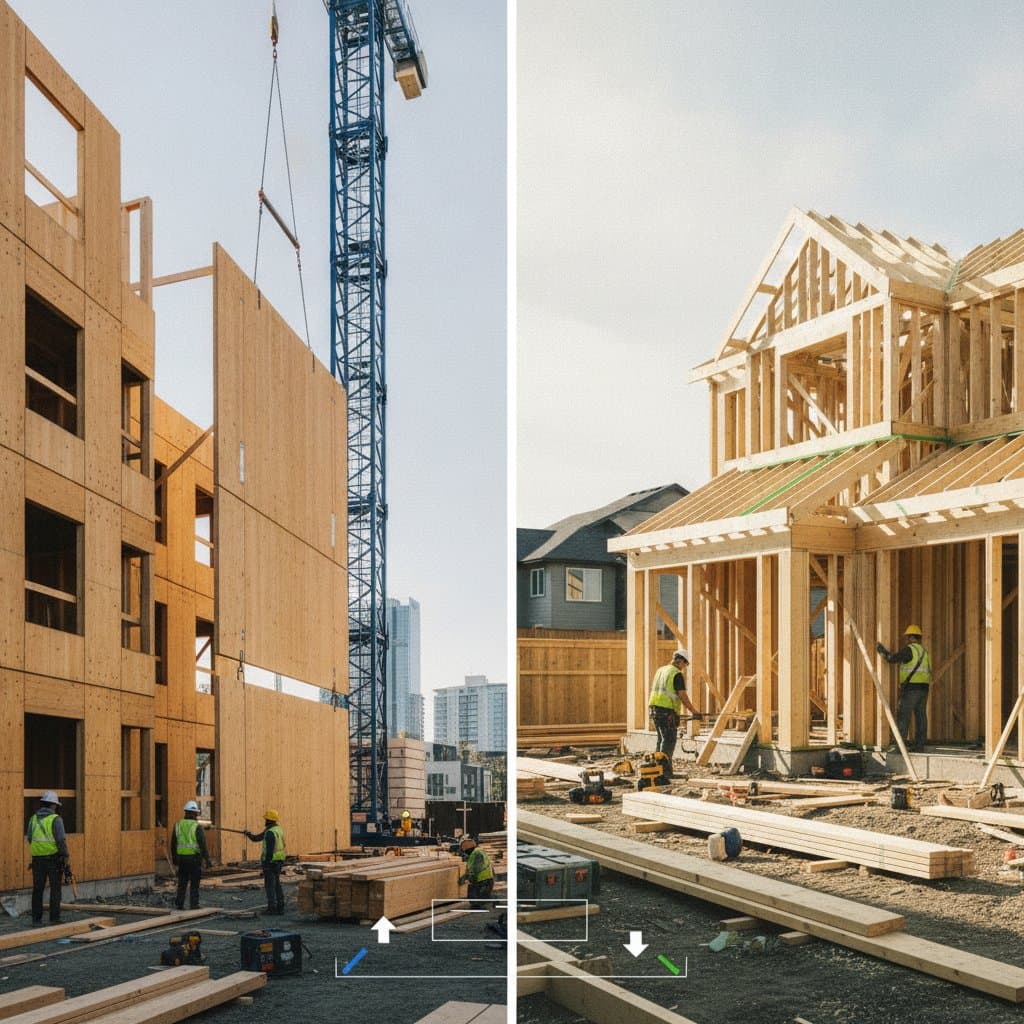
- Measure, cut, and secure studs, top and bottom plates, and headers using nails or screws as per the engineered plans.
- Cover exterior surfaces with plywood sheathing or oriented strand board (OSB) to enhance rigidity.
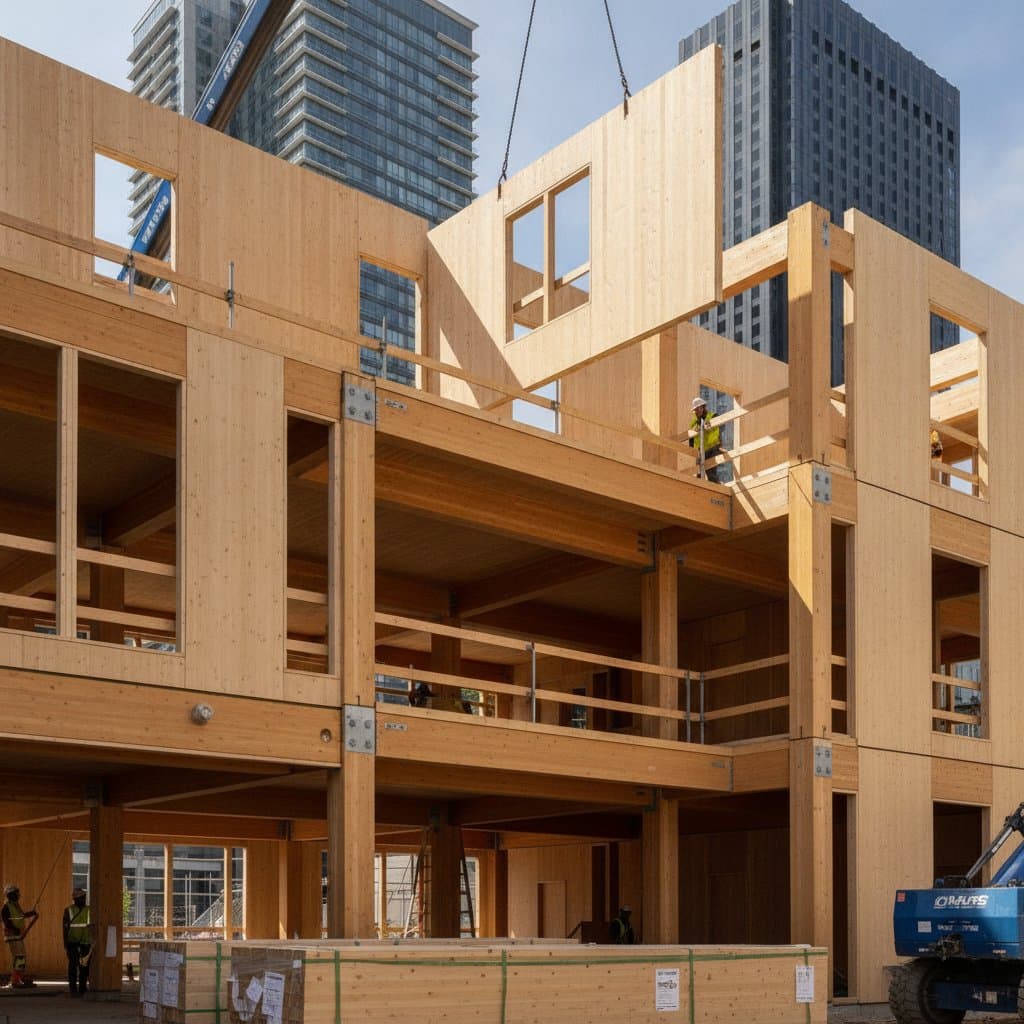
Mass Timber Process:
- Lift CLT panels into position with a crane, ensuring alignment with pre-marked foundation points.
- Fasten panels using high-strength bolts, screws, or brackets designed for engineered wood connections.
Verification Step: Use levels and plumb lines to confirm that every wall or panel stands perfectly vertical and horizontal prior to final securing.
5. Construct Floors and Roofs
Traditional methods deploy individual joists or pre-fabricated trusses for these elements.
- Assembling framed floors involves numerous components, which increases labor hours and potential for errors.
- Mass timber employs expansive CLT panels or glulam beams, enabling rapid installation despite the need for cranes or lifts.
Verification Step: Inspect all joints for secure fits and ensure connections adhere strictly to the engineering specifications.
6. Implement Fire and Moisture Safeguards
Building codes often mandate protective measures to mitigate risks.
- Apply intumescent coatings, fire-retardant treatments, or encase wood with gypsum board to achieve required fire-resistance ratings.
- Install vapor barriers, flashing, and drainage planes on exterior assemblies to shield against water infiltration.
Verification Step: Verify that no untreated wood remains exposed where codes specify protection, conducting tests if necessary.
7. Conduct Inspections and Gain Approval
Local authorities require phased reviews to validate workmanship.
- Inspectors examine framing integrity, mechanical connections, and protective installations at key stages.
Verification Step: Withhold enclosure of any structural components until inspectors issue passing certifications.
Managing Waste and Cleanup
Gather sawdust, nails, and wood scraps systematically during the build.
- Direct treated lumber or chemically coated materials to designated hazardous waste facilities to comply with environmental standards.
- Mass timber remnants often qualify for recycling into biomass fuel or reuse in non-structural applications like landscaping blocks.
Wipe down tools using mild detergent solutions, and store surplus panels horizontally on elevated, covered supports to prevent warping or moisture damage.
Long-Term Upkeep and Durability
Routine Maintenance Protocol
Examine wood elements yearly for signs of water damage or loosening at joints.
- Clear debris from gutters, downspouts, and roof flashings to direct water away from the structure.
- Refresh sealants, paints, or protective finishes according to manufacturer guidelines, typically every 3 to 5 years.
Projected Service Life
Well-maintained traditional framed buildings endure 50 to 100 years or more.
- Mass timber structures achieve comparable longevity when protected from prolonged moisture exposure and subjected to regular sealing.
Indicators of Potential Issues
Watch for softened areas or color changes in wood fibers, which signal rot.
- Listen for unusual sounds like creaking from shifting joints, or observe visible fungal growth and expansion around hardware.
Address these promptly to avoid progressive deterioration.
Expert Recommendations
- Emphasize Accuracy in Planning. Mass timber demands precise dimensions; order custom panels only after double-checking measurements and site surveys.
- Prioritize Moisture Management. Acclimate all wood materials on-site under tarps, raised at least 6 inches above ground to allow air circulation.
- Select Approved Hardware. Opt for corrosion-resistant fasteners and connectors certified for use with engineered wood products to ensure load transfer integrity.
- Time Inspections Strategically. Coordinate with authorities early in the schedule to prevent delays from rework.
- Consider Hybrid Designs. Integrate mass timber elements, such as CLT flooring, with traditional walls to balance cost savings and structural performance where full adoption proves uneconomical.
Achieving Optimal Results
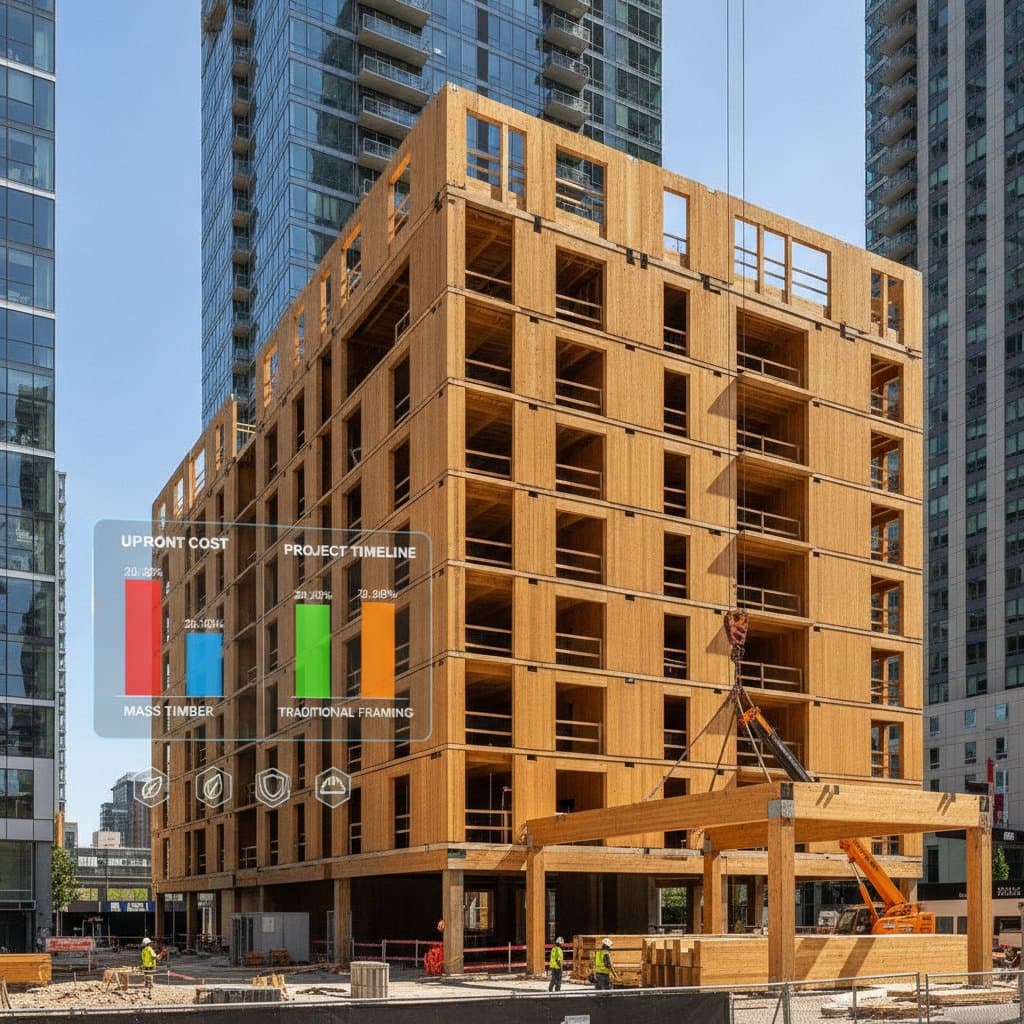
The decision between mass timber and traditional framing hinges on project scale, financial parameters, and desired outcomes. Small residential builds favor traditional framing for its accessible materials and broad contractor expertise, keeping initial investments low. Larger commercial or multi-story projects leverage mass timber's efficiencies in time, labor, and foundational support to offset higher material prices.
Proper execution of either approach yields resilient, code-compliant buildings capable of serving generations. Emphasize vigilant moisture prevention, robust fastening, and thorough inspections to maximize value. Obtain comprehensive bids that encompass engineering consultations, material transport, and regulatory fees for a true cost assessment before finalizing your choice.