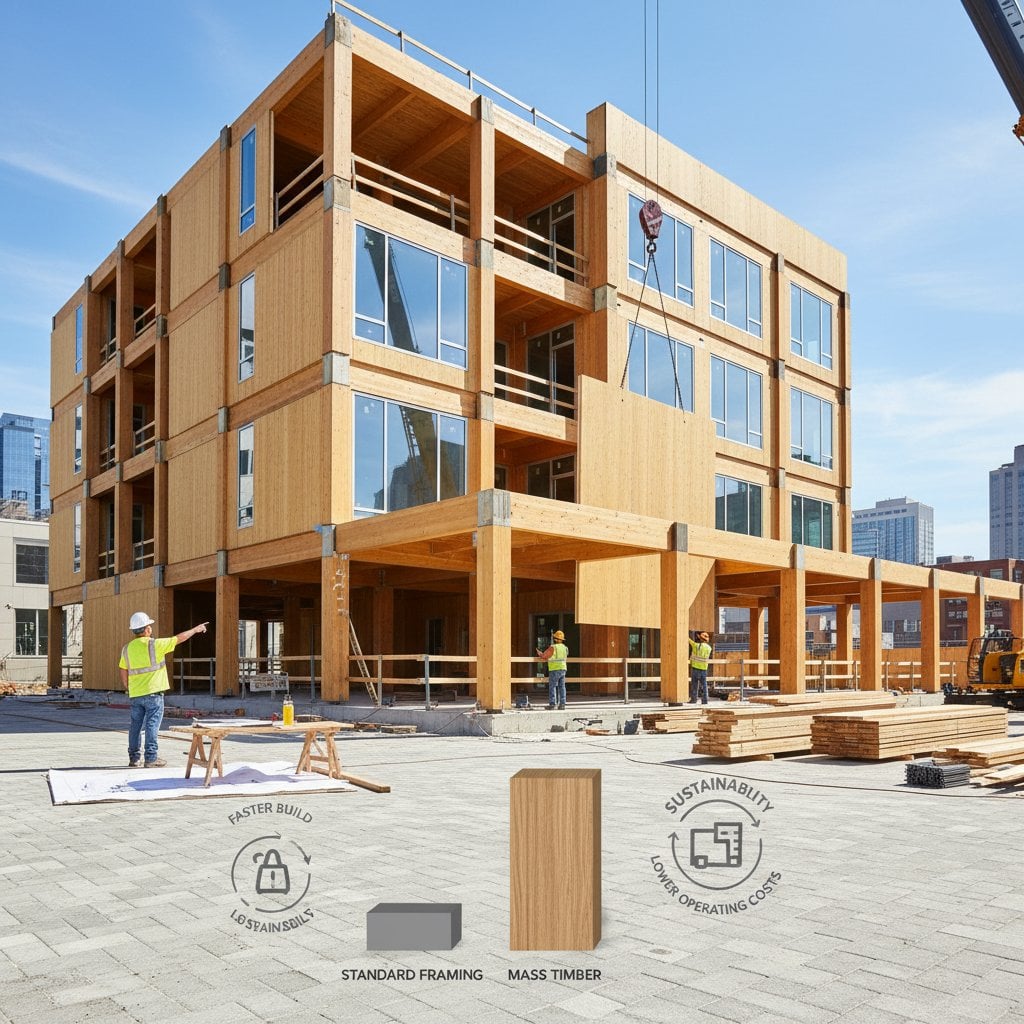
Cost Comparison Overview
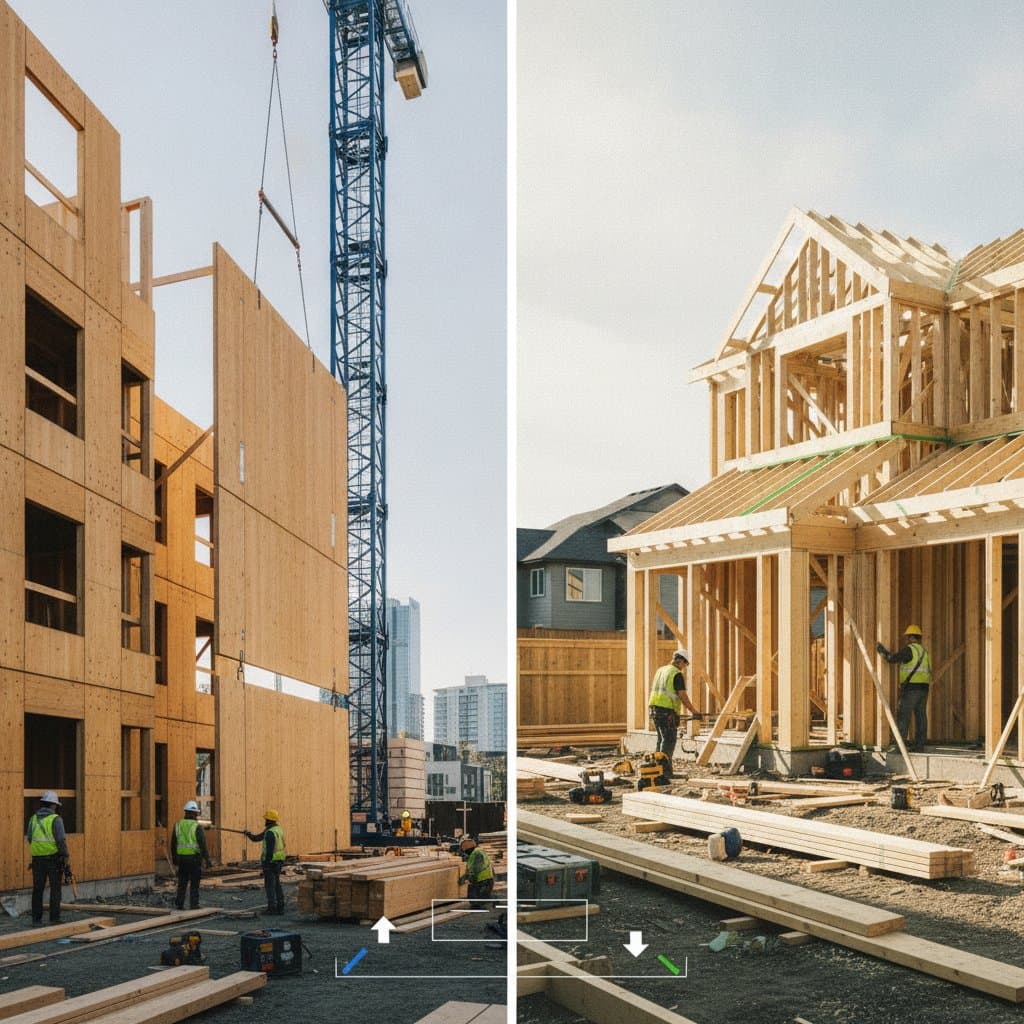
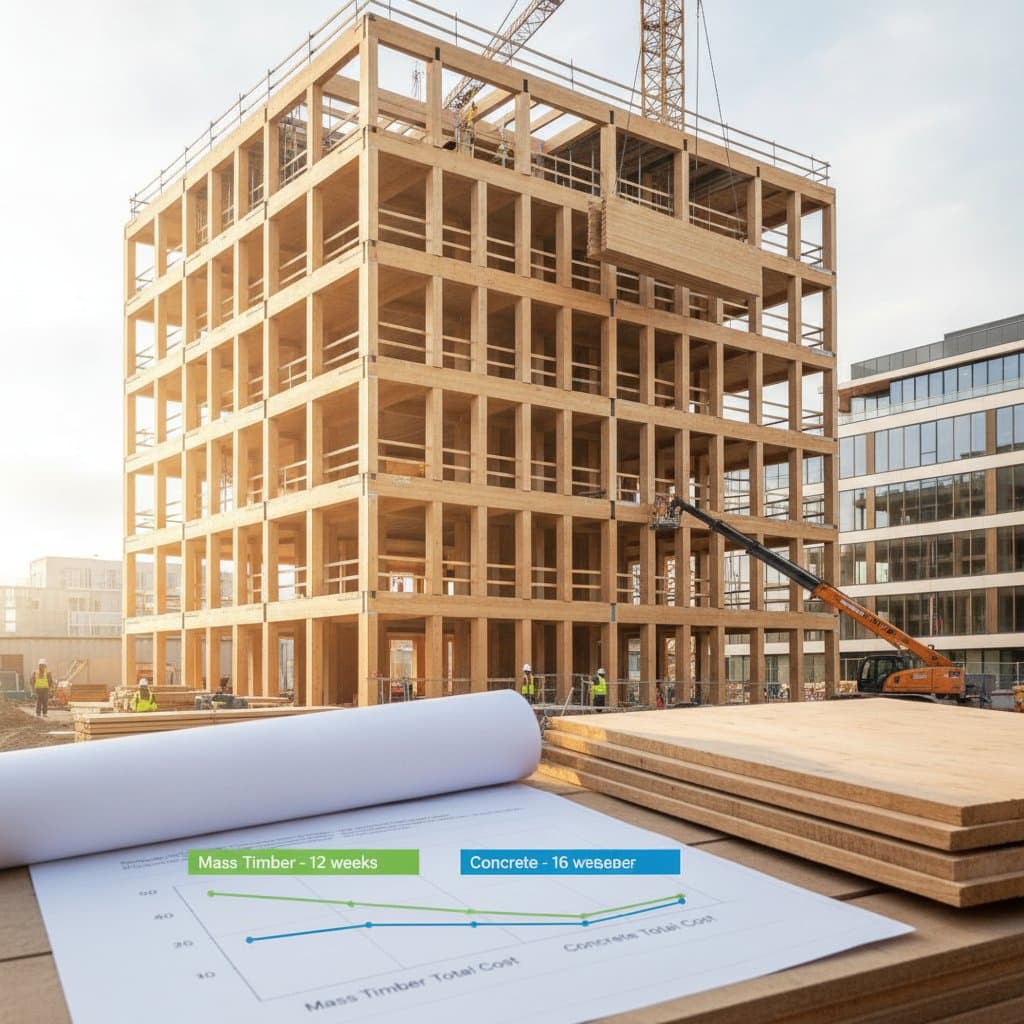
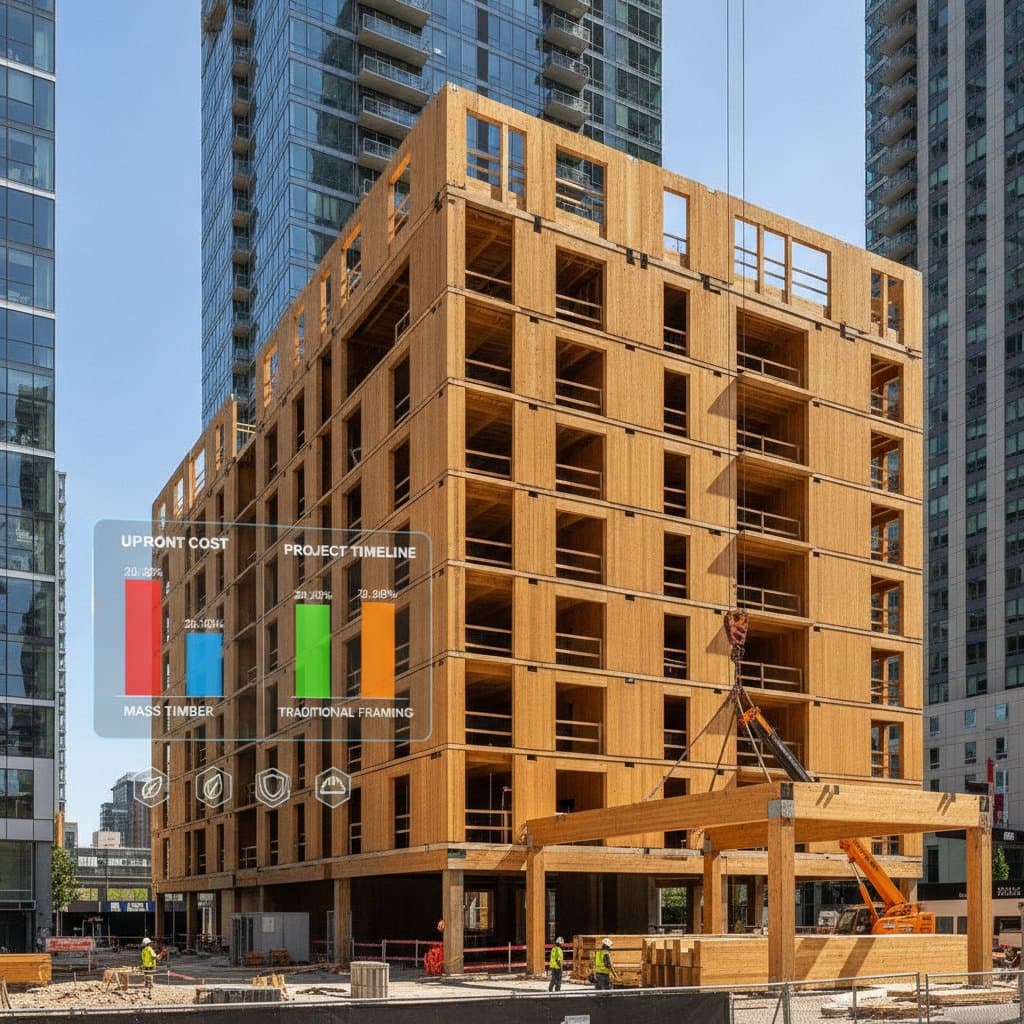
Mass timber construction typically exceeds traditional wood framing expenses by 10 to 20 percent per square foot. This premium stems from material production methods and specialized handling requirements. Project teams often recover portions of the difference through accelerated schedules and reduced foundation demands.
Key variables that influence final pricing include regional labor rates, panel sizes, and connection hardware selections. Early budget models should account for both material premiums and time savings to avoid surprises during bidding.
Primary Cost Drivers
- Material sourcing and panel fabrication: Cross-laminated timber and glulam members carry higher unit prices than dimensional lumber. Volume discounts appear once order quantities exceed standard thresholds.
- Design complexity: Custom beam layouts and curved elements increase engineering time and waste factors during production.
- Mechanical and electrical integration: Prefabricated panel systems require early coordination for wiring and duct placement. Design fees may increase, yet installation time decreases.
- Fire rating and safety systems: Mass timber meets code requirements through char calculations, though some jurisdictions request additional coatings or enhanced sprinkler layouts.
- Material logistics: Transporting large panels or beams adds expense when the nearest fabrication facility lies far from the site.
Return on Investment
Higher initial outlays can be offset by measurable long-term gains. Energy modeling shows that well-detailed mass timber envelopes deliver 5 to 10 percent lower annual operating costs through improved thermal performance. Earlier occupancy dates allow commercial owners to begin lease revenue streams weeks or months ahead of conventional schedules.
Traditional framing carries lower first costs yet may incur greater lifecycle expenses from repeated insulation upgrades or moisture repairs. Maintenance for mass timber remains modest when interior elements stay protected from direct water exposure.
Professional Execution Requirements
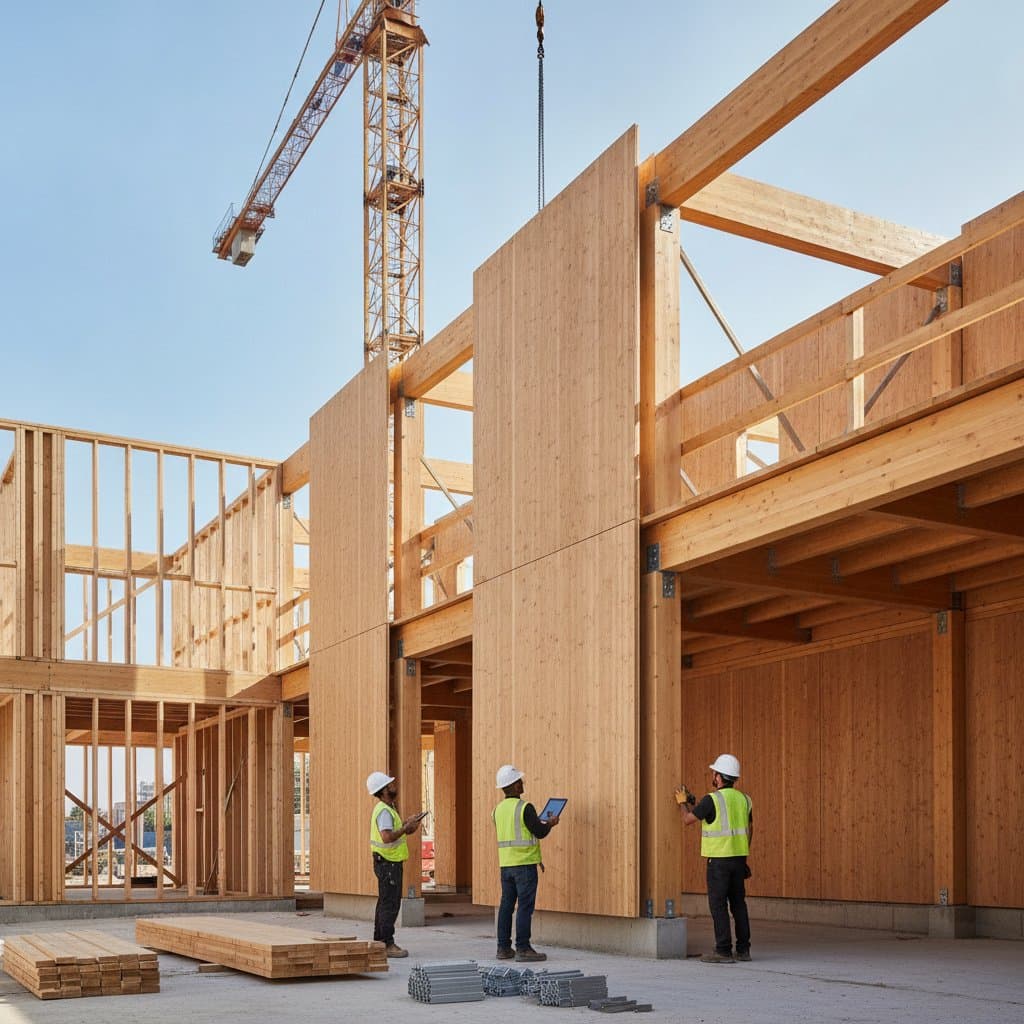
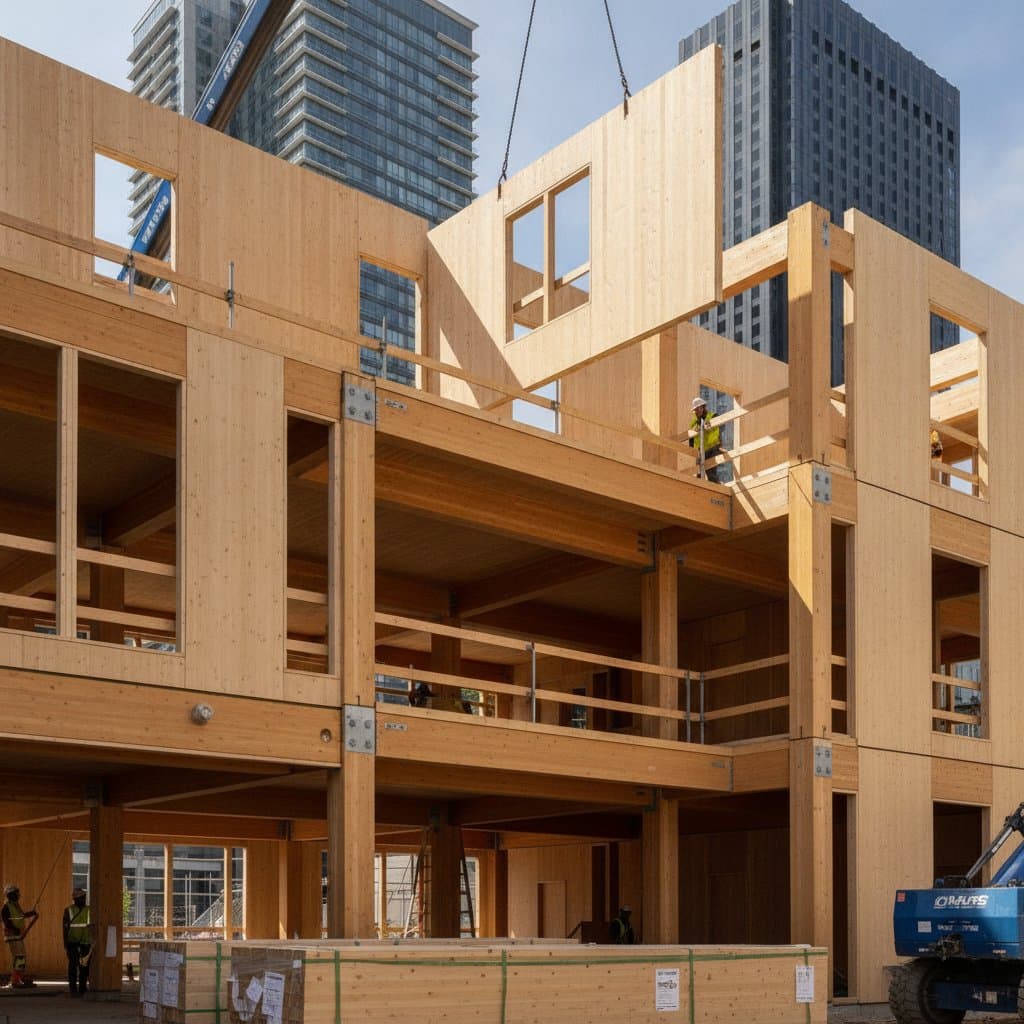
Full-scale mass timber assembly demands certified crews and crane operations. Load calculations, panel sequencing, and connection torque specifications fall outside typical DIY scope. Smaller nonstructural elements such as benches or feature walls can be owner-built with proper guidance.
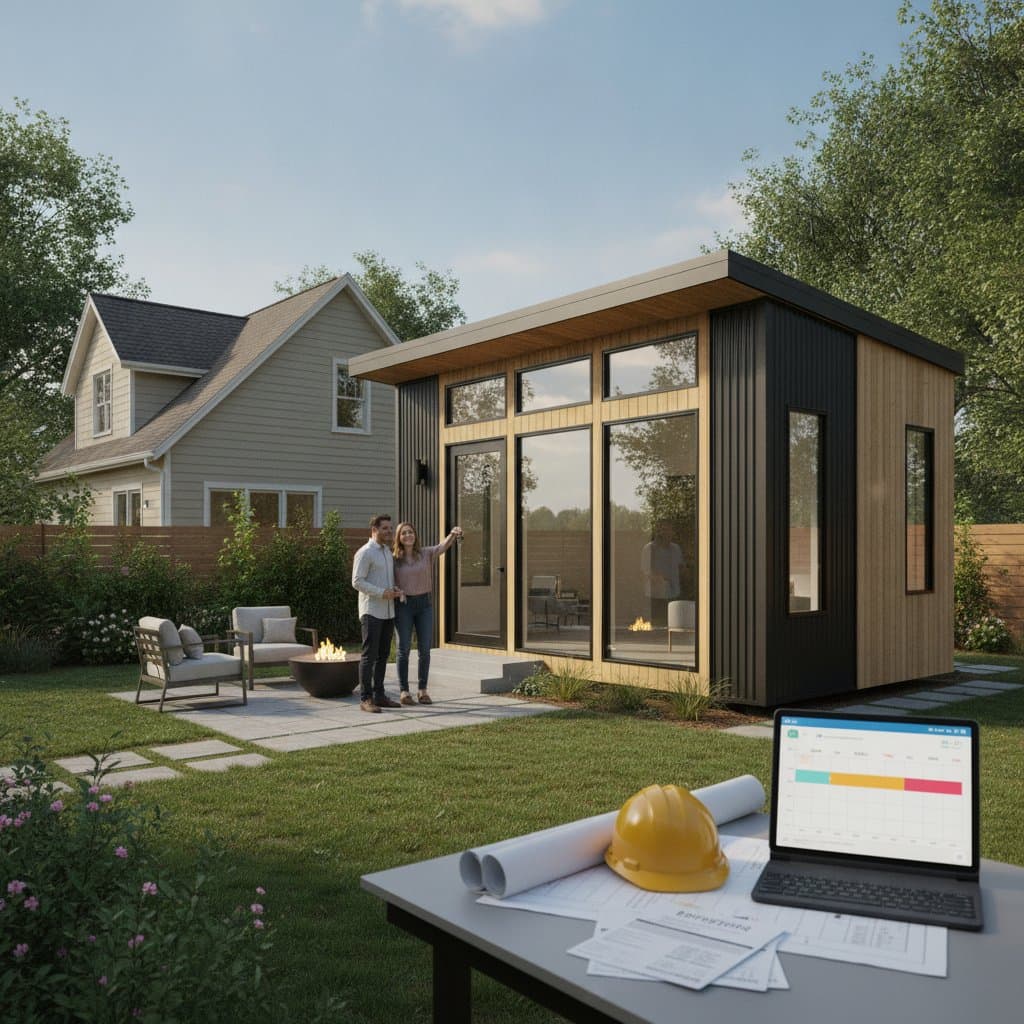
Conventional framing permits greater owner involvement on accessory buildings. Even then, structural review and inspection remain mandatory for safety and code compliance. Professional oversight coordinates material deliveries and ensures consistent quality across both systems.
How Cost Data Were Developed
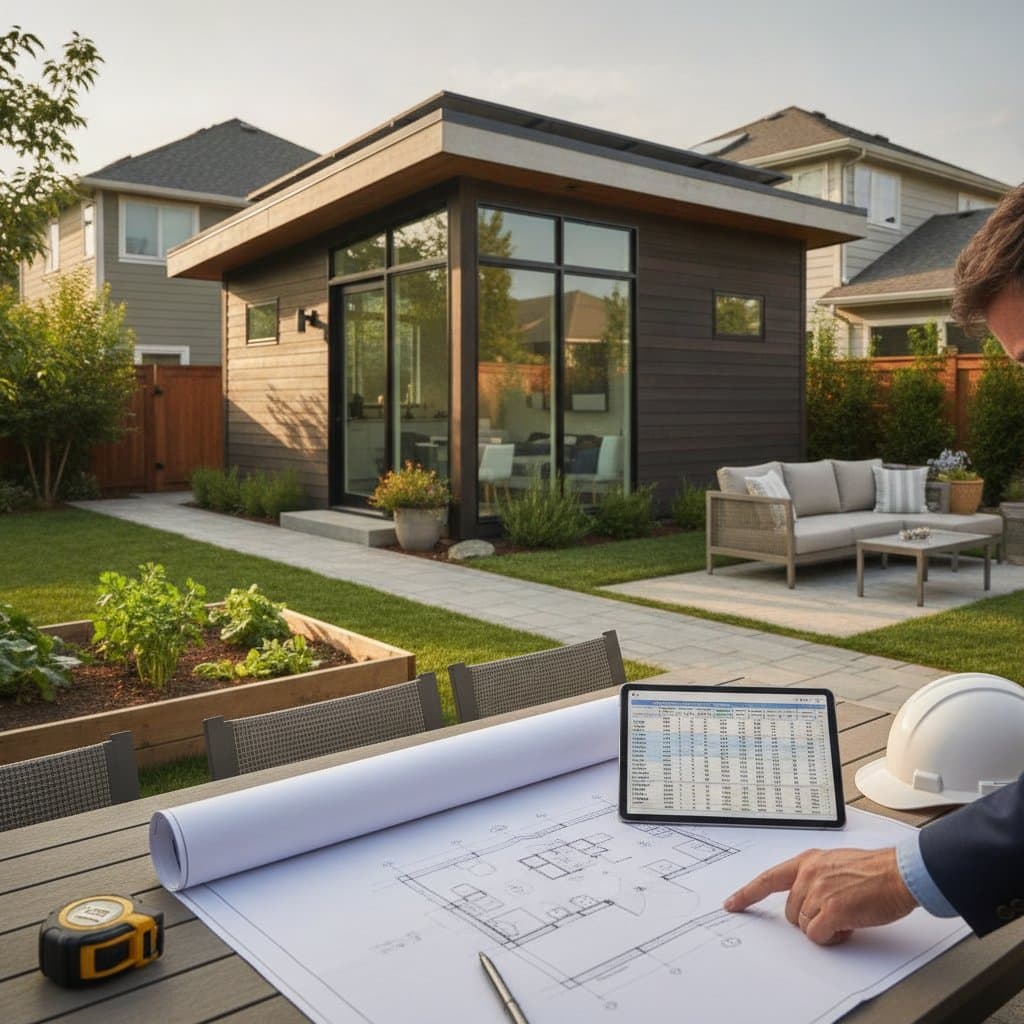
Figures reflect aggregated contractor bids, manufacturer pricing sheets, and regional surveys. Assumptions include mid-grade finishes, standard soil conditions, and prevailing wage rates. Unique site constraints or architectural features can shift totals in either direction.
Frequently Asked Questions
How much does mass timber cost compared to standard framing?
Mass timber projects usually run 10 to 20 percent higher per square foot, although shorter construction calendars can reduce overall financing costs.
Is mass timber cheaper than steel?
In mid-rise buildings, mass timber often matches or undercuts steel once foundation savings and faster erection are included.
What type of maintenance does mass timber need?
Exposed surfaces benefit from periodic sealant renewal. Scheduled inspections catch surface issues before they progress.
Can I combine mass timber with other materials?
Hybrid assemblies that pair timber with steel or concrete are common and allow optimization of both cost and structural performance.
Selecting the Right System
Project priorities determine the better choice. Teams that value speed, daylight, and reduced operating energy often favor mass timber despite the premium. Projects driven by lowest first cost or simple construction sequences continue to rely on conventional framing. Early collaboration between designers and builders clarifies which path aligns with schedule and budget targets.