Understanding the True Costs and Timelines for Installing a Prefab ADU
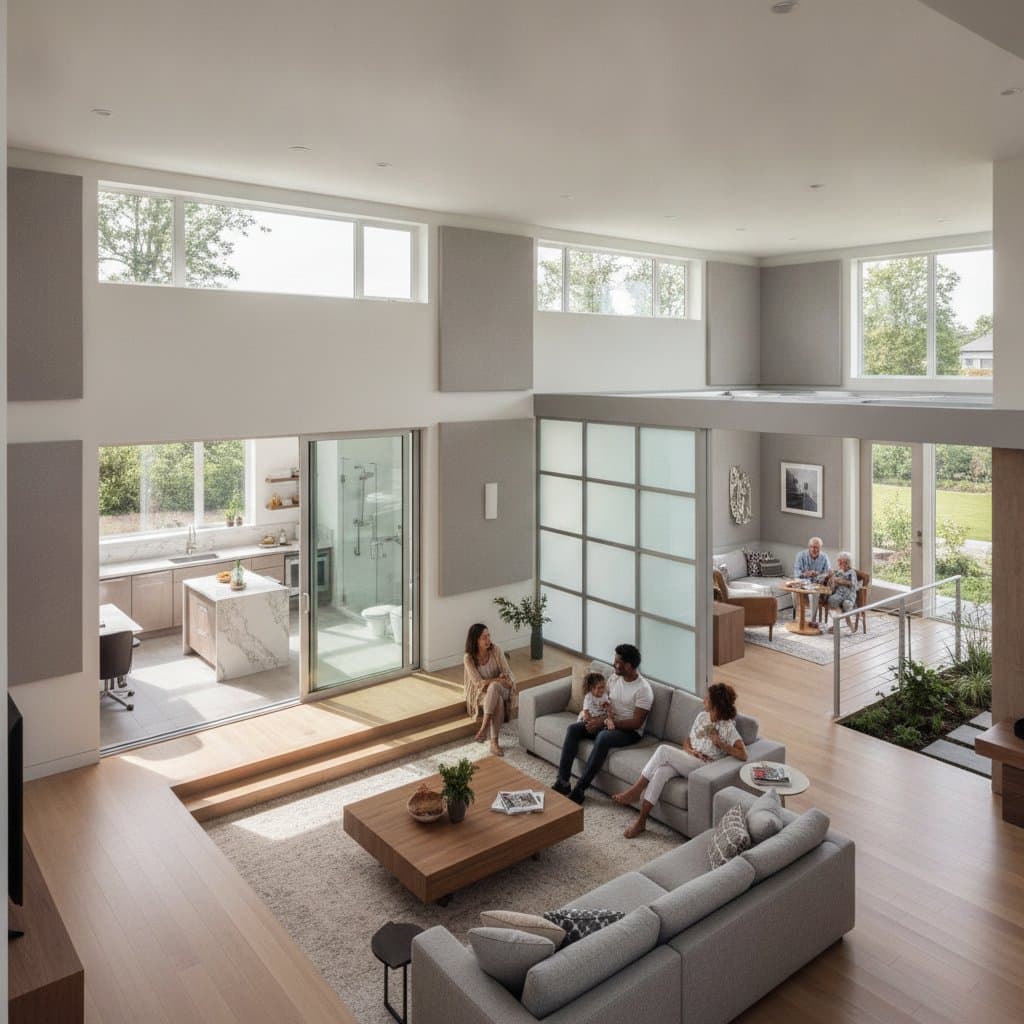
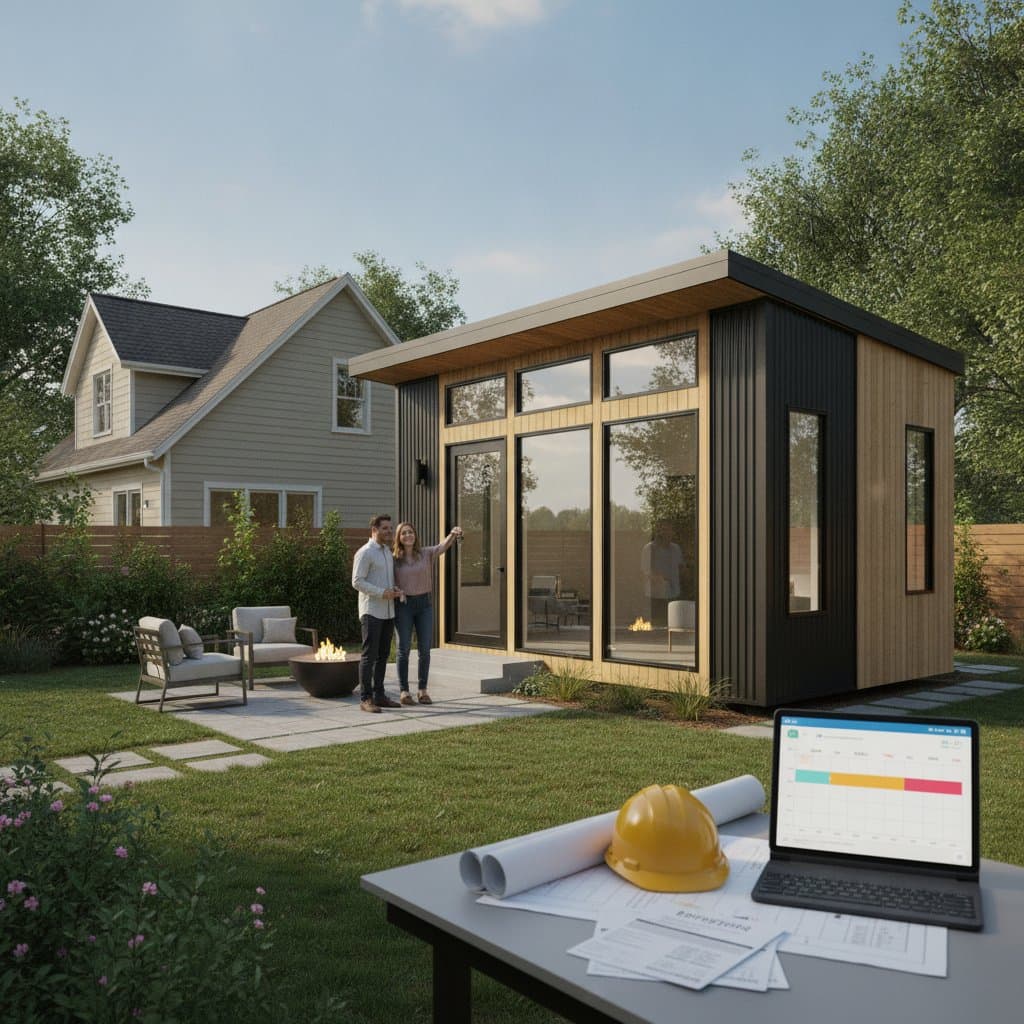
Installing a prefab accessory dwelling unit expands your property with a self-contained living space, ideal for accommodating family, generating rental income, or establishing a dedicated workspace. These units bypass many challenges of on-site construction through factory prefabrication, yielding faster timelines and more reliable outcomes. This guide examines the essential expenses and durations involved, spanning permitting through completion, to equip you with the knowledge needed for informed planning.
What Is a Prefab ADU?
A prefab ADU constitutes a compact, standalone residence constructed in a factory setting and then transported to your site for assembly. This method leverages streamlined production to minimize on-site labor and weather disruptions while upholding rigorous quality standards. Homeowners benefit from reduced variability in both cost and schedule compared to conventional builds.
Prefab ADUs vary by construction approach:
- Modular units: Fabricated in large sections off-site and joined together on location, suitable for versatile layouts.
- Panelized systems: Comprising pre-cut wall and roof panels that crews assemble rapidly, emphasizing speed for simpler designs.
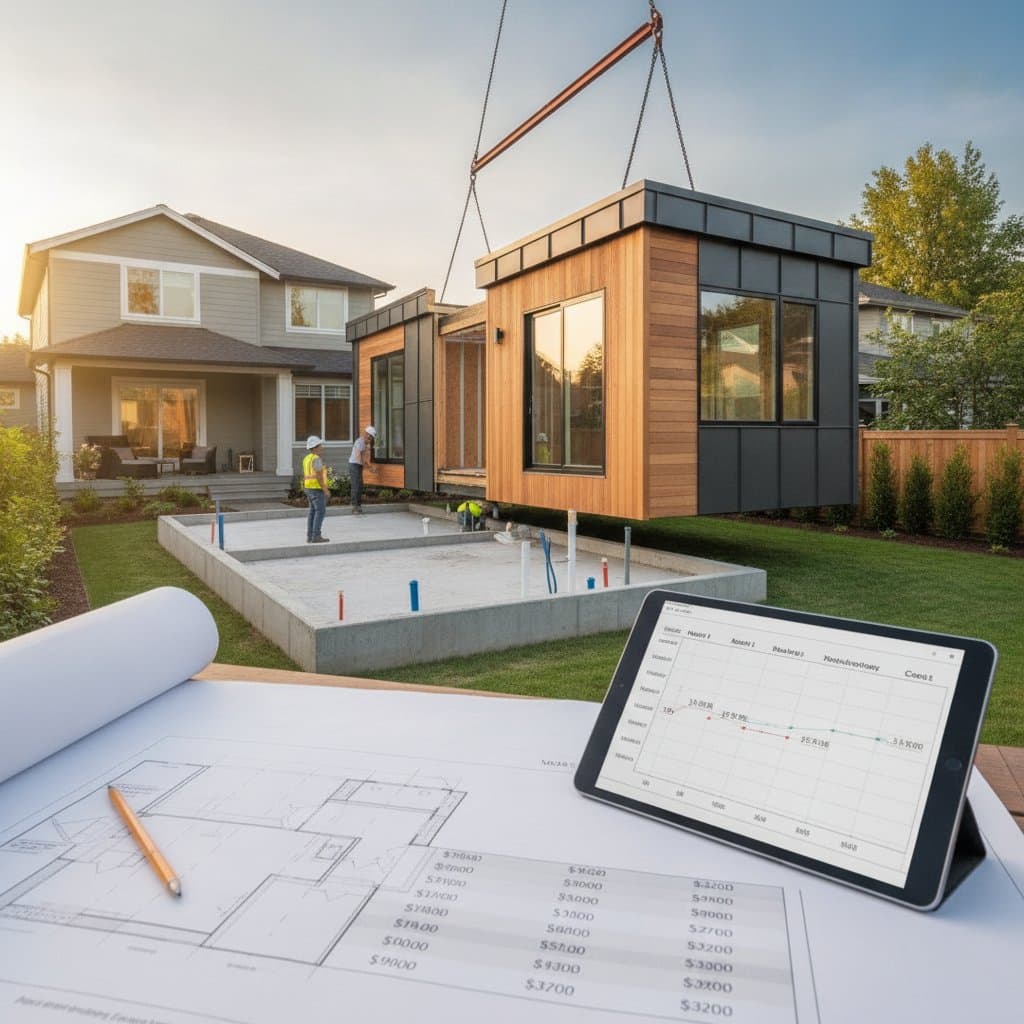
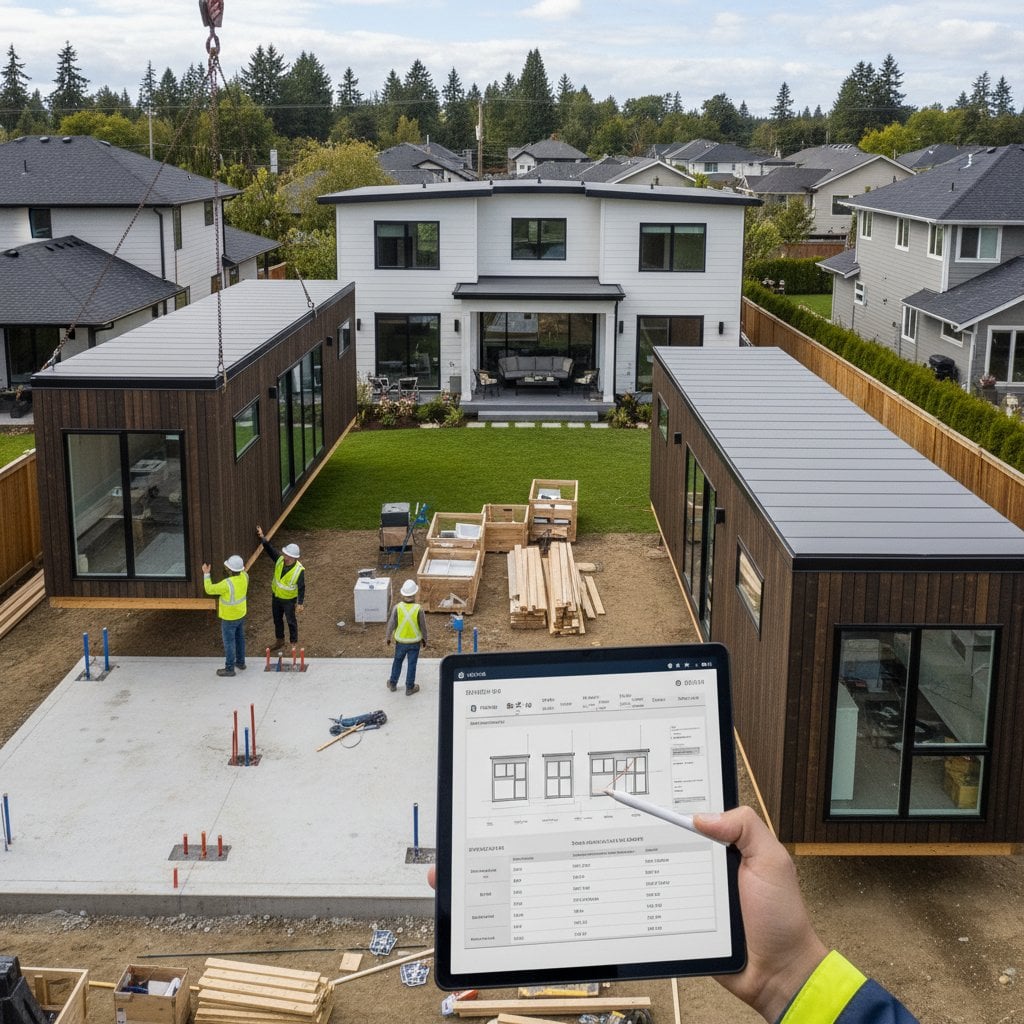
- Fully prebuilt models: Delivered nearly complete via truck and positioned with a crane, minimizing assembly time for standard configurations.
Selecting the appropriate type aligns with your spatial needs and site constraints, directly impacting both financial outlay and project duration.
Dissecting the Costs of a Prefab ADU
The overall expense for a prefab ADU arises from multiple components, including the core structure, site adaptations, and regulatory requirements. Although prefabrication curbs certain variables, preparatory work and local mandates remain unavoidable. The following outlines key cost elements to anticipate.
1. Base Unit Price
The foundational cost encompasses the factory-assembled structure, incorporating framing, roofing, insulation, windows, and entry-level interior elements. For a compact studio around 400 square feet, expect to pay between $80,000 and $120,000. Larger configurations, such as 800-square-foot two-bedroom units with enhanced features, range from $150,000 to $250,000.
This pricing reflects the efficiencies of controlled manufacturing, which eliminates many field-based variables like material waste or labor fluctuations.
2. Site Preparation Expenses
Prior to placement, your property requires assessment and modification to support the structure securely. Essential tasks involve soil testing, land grading, foundation pouring, and utility trenching for water, sewage, and power.
Budget $20,000 to $50,000 for these efforts, with higher amounts for challenging terrains like steep slopes or rocky soil. Properties with existing infrastructure may incur lower fees, but upgrades to meet modern codes often add to the total.
3. Permitting and Design Costs
Compliance with local ordinances demands approvals for zoning, safety, and environmental standards, regardless of the prefab approach. Fees for applications, plan reviews, and inspections typically total $5,000 to $15,000, varying by jurisdiction.
If customization exceeds standard options, engage an architect for $3,000 to $10,000 to produce compliant drawings and engineering reports. Early submission of detailed site plans accelerates this step and prevents rework.
4. Delivery and Installation Charges
Transporting the unit involves specialized vehicles and equipment, plus any necessary route clearances. Crane operations for positioning add precision but expense.
Allocate $10,000 to $30,000 here, covering haulage fees, on-site labor for assembly, and initial utility hookups. Remote locations or oversized modules elevate these costs due to logistical demands.
5. Interior and Upgrade Selections
Standard prefab packages provide functional basics like laminate counters and vinyl flooring. Opting for enhancements, such as hardwood floors or stainless appliances, increases the investment by $10,000 to $40,000.
Focus on durable choices that align with usage: energy-efficient appliances reduce ongoing expenses, while built-in storage maximizes space efficiency in compact units.
6. Exterior and Landscaping Integration
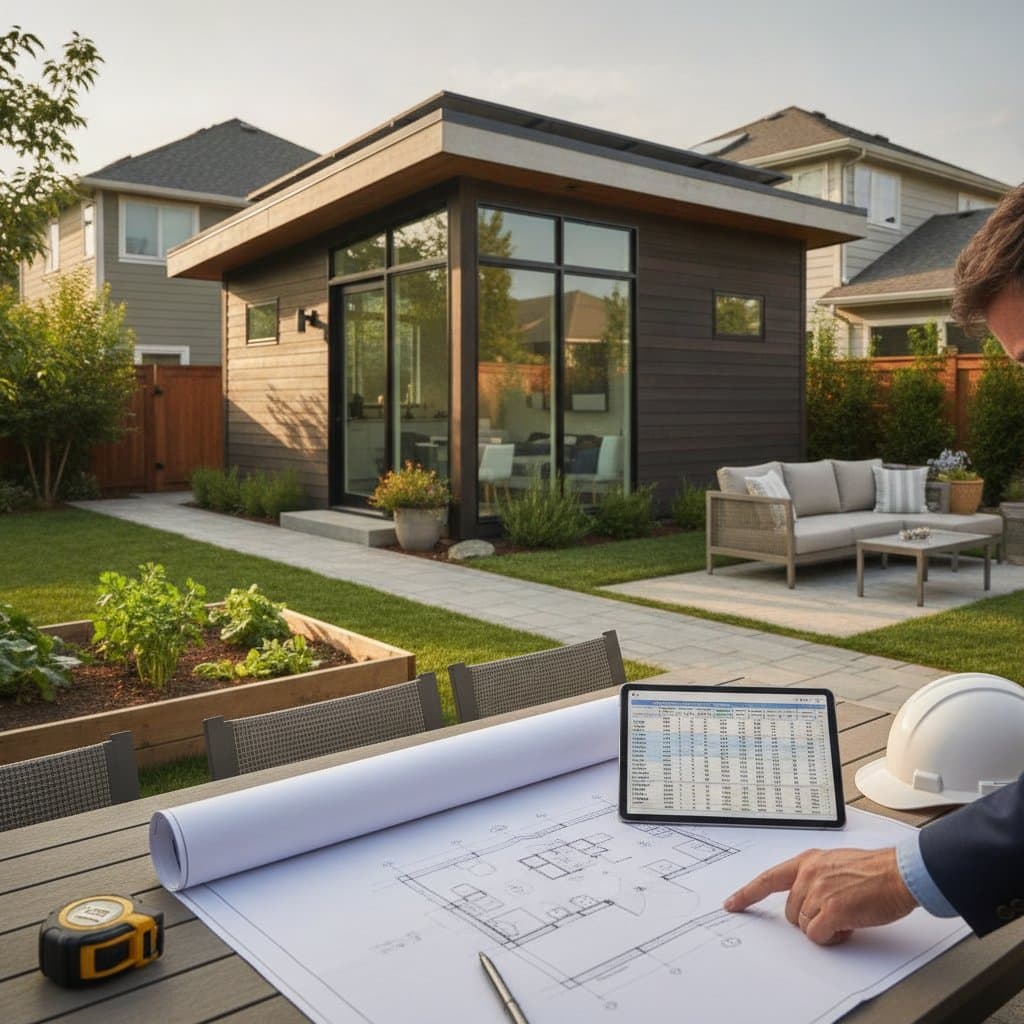
Post-installation, enhance the area with pathways, retaining walls, or vegetation to blend the ADU seamlessly. Basic improvements, including gravel access routes and border plantings, cost $5,000 to $15,000.
More elaborate designs, like patios or irrigation systems, push expenses higher; integrate these plans during initial budgeting to maintain cohesion.
7. Oversight and Contractor Fees
Coordinating specialists for site work and compliance often requires a project manager, charging 10 to 20 percent of the total budget. Full-service prefab providers may bundle this, but independent oversight ensures adherence to timelines.
For complex sites, professional involvement mitigates risks like permit denials or coordination errors, ultimately preserving your investment.
Overall Cost Spectrum
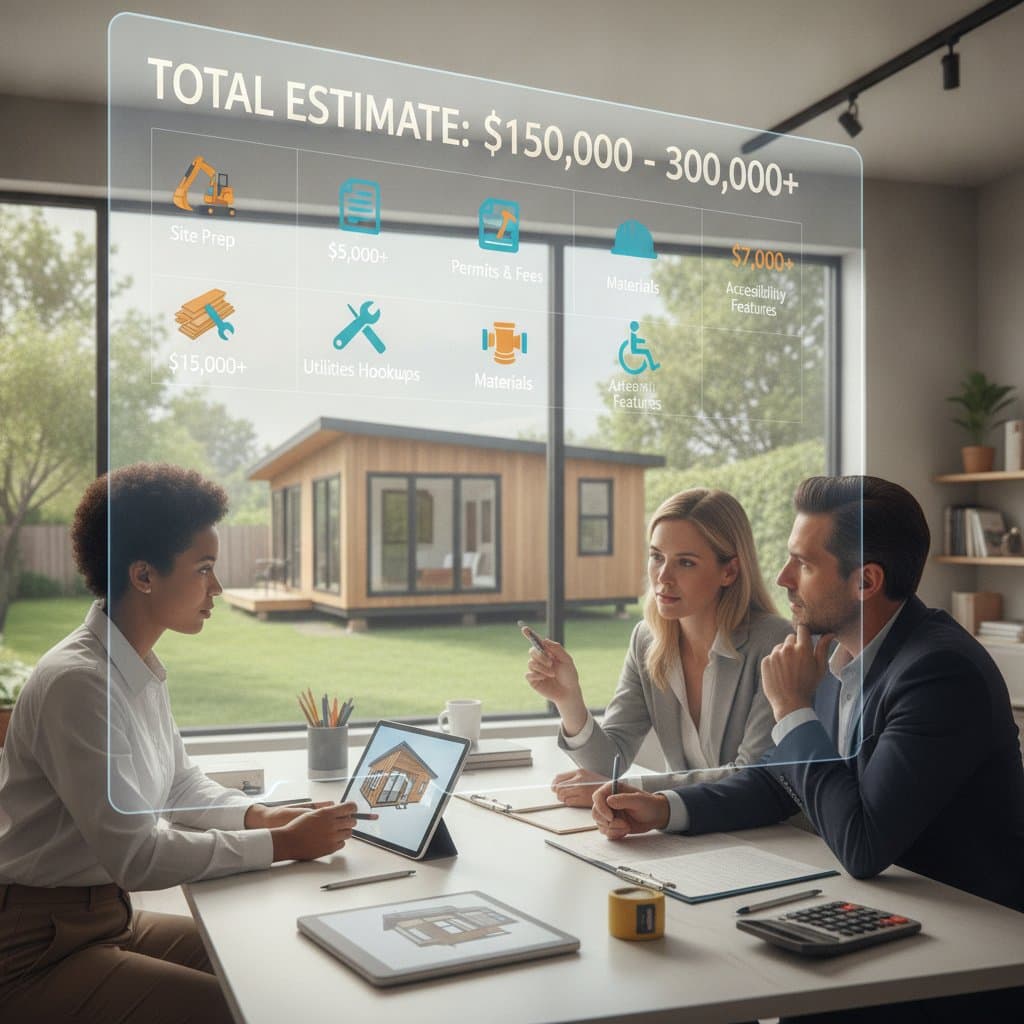
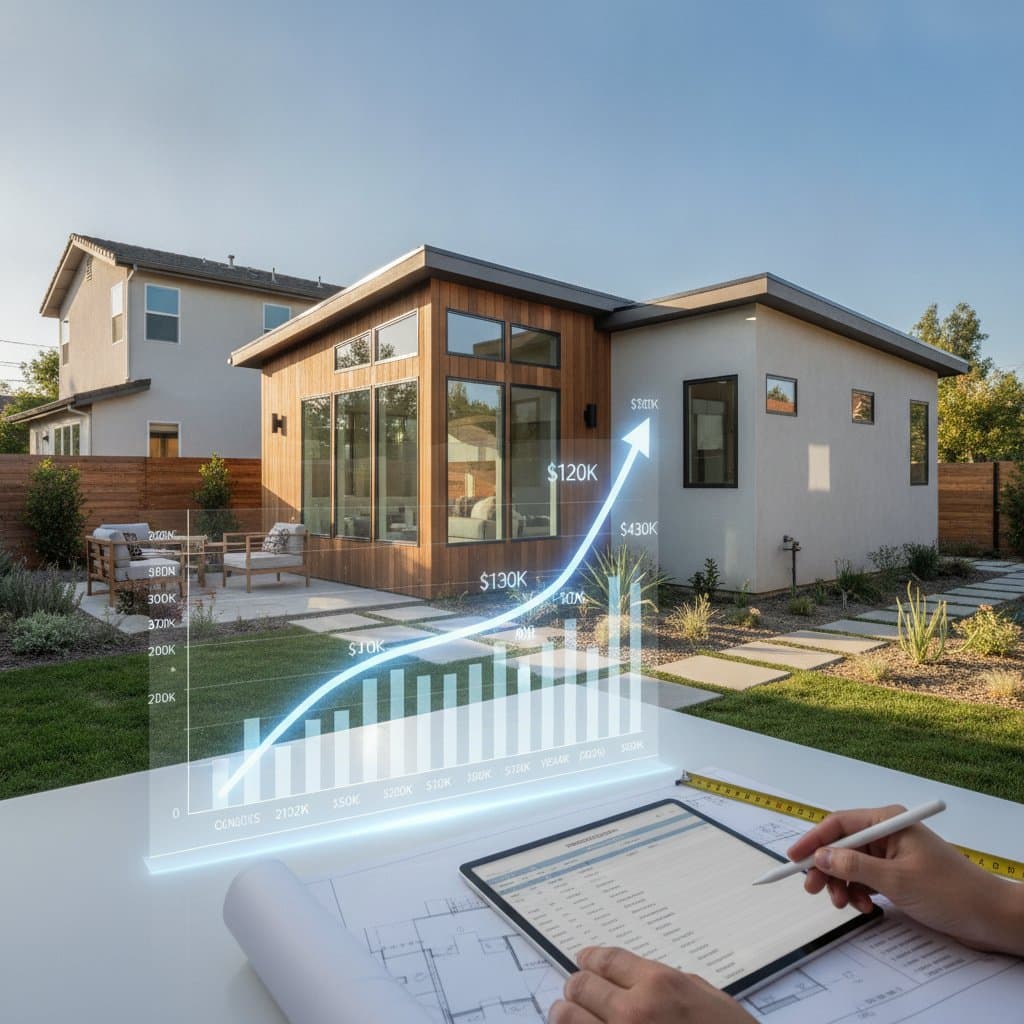
Complete prefab ADU projects generally span $150,000 to $400,000, encompassing all elements from fabrication to finishing. Basic 400-square-foot units approach the lower threshold on straightforward sites, while expansive or customized builds with utility overhauls reach the upper limit. Prefab predictability shines in avoiding overruns common to traditional methods, though site-specific surprises like unforeseen soil remediation can adjust figures by 10 to 20 percent.
Timeline Breakdown for Prefab ADU Projects
While factory work accelerates the build phase, the full endeavor unfolds across coordinated stages. Total durations average 3 to 6 months, offering a structured alternative to the 6 to 12 months typical of site-built ADUs.
1. Planning and Approval Phase
Select designs, conduct surveys, and submit for permits, addressing zoning and code specifics. This period lasts 4 to 12 weeks, influenced by municipal efficiency.
Prepare thorough documentation upfront, including property diagrams and utility layouts, to expedite reviews and minimize back-and-forth.
2. Manufacturing Period
With approvals secured, production occurs in the factory, parallel to site readiness. Standard units complete in 4 to 8 weeks; bespoke elements extend this to 10 to 12 weeks.
This controlled environment shields against external delays, ensuring modules arrive on schedule.
3. On-Site Preparation
Simultaneously, ready the foundation and utilities through excavation and concrete work. Expect 2 to 6 weeks, subject to weather and inspection cadences.
Schedule inspections promptly to align with delivery, preventing bottlenecks.
4. Transport and Assembly
Delivery and erection follow readiness confirmation, with cranes lifting units into position. This spans 1 to 3 weeks, shorter for panelized options.
Coordinate access routes in advance to avoid transport hiccups.
5. Finishing and Certification
Finalize connections, interiors, and compliance checks for occupancy approval. This concludes in 2 to 4 weeks, pending inspector availability.
Address punch-list items swiftly to transition to use without prolonged waits.
Key Influences on Expenses and Durations
Site characteristics and choices shape outcomes significantly.
- Access challenges: Restricted entry points demand custom transport, adding time and fees.
- Infrastructure needs: Upgrading outdated systems, like septic expansions, can double preparation costs.
- Customization level: Non-standard features prolong manufacturing and inflate pricing.
- Regulatory environment: Progressive areas approve ADUs in weeks; stringent ones require months of scrutiny.
- Seasonal factors: Inclement weather hampers outdoor tasks, though indoor fabrication proceeds unaffected.
Anticipate these by consulting local experts early, fostering a resilient project plan.
Prefab Versus Traditional Construction
Prefab ADUs prioritize efficiency over absolute minimal cost, delivering timelines 30 to 50 percent shorter than stick-built equivalents. On-site builds suffer from supply chain issues and elemental interruptions, whereas factory methods enforce precision and reduce waste.
Both approaches navigate identical permitting landscapes, but prefab minimizes disruption to your daily life. Traditional methods suit highly bespoke integrations, yet prefab excels for those valuing speed and consistency.
Strategies for Budget Control
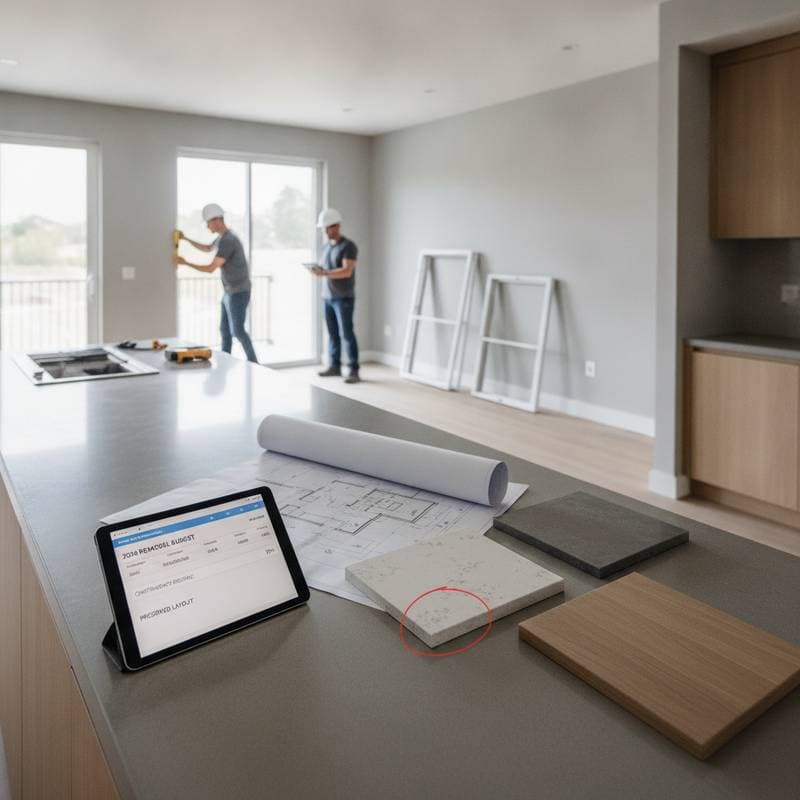
Establish priorities based on intended function, such as resilience for rentals or aesthetics for personal retreats. Secure detailed breakdowns separating fabrication from site expenses to track allocations.
Maintain a 15 percent reserve for contingencies like code revisions. Lock in designs pre-production to evade change-order premiums, and solicit bids from prefab-savvy contractors for competitive installation rates.
Selecting a Reliable Prefab Provider
Evaluate firms on local expertise, comprehensive warranties, and customization flexibility. Confirm their role in permitting and post-install support to streamline your involvement.
Review portfolios and client feedback to gauge execution quality, ensuring alignment with your vision.
Steps to Launch Your Prefab ADU Project
Begin by assessing your property's zoning eligibility and sketching functional requirements. Contact vetted providers for consultations, gathering quotes that detail inclusions and exclusions. Assemble a timeline integrating all phases, then proceed with permitting to initiate momentum toward your enhanced living space.