- Customization level: Bespoke designs exceed off-the-shelf solutions in expense.
Strategies to Optimize Expenses
- Target critical zones: Address bathrooms and entrances initially for maximum safety gains.
- Select versatile components: Opt for adjustable counters and modular storage that evolve with needs.
- Invest in longevity: Robust materials minimize future repairs and replacements.
- Coordinate efforts: Group upgrades with a single team to streamline labor charges.
- Explore funding support: Investigate community grants or health-related aid for eligible modifications.
- Incorporate proactively: Embed features in broader projects to sidestep later disruptions.
Investment Returns
Universal design elevates home functionality and desirability in the market. Financial recovery upon sale typically reaches 50 to 70 percent of invested amounts.
Beyond economics, these adaptations avert relocation or institutional care costs. Preventing a single incident of injury can justify the full expenditure, while ongoing risk reduction curtails healthcare outlays and sustains well-being.
DIY Opportunities Versus Professional Expertise
Suitable DIY Projects
Undertake straightforward enhancements like mounting adjustable shower wands, placing anti-slip rugs, or installing lever handles with basic equipment. Applying high-contrast paints to walls or adding strip lights to stair edges offers cost-effective visibility improvements without complexity.
Essential Professional Interventions
Delegate to experts any work involving:
- Wiring or piping systems
- Framework alterations
- Shower reconfigurations or ramp constructions
- Storage or surface adaptations
Specialists verify precise gradients in wet areas, secure reinforcements for supports, and align with jurisdictional codes. Their input optimizes space for devices like walkers or wheelchairs, ensuring enduring reliability that outweighs initial outlays.
Prominent Universal Design Elements
Bathroom Adaptations
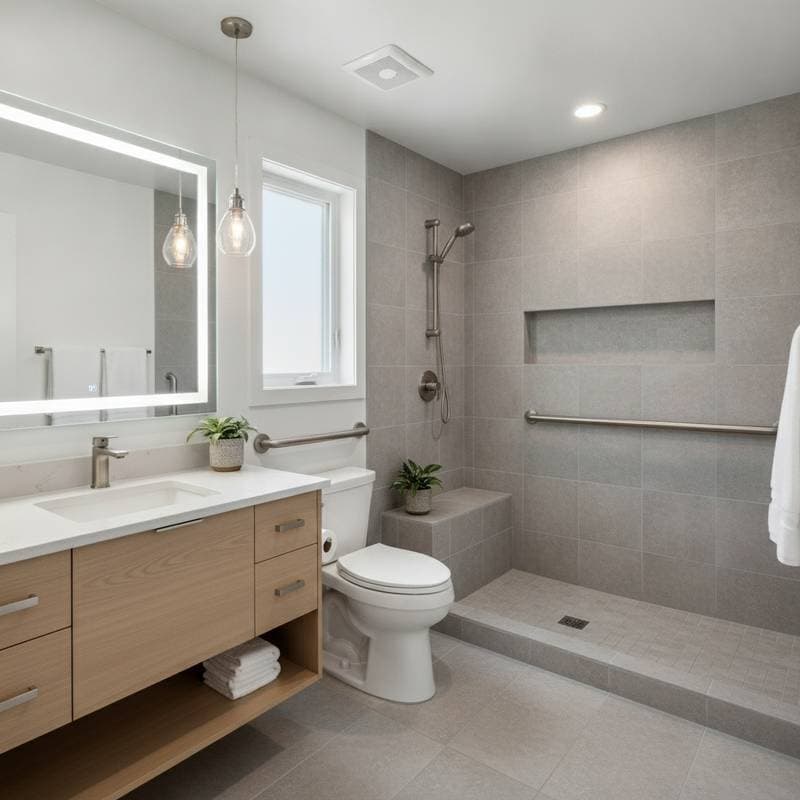
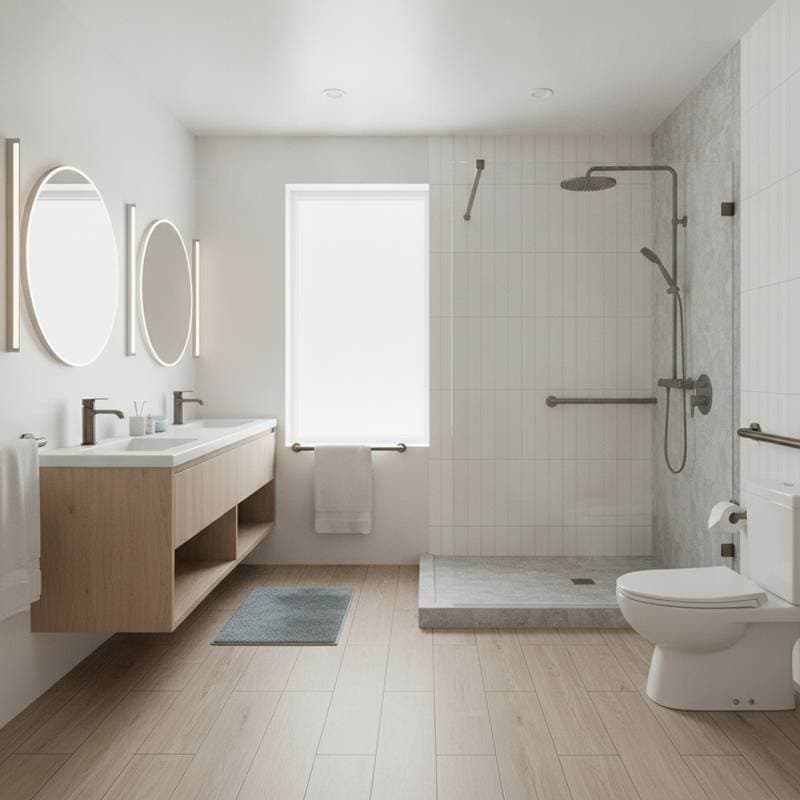
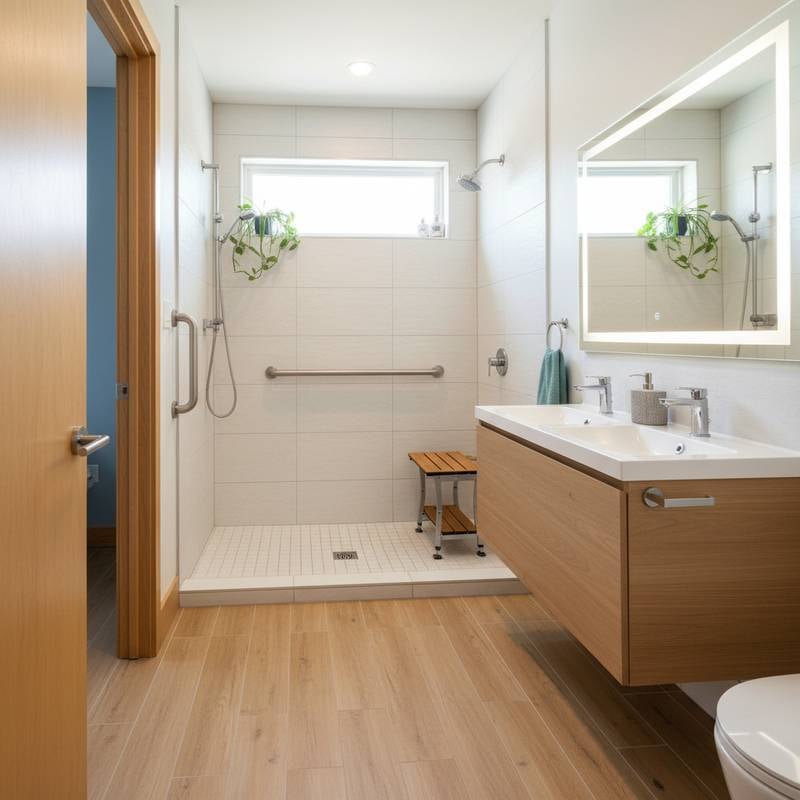
- Barrier-free or roll-in showers with built-in benches
- Strategically placed grab bars adjacent to fixtures
- Flexible-height shower sprays
- Textured, low-slope surfaces
- Elevated toilets for easier access
- Spacious maneuvering areas (at least 60 inches diameter)
Kitchen Enhancements
- Accessible drawers and lazy Susans
- Front-loading ovens and compact dishwashers
- Effortless lever or motion faucets
- Directed under-cabinet illumination
- Edged counters with visual cues for depth perception
Home-Wide Implementations
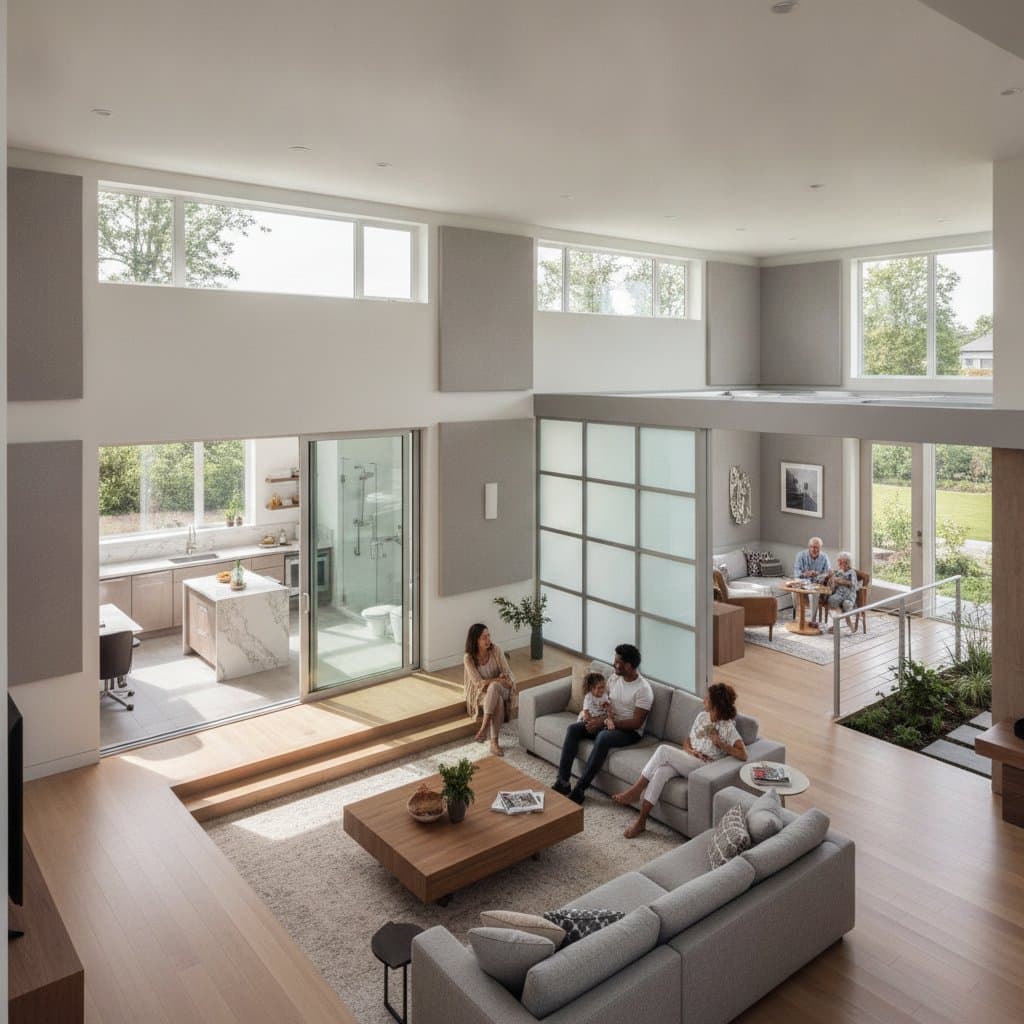
- Level entry points without thresholds
- Minimum 36-inch corridors and passages
- Toggle switches at 48-inch heights
- Firm yet forgiving flooring like sealed cork or resilient vinyl
- Voice-activated controls for lights, climate, and alerts
Such integrations promote effortless navigation and lessen physical demands for all occupants.
Cost Estimation Basis
Ranges derive from nationwide data, including contractor bids, industry benchmarks, and owner reports. Local markets and property specifics adjust these figures. Mid-grade materials and typical wages form the foundation; obtain site-specific bids from qualified professionals for accuracy.
Frequently Asked Questions
What is the expense for home accessibility upgrades? Full-scale projects span $15,000 to $100,000, scaled to extent and inclusions.
Does universal design equate to ADA standards? It surpasses basic compliance, fostering inclusive comfort for varied users beyond disability accommodations.
Is phased implementation feasible? Absolutely; commence with essentials like supports, handles, and lights, then progress incrementally.
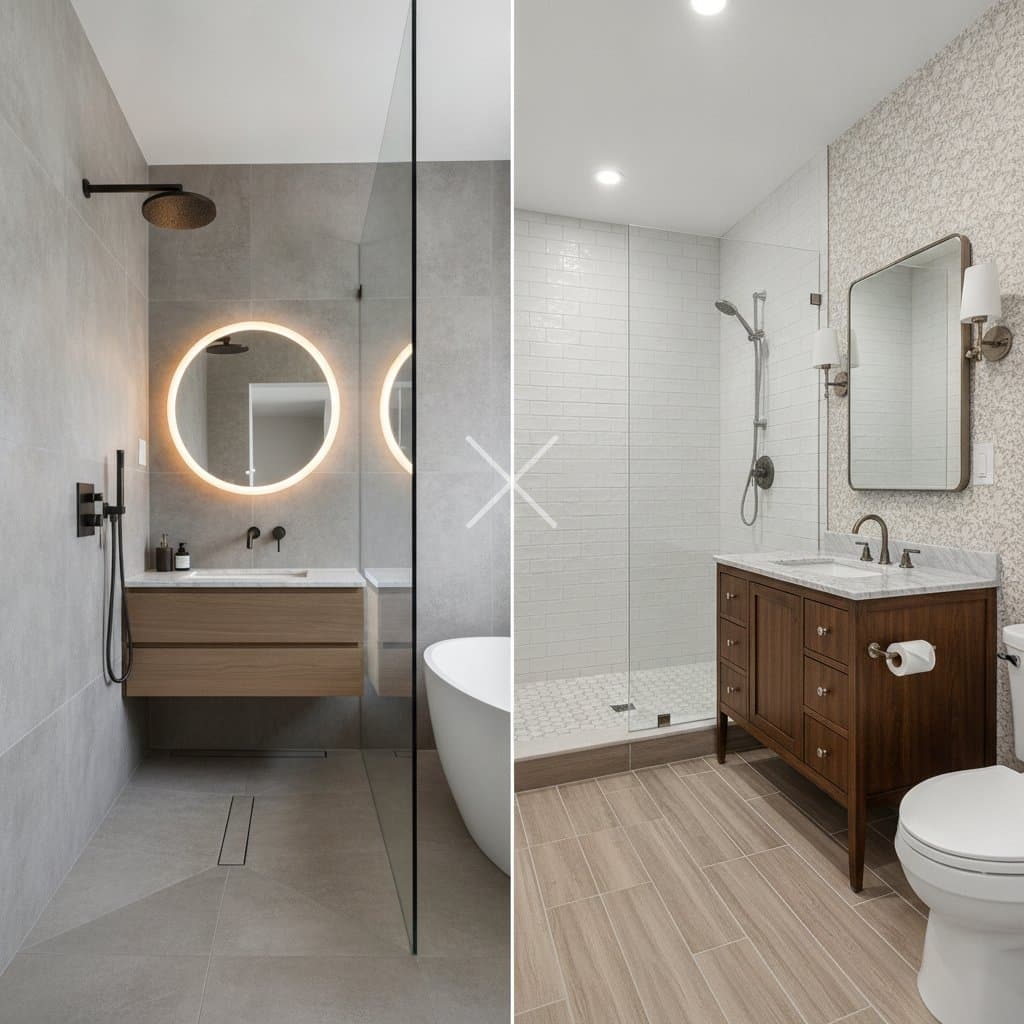
Do modifications alter home aesthetics? Contemporary approaches merge form and function, yielding sleek, modern results.
How do these updates affect property value? They broaden appeal and preserve premium pricing in sales.
Which areas merit initial attention? Prioritize bathrooms, kitchens, and access points due to frequent use and hazard potential.
Are support programs available? Certain municipalities, medical entities, and charities extend grants or favorable financing for such work.
Sustaining Accessibility Over Time
Post-renovation, routine inspections preserve effectiveness. Test supports for stability, refresh deteriorated surfaces, and adjust lighting to match changing vision. Consult specialists annually to integrate emerging innovations that refine daily experiences.
Universal design fosters enduring home suitability. Strategic choices in planning and execution yield spaces that evolve with residents, delivering sustained independence and enhanced living quality.