Universal Design for Lifelong Home Independence
Quick Answer Box
Universal design equips a home for seamless use by individuals of all ages and abilities. This method supports prolonged independence and safety, minimizing the need for repeated renovations. Homeowners often manage minor adjustments independently, yet substantial structural modifications require engagement with a licensed contractor. Costs typically span from several hundred dollars for basic fixture replacements to thousands for comprehensive overhauls. Project timelines vary from days for simple tasks to weeks for broader scopes. Difficulty levels extend from straightforward installations, such as grab bars, to complex reconfiguration of spatial layouts. Primary concerns involve fall risks, inadequate accessibility, and hazards in electrical or plumbing systems.
Step-by-Step Instructions
1. Evaluate Your Home’s Accessibility
Conduct a thorough walkthrough of each room to identify barriers or confined areas. Measure doorways to confirm a minimum clear width of 32 inches, accommodating most mobility aids. Assess hallways for at least 36 inches of clearance and document any flooring shifts that might impede foot traffic or wheeled devices.
Success check: Compile a detailed inventory of issues, complete with precise measurements for targeted improvements.
2. Improve Entry and Pathways
Begin enhancements outside, as access originates at the threshold. Substitute steep steps with a ramp featuring a gentle slope of one inch rise per 12 inches of run. Apply non-slip coatings to exterior walkways and affix robust handrails along both sides of any remaining stairs.
Success check: Achieve secure entry and exit without risk of stumbling or excessive physical effort.
3. Modify Doors and Hardware
Exchange traditional round knobs for lever-style handles, which demand less hand strength. Incorporate offset hinges to expand doorway clearance by up to two inches. Verify that thresholds remain under one-half inch in height, or install beveled transitions to eliminate abrupt changes.
Success check: Ensure all doors operate effortlessly with a single hand and latch securely without resistance.
4. Update Lighting and Switch Controls
Adequate illumination reduces fall incidents and enhances overall usability. Position rocker or touch-sensitive switches between 42 and 48 inches from the floor. Integrate motion-activated lights in corridors, restrooms, and storage areas. Select warm-toned LED bulbs to deliver bright, non-glaring visibility.
Success check: Confirm uniform, shadow-free illumination throughout rooms and circulation paths.
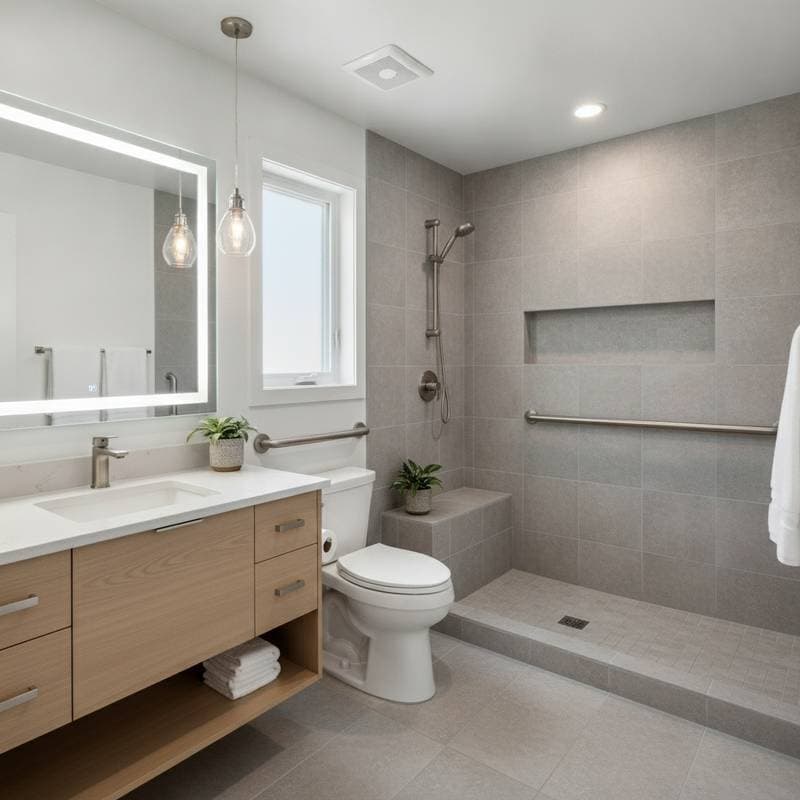
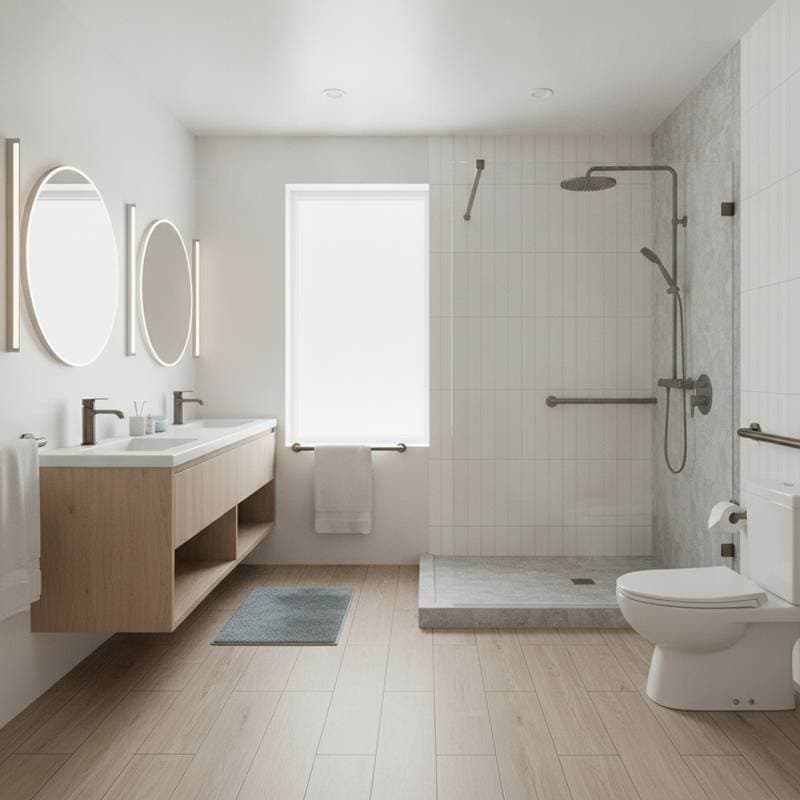
5. Remodel the Bathroom for Safety
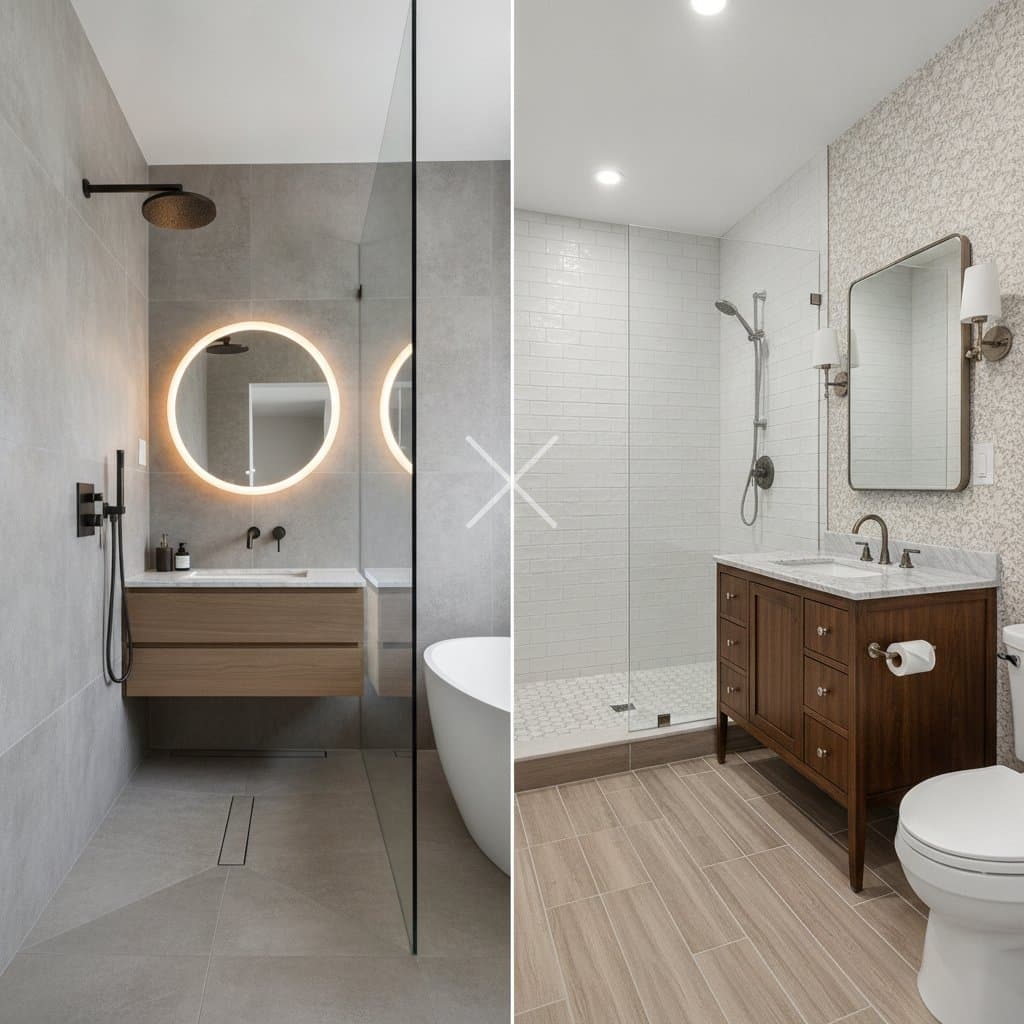
Restrooms pose significant dangers from slips and thermal injuries. Transition from conventional bathtubs to barrier-free showers equipped with tiles rated above 0.6 for friction coefficient. Mount grab bars adjacent to the commode and shower enclosure, anchoring them to wall studs with corrosion-resistant stainless steel fasteners. Fit adjustable handheld showerheads on vertical rails for versatile positioning. Regulate the water heater to not exceed 120 degrees Fahrenheit, averting scald risks.
Success check: Facilitate safe bathing and fixture use with firm support and reachable controls.
6. Adjust Kitchen Layout for Accessibility
Streamline routine activities to promote efficiency and security. Reduce a countertop segment to approximately 34 inches in height to accommodate seated operations. Opt for extendable shelves and drawers over recessed cabinetry. Install D-shaped pulls for superior grasp. Position the microwave at standard counter level, avoiding elevated placements.
Success check: Enable meal preparation without undue reaching, stooping, or ladder use.
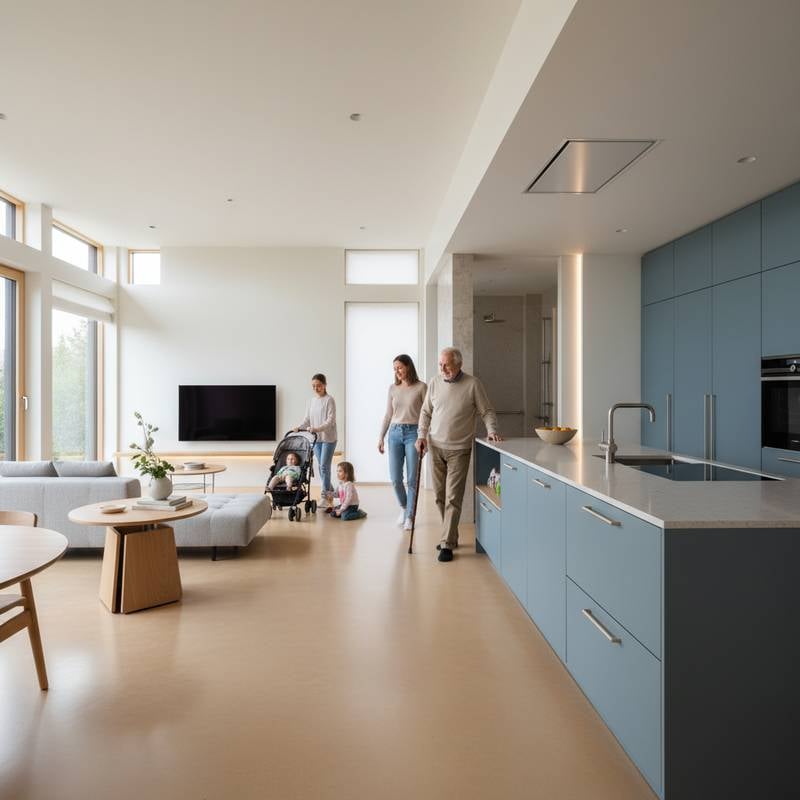
7. Create Flexible Living Spaces
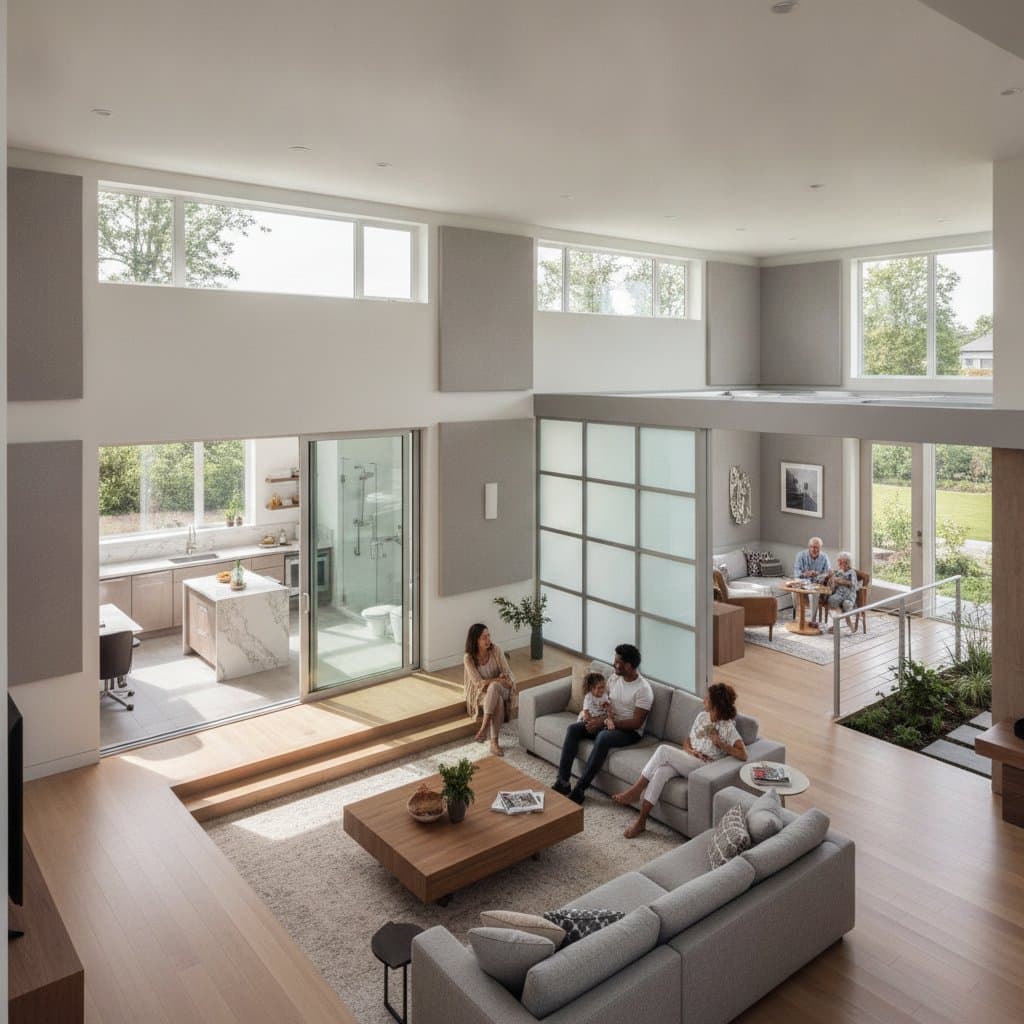
Anticipate evolving requirements through adaptable configurations. Adopt open-plan layouts to enhance navigation and line-of-sight. Employ pocket or sliding doors to maximize unobstructed space, supplanting traditional hinged varieties. Incorporate height-adjustable shelving units and closet rods.
Success check: Verify that spaces promote fluid movement, visibility, and customization potential.
8. Improve Flooring for Stability
Select firm, even surfaces to mitigate trips and bolster assistive devices. Swap dense carpeting for low-profile options or resilient hard materials. In moisture-prone zones, utilize vinyl, cork, or rubber with inherent slip resistance. Anchor area rugs using adhesive underlays.
Success check: Attain level, fastened, and ergonomic flooring throughout the home.
Quality Checks and Troubleshooting
- Loose grab bars: Reinforce by tightening fasteners into studs; employ heavy-duty wall anchors if studs prove inaccessible.
- Uneven ramps or thresholds: Refine inclines and edge fastenings to eliminate snagging points.
- Sticky doors: Inspect and realign hinges, then shave any expanded framing.
- Uneven lighting: Supplement with auxiliary sources or relocate fixtures for comprehensive coverage.
In cases of electrical or plumbing failures, immediately deactivate the relevant utilities and summon a qualified expert.
When to Call a Pro
Engage a licensed contractor or specialized technician for tasks involving:
- Modifications to load-bearing walls or subfloors
- Electrical rewiring or addition of circuits
- Relocation of pipes or drainage systems
- Construction of fixed ramps or elevating platforms
- Presence of potential contaminants like mold, asbestos, or lead-based paint
Professional interventions for accessibility enhancements vary in expense. Fixture swaps might incur a few hundred dollars, while complete bathroom or kitchen transformations often total several thousand, influenced by selections and workmanship. Obtain itemized quotes, verify credentials including licensing and coverage, review past projects, and ensure proficiency in universal design or aging-in-place methodologies.
FAQs
What is universal design?
This philosophy crafts environments usable by individuals across all ages and capabilities, requiring little to no customization.
Do I need a permit for accessibility updates?
Structural, plumbing, or electrical alterations generally necessitate permits. Surface-level changes, such as installing grab bars or lever handles, typically bypass this requirement.
What is the best flooring for accessibility?
Options like low-pile carpeting, resilient vinyl, or rubberized surfaces excel by minimizing trip hazards and facilitating smooth mobility aid transit.
How wide should a hallway be?
Maintain a minimum width of 36 inches to support unobstructed passage for ambulatory aids or wheelchairs.
Can I install grab bars myself?
Proceed if capable of identifying studs and applying suitable hardware; otherwise, retain a professional for structural integrity.
How can I reduce glare for seniors?
Incorporate matte surfaces, warm LED illumination, and balanced distribution to soften visual strain.
What height is best for light switches?
Elevate switches to 42 through 48 inches above the floor, accessible from seated or upright postures.
How much does it cost to remodel for universal design?
Modest enhancements range from several hundred dollars, whereas layout-intensive projects escalate to thousands, contingent on components and labor.
Sustaining Home Adaptability
Universal design transcends age-specific needs, cultivating environments that uphold security, ease, and versatility for all occupants. Thoughtful implementation curtails long-term renovation expenses and extends periods of self-sufficiency. Initiate with incremental modifications to simplify everyday routines, progressing to ambitious undertakings aligned with emerging priorities. Ultimately, such a residence evolves alongside its inhabitants, delivering assurance and well-being over decades.