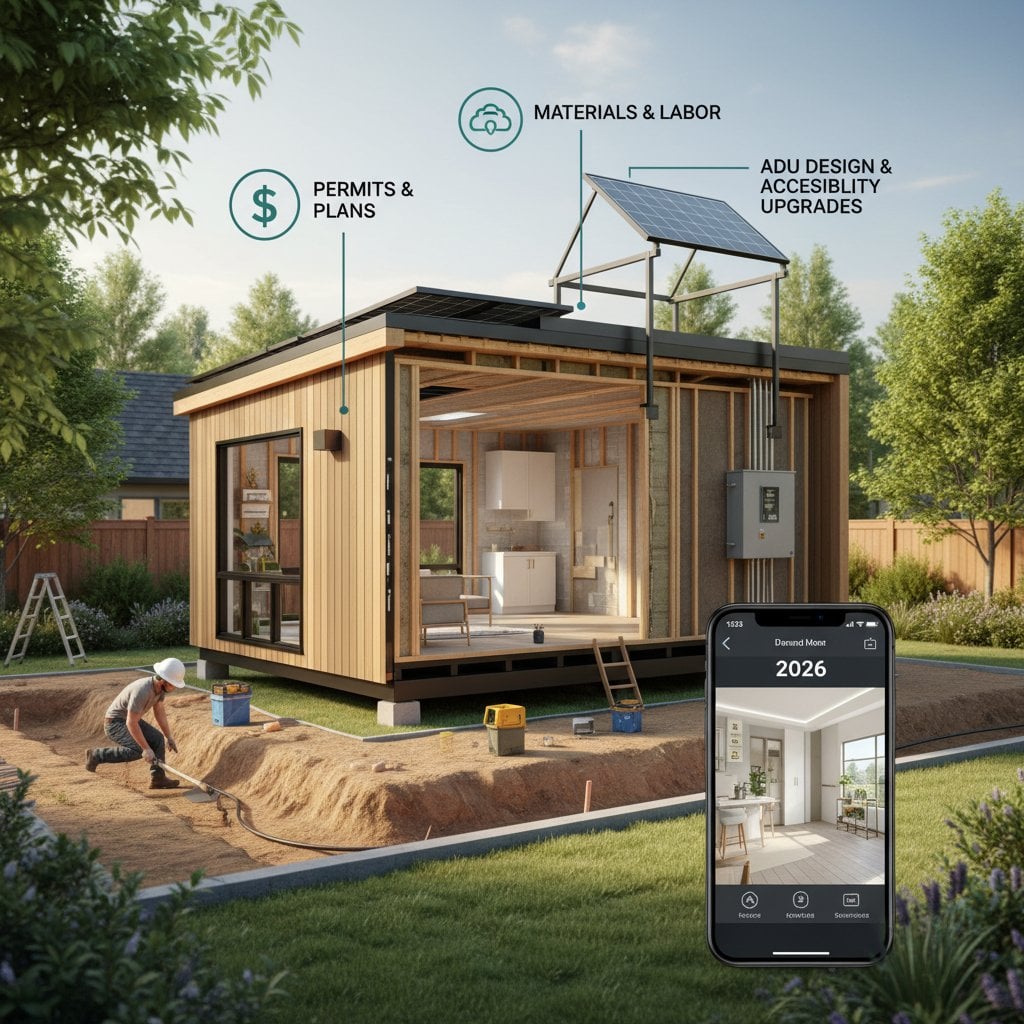
The Real 2026 Cost of Building a Granny Pod ADU
Building a granny pod, also known as an accessory dwelling unit (ADU), provides families with flexibility, privacy, and long-term value. Families often construct these units to accommodate aging parents or to serve as private guest suites. Understanding the full scope of construction expenses enables informed planning and budgeting.
This guide details the key factors influencing granny pod costs in 2026, from initial site work to final finishes. It covers essential components, cost variations by type, and strategies for effective budget management. Readers gain practical insights to create a compliant, comfortable living space.
Understanding What a Granny Pod Is
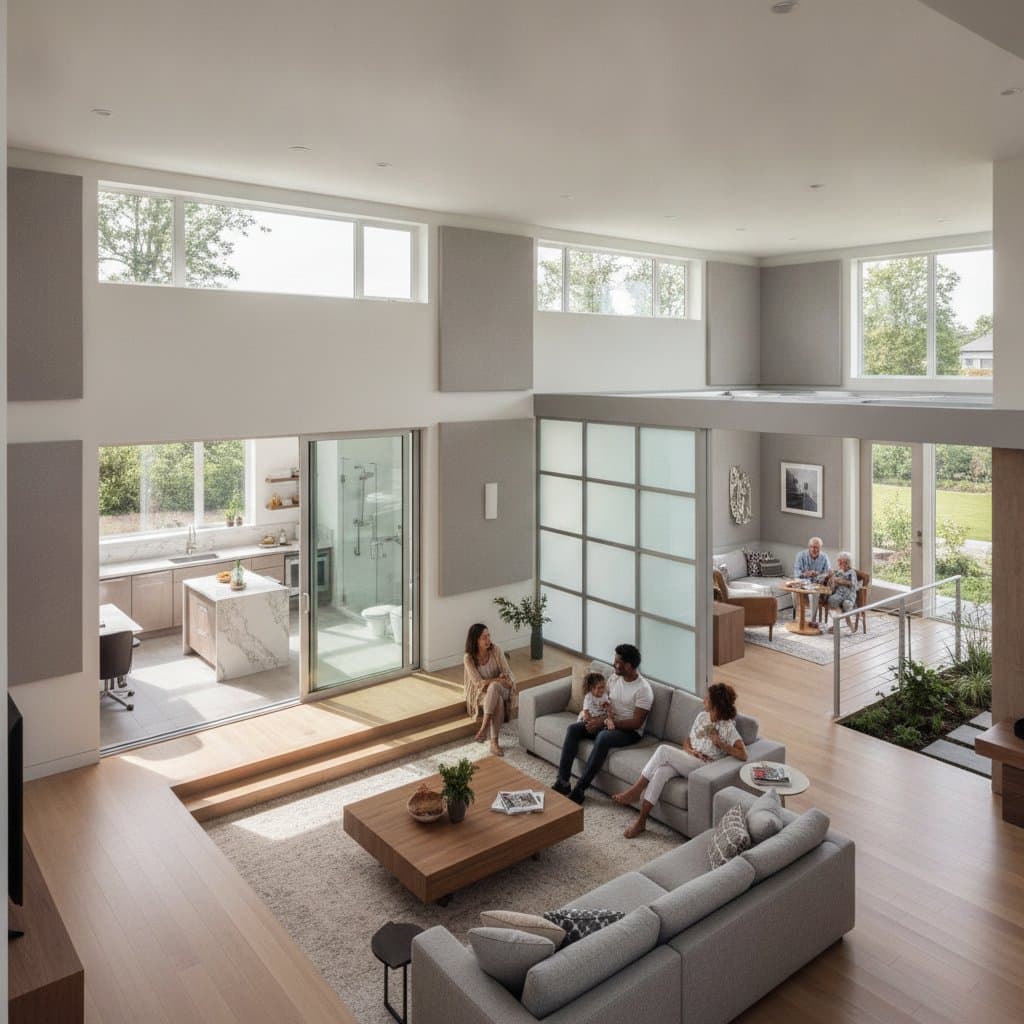
A granny pod consists of a compact, self-contained living area on the same property as the primary residence. Typical features include a bedroom, full bathroom, kitchenette, and modest living space. Designs frequently incorporate accessibility elements like ramps, wide doorways, and roll-in showers to support independent living.
These units foster connection to the main home while preserving autonomy. Sizes range from 300 to 800 square feet, depending on local zoning and family needs. Proper planning ensures the space meets both functional and regulatory requirements.
Why Costs Vary So Widely
Granny pod expenses fluctuate based on size, design intricacy, and regional labor rates. Seemingly identical units may differ in price due to material selections, finish quality, and site-specific challenges. Primary cost drivers encompass square footage, foundation types, utility integrations, interior upgrades, permitting processes, and geographic variations.
For instance, urban areas with stringent codes incur higher fees than rural locations. Material choices, such as standard versus premium insulation, directly impact totals. Grasping these interconnections allows for targeted decisions that align with budget constraints.
Core Cost Components
1. Site Preparation and Foundation
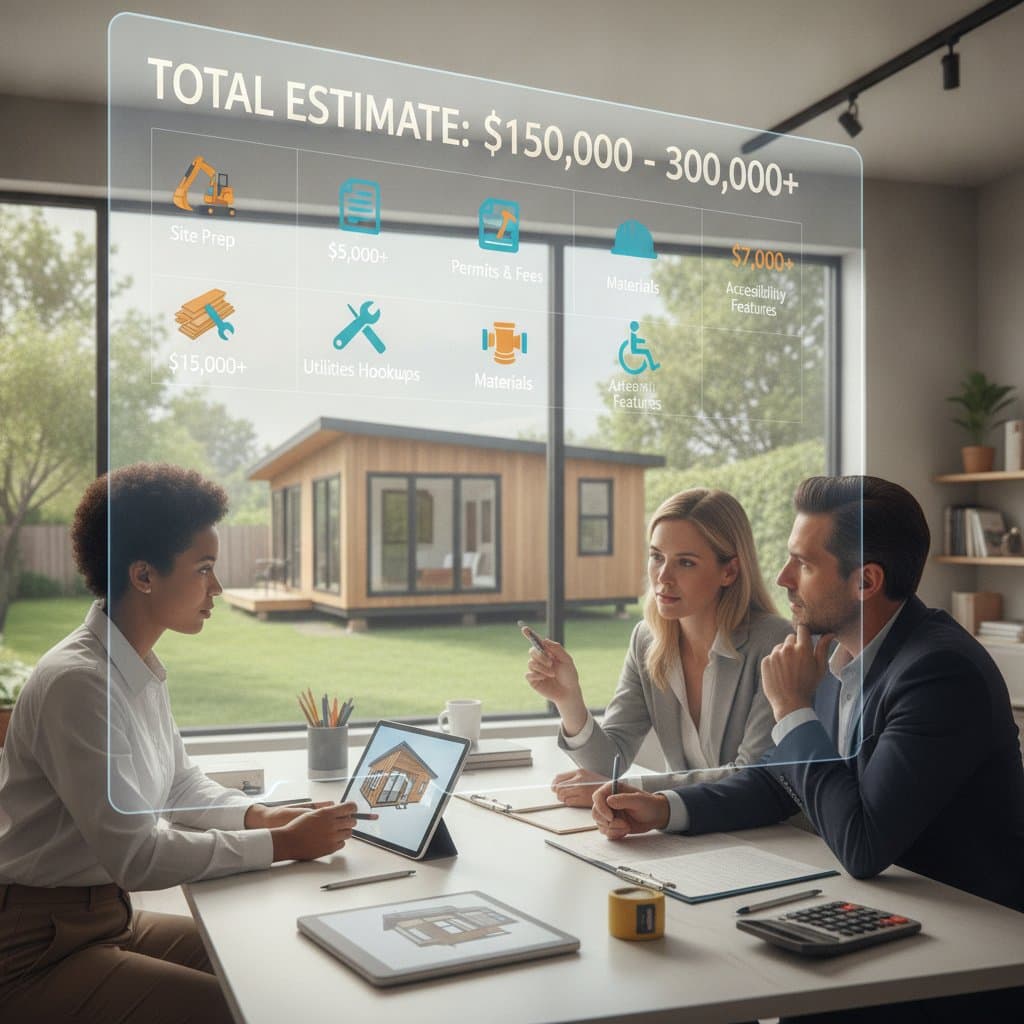
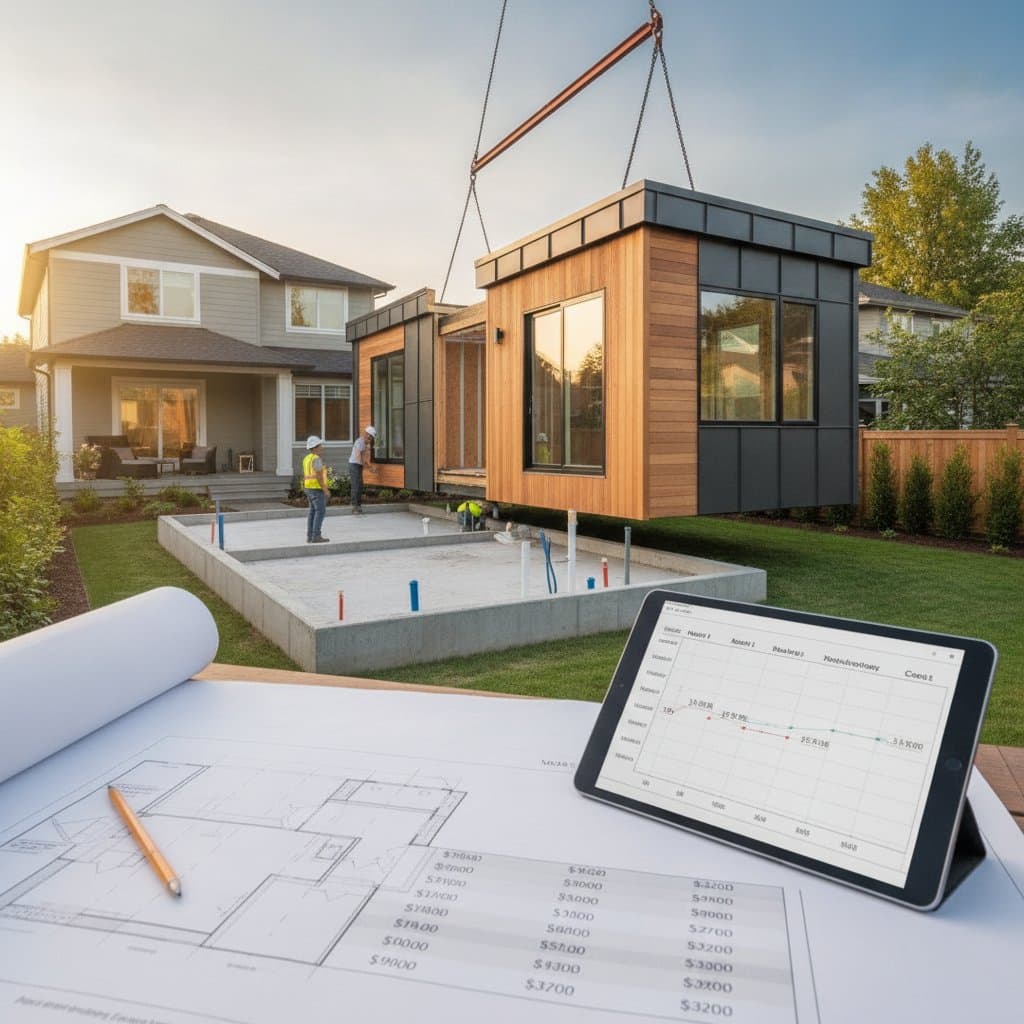
Site preparation involves clearing vegetation, grading land, and stabilizing soil, which can cost $5,000 to $15,000 depending on terrain complexity. Uneven ground or rocky soil necessitates additional excavation or retaining walls. Foundations range from basic concrete slabs at $4 to $8 per square foot to elevated piers for sloped sites, adding $10,000 or more.
Engineers assess soil bearing capacity to prevent settling issues. In flood-prone areas, elevated foundations become essential for compliance and durability. Early site evaluations by professionals minimize surprises and ensure a stable base.
2. Framing and Structural Work
Framing establishes the building's framework, with costs averaging $15,000 to $30,000 for a 500-square-foot unit. Simple gable roofs keep expenses low, while multi-pitched designs or skylights increase labor by 20 to 30 percent. Wood framing prevails for its affordability, though steel options enhance resistance to pests and weather.
This phase influences overall efficiency, including insulation placement and natural light optimization. Builders recommend rectangular footprints to streamline construction and reduce waste. Structural integrity supports future expansions if needed.
3. Exterior Finishes and Roofing
Exterior elements shield the interior and enhance curb appeal, contributing $10,000 to $25,000 to the budget. Vinyl siding offers economy at $3 to $7 per square foot, whereas fiber cement provides superior weather resistance for $7 to $12 per square foot. Wood siding demands more maintenance but allows customization.
Roofing selections include asphalt shingles at $4 to $6 per square foot or metal for longevity at $8 to $14 per square foot. Matching the main home's aesthetic boosts property harmony and value. Durable choices withstand local climates, from heavy rain to intense sun.
4. Interior Finishes and Fixtures
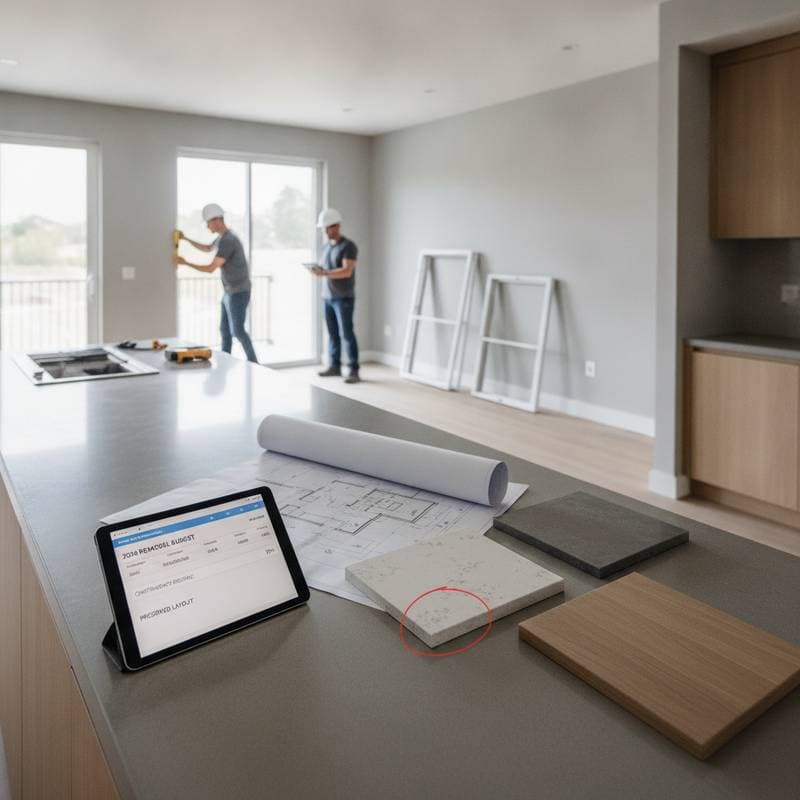
Interiors account for 20 to 30 percent of total costs, often ranging from $15,000 to $40,000. Basic laminate flooring costs $2 to $5 per square foot, while hardwood elevates expenses to $8 to $12. Kitchen cabinetry varies from stock units at $5,000 to custom builds exceeding $15,000.
Bathroom fixtures, including vanities and lighting, add $3,000 to $10,000. Prioritize multifunctional storage in compact spaces to maximize utility. Selecting resilient, easy-clean surfaces supports daily comfort without excessive upkeep.
5. Utilities and Systems
Utility installations form critical infrastructure, with expenses from $8,000 to $20,000. Extending water and sewer lines over 50 feet may require trenching that adds $5,000 or more. Electrical panels and wiring comply with code, costing $4,000 to $10,000.
HVAC options like ductless mini-splits run $3,000 to $7,000 per unit, promoting energy savings. Tankless water heaters at $1,500 to $3,000 reduce waste compared to traditional models. Integrating smart thermostats early enhances efficiency and lowers ongoing bills.
6. Permits and Professional Services
Permitting processes vary by locality, typically adding $2,000 to $10,000. Architectural drawings for complex designs cost $1,500 to $5,000, while engineering reviews address seismic or wind loads. Inspections occur at multiple stages to verify code adherence.
Contractors manage submissions, but owners should review zoning for setbacks and size limits, often capping units at 1,000 square feet. Non-compliance risks fines or demolition. Engaging local experts navigates evolving 2026 regulations effectively.
7. Accessibility Features
Accessibility modifications ensure safe aging in place, increasing costs by 10 to 20 percent. Installing grab bars and lever handles adds $1,000 to $3,000. Zero-step entries and reinforced walls for future adaptations integrate seamlessly.
Non-slip tiles at $4 to $8 per square foot prevent falls. Consult universal design principles to future-proof the space. These investments avert costly retrofits and promote independence for occupants.
Cost Comparison by Type
Different construction approaches yield varying expenses and benefits.
- Detached New Build: Fully independent with dedicated foundation and systems; costs $100,000 to $200,000 for 600 square feet, offering maximum privacy.
- Garage Conversion: Repurposes existing space, saving 30 to 50 percent on structure; totals $50,000 to $120,000 if insulation upgrades are needed.
- Basement or Interior Conversion: Leverages shared utilities for lowest outlay at $40,000 to $90,000; suits properties with underutilized areas.
- Prefab or Modular Unit: Factory-built for $80,000 to $150,000, including delivery; accelerates timelines but demands site readiness for assembly.
Each type aligns with specific site conditions and goals. Evaluate feasibility through professional assessments.
Typical Cost Ranges
In 2026, a standard 400- to 600-square-foot detached granny pod averages $120,000 to $180,000 nationwide, excluding land costs. Basic models start at $100,000 in low-regulation areas, while premium versions in high-cost regions exceed $250,000. Prefab units trim 15 to 25 percent off labor but retain site-related fees.
Regional factors, like California's seismic requirements, inflate prices by 20 percent. Budget 10 percent for inflation adjustments. These ranges guide realistic expectations.
Managing Costs Effectively
Choose a Simple Design
Opt for 400- to 600-square-foot layouts with open concepts to cut framing and material needs by 15 percent. Merge kitchen and living areas for efficient space use. Avoid ornate details that complicate builds.
Select Durable, Midrange Materials
Fiber cement siding at $8 per square foot balances protection and affordability. Laminate counters and vinyl plank flooring endure wear at low cost. These selections minimize repairs over decades.
Plan for Utility Access Early
Site surveys identify optimal placement near main lines, potentially saving $5,000 in extensions. Cluster the pod within 30 feet of services. Coordinate with utility providers for seamless hookups.
Get Multiple Bids
Solicit three to five detailed proposals breaking down categories. Compare apples-to-apples on warranties and timelines. Negotiate inclusions like basic landscaping.
Consider DIY Where Safe
Handle non-structural tasks like interior painting, saving $2,000 to $5,000. Professionals must oversee electrical and plumbing for liability reasons.
Long-Term Value and Return
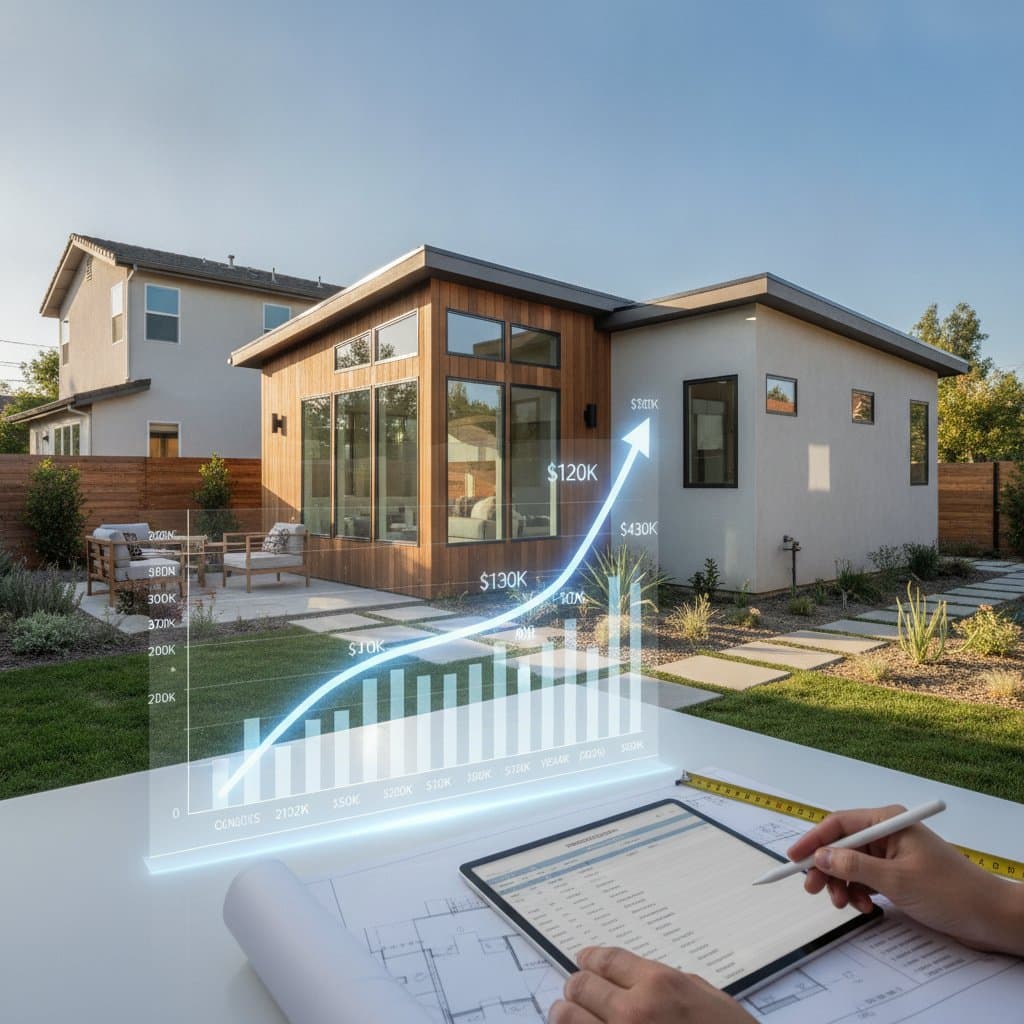
Granny pods enhance property equity by 10 to 20 percent upon resale, appealing to multigenerational buyers. Rental potential generates $800 to $1,500 monthly income in compliant areas. Energy-efficient builds recoup investments through 20 to 30 percent utility reductions.
Verify rental rules, including separate metering and occupancy limits. Insurance adjustments cover the addition adequately. These benefits extend usability across life stages.
Hidden Costs to Watch For
Post-construction adjustments like pathway paving add $2,000 to $5,000. Appliance setups and initial furnishings total $5,000 to $10,000. Allocate 10 to 15 percent contingency for delays or material price hikes.
Outdoor integrations, such as lighting or fencing, ensure accessibility. Track all estimates to maintain control.
Steps to Launch Your Project
Select a contractor experienced in ADUs through references and licensing checks. Develop a timeline spanning 3 to 6 months from permitting to occupancy. Secure financing options like home equity loans tailored to additions.
Regular site visits monitor progress. Celebrate completion with a functional space that supports family well-being for years.