Prefab ADU Real Costs and Construction Timeline
A prefab accessory dwelling unit expands living space, generates rental income, or houses family members. This guide presents actual costs, construction phases, and time requirements so property owners can plan effectively.
Cost and Time Estimates
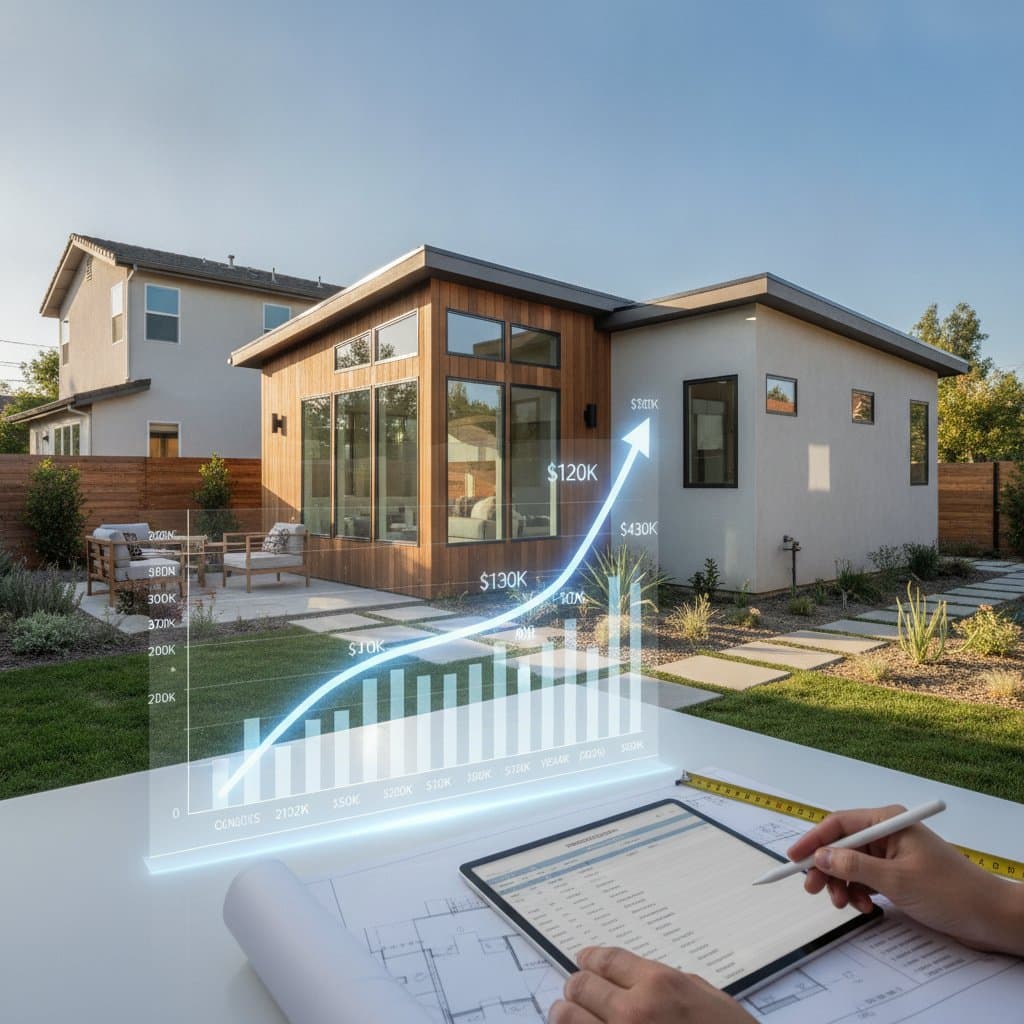
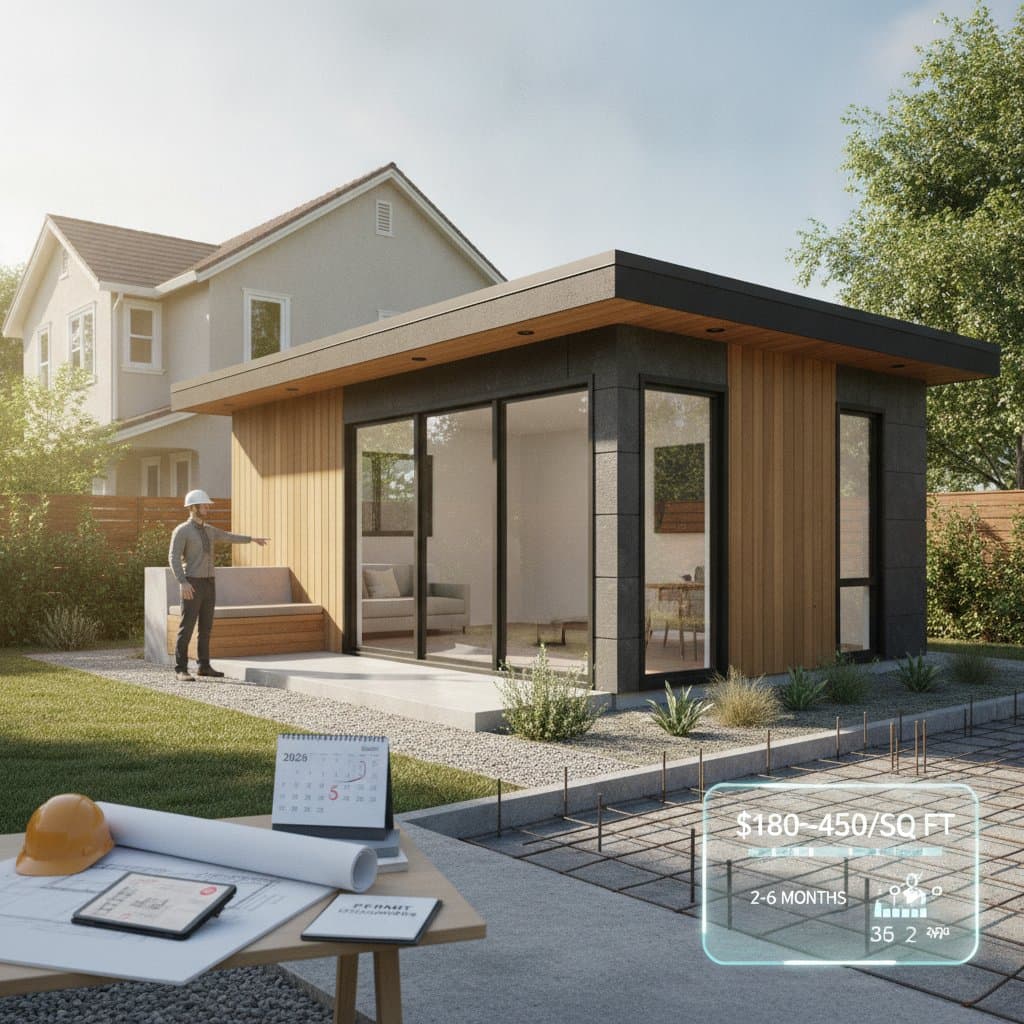
Total costs for a prefab ADU range from $180 to $500 per square foot. The range depends on design complexity, site conditions, utility connections, and local permitting rules.
Small studios of 250 to 400 square feet typically cost $60,000 to $120,000. One-bedroom units of 400 to 600 square feet fall between $90,000 and $180,000. Two-bedroom units of 600 to 1,000 square feet range from $130,000 to $300,000.
Budget allocation usually follows these proportions. The prefab unit and delivery account for 50 to 60 percent. Site preparation and foundation require 15 to 25 percent. Utility connections take 10 to 15 percent. Permits, design, and fees represent 5 to 10 percent. Finishing and landscaping complete the remaining 5 to 10 percent.
Project timelines span 6 to 10 months overall. Design and permitting require 1 to 3 months. Site preparation and foundation work take 1 to 2 months. Manufacturing runs 2 to 4 months and often overlaps with site work. Delivery and installation last 2 to 4 weeks. Utility hookups and final inspection need 2 to 6 weeks.
DIY Versus Professional Approaches
Homeowners can manage certain tasks while licensed professionals must handle others. DIY-friendly work includes selecting finishes, light landscaping, painting after delivery, and non-structural interior coordination.
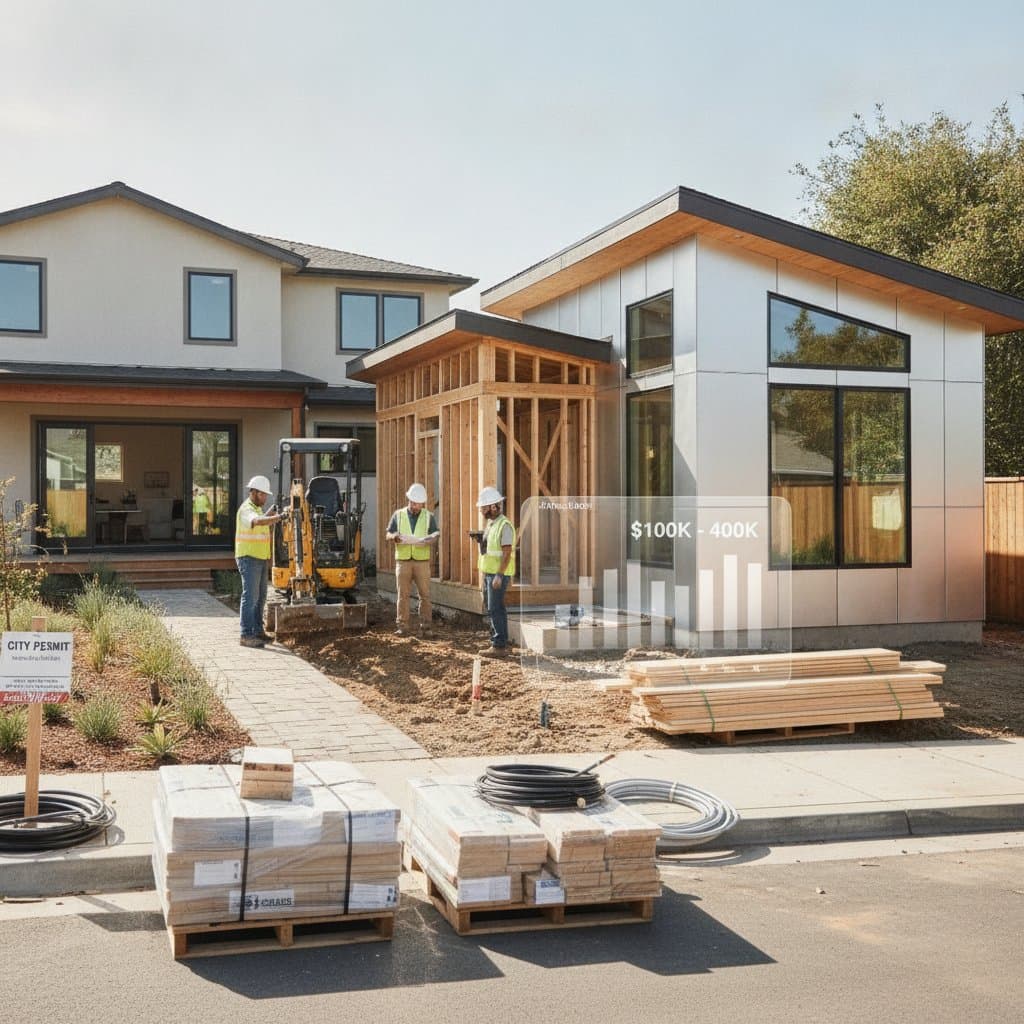
Professional tasks cover foundation installation, electrical and plumbing connections, crane delivery, structural tie-downs, and code compliance. Partial DIY builds cost $100,000 to $180,000. Full professional builds range from $150,000 to $350,000.
Licensed builders reduce errors and accelerate schedules. Sites with slopes, drainage challenges, or complex utilities benefit from professional oversight.
Step-by-Step Process
Site Evaluation
Review local zoning rules for setbacks, lot coverage, and height limits before ordering a unit. Confirm that the property permits ADUs. Arrange soil testing and utility mapping. Note any trees or easements that affect placement.
Design and Permitting
Select a standard model and request customizations for layout or finishes. Submit drawings for building, electrical, plumbing, and mechanical permits. Secure zoning approval when required. All permits must be issued before the manufacturer order is placed.
Foundation and Site Work
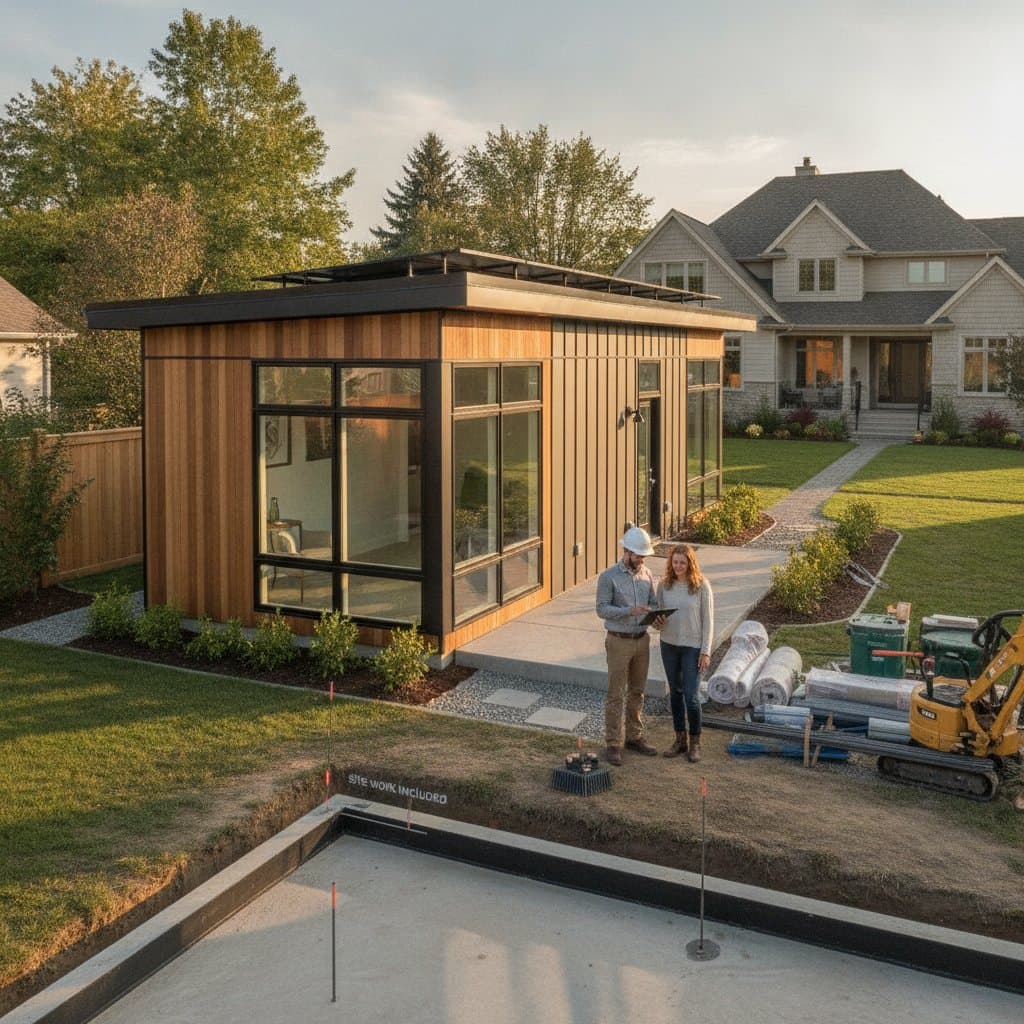
Excavate and level the pad while the unit is manufactured. Install a concrete slab or pier foundation. Run conduit and plumbing lines to connection points. The foundation must remain level within one-quarter inch and pass inspection before delivery.
Manufacturing
Factory construction completes framing, insulation, roofing, windows, and finishes under controlled conditions. Quality checks verify that electrical and plumbing systems meet code. Manufacturers supply inspection records with each unit.
Delivery and Installation
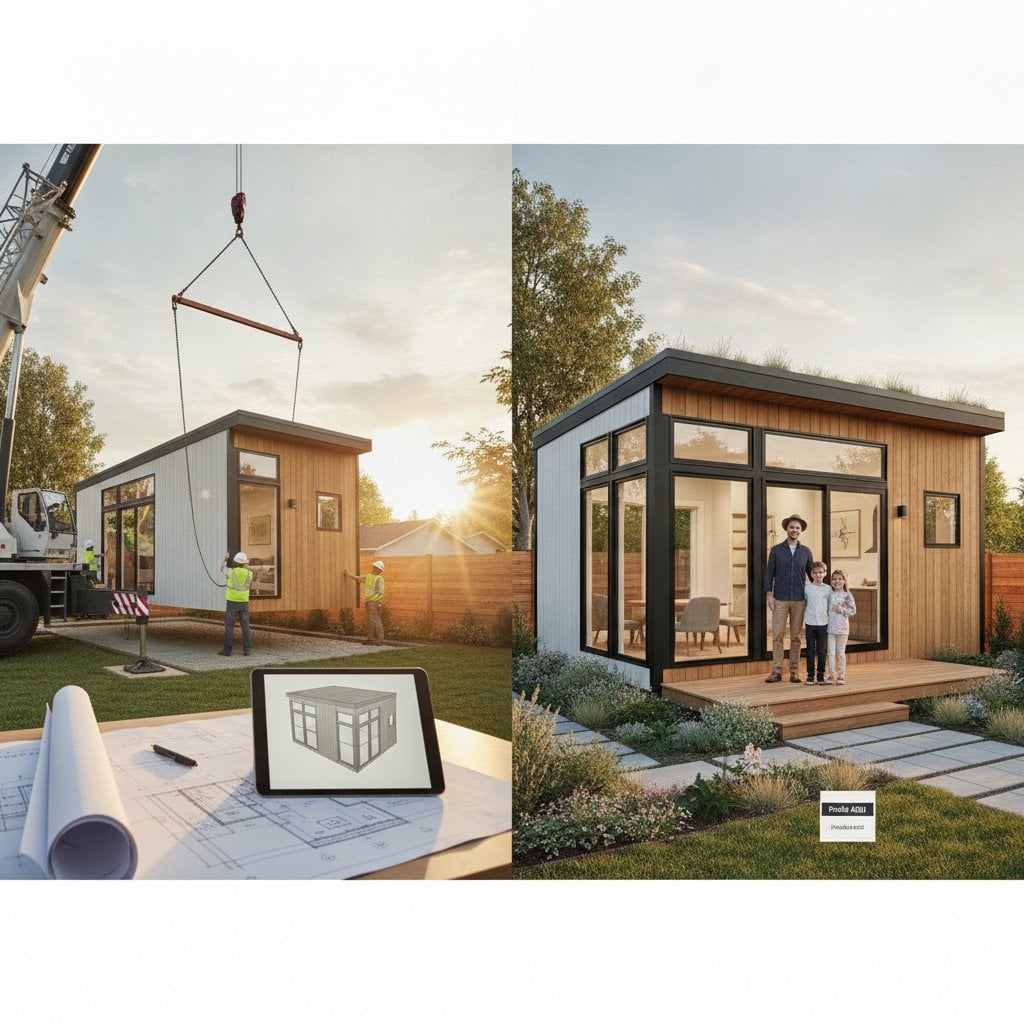
Prepare stable access routes for trucks and cranes. Position modules on the foundation and secure them. Seal all roof and wall joints. The completed structure must meet engineering specifications for level, anchoring, and weather tightness.
Utility Connections
Licensed contractors link water, sewer, electrical, and HVAC systems. Gas lines receive testing when present. All connections must pass inspection before occupancy.
Interior Finishing and Final Inspection
Complete minor drywall touch-ups, flooring transitions, and appliance installation. The building department performs a final walkthrough to confirm structural integrity, detector placement, and code compliance. A certificate of occupancy is issued upon approval.
Safety Practices
Hire licensed electricians for all wiring and panel work. Use guardrails or scaffolding on elevated surfaces. Keep children and pets away from equipment. Wear gloves, safety glasses, and hard hats during site activity. Cover open foundations before rain.
Common Issues and Checks
Uneven foundations often trace to poor soil compaction. Re-level or repour concrete as needed. Water intrusion at seams requires inspection of flashing and sealant after the first rain. Slow drainage calls for verification of pipe slope and venting. Electrical trips indicate overloaded circuits or grounding problems.
Test the completed ADU at night to confirm lighting and insulation performance. Operate every outlet, faucet, and HVAC component.
Site Cleanup
Recycle metal, cardboard, and pallets. Dispose of concrete and soil at approved facilities. Clear nails and debris before occupancy. Follow local rules for paint or solvent disposal.
Maintenance Schedule
Inspect roofs and gutters twice each year. Replace HVAC filters every three months. Repaint exteriors every five to ten years. Check caulk and window seals annually. Structural elements last fifty years or more with routine care. Mechanical systems and roofing require replacement on shorter cycles.
Professional Assistance Thresholds
Engage specialists when engineered drawings, utility relocation, or slopes over ten percent are involved. Gas line work and electrical service upgrades also require licensed contractors. General contractors charge $150 to $300 per square foot. Structural engineers cost $1,500 to $5,000. Hourly rates for electricians and plumbers range from $100 to $200.
Verify licenses, request written estimates, and obtain recent client references before signing agreements.
Planning Recommendations
Address utility upgrades during initial design to avoid later expense. Maintain clear, stable access paths for delivery equipment. Choose exterior finishes that match the primary residence. Reserve ten to fifteen percent of the budget for contingencies. Retain copies of all permits, reports, and warranties.
Lasting Value
Prefab ADUs deliver flexible space for family needs, offices, or income while maintaining energy efficiency through factory construction. Proper planning and upkeep protect the investment and support property value over decades.