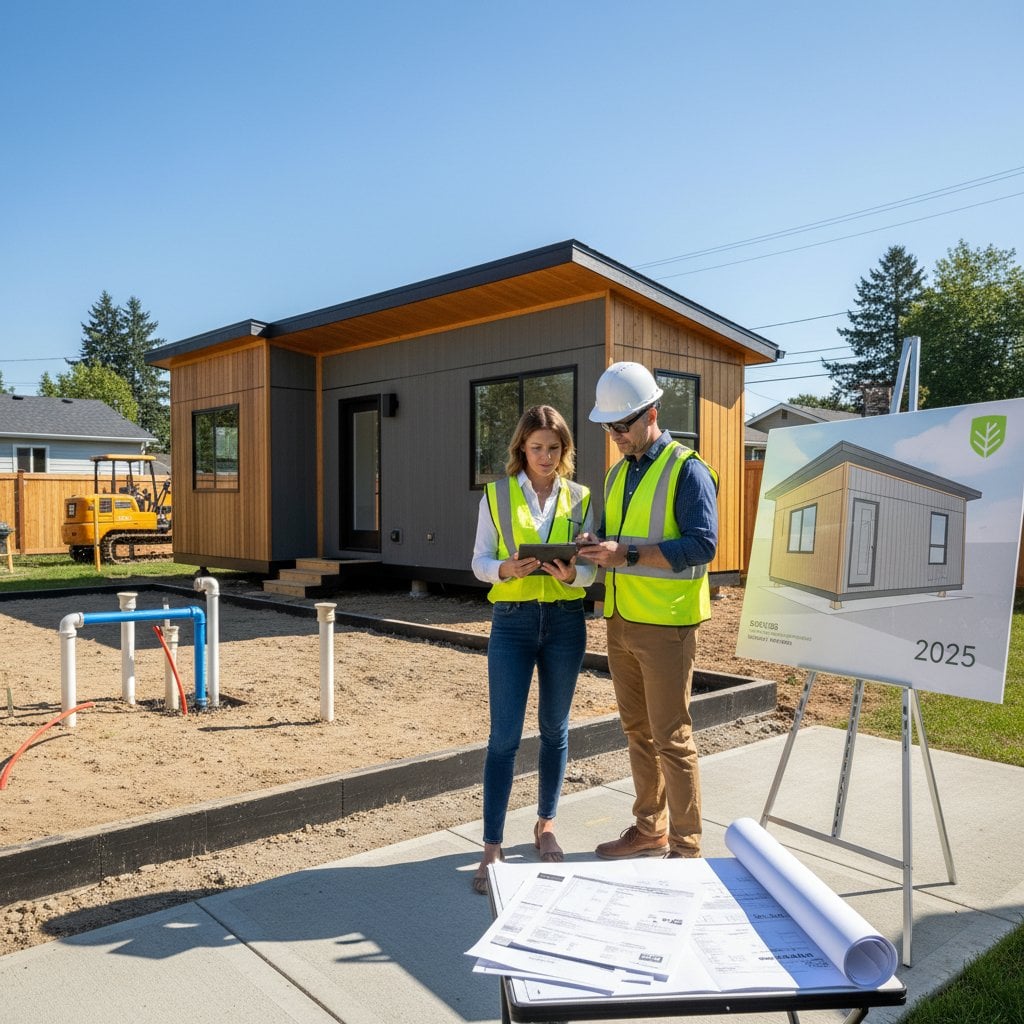
The True Costs of Prefab ADUs: Navigating 2025 Permit Changes
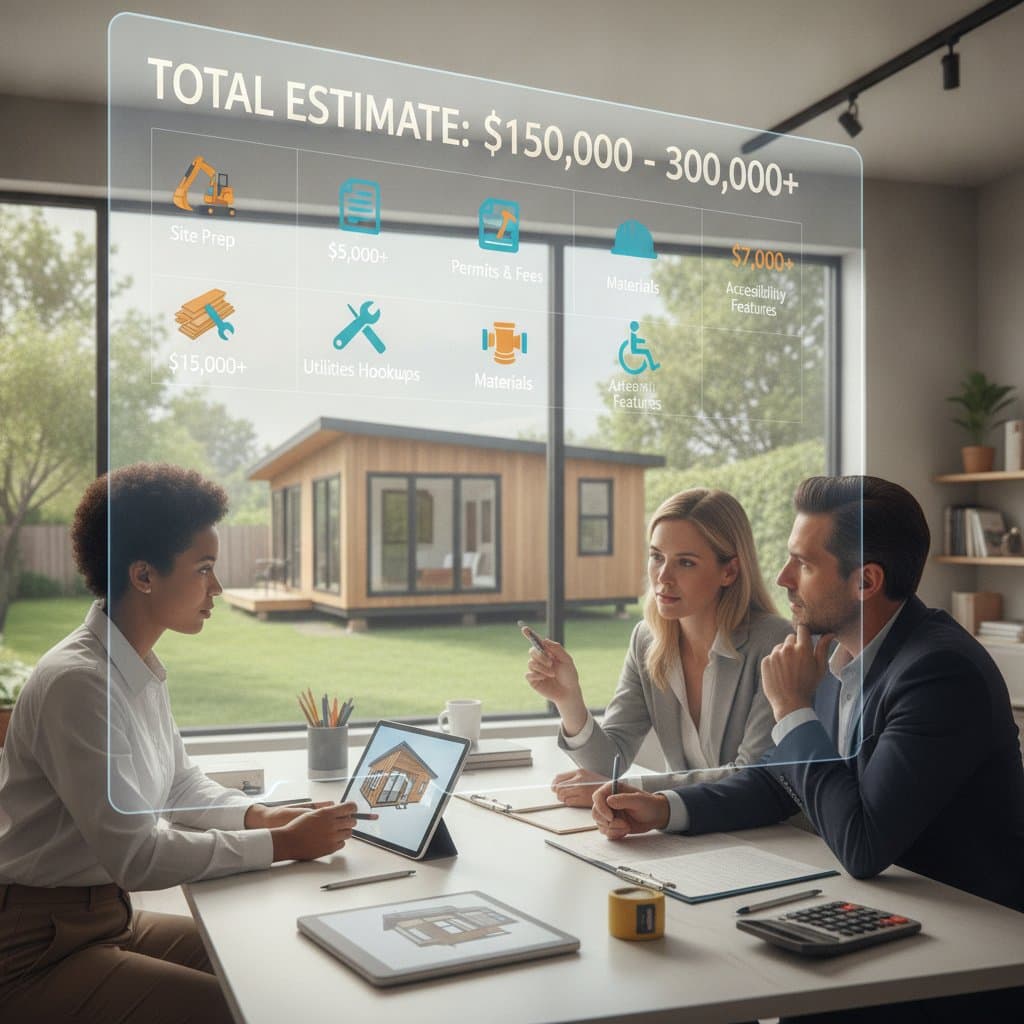
Prefab accessory dwelling units provide homeowners with a streamlined path to additional living space, such as studios or two-bedroom setups. Cost transparency proves essential, as local permits, site preparation, and customizations often exceed initial estimates. This guide dissects the complete expense profile for prefab ADUs and examines how evolving permit requirements impact budgets and timelines.
What Is a Prefab ADU?
A prefab ADU consists of components constructed off-site in a factory, then transported and assembled on your property. This method accelerates construction and minimizes on-site waste. Compliance with zoning laws, utility connections, and permit criteria remains mandatory, directly affecting both expenses and project duration.
Prefab ADUs vary by design:
- Modular units, assembled from multiple factory-built sections on-site.
- Panelized systems, featuring pre-fabricated walls and floors that connect easily.
- Trailer-based tiny homes, arriving almost fully assembled for quicker setup.
Each variant introduces distinct cost elements, including transportation logistics and foundation specifications.
Comprehensive Cost Breakdown
While prefab ADUs emphasize affordability, the overall investment extends well beyond the factory-built shell. Examine these key expense categories to grasp the full financial commitment.
-
Base Unit Pricing
The foundational cost includes the core structure, standard interior finishes, and essential fixtures. A basic studio unit typically ranges from $80,000 to $120,000, whereas a two-bedroom configuration may reach $150,000 to $250,000. Opting for durable materials, such as fiber cement siding or energy-efficient windows, increases the upfront price but lowers future repair needs. -
Site Preparation Expenses
Delivery demands a level, accessible site, often requiring ground clearing, vegetation removal, or retaining wall installation. These preparations can add $5,000 to $15,000, with urban or sloped properties incurring higher charges due to limited maneuverability. -
Foundation and Utility Connections
Permanent foundations like concrete slabs or pier-and-beam systems cost $10,000 to $30,000, depending on soil stability. Linking to water, sewer, and electrical services contributes another $8,000 to $20,000; older areas might necessitate infrastructure upgrades, such as new service lines. -
Permits and Impact Fees
Fees differ across jurisdictions, ranging from $2,000 to $10,000 for plan reviews, inspections, and utility approvals. Certain regions waive charges to promote ADU growth, while impact fees for added density can elevate totals by $5,000 or more. -
Delivery and On-Site Installation
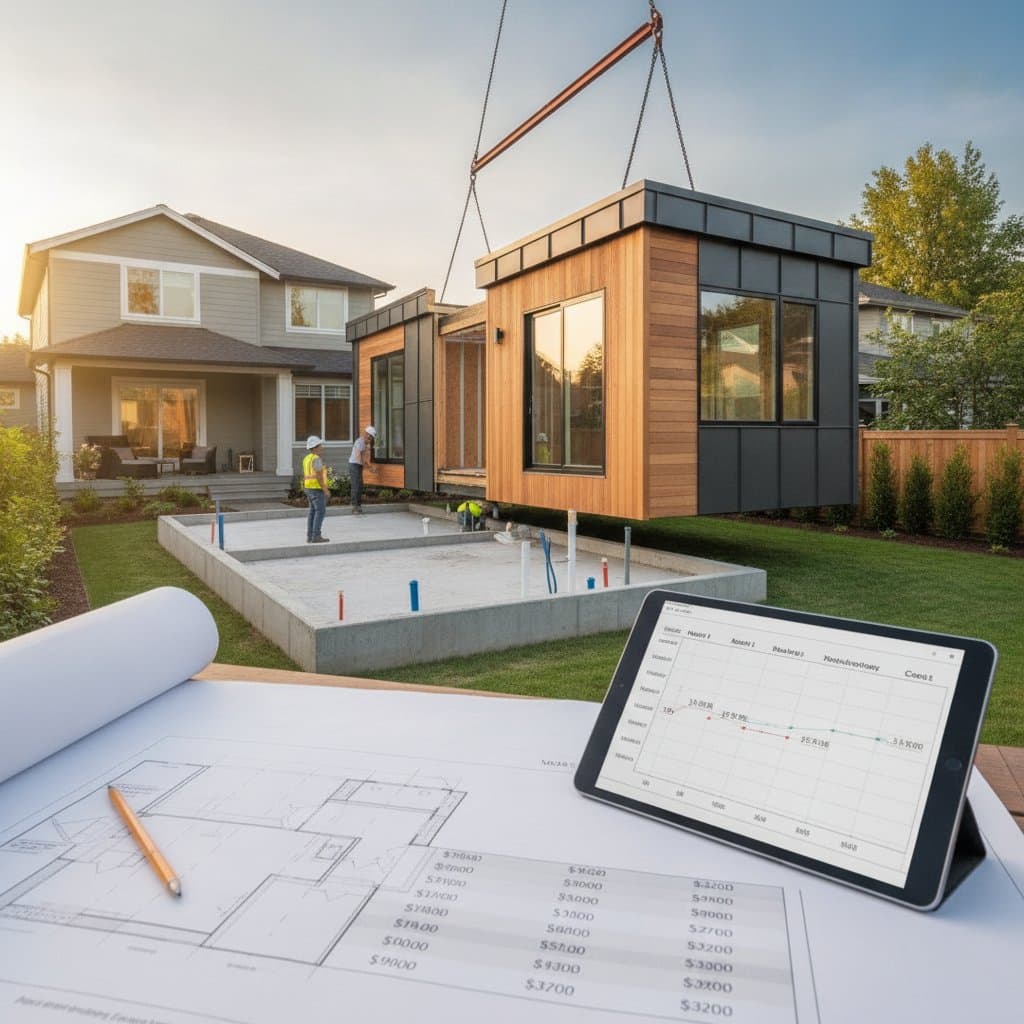
Transport and crane operations vary with factory distance and site access, adding $3,000 to $10,000. The process encompasses seam sealing, structural anchoring, and exterior detailing to ensure weatherproof integrity. -
Customization Options
Tailoring elements like premium cabinetry, hardwood flooring, or solar integrations can boost costs by 10% to 30%. Focus on high-impact choices, such as insulation upgrades, to balance immediate expenses with ongoing savings.
Key Permit Considerations for 2025
Permits frequently emerge as the most unexpected hurdle in ADU projects. Prefab construction demands adherence to local codes, shaping design and finances. Address these elements to streamline approval.
-
Zoning Guidelines
Regulations cap unit sizes at 800 to 1,200 square feet in many areas, mandate setbacks of 4 to 10 feet from boundaries, and enforce aesthetic matches like gabled roofs. Early zoning checks avert costly redesigns. -
Utility and Accessibility Standards
Independent metering for electricity and water applies if the ADU functions separately; fire lanes and ADA-compliant paths add layout constraints and $2,000 to $5,000 in modifications. -
Sustainability Requirements
Codes now stipulate R-30 insulation, low-flow fixtures, and LED systems, potentially raising material costs by 5% to 15%. These upgrades yield 20% to 30% reductions in utility bills over time. -
Inspection Protocols
Factory certifications precede on-site reviews of foundations, electrical ties, and fire safety. Delays in scheduling can extend timelines by 2 to 4 weeks; prepare documentation in advance.
Regional Influences on Pricing
Location drives significant variations in prefab ADU expenses through labor, regulations, and supply chains.
-
Urban Versus Suburban Dynamics
City sites face premiums of 15% to 25% from constrained access and utility retrofits; expansive suburban yards facilitate easier staging, trimming labor by up to 20%. -
Climate-Specific Adaptations
Northern regions require enhanced vapor barriers and heating systems, adding $5,000 to $10,000; southern zones prioritize UV-resistant roofing and cross-ventilation for similar cost impacts. -
Incentive Programs
Municipalities like those in California offer expedited reviews or rebates up to $10,000; research via planning offices to leverage these savings.
Overlooked Costs to Anticipate
Subtle expenses accumulate quickly in ADU builds.
-
Landscaping Recovery
Equipment tracks may scar turf or pavement, necessitating $1,000 to $4,000 in sod, gravel, or sealant repairs post-installation. -
Interim Utilities and Storage
On-site power needs during setup or material containment can incur $500 to $2,000 in rentals. -
Finishing Touches
Beyond built-ins, budget $3,000 to $8,000 for furnishings, blinds, and supplemental appliances to make the space habitable.
Strategies for Effective Budgeting
Solid planning mitigates overruns and ensures project success.
-
Secure Detailed Estimates
Request itemized quotes covering all phases, from permits to finishes, to identify potential gaps. -
Allocate for Unforeseen Issues
Reserve 10% to 15% of the total for variables like geotechnical surprises or code amendments. -
Engage Authorities Prematurely
Submit preliminary sketches to planners for feedback, refining designs before fabrication orders. -
Evaluate Foundation Alternatives
Piers suit unstable soils at $8,000 to $15,000 versus slabs at $15,000 to $25,000; weigh stability against budget with experts. -
Prioritize Enduring Materials
Select low-maintenance options like synthetic composites to cut annual upkeep by 50% over a decade.
Maximizing Your Prefab ADU Investment
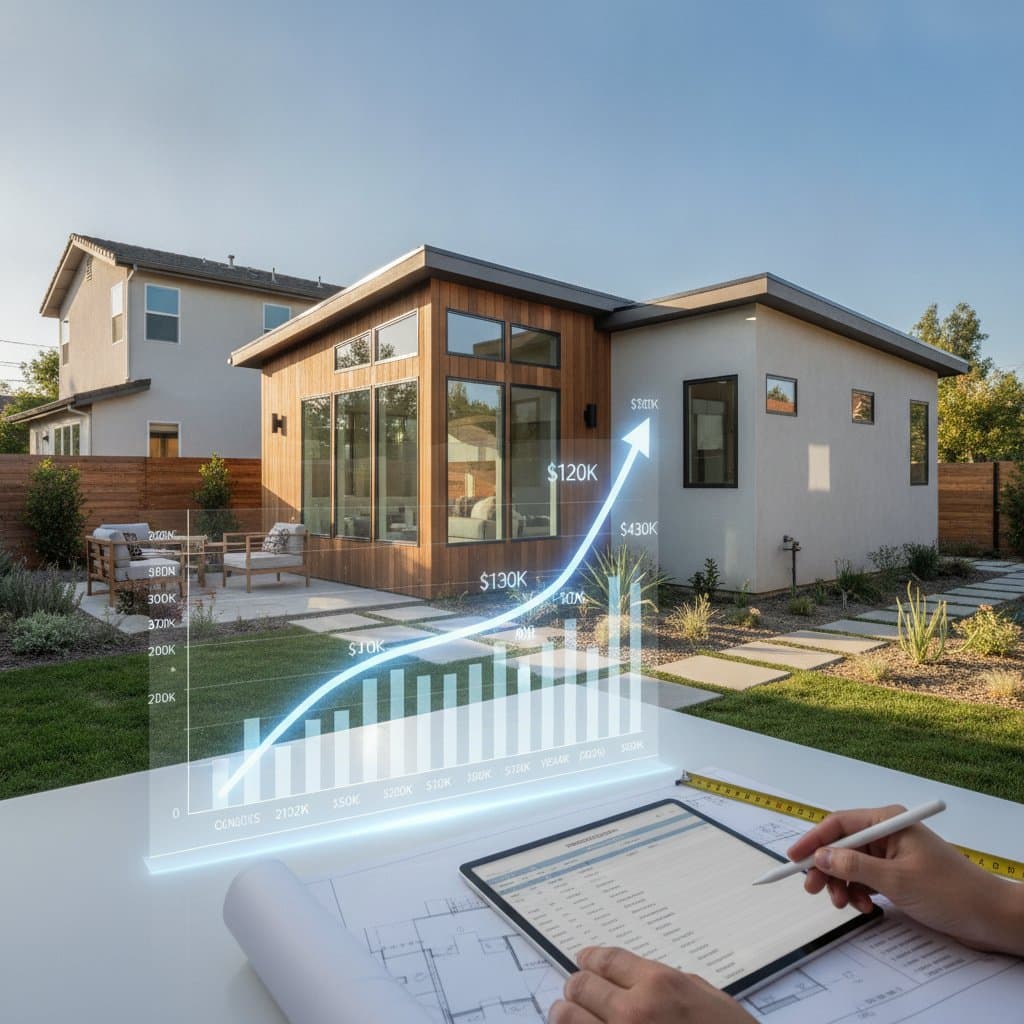
A completed prefab ADU enhances versatility as a guest quarters, income-generating rental, or dedicated workspace, boosting property equity by 10% to 20%. Schedule yearly checks on structural elements and drainage to sustain performance. Thoughtful integration with your primary residence ensures seamless functionality and lasting value.