2025 Costs and Designs for Senior-Friendly Bathrooms
Creating a senior-friendly bathroom ranks among the most impactful home upgrades for enhancing comfort, safety, and independence. Homeowners undertake these projects to simplify daily routines and promote long-term livability. Costs vary based on layout, materials selected, and the scope of the remodel.
Quick Cost Summary
The average cost for a senior-friendly bathroom remodel falls between $8,000 and $25,000, with many homeowners allocating about $16,000. For minor enhancements like grab bars, slip-resistant flooring, and comfort-height toilets, expenses range from $2,000 to $5,000. Comprehensive overhauls incorporating walk-in showers, widened doorways, and accessible sinks often surpass $30,000.
Major cost drivers encompass the following:
- Materials such as tile, fixtures, cabinetry, and accessibility hardware.
- Labor for plumbing, electrical work, carpentry, and tile installation.
- Design complexity, where custom layouts or reconfigured plumbing elevate expenses.
- Accessibility features including walk-in tubs, curbless showers, and grab bars.
Highlights and Key Insights
Accessibility upgrades frequently qualify as medical or aging-in-place improvements, potentially raising resale value. Labor typically constitutes half the total budget in most projects. Opting for durable, low-maintenance materials minimizes ongoing expenses. Professionals strongly advise hiring experts for plumbing and electrical alterations. Even minor design adjustments can enhance safety without necessitating extensive reconstruction.
Cost by Size or Type
The size and type of bathroom significantly influence the overall expense.
- Half bath (powder room): $3,000 to $8,000, generally limited to grab bars, flooring upgrades, and a comfort-height toilet.
- Standard full bath: $8,000 to $20,000, covering shower or tub modifications, improved lighting, and accessibility elements.
- Primary or master bath: $15,000 to $35,000, which may involve layout alterations, expansive walk-in showers, or premium materials.
Even compact spaces can achieve accessibility through efficient layout optimization. Consider installing corner sinks, pocket doors, and fold-down shower benches to conserve space while avoiding substantial structural modifications.
Contractor Costs and Professional Installation
Licensed contractors charge between $75 and $150 per hour, varying by region and expertise. Plumbers and electricians bill separately for system enhancements. For instance, a curbless shower pan with adequate drainage might incur $1,000 to $3,000 in labor costs alone.
While DIY approaches can cut labor expenses, they introduce risks. Experienced homeowners might handle grab bar installation or slip-resistant flooring application. However, relocating plumbing lines, adjusting light switch heights, or expanding doorways demands professional skills to prevent water damage or safety issues.
A hybrid strategy—tackling simple DIY tasks alongside professional oversight for complex elements—strikes an optimal balance of affordability and reliability.
Additional Cost Factors
Beyond size and labor, several elements shape the project budget.
Accessibility Fixtures and Fittings
- Walk-in tubs: $2,500 to $8,000.
- Curbless shower conversions: $5,000 to $12,000.
- Grab bars: $100 to $300 each, including installation.
- Handheld showerheads: $150 to $400 installed.
Flooring and Surfaces
Slip-resistant tile or vinyl flooring runs $8 to $20 per square foot when installed. Applying non-slip coatings to current tile surfaces costs $3 to $7 per square foot.
Lighting and Visibility
Uniform, bright illumination bolsters safety. Recessed LED fixtures or motion-activated options range from $200 to $800 per unit with installation.
Doorways and Layout
Expanding a doorway to 36 inches for wheelchair accessibility costs $700 to $2,000, contingent on wall construction. Repositioning fixtures to facilitate movement raises plumbing and electrical outlays.
Permits and Inspections
Local regulations mandate permits for structural or plumbing alterations, with fees spanning $200 to $1,000 based on project scale.
Strategies to Control Expenses
Maintain budget constraints while upholding safety and quality through targeted choices.
- Preserve the current layout to sidestep the high costs of plumbing relocation.
- Select prefabricated shower units, which prove more economical than custom-tiled alternatives.
- Implement safety elements incrementally, beginning with grab bars, enhanced lighting, and anti-slip flooring.
- Incorporate mid-range materials like resilient vinyl flooring and acrylic shower surrounds, which deliver performance at a lower price than tile.
- Coordinate bathroom work with broader home renovations to consolidate labor charges.
Utility providers and community initiatives sometimes provide rebates or low-interest financing for accessibility projects. Consult your contractor or local housing authority to explore eligibility.
Return on Investment
Senior-friendly bathroom remodels yield tangible financial and lifestyle benefits. Accessible modifications recoup 55 to 70 percent of costs upon resale, influenced by market conditions.
These enhancements also mitigate fall risks and foster greater autonomy. Homeowners benefit from proactive renovations before mobility challenges intensify, circumventing the need for rushed, costlier fixes in the future.
Essential Design Features for Accessibility
Effective designs prioritize comfort, safety, and usability, adhering to universal design principles that accommodate diverse needs.
Key elements include:
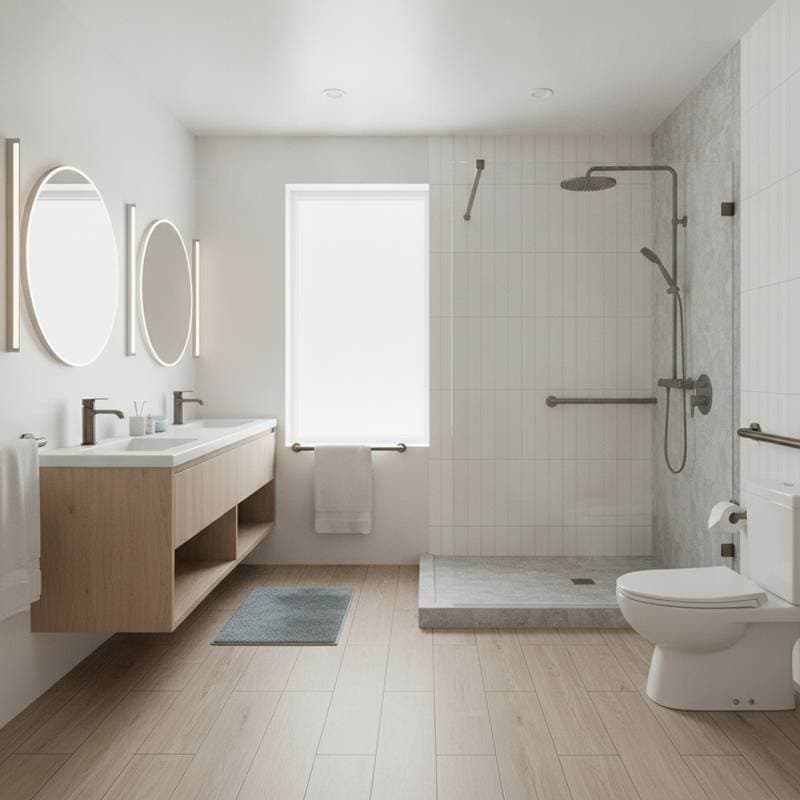
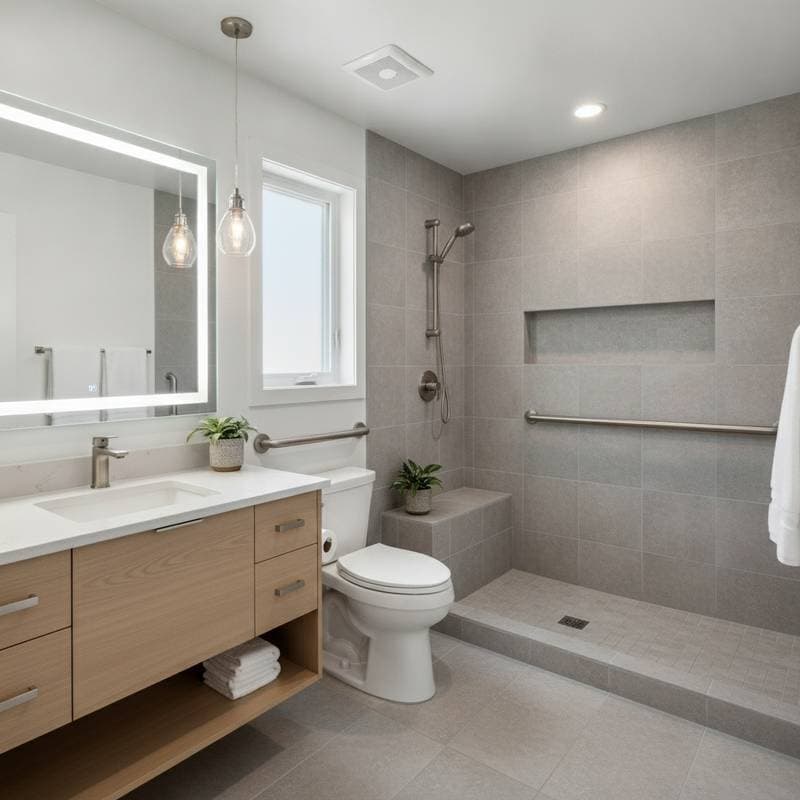
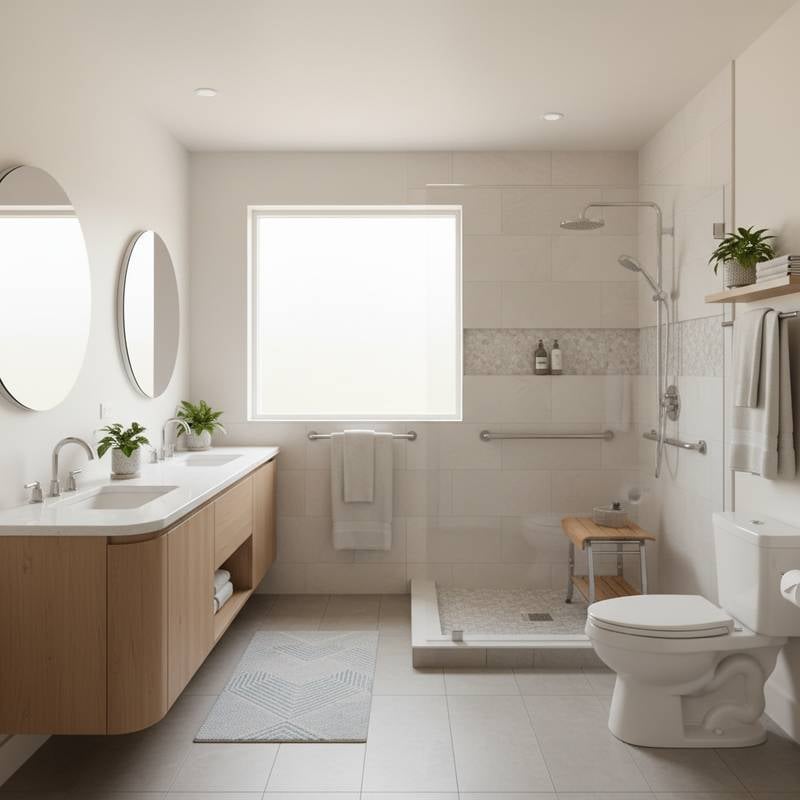
- Zero-threshold showers for seamless entry and reduced tripping risks.
- Built-in bench seating to aid balance during bathing.
- Handheld showerheads for versatile, user-friendly operation.
- Lever-style handles in place of knobs for simpler grasping.
- Comfort-height toilets elevated two to three inches above standard models.
- Sufficient lighting to minimize glare and shadows.
- Contrasting colors to delineate floors, walls, and fixtures clearly.
Allocate at least five feet of clear turning radius for wheelchair maneuverability. Rounded countertop edges and slip-resistant flooring complete a secure environment.
DIY Tasks Versus Professional Expertise
DIY efforts can trim expenses by 10 to 20 percent, yet suitability depends on the task.
Suitable for DIY:
- Mounting grab bars, shelving, or handheld showerheads.
- Swapping mirrors or upgrading to brighter bulbs.
- Adding anti-slip coatings to floors.
Delegate to professionals:
- Plumbing and electrical adjustments.
- Tub-to-shower conversions.
- Doorway expansions or wall relocations.
- Waterproofing and tiling applications.
Professionals guarantee compliance with accessibility codes, averting expensive repairs from errors.
Cost Basis
These estimates derive from national remodeling data, contractor quotes, and average supplier prices. Figures assume mid-range materials and typical labor rates, though local differences, selections, and complexities may adjust totals.
Frequently Asked Questions
How much does a senior-friendly bathroom remodel cost? Projects generally range from $8,000 to $25,000, shaped by materials, layout, and features.
Can a small bathroom become accessible? Absolutely. Features such as pocket doors and wall-mounted sinks enhance usability in limited areas.
What offers the most affordable safety improvements? Prioritize grab bars, better lighting, and non-slip mats or coatings.
Does an accessible bathroom elevate home value? Indeed, as buyers appreciate safety and ease, particularly for aging-in-place properties.
Are walk-in tubs a worthwhile investment? They enhance safety and comfort, though high costs make curbless showers a versatile alternative.
Is financial assistance available for accessibility work? Certain agencies and nonprofits extend grants, rebates, or favorable loans.
Sustaining Long-Term Value
Preserve the remodel's benefits through routine care. Regularly clean grout and flooring to sustain traction. Annually inspect grab bars and fixtures for firmness, and renew seals or caulking to avert leaks.
Incorporate periodic refreshes like updated bulbs, additional handrails, or flooring enhancements to prolong functionality. Thoughtful planning and expert execution yield a bathroom that adapts to evolving requirements, securing safety, comfort, and independence over time.