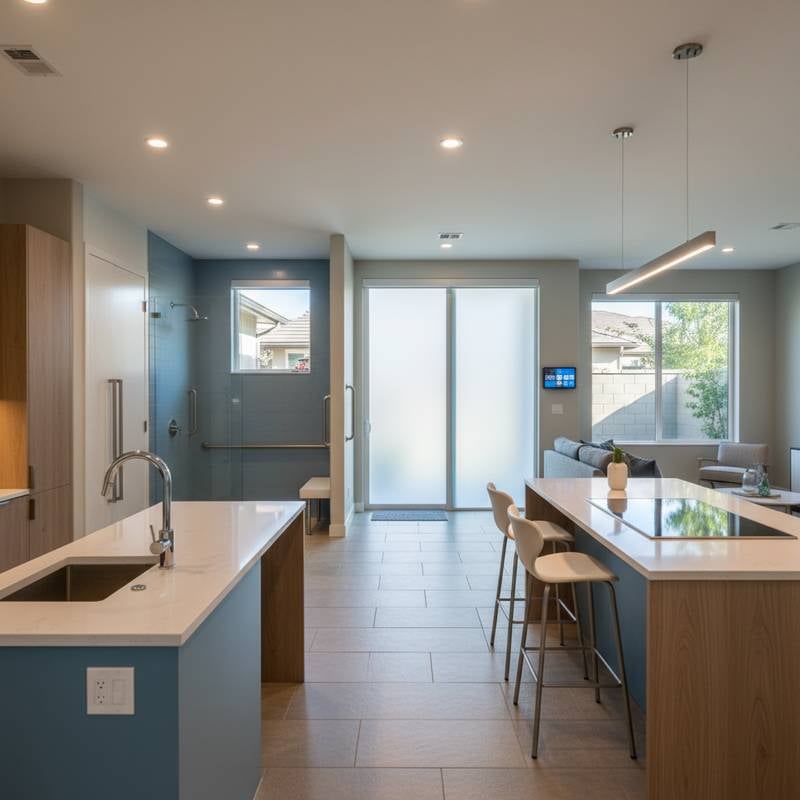
2025 Universal Design Costs for Aging in Place
Quick Overview
Universal design remodels enhance home safety and usability for individuals of all ages and mobility levels. Homeowners aiming to age in place typically invest between $8,000 and $75,000, based on project scope. Minor updates, such as installing grab bars or lever handles, range under $1,000. Comprehensive transformations, like full bathroom or kitchen overhauls, often surpass $25,000. Completion times vary from one day to four weeks. Project complexity spans easy to advanced levels. Key risks include electrical modifications, plumbing adjustments, and structural alterations, which demand licensed experts.
Step-by-Step Guide to Implementation
1. Assess Existing Accessibility
Conduct a thorough walkthrough of your home to pinpoint potential barriers, including narrow doorways, steep staircases, or inaccessible controls.
- Measure doorway widths to ensure at least 32 inches of clear passage.
- Evaluate lighting adequacy in hallways, stairwells, and bathrooms.
- Test the functionality of handles and switches for effortless operation.
Verification Point: Compile a detailed inventory of issues, complete with precise measurements.
2. Develop Upgrade Priorities
Identify enhancements that optimize safety, comfort, and budget constraints.
- Target frequently used spaces, such as entrances, bathrooms, and kitchens.
- Select durable, slip-resistant materials that simplify maintenance.
- Emphasize features that minimize bending, stretching, or excessive effort.
Verification Point: Create a documented strategy outlining priorities alongside preliminary cost projections.
3. Establish Budget and Select Experts
Obtain detailed bids from certified contractors experienced in accessibility modifications.
- Request breakdowns covering labor, materials, and required permits.
- Confirm licensing, insurance, and client testimonials.
- Allocate 10 to 15 percent extra for unforeseen expenses.
Verification Point: Engage a vetted specialist and establish a comprehensive financial plan.
4. Enhance Entryway Accessibility
Secure entry points form the foundation of safe home access for long-term residency.
- Substitute steps with a ramp maintaining a 1:12 slope ratio, rising one inch for every twelve inches of horizontal distance.
- Install robust handrails on both sides for reliable support.
- Incorporate motion-activated lights and a protective overhang to shield against weather elements.
Verification Point: Navigate the entry and exit effortlessly, free from tripping hazards or physical strain.
5. Broaden Interior Doorways
Expand confined doorways to accommodate wheelchairs, walkers, or other mobility aids.
- Dismantle existing trim and adjust framing as necessary to increase width.
- Reattach trim and apply fresh paint to blend seamlessly with surrounding walls.
- Opt for offset hinges to gain additional clearance in constrained areas without major reconstruction.
Verification Point: Doors swing freely, providing sufficient space for mobility equipment.
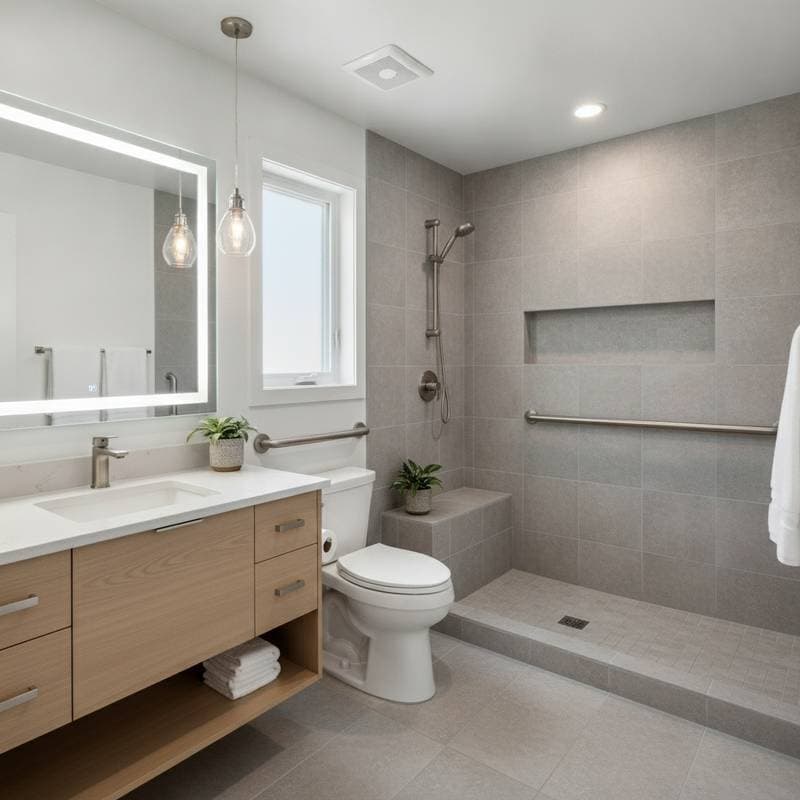
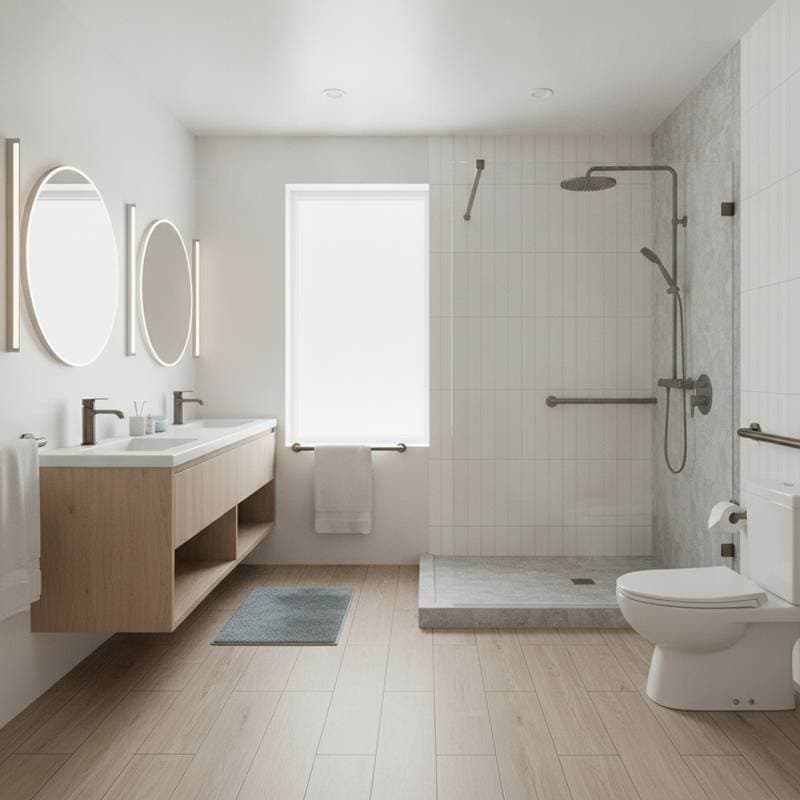
6. Transform the Bathroom
Bathrooms pose the greatest slip and fall dangers, making targeted safety improvements essential.
- Convert traditional tubs to curbless or low-threshold showers for seamless entry.
- Secure grab bars adjacent to toilets and showers by anchoring into wall studs.
- Lay non-slip flooring featuring a textured surface for enhanced traction.
- Modify vanity heights to support comfortable use while seated.
Verification Point: Traverse the space confidently, avoiding obstacles and slick areas.
7. Optimize Kitchen Functionality
A thoughtfully adapted kitchen promotes self-sufficiency while easing physical demands.
- Reduce countertop elevations or integrate adjustable sections for varied user heights.
- Replace deep cabinets with pull-out shelves and full-extension drawers.
- Swap round knobs for lever-style handles that require minimal grip strength.
- Augment illumination beneath cabinets and across preparation zones.
Verification Point: Prepare meals independently, without excessive reaching or stooping.
8. Refine Lighting and Control Systems
Adequate illumination and intuitive controls mitigate mishaps and disorientation.
- Upgrade standard toggles to rocker-style or sensor-based switches.
- Deploy smart lighting or motion detectors in corridors and bathrooms.
- Boost lumens in staircases and entry areas for better visibility.
Verification Point: Access all controls effortlessly from standing or seated positions.
9. Revamp Flooring Surfaces
Consistent, secure flooring underpins mobility and fall prevention throughout the home.
- Install vinyl plank, cork tiling, or low-pile carpeting to ensure smooth transitions.
- Eliminate loose rugs and elevated thresholds that disrupt even paths.
- Coat stair treads with anti-slip treatments for added grip.
Verification Point: Surfaces remain firm, flat, and hazard-free in every area.
Troubleshooting and Maintenance
Frequent Challenges
- Loose grab bars: Ensure fasteners penetrate wall studs; install reinforcement blocking if studs are absent.
- Doors dragging on floors: Fine-tune hinge positions or trim the lower edge minimally.
- Overly steep ramps: Confirm the 1:12 slope and extend length accordingly.
- Shower water accumulation: Inspect and correct the floor pitch directing flow to the drain.
Routine Solutions
- Inspect and secure all fixtures periodically.
- Renew caulking and seals in moisture-prone zones annually.
- Swap out deteriorated anti-slip elements or localized flooring repairs.
Engaging Professional Services
Retain certified specialists for tasks involving electricity, plumbing, or load-bearing elements. Such work encompasses:
- Relocating electrical outlets or fixtures.
- Shifting plumbing lines for sinks, toilets, or drainage systems.
- Demolishing structural walls.
- Constructing attached ramps or platforms.
Standard Rates
- Electrical services: $85 to $150 hourly.
- Plumbing expertise: $90 to $160 hourly.
- Carpentry for framing or ramp installation: $40 to $100 hourly.
Contractor Evaluation Process
- Validate active licensing and comprehensive insurance coverage.
- Demand detailed written proposals and binding agreements.
- Solicit client references alongside visual documentation of comparable installations.
- Review guarantees for workmanship and product durability.
Practical Implementation Advice
Initiate modifications in the area delivering the most immediate advantages, typically the primary bathroom or front entrance. Allocate funds initially to core safety elements, including grab bars, traction-enhanced floors, and enhanced lighting. Progress to ergonomic enhancements, such as adaptable countertops and expanded passages, after addressing primary risks.
Universal design transcends mere renovation; it sustains autonomy, security, and ease across life's phases. Strategic preparation paired with expert oversight ensures efficient execution and long-term value preservation.
Frequently Asked Questions
What defines universal design?
This philosophy creates environments that accommodate diverse ages, abilities, and needs, promoting inclusivity without specialized adaptations.