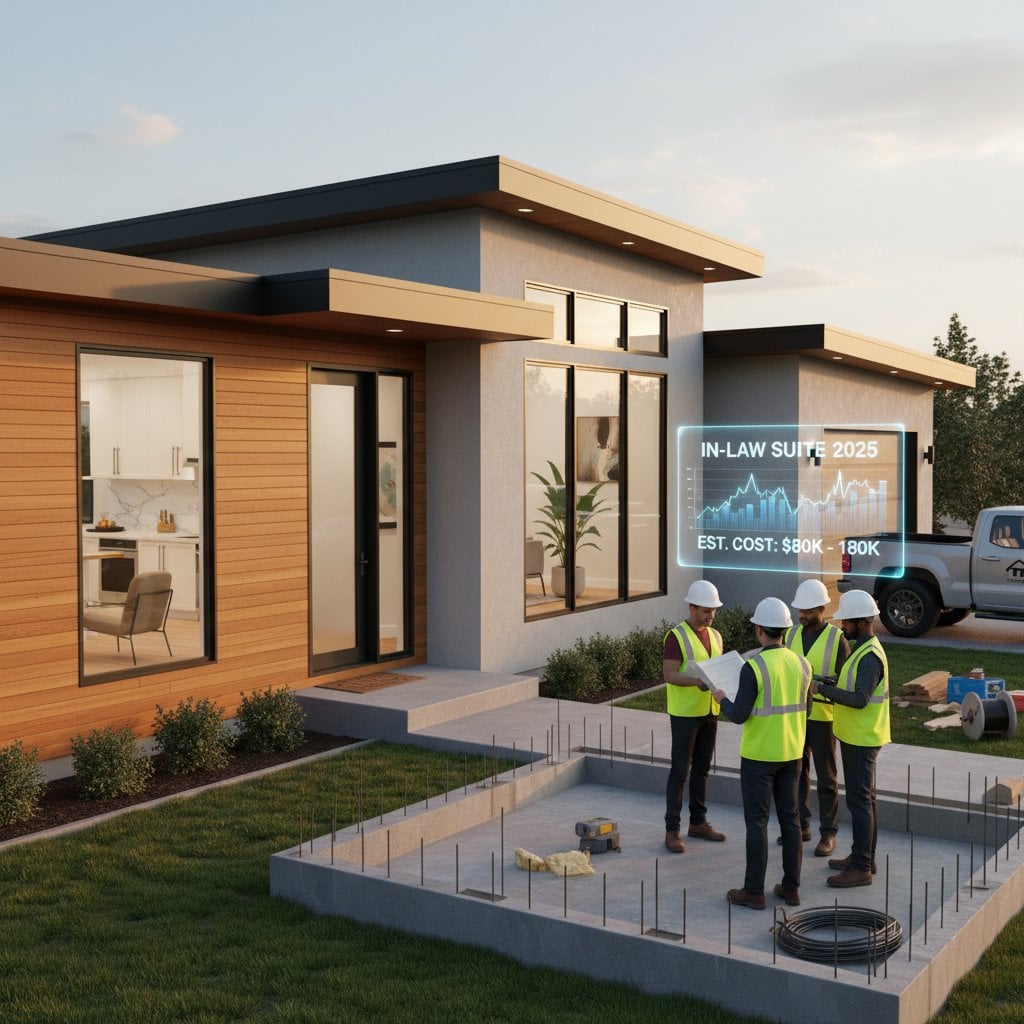
Understanding In-Law Suite Addition Costs
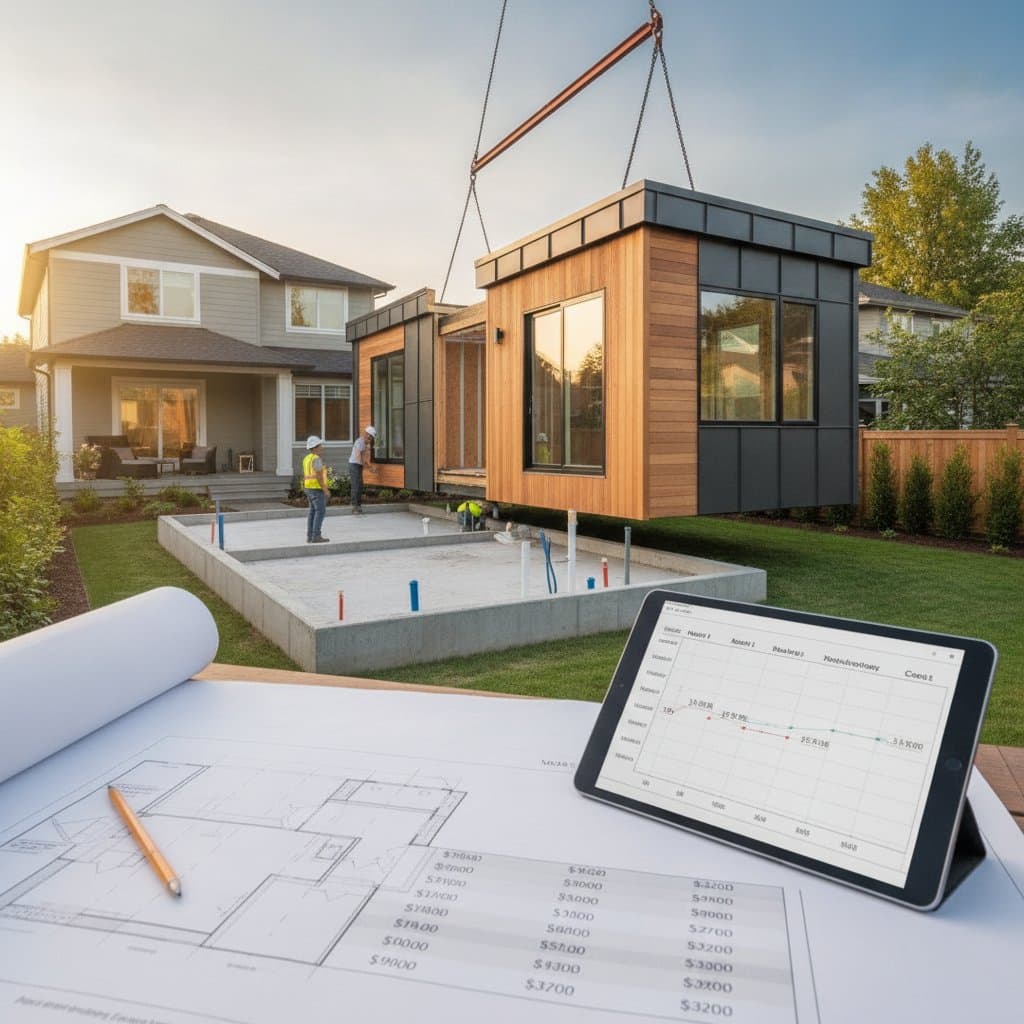
An in-law suite provides a dedicated living area for relatives or guests, often attached to the main home or converted from existing space. These additions range from simple guest quarters to fully accessible units for long-term residents. Homeowners typically invest between $80,000 and $180,000, influenced by square footage, material choices, and local site challenges. Completion requires two to five months under a licensed contractor's supervision, involving complex structural, plumbing, and electrical elements. Professionals strongly advise against full DIY efforts, limiting amateur involvement to minor finishing touches.
Planning Your In-Law Suite Project
1. Assess Needs and Determine Size
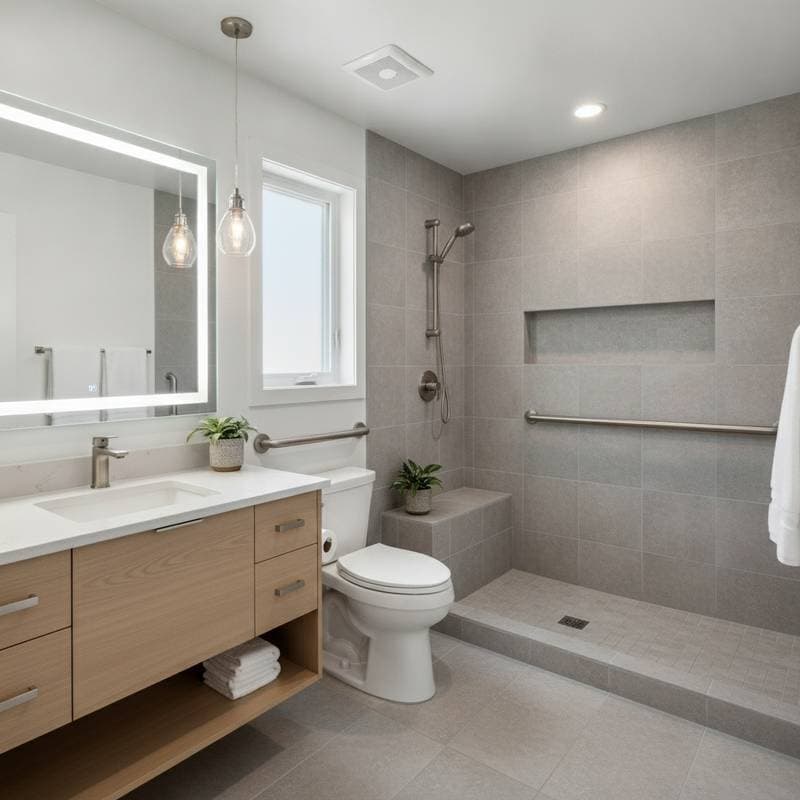
Start by identifying the suite's primary users and duration of occupancy. For elderly parents, prioritize universal design features like wide doorways and zero-threshold showers. Guest accommodations might suffice with a compact kitchenette and powder room. Standard suites measure 400 to 800 square feet, balancing functionality with budget constraints.
Verification Step: Review the layout against local building codes for accessibility, soundproofing, and emergency egress.
2. Select the Addition Type
Consider these primary configurations to match your property and preferences:
- Attached Extension: Integrates with the existing home via a shared wall, offering the lowest upfront costs and easiest utility connections.
- Detached Structure: Stands alone as a backyard cottage, providing greater independence but increasing expenses for separate foundations and services.
- Conversion Projects: Repurpose a garage or basement, minimizing new construction while adapting to inherent spatial limitations.
Verification Step: Evaluate site access, soil drainage, and airflow to comply with zoning and health regulations.
3. Establish a Comprehensive Budget
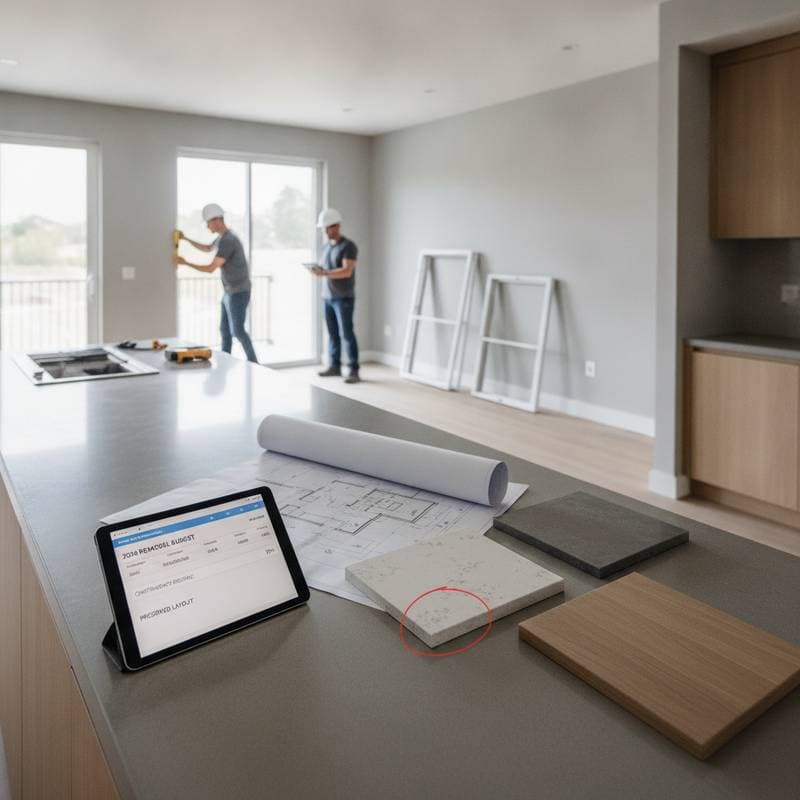
Allocate funds across essential phases to avoid overruns:
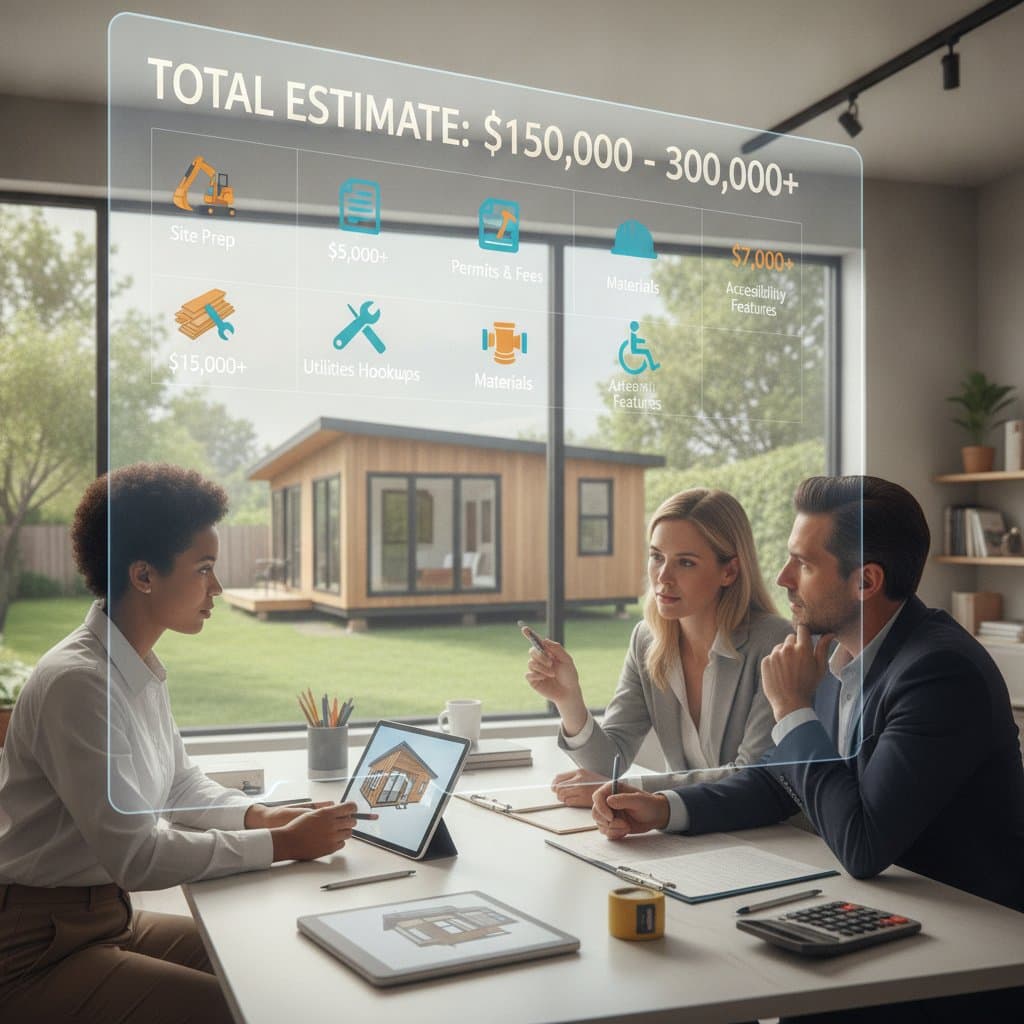
- Design and Permitting: $2,000 to $10,000 for architectural plans and regulatory approvals.
- Site Preparation and Foundation: $10,000 to $25,000, covering excavation, grading, and concrete work.
- Structural Elements: $20,000 to $40,000 for framing, roofing, and energy-efficient insulation.
- Mechanical Installations: $15,000 to $35,000 encompassing plumbing, wiring, and climate control systems.
- Interior Outfitting: $15,000 to $40,000 for walls, flooring, and cabinetry.
- Final Equipment: $3,000 to $10,000 including appliances, fixtures, and safety devices.
Verification Step: Reserve at least 10 percent of the total for unforeseen issues like utility relocations or weather delays.
4. Engage Reliable Experts
Partner with a certified general contractor specializing in accessory dwelling units (ADUs). This professional manages subcontractors, secures approvals, and schedules inspections. Mandate licensed specialists for electrical and plumbing tasks to ensure safety and warranty coverage.
Verification Step: Confirm credentials through state licensing boards, review past projects, and secure proof of liability insurance.
5. Ready the Construction Site
Remove obstacles such as plants or debris, locate underground utilities, and level the terrain for proper water runoff. For ground-up builds, obtain a soil analysis to assess bearing capacity and prevent settling.
Verification Step: Double-check foundation forms, reinforcement bars, and moisture barriers prior to pouring concrete.
6. Construct the Framework
Erect walls, install the roof truss system, and frame openings according to approved blueprints. Secure windows and exterior doors with proper weatherproofing seals to guard against water damage.
Verification Step: Use levels and plumb lines to confirm structural alignment, and measure roof slopes for optimal shedding.
7. Install Core Systems
Route pipes, conduits, and vents through the open framework before enclosing surfaces. Opt for durable materials like cross-linked polyethylene tubing for water lines or armored cabling for power distribution. Equip damp zones with ground-fault circuit interrupters and select heating units scaled to the space's dimensions.
Verification Step: Schedule and pass preliminary inspections for all rough-ins to confirm code adherence before proceeding.
8. Apply Insulation and Interior Layers
Fit rigid foam or batt insulation to achieve the recommended thermal resistance for your region. Secure drywall sheets, apply joint compound smoothly, and lay resilient flooring options.
Verification Step: Inspect for uniform coverage without voids and test air sealing around penetrations.
9. Incorporate Fixtures and Complete Setup
Mount cabinetry, vanities, and overhead lights, then integrate essential safety features like interconnected alarms for smoke and gas detection. Connect all utilities and perform operational tests.
Verification Step: Cycle through electrical circuits, water flows, and temperature controls to identify any malfunctions.
Addressing Potential Challenges
Frequent Concerns
Water seepage often stems from inadequate seals or improper sloping; inspect eavestroughs and exterior pitches regularly. Insufficient hydraulic performance may arise from restricted pipes or sediment buildup. Floor irregularities can result from inadequate support beams or uneven substructures.
Straightforward Resolutions
Apply silicone sealant to minor cracks. Realign hardware on fixtures. Renew seals around entry points to maintain efficiency.
Professional Intervention Thresholds
Summon experts for:
- Cracks in foundations exceeding one-quarter inch in width.
- Recurring circuit breaker trips or flickering lights.
- Persistent drips from pipes or overflows in drains.
- Heating or cooling units that activate too frequently.
Repair fees vary from $150 for basic wiring adjustments to $5,000 plus for foundational or systemic overhauls. Obtain multiple detailed quotes and clarify coverage under guarantees.
Advancing Your Project Forward
Evaluate funding sources such as home equity lines or municipal grants for ADUs to ease financial strain. Select low-maintenance materials like vinyl siding and laminate counters for enduring appeal. Incorporate future-proof elements if supporting seniors, and archive all documentation for property transactions or claims processing.