2026 Mass Timber Costs: Strategies for Efficient, Cost-Effective Building
Quick Answer Box
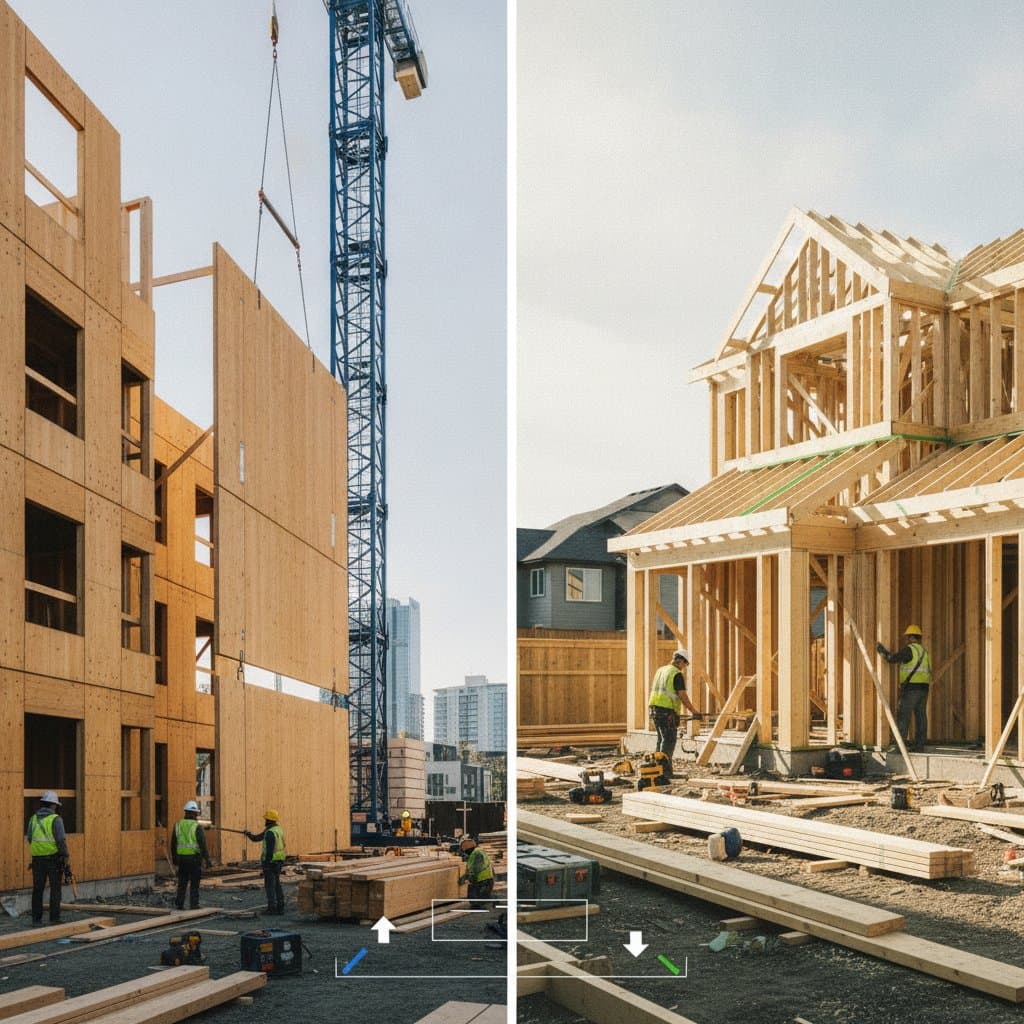
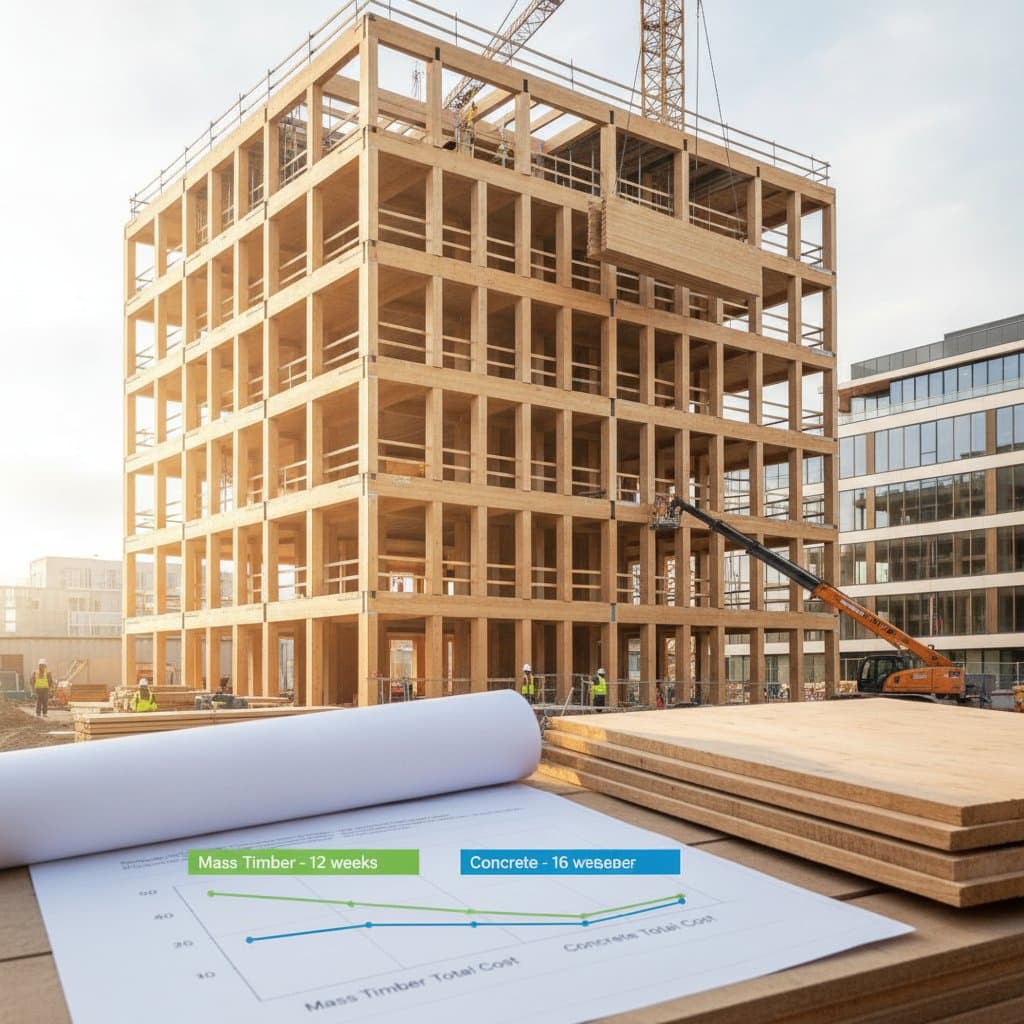
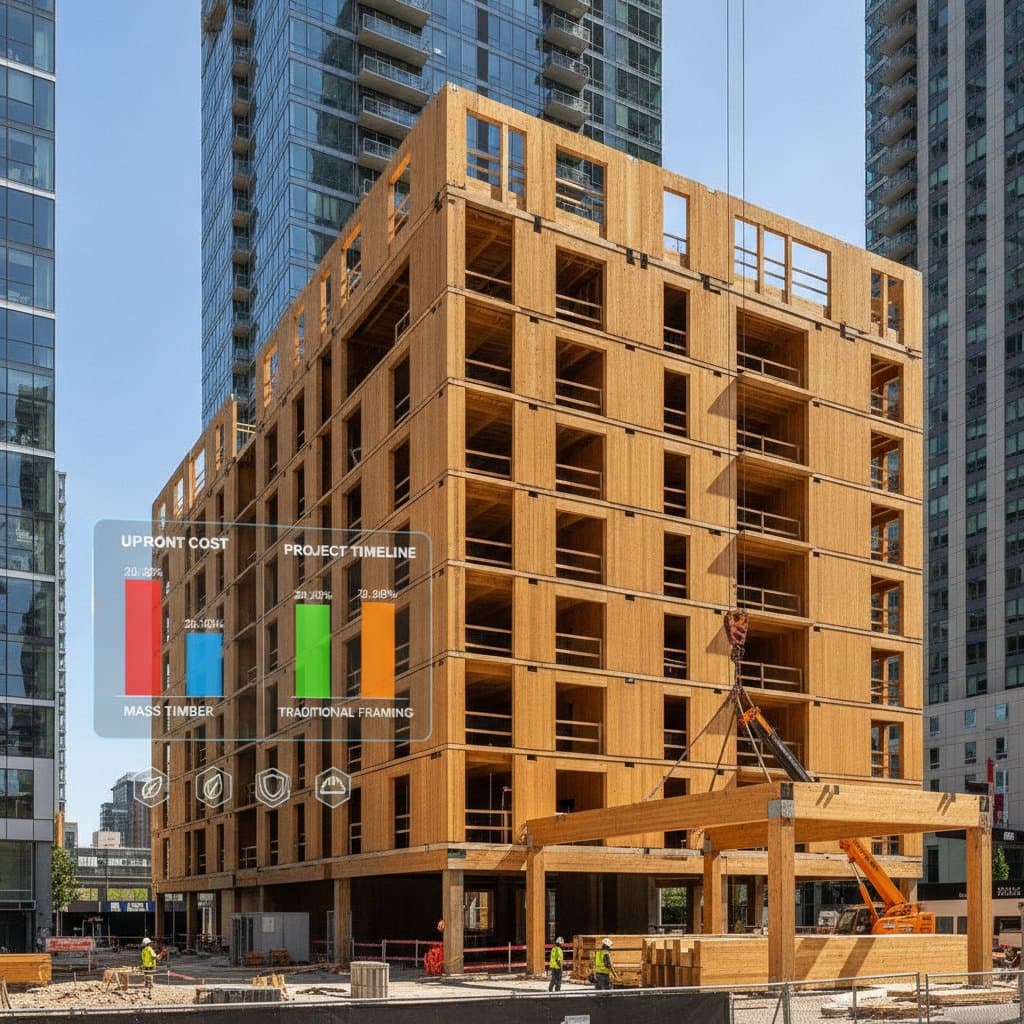
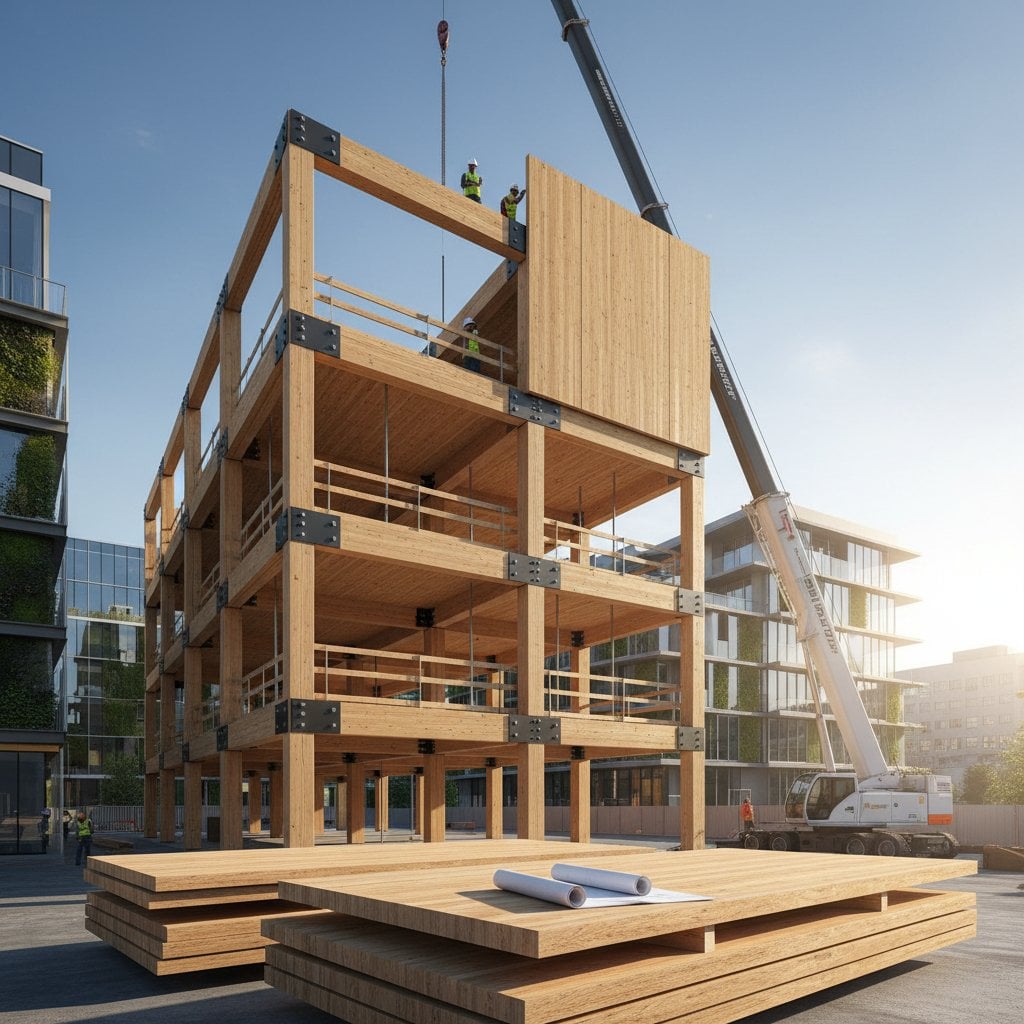
Mass timber construction relies on large-scale engineered wood elements, such as panels and beams, to form robust, environmentally responsible structures. This approach applies to a wide range of developments, including commercial offices, residential complexes, and mixed-use facilities. Upfront costs for mass timber projects typically range 5 to 15 percent above conventional steel or concrete methods, but total construction duration can decrease by as much as 25 percent. Planning and coordination demand moderate to advanced expertise, with material pricing influenced by geographic location and vendor selection. Over time, benefits from expedited erection and reduced energy consumption outweigh initial investments. Engage a licensed structural engineer early to ensure designs align with local building codes and supplier guidelines.
Step-by-Step Instructions
1. Confirm Structural Design
Engage a licensed structural engineer with proven expertise in mass timber applications. This professional will specify panel thicknesses, select appropriate connection hardware, and map out load-bearing pathways to support the building's intended use.
Check: Verify that all engineering drawings bear official stamps and conform to municipal codes as well as the specifications provided by material manufacturers.
2. Order Panels and Hardware
Collaborate with a certified supplier specializing in cross-laminated timber (CLT) panels or glue-laminated (glulam) beams. Request documentation confirming the wood's moisture content falls within acceptable limits, typically below 12 percent, and that grading standards meet or exceed project requirements.
Check: Cross-reference every panel dimension and hardware specification against the approved structural drawings prior to production and shipment to avoid costly delays.
3. Prepare the Foundation
Construct a foundation using reinforced concrete or steel pilings designed to handle the specific bearing pressures of mass timber elements. Precisely position and embed anchor bolts according to the engineer's layout to secure the initial frame.
Check: Measure bolt spacing, embedment depth, and overall elevation multiple times to guarantee compatibility with incoming panels and prevent alignment issues during erection.
4. Protect Materials Onsite
Upon delivery, position panels horizontally on elevated spacers, at least 12 inches above ground level, to promote airflow and minimize ground moisture exposure. Securely drape panels with breathable, waterproof tarps to shield them from rain, direct sunlight, and environmental contaminants.
Check: Inspect surfaces regularly for signs of moisture accumulation, dirt buildup, or oily residues, addressing any issues immediately to preserve material integrity.
5. Install Wall and Floor Panels
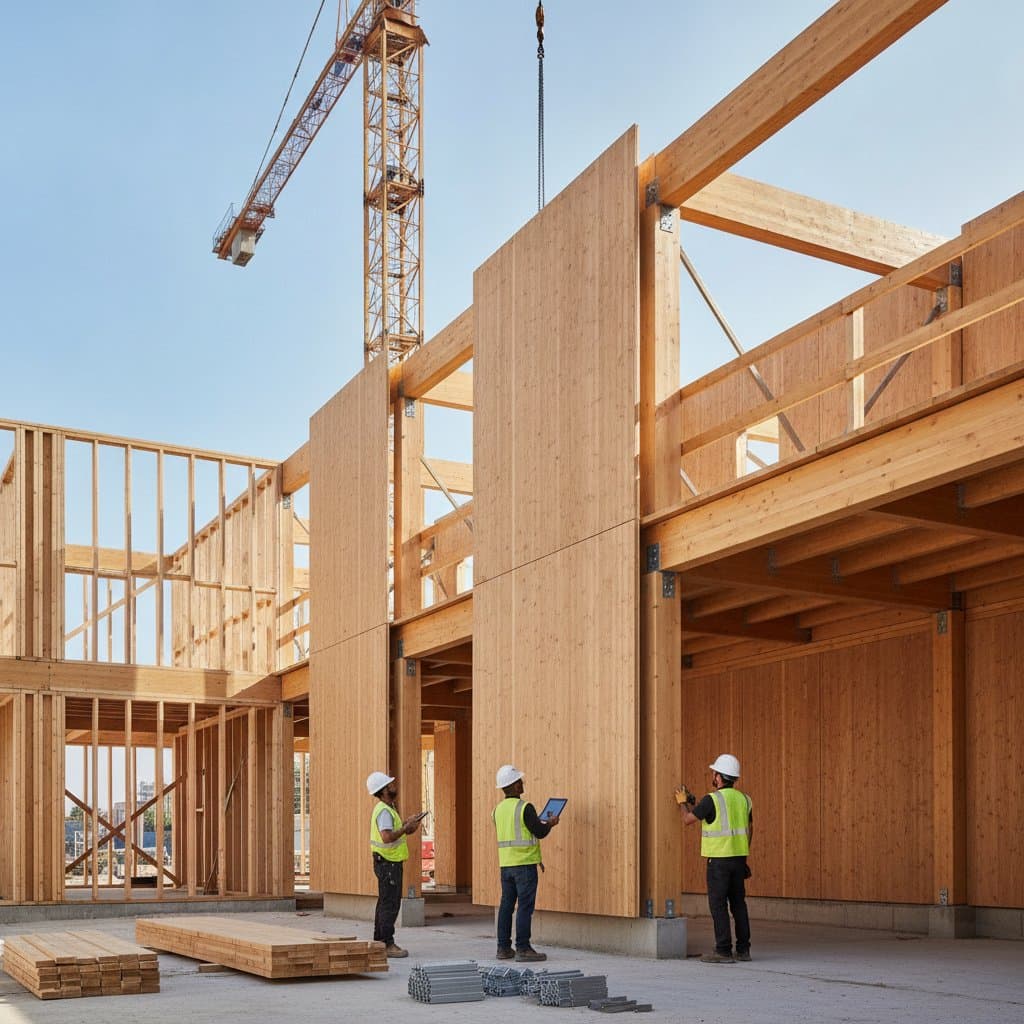
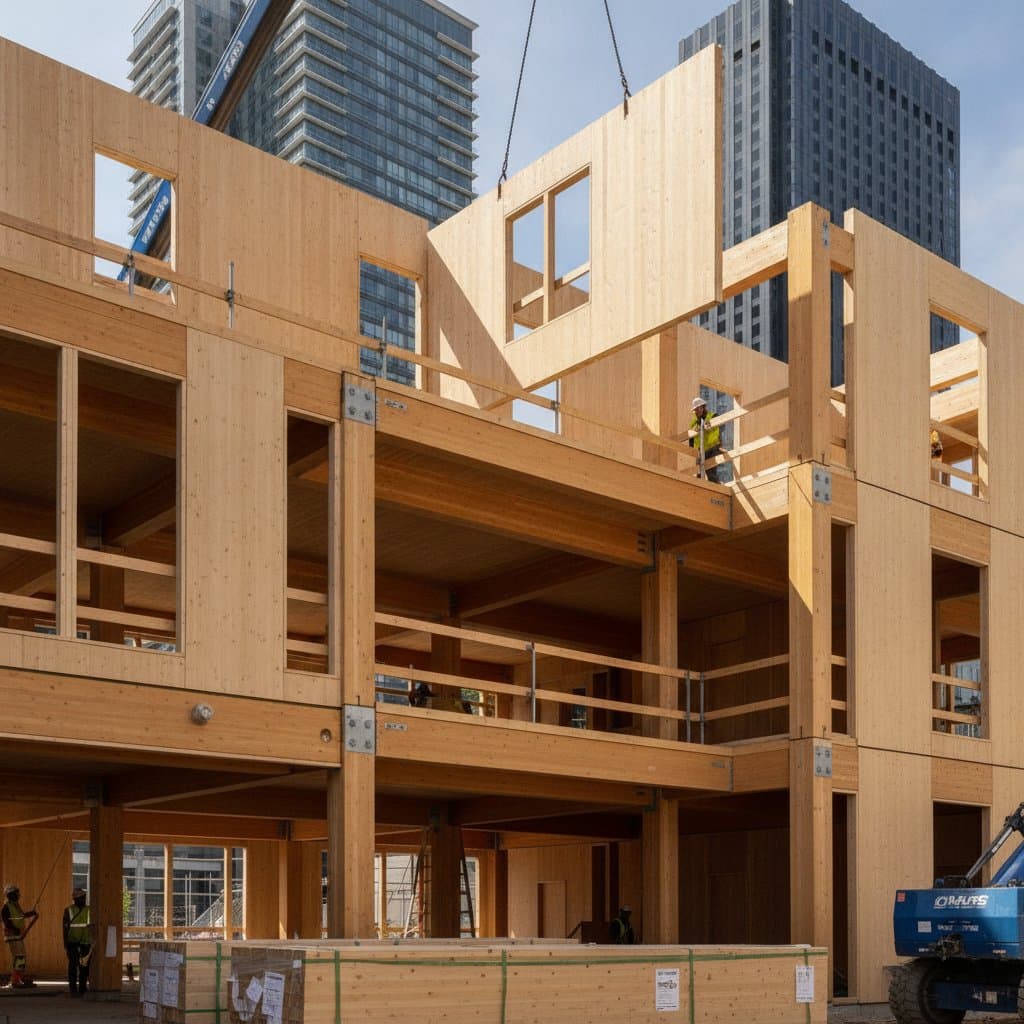
Utilize cranes equipped with certified slings attached to designated lifting inserts on each panel. Position panels with precision, employing temporary bracing to maintain stability until permanent connections secure them in place.
Warning: Establish exclusion zones around lifting operations and ensure all personnel wear appropriate personal protective equipment to mitigate risks from overhead loads.
Check: Confirm that all mechanical connections achieve full engagement, and use levels and plumb lines to verify that installed surfaces align vertically and horizontally within tolerances of 1/4 inch over 10 feet.
6. Seal Joints and Penetrations
Apply high-performance, fire-rated sealants along every panel-to-panel joint to enhance airtightness and structural continuity. For areas where plumbing, electrical conduits, or HVAC ducts penetrate the assembly, integrate compressible gaskets to maintain seals under movement.
Check: Conduct visual and tactile inspections to ensure sealants form unbroken beads without voids, bubbles, or excess material that could compromise performance.
7. Add Finishes and Protection
Layer in vapor-retardant membranes, thermal insulation, and interior or exterior finishes following the detailed instructions from material producers. Monitor environmental conditions throughout this phase to control temperature and humidity fluctuations.
Check: Maintain indoor relative humidity below 60 percent using temporary dehumidification equipment if necessary, preventing dimensional changes like warping or cracking in the wood elements.
Quality Checks and Troubleshooting
Common Issues
- Panel misalignment: This often stems from foundation inaccuracies or hardware mismatches; revisit anchor bolt positions and replace any substandard connectors.
- Moisture staining: Poor drainage or high ambient humidity can cause this; enhance site grading for water runoff and deploy industrial dehumidifiers during enclosure phases.
- Creaking floors: Loose fasteners or inadequate bearing surfaces contribute; systematically retighten all screws and bolts while confirming full contact between panels and supports.
Quick Fixes
For superficial scratches on panel surfaces, lightly sand the affected area and apply a compatible wood sealant to restore appearance and protection. Deeper damage, such as gouges exceeding 1/8 inch or visible splits, requires epoxy-based repair kits endorsed by the manufacturer for structural applications. Any panel exhibiting cracks that penetrate beyond the surface layer demands immediate replacement to uphold safety standards.
When to Call a Pro
Summon a licensed contractor or structural engineer under these circumstances:
- Observable deflection or sagging occurs in beams, panels, or floor assemblies, indicating potential overload or design flaws.
- Exposure to fire, flooding, or severe weather impacts load-bearing components, necessitating damage assessment.
- Structural modifications, such as enlarging openings, adding levels, or altering occupancy loads, require reevaluation.
Inspection fees for basic visual reviews generally fall in the moderate range, while advanced diagnostics like non-destructive load testing or full panel replacements incur higher expenses. Select professionals who demonstrate a track record in mass timber projects, backed by verifiable references and certifications from industry bodies.
FAQs
What is mass timber?
Mass timber refers to engineered wood products formed by bonding multiple layers of lumber with structural adhesives, creating expansive panels and beams capable of supporting multi-story constructions.
Is mass timber fire resistant?
Mass timber exhibits inherent fire resistance through a charring process that insulates the unexposed core. Achieving desired fire-resistance ratings involves selecting appropriate panel thicknesses, typically 3 to 7 inches, and incorporating intumescent sealants at joints.
Does mass timber require special maintenance?
Regular inspections focus on moisture management, joint integrity, and sealant condition. Annual checks by qualified technicians help detect early signs of degradation, ensuring the structure's longevity in varying climates.
Maximizing Long-Term Value in Mass Timber Projects
Mass timber enables the creation of durable, low-impact buildings that integrate seamlessly with urban environments. Proper execution minimizes operational costs through reduced energy demands and streamlined renovations. Invest in expert guidance from the outset, adhere to rigorous quality protocols, and commit to proactive upkeep to realize enduring financial and ecological advantages.