
Mass Timber: Cheaper Than Traditional Framing?
Mass timber emerges as a modern alternative to steel and concrete framing. Builders and designers value its warmth, sustainability, and potential for cost savings. The question of whether it proves cheaper than traditional methods hinges on a comprehensive view of expenses, including materials, labor, time, and long-term value.
Understanding Mass Timber Construction
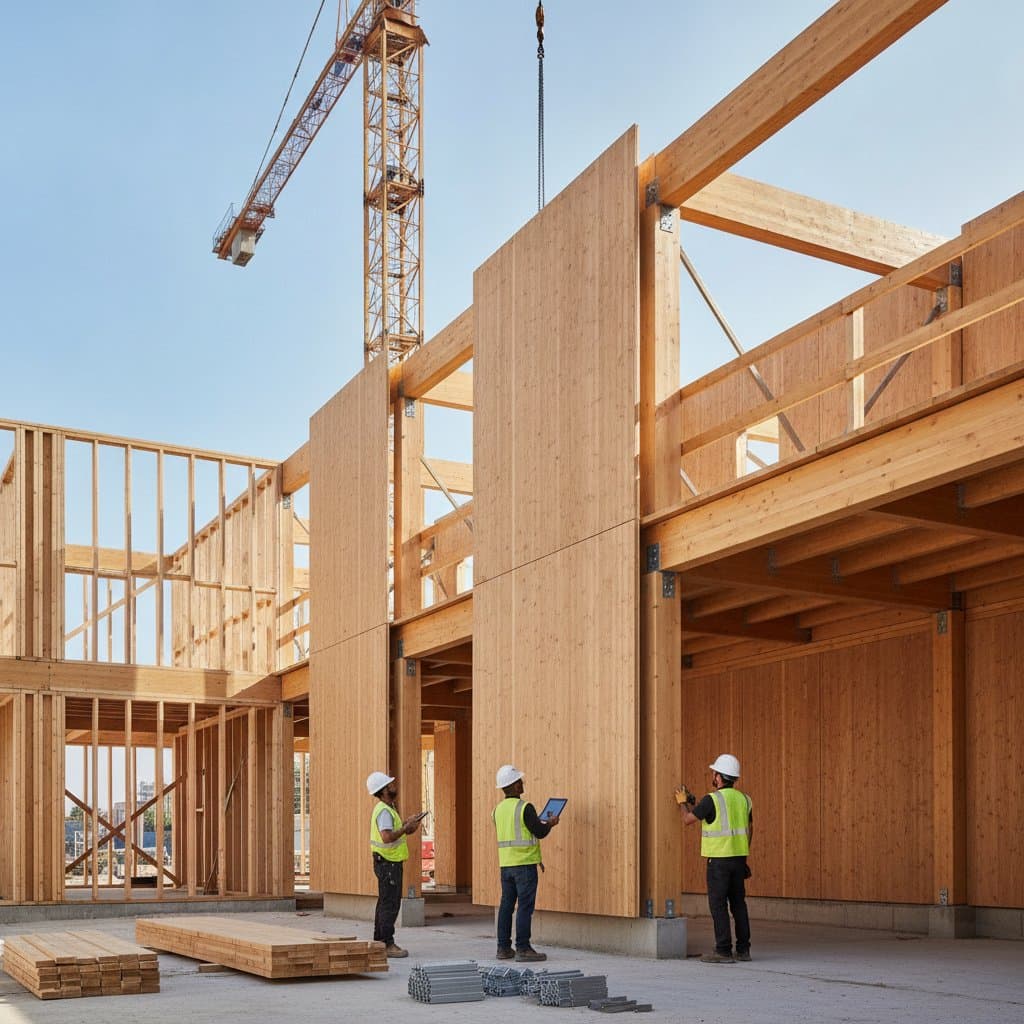
Mass timber consists of large, engineered wood components that serve as a building's structural frame. Key types include cross-laminated timber (CLT), glue-laminated beams (glulam), and nail-laminated timber (NLT). Manufacturers create these by bonding layers of wood under pressure, resulting in panels and beams strong enough to substitute for steel or concrete in mid-rise buildings and select high-rise applications.
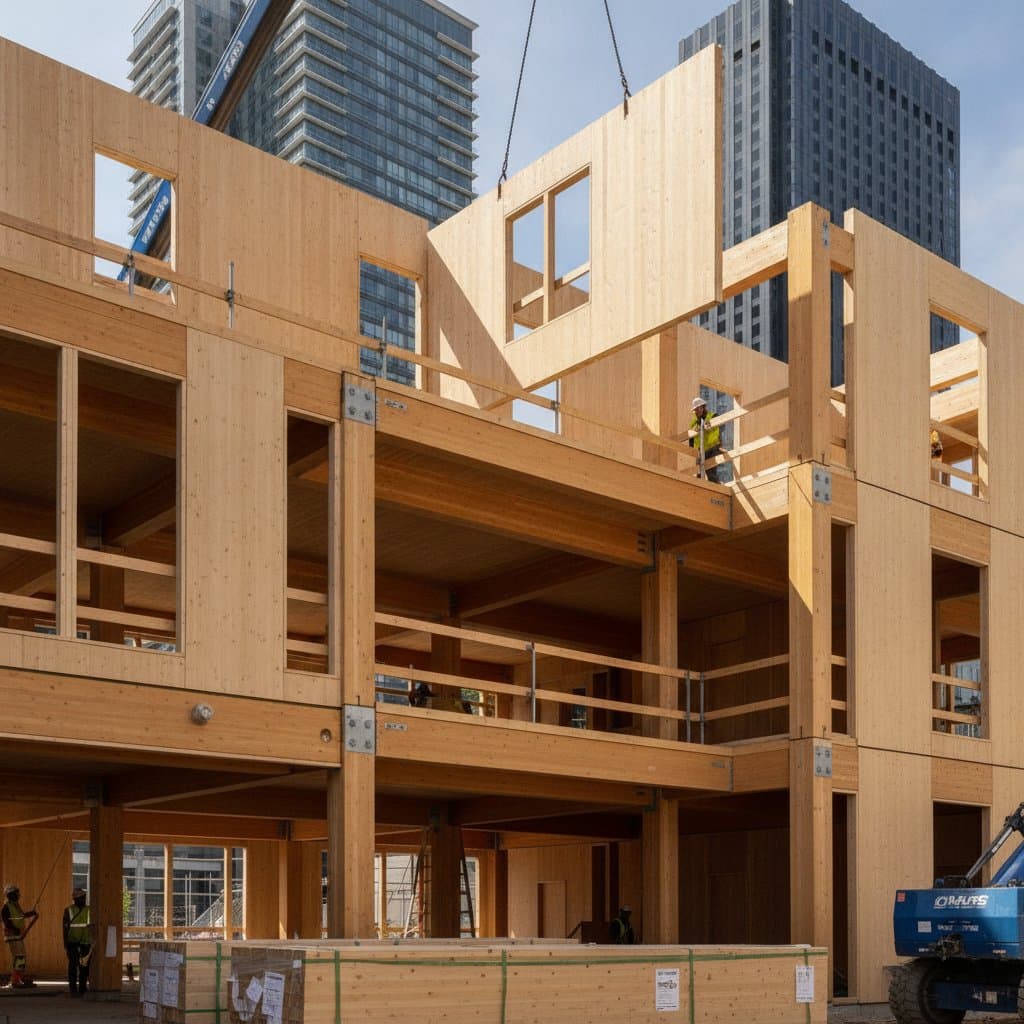
CLT panels, for example, feature multiple lumber layers stacked at right angles. This configuration provides bidirectional strength, enabling off-site prefabrication of walls, floors, and roofs for rapid on-site assembly.
Cost Comparison: Material vs. Total Project Expense
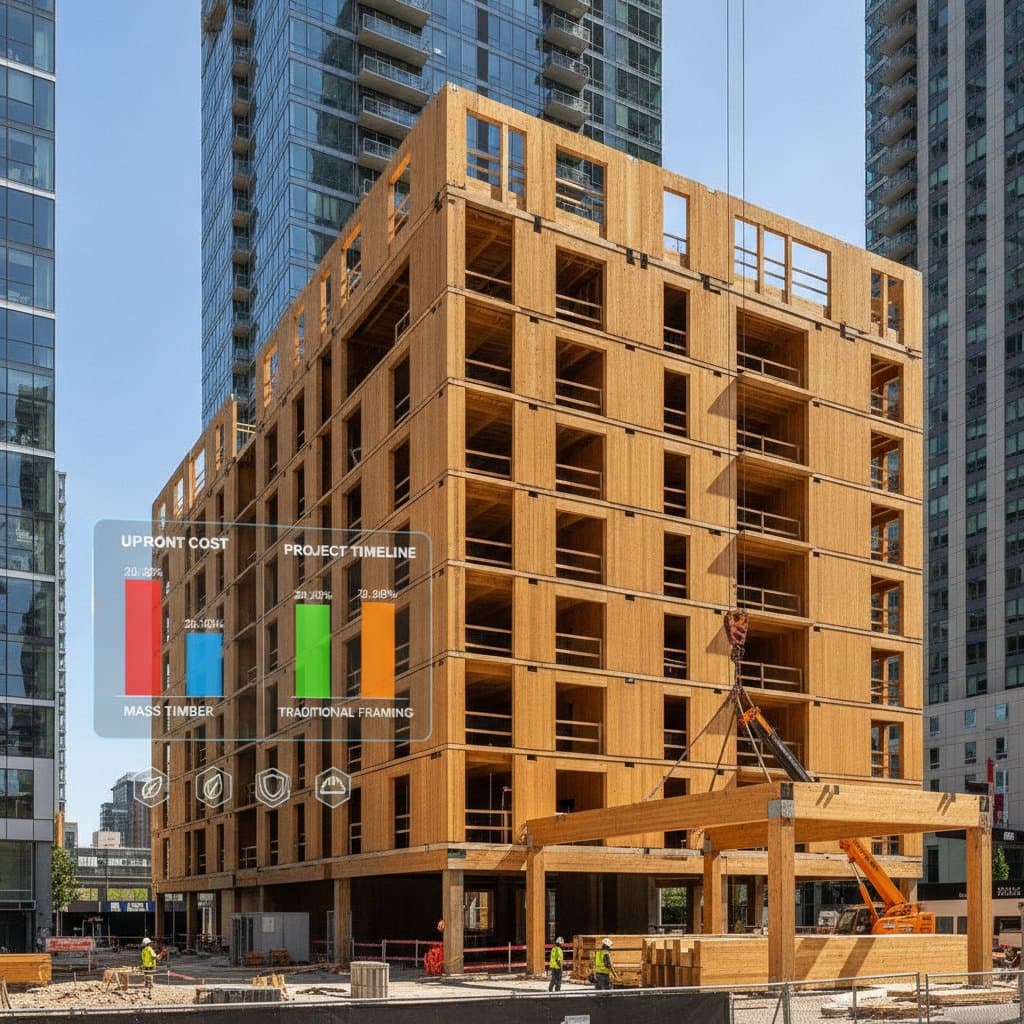
Mass timber materials often carry a higher initial price per unit than standard options. However, total project costs frequently decrease when accounting for additional factors.
Material Cost:
- CLT and glulam typically exceed the price of conventional lumber.
- Transportation expenses vary based on supplier proximity to the site.
Labor and Assembly:
- Prefabricated elements minimize on-site labor requirements.
- Quicker installation reduces wages and equipment needs.
- Reduced site time limits exposure to weather disruptions.
Project Timeline:
- Accelerated schedules lower financing and oversight expenses.
- Earlier completion enables prompt occupancy, enhancing investment returns.
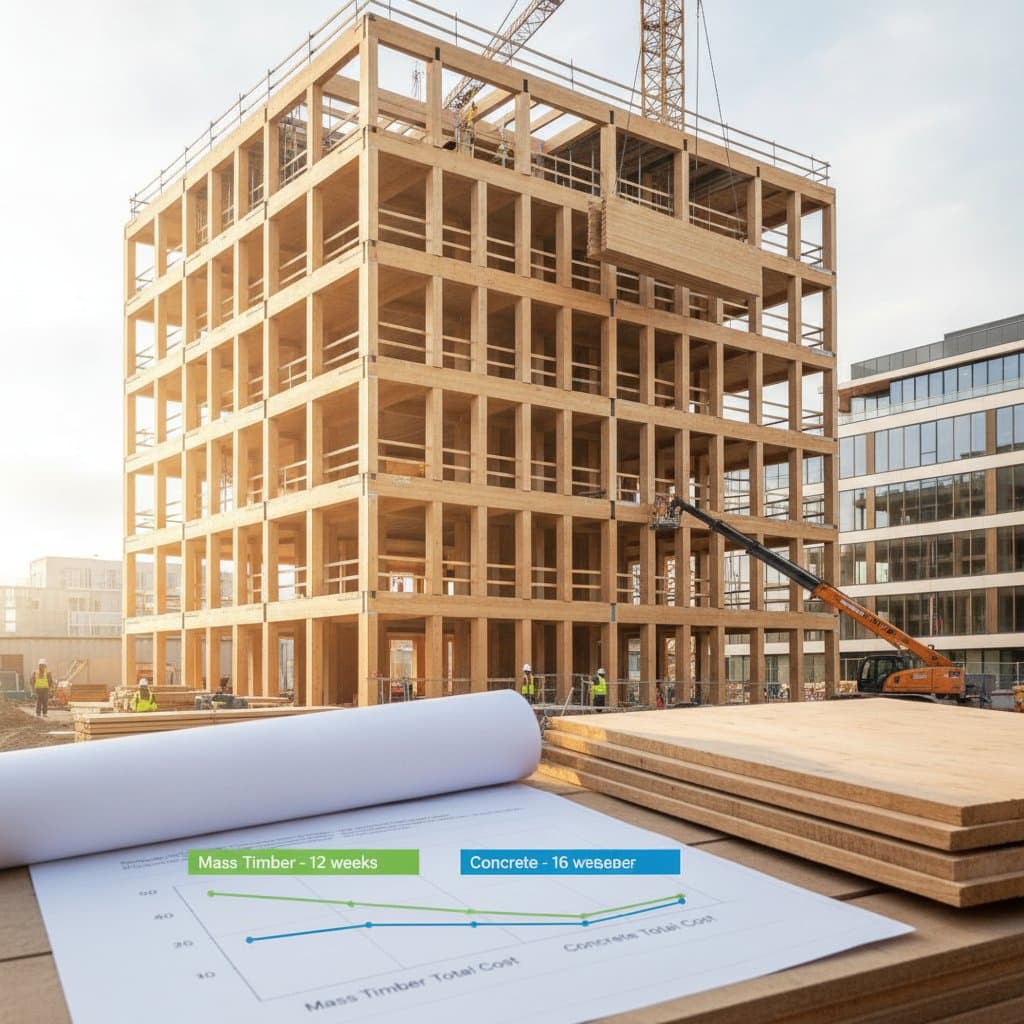
Savings in time and labor often compensate for elevated material costs. In extensive or intricate projects, mass timber matches or undercuts steel and concrete expenses.
Why Builders Choose Mass Timber
Beyond financial advantages, mass timber offers compelling attributes.
-
Speed of Construction
Prefabricated panels facilitate floor assembly in mere days, cutting labor expenses and overall duration. -
Lighter Weight
Mass timber proves substantially lighter than concrete or steel equivalents. Foundations require less reinforcement, and handling demands fewer resources. -
Sustainability Factor
Wood renews naturally and sequesters carbon, unlike the emission-heavy production of steel or concrete. This aspect enhances project attractiveness to environmentally conscious stakeholders. -
Aesthetic Warmth
Exposed timber creates a natural, welcoming interior. Such finishes often eliminate separate cladding, yielding further savings. -
Thermal and Acoustic Performance
Timber delivers effective insulation and sound control, curbing energy demands and boosting comfort without supplementary systems.
Comparing to Traditional Framing Systems
Wood Stud Framing:
This approach suits small residential builds. Materials cost less, yet scaling to larger structures extends timelines. Structural limits fall short of CLT capabilities.
Steel Framing:
Steel provides durability at high cost and energy use. Installation demands skilled workers and intricate joints.
Concrete Framing:
Concrete excels in strength and fire resistance. Its weight, prolonged curing, and forming processes inflate expenses and delay progress.
Mass timber bridges these options, matching the robustness of steel and concrete while incorporating wood's simplicity. Factory-based precision curtails on-site disturbances.
Factors That Influence Cost Outcomes
Several elements determine mass timber's economic viability relative to traditional systems:
- Project Scale: Prefabrication yields greater efficiencies in expansive developments.
- Design Complexity: Simple configurations minimize expenses; elaborate designs or long spans may increase them.
- Local Supply Chain: Nearby CLT producers reduce shipping costs.
- Labor Market: Timber erection requires fewer specialists than steel or concrete work.
- Code and Permitting: Certain regulations necessitate extra engineering, though costs remain moderate.
Optimal conditions position mass timber as equally or more economical than alternatives.
Practical Considerations for Builders
To assess mass timber for an upcoming project, follow these steps:
- Evaluate complete project budgets, incorporating time, labor, and funding elements.
- Collaborate with designers experienced in CLT and glulam to optimize detailing for efficiency and integrity.
- Schedule logistics meticulously, aligning panel delivery with installation phases.
- Verify compliance with local authorities regarding height restrictions and fire standards.
- Assess sustainability advantages, as they bolster marketability and client satisfaction.
Integrating Mass Timber into Your Projects
Mass timber reshapes building design and execution. Although initial material investments exceed those of conventional choices, efficiencies in labor, timelines, and operations frequently yield net savings. Adopting this method accelerates delivery, minimizes waste, and imparts a unique architectural character.
For projects prioritizing quality, economy, and environmental responsibility, mass timber warrants thorough evaluation. Strategic partnerships with knowledgeable teams and suppliers ensure it serves as a viable, innovative framing solution.