Understanding Prefab ADU Costs in 2026
Prefab accessory dwelling units deliver flexible living space and potential rental income. Accurate budgeting requires attention to every phase from site preparation through final inspection.
Detailed Cost Breakdown
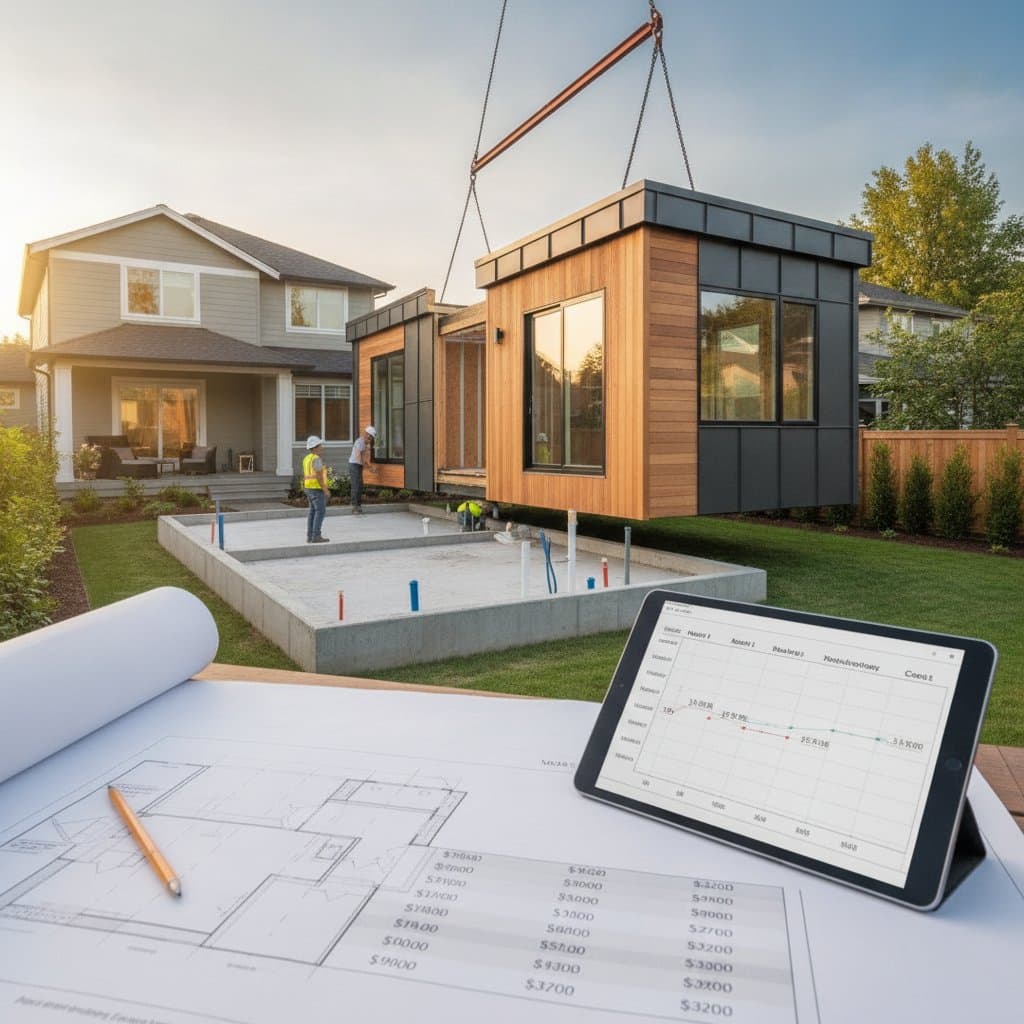
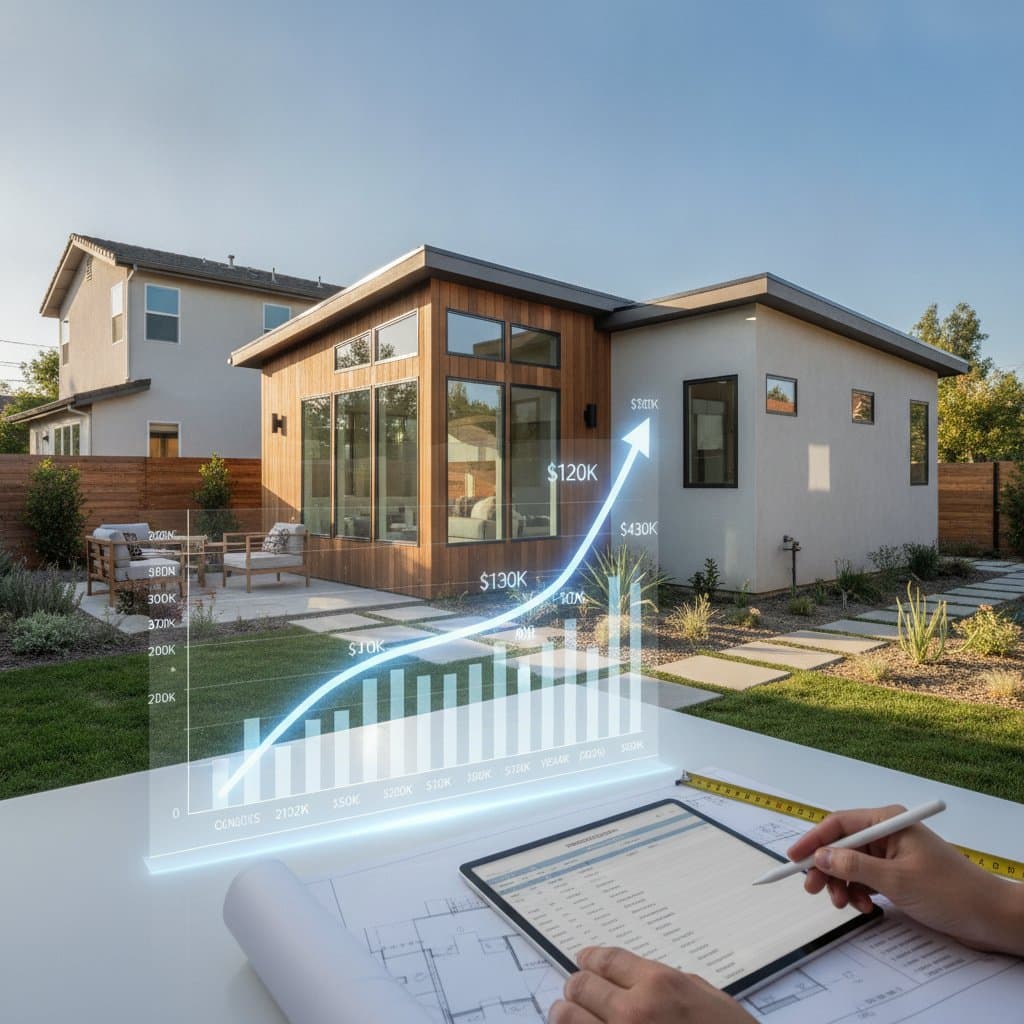
Foundation work ranges from 15000 dollars to 40000 dollars based on soil conditions and slab type. Utility connections add 10000 dollars to 25000 dollars for trenching, permits, and hookups.
The prefab unit itself costs between 130000 dollars and 200000 dollars for units sized 400 to 800 square feet. Installation and finishing require another 20000 dollars to 35000 dollars for crane rental, labor, and materials.
Total project costs typically fall between 180000 dollars and 300000 dollars. Location, design complexity, and local labor rates influence the final figure.
Step by Step Installation Process
Prepare the Foundation
Hire a licensed concrete contractor for any structural foundation. Confirm that the foundation passes inspection and matches the prefab anchoring plan.
Arrange Utility Connections
Trench from the main house or street to the new foundation for water, sewer, and power. Only a licensed electrician should connect service lines. Improper slope or connection can cause leaks or backups. Verify that all utility lines receive inspection and approval before backfilling.
Schedule Delivery and Set the Unit
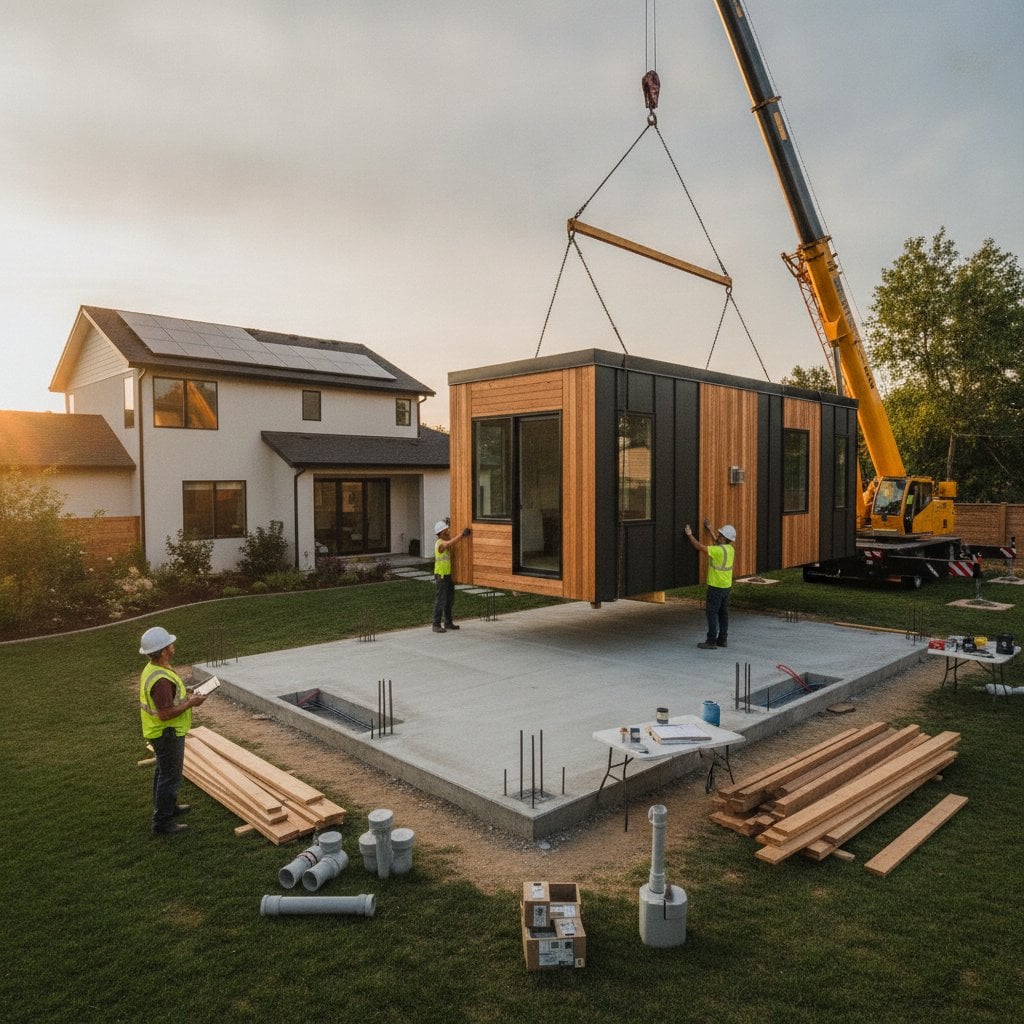
Coordinate with the manufacturer and crane operator for delivery day. Confirm weather and ground stability. Block off access routes. Guide the crane operator to align modules precisely. Verify that the unit sits level and securely anchored according to the manufacturer plan.
Connect Utilities and Systems
After placement, licensed trades must connect plumbing, electrical, and HVAC systems. Test all lines for leaks. Install exterior disconnects and shutoff valves. Confirm that all systems function properly and pass inspection.
Finish Exterior and Interior Details
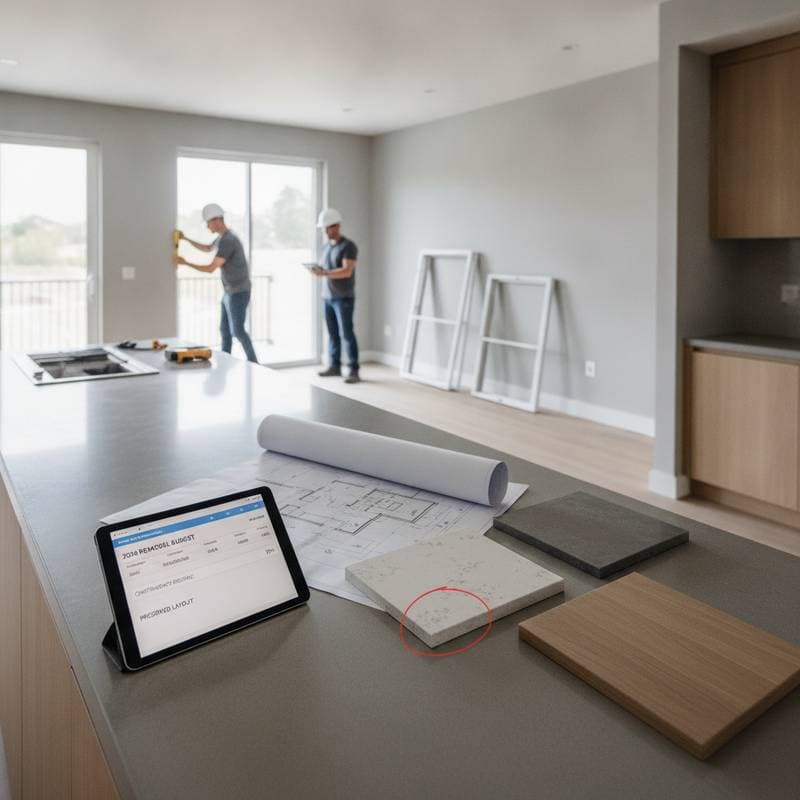
Seal seams, install siding, roofing, and trim. Inside, finish drywall joints, paint, and flooring. Ensure all finishes meet contract specifications and manufacturer warranty requirements.
Final Inspection and Handover
Schedule final inspection for all permits. Once approved, the ADU is ready for occupancy. Obtain final sign off and certificate of occupancy from the local building department.
Quality Checks and Troubleshooting
Common Failure Points
Uneven foundation can cause door or window misalignment. Leaking utility connections create ongoing problems. Poor drainage leads to standing water. Cracked drywall seams may appear after transport.
Simple Fixes
Adjust door hinges and relevel thresholds. Tighten plumbing fittings and check for drips under sinks. Add soil fill around the perimeter to direct water away. Patch drywall cracks with joint compound and touch up paint.
Call a licensed electrician immediately if electrical faults, flickering lights, or repeated tripped breakers occur.
When to Call a Pro
Licensed Trades Required
Electrical service always requires a licensed electrician. Plumbing connections must be completed by a licensed plumber. Only a qualified gas contractor should install or modify gas lines. Structural foundation work requires a licensed concrete or general contractor.
Vetting a Contractor
Verify license and insurance through the state contractor board. Request three local references and visit completed ADU projects. Obtain a detailed written estimate that lists scope, materials, and payment schedule. Require lien releases from subcontractors upon final payment.
A reputable builder provides clear communication, realistic schedules, and transparent cost tracking.
Frequently Asked Questions
What size prefab ADU is most common?
Units between 400 and 800 square feet fit most backyard lots and meet zoning limits.
Do I need a separate meter for utilities?
Some cities require separate meters for rental units, while others allow shared service. Check with the local utility provider.
Can I finance a prefab ADU?
Yes. Options include home equity loans, construction loans, or ADU specific financing programs.
How long does the permit process take?
Permit review time varies by city but usually lasts several weeks to a few months.
Can I rent out my ADU immediately after installation?
Once final inspection passes and occupancy is approved, rental is possible if local regulations allow.
What type of foundation lasts longest?
A reinforced concrete slab provides the most durable and low maintenance base for most climates.
Do prefab ADUs hold value?
Yes. A well installed ADU typically increases property value and generates rental income.
Is a prefab ADU cheaper than a site built unit?
Prefab units often cost 10 to 20 percent less due to factory efficiency and shorter construction time.
Can I install solar panels on a prefab ADU?
Yes. Most roofs can support solar panels, but verify structural capacity and local incentives before installation.
Is insulation included in prefab units?
Most factory built ADUs include insulation that meets or exceeds code requirements.
Planning a Successful Project
Careful planning, accurate cost tracking, and code compliance reduce surprises and delays. Treat the foundation, utility connections, and inspections as critical elements that determine long term performance and safety. Work only with licensed professionals for structural, electrical, and plumbing tasks. Keep copies of all permits, inspections, and warranties in one place for future resale or refinancing.